
Opioid Withdrawal Timeline: How Long Does Recovery Take In Ohio Rehabs?

The opioid recovery process progresses through a well-defined timeline spanning acute, early, and long-term phases. The acute withdrawal phase lasts 1 week.
You will experience intense physical and psychological symptoms that require medical detoxification. This is followed by an early abstinence phase of several weeks to months.
The maintenance phase then requires 6 months to several years of therapy to prevent relapse and support continued recovery. Beyond these initial phases, long-term recovery becomes a lifelong process.
However, the prevalence and impact of the opioid crisis underscore the importance of this recovery process. According to the Ohio Department of Health, 2023, Unintentional Drug Overdose Annual Report, deaths involving natural and semi-synthetic opioids (e.g., oxycodone) decreased by 20% from 2022 to 2023.
How Long Does It Take To Recover From Opioid Use Disorder?
Recovering from opioid use disorder takes anywhere from several days to many years. It begins with a week of acute withdrawal, progressing through months of early abstinence, and extending into years of maintenance before developing into a lifelong recovery journey.
The opioid addiction recovery process involves medical detoxification, structured treatment programs, and continuous support systems.
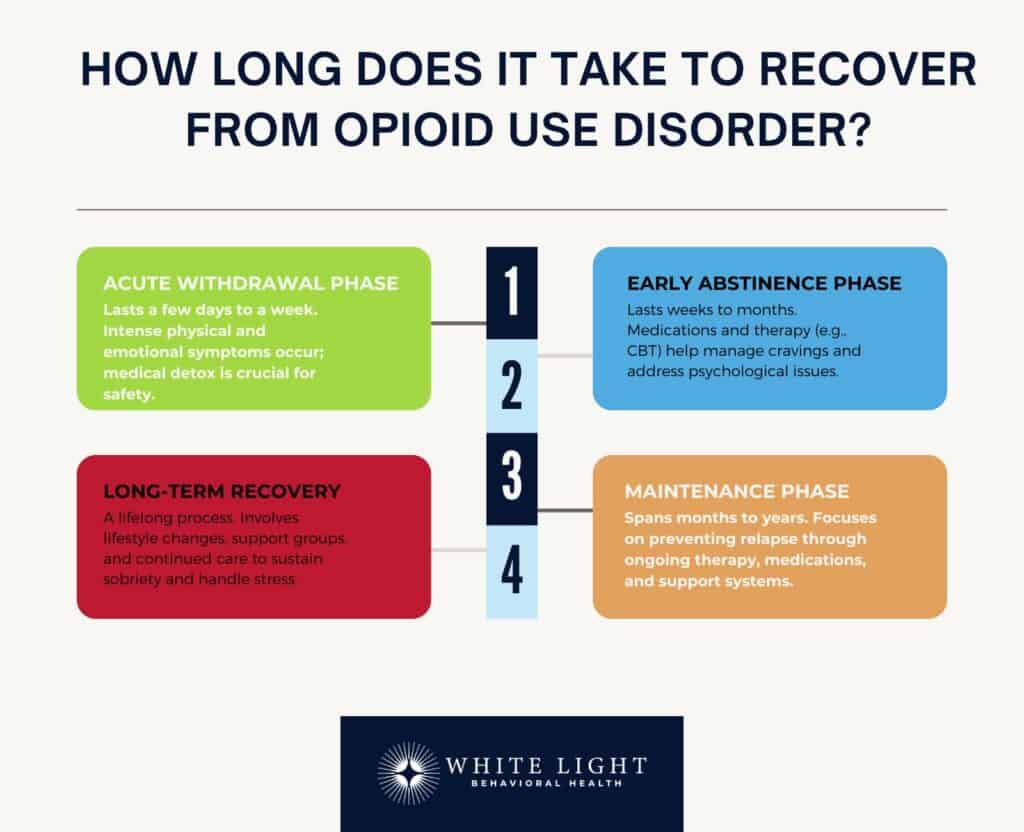
The table below shows the timeline of each recovery phase and its specific characteristics.
| Phase | Duration |
| Acute Withdrawal Phase | A few days to a week |
| Early Abstinence Phase | Several weeks to a few months |
| Maintenance Phase | Several months to years |
| Long-Term Recovery | Lifelong process |
Did you know most health insurance plans cover substance use disorder treatment? Check your coverage online now.
1. Acute Withdrawal Phase
The acute withdrawal phase usually lasts for a few days to a week.
This period is characterized by intense withdrawal symptoms, including muscle aches, anxiety, sweating, nausea, and severe cravings. Medical detoxification is necessary during this stage to manage these symptoms safely and comfortably.
More Resources on Addiction:
2. Early Abstinence Phase
The early abstinence phase lasts from several weeks to a few months.
During this time, individuals participate in structured treatment programs, which include medications like methadone or buprenorphine to reduce cravings and withdrawal symptoms. Behavioral therapies, such as cognitive-behavioral therapy (CBT), are also crucial in addressing the psychological aspects of addiction.
3. Maintenance Phase
This phase lasts from several months to years.
The primary goals are to maintain abstinence, prevent relapse, and support ongoing recovery. Individuals continue to use medication-assisted treatment (MAT) and engage in ongoing therapy sessions.
Support groups and community resources play a significant role in providing continuous encouragement and accountability.
4. Long-Term Recovery
Long-term recovery is a lifelong process.
Achieving long-term recovery involves building a stable, healthy lifestyle and coping mechanisms to handle stress and triggers. Regular follow-ups with healthcare providers, participation in support groups like Narcotics Anonymous (NA), and a strong support network are essential components for sustaining recovery.
What Are The Common Types of Opioids?
The common types of opioids are heroin, fentanyl, oxycodone, morphine, and prescription pills. These opioids are used legally to manage pain, but there are illicit ones produced secretly in higher concentrations. Illicit opioids are illegal and very dangerous.
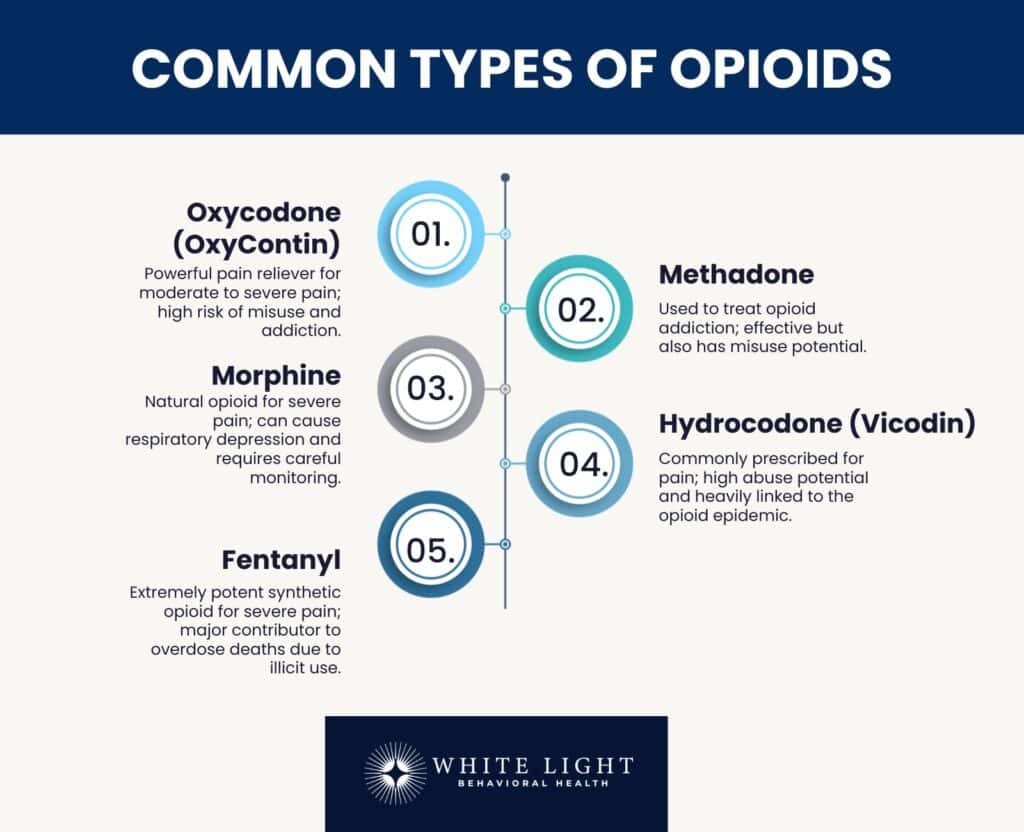
The common types of opioids include:
- Oxycodone (OxyContin): Oxycodone serves as a potent opioid analgesic widely prescribed for moderate to severe pain. This medication is susceptible to misuse and addiction, contributing to the opioid crisis.
- Methadone: Methadone functions as a synthetic opioid primarily used to treat opioid dependence and addiction.
Despite its therapeutic use, methadone is also prone to misuse. - Morphine: Morphine acts as a potent opioid analgesic derived from the opium poppy.
This medication effectively relieves severe pain but carries risks of respiratory depression and constipation, requiring careful monitoring and dosage adjustments.
- Hydrocodone (Vicodin): Hydrocodone, known as Vicodin, serves as a widely prescribed semi-synthetic opioid analgesic for moderate to severe pain.
Its high potential for misuse and addiction contributes to the opioid crisis, necessitating stricter regulations and safer pain management alternatives. - Fentanyl: Fentanyl represents a highly potent synthetic opioid primarily used for severe pain management in medical settings. Illicit use of fentanyl has fueled the opioid crisis, leading to a surge in overdose deaths caused by fentanyl addiction.
Contact us today to schedule an initial assessment or to learn more about our services.
Whether you are seeking intensive outpatient care or simply need guidance on your mental health journey, we are here to help.
What Are the Symptoms of Opioid Misuse?
Symptoms of Opioid Misuse include respiratory depression, sedation and drowsiness, constipation, euphoria and mood swings, and pinpoint pupils.
See the symptoms of opioid misuse in detail below:
- Respiratory Depression: Opioids suppress the central nervous system, slowing breathing and risking oxygen deprivation, respiratory arrest, unconsciousness, brain damage, or death.
- Sedation and Drowsiness: Opioids cause drowsiness, impair cognitive abilities, and interfere with daily activities, posing risks during tasks requiring alertness.
- Constipation: Opioids disrupt gastrointestinal motility, causing decreased bowel movements, hardened stools, discomfort, bloating, and abdominal pain.
- Euphoria and Mood Swings: Opioids trigger dopamine surges, causing euphoria followed by mood swings, irritability, and dysphoria, driving continued misuse.
- Pinpoint Pupils: Opioids cause pupil constriction, resulting in very small pupils, a reliable indicator of misuse.
The table below shows the opioid withdrawal symptoms timeline:
| Type of Opioid | Onset | Duration | Symptoms |
| Short-Acting (e.g., heroin) | 8-24 hours after last use | 4-10 days | • Nausea and vomiting• Anxiety• Insomnia• Hot and cold flushes• Perspiration• Muscle cramps• Watery discharge from eyes and nose• Diarrhoea |
| Long-Acting (e.g., methadone) | 12-48 hours after last use | 10-20 days | Same as above |
| Post-Acute Withdrawal | After the acute phase | Up to 6 months | • General feeling of reduced well-being• Strong cravings for opioids• Increased risk of relapse• Higher risk of overdose due to reduced tolerance |
What Are the Treatment Options for Opioid Misuse?
The treatment options for opioid misuse include Medication-Assisted Treatment (MAT), Cognitive Behavioral Therapy (CBT), Residential or Inpatient Treatment, Outpatient Treatment, and Support Groups and Peer Support. Each of these strategies offers unique benefits and approaches to help individuals manage withdrawal symptoms, develop coping skills, and maintain long-term recovery.
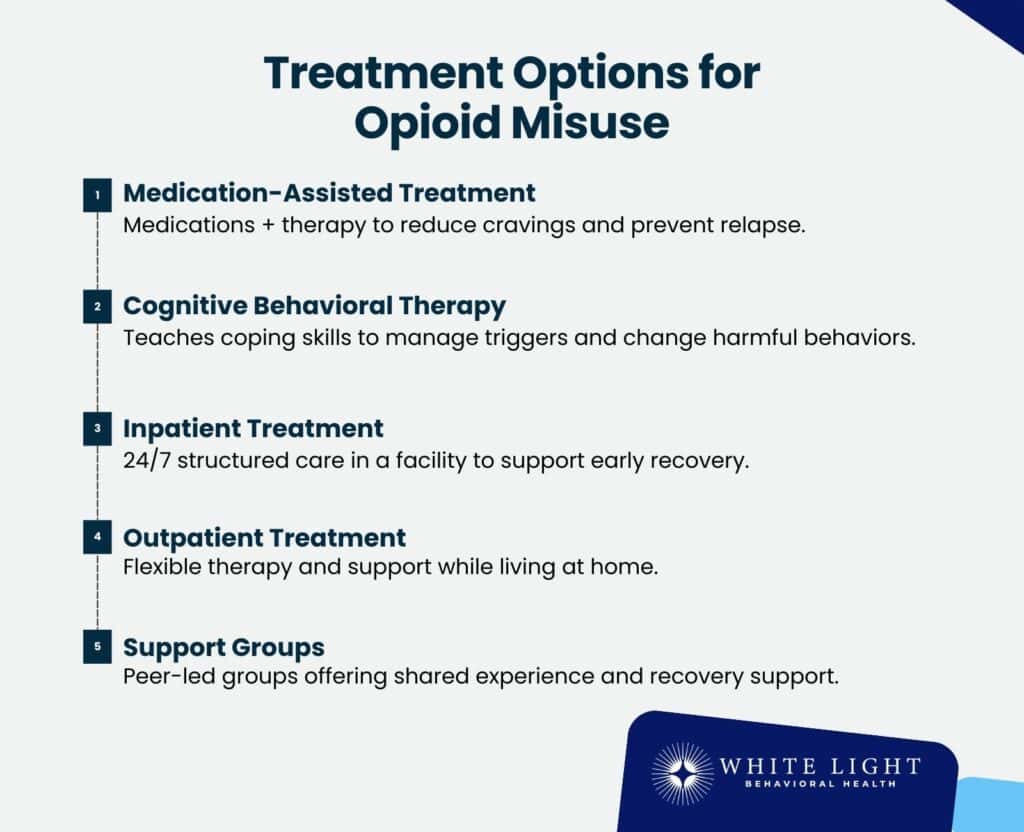
Here is the opioid misuse treatment in detail:
- Medication-Assisted Treatment (MAT): Medications, such as methadone, buprenorphine, or naltrexone, in combination with counseling and behavioral therapies, help manage withdrawal symptoms, reduce cravings, and stabilize individuals, allowing them to focus on their recovery journeys. Methadone and buprenorphine act as opioid agonists or partial agonists, providing a controlled, safer substitute for opioids.
Naltrexone, on the other hand, blocks the effects of opioids, preventing relapse. - Cognitive Behavioral Therapy (CBT): Through CBT, individuals learn coping strategies, problem-solving skills, and relapse prevention techniques to manage cravings, handle triggers, and develop healthier alternatives to drug use.
It also addresses co-occurring mental health conditions often associated with opioid misuse.
By promoting self-awareness, self-control, and positive behavioral changes, CBT empowers individuals to overcome challenges, build resilience, and sustain long-term recovery from opioid misuse. - Residential or Inpatient Treatment: Inpatient treatment typically includes detoxification, therapy sessions, group activities, and educational workshops to address the physical, psychological, and social aspects of addiction. This immersive environment provides a safe and supportive space for individuals to focus solely on their recoveries without the distractions and triggers of the outside world.
- Outpatient Treatment: The outpatient treatment approach allows individuals to attend counseling, therapy sessions, and medication management appointments on an outpatient basis.
The programs typically offer a range of services tailored to individual needs, including individual counseling, group therapy, relapse prevention strategies, and education about addiction and recovery.This approach allows individuals to receive treatment to address their opioid misuse and make positive changes in their lives while living at home and continuing with work, school, or other obligations.
- Support Groups and Peer Support: Participating in support groups offers a supportive community of individuals who have experienced similar struggles and understand the challenges of addiction.
These groups provide a safe space to share experiences, gain insights, and receive guidance from peers who are on a similar recovery journey.
At White Light Behavioral Health, we understand the complexities of opioid addiction and offer specialized opioid recovery services. With our state-of-the-art facility and highly trained staff, we are committed to providing personalized care and empowering individuals to reclaim their lives.
If you or someone you know is struggling with opioid misuse, please don’t hesitate to reach out.
What Factors Affect the Rate of Opioid Dependency During Misuse?
Factors that affect the rate of opioid dependency during misuse include the type of opioid, duration of use, dosage, and individual susceptibility. Highly potent opioids like fentanyl can rapidly lead to dependence, while prolonged use and higher doses increase tolerance and addiction risk. Genetic variations also play a role in how individuals metabolize opioids.
How Does Opioid Tolerance Develop Over Time?
Opioid tolerance develops over time as the body adjusts to the drug, requiring higher doses to achieve the same effects. This is known as tolerance. Over time, tolerance leads to an increased risk of overdose and dependence.
Share This Post

Dr. Ryan Wakim M.D.
All author posts
TREATMENTS WE OFFER
Are you covered for treatment?















White Light Behavioral Health is an approved provider for Blue Shield and Tufts, while also accepting many other major insurance carriers.
Check Coverage Now!