The Role of Trauma in Opioid Addiction: Addressing Underlying Causes

Trauma is an emotional and psychological response to a deeply distressing or disturbing experience, such as physical or sexual abuse, neglect, violence, or a natural disaster. Individuals who have experienced trauma are at a higher risk of developing opioid addiction, particularly when they also suffer from chronic pain.
According to a report by the Ohio Department of Health titled “2023 Unintentional Drug Overdose Annual Report,” published in 2024, Ohio recorded 4,452 unintentional drug overdose deaths in 2023
Types of trauma include childhood trauma, sexual trauma, combat trauma, and medical trauma, each of which has a significant impact on an individual’s mental and emotional well-being and increases the risk of developing opioid addiction.
Utilizing trauma-informed care in treatment options for trauma and opioid addiction are cognitive-behavioral therapy (CBT), eye movement desensitization and reprocessing (EMDR), dialectical behavior therapy (DBT), group therapy, and medication-assisted treatment (MAT).
What Is The Link Between Trauma and Opioid Addiction?
Trauma directly increases the risk of opioid addiction, as individuals use opioids to self-medicate emotional and psychological pain resulting from traumatic experiences. People with trauma histories are more likely to develop opioid use disorders, especially when symptoms of anxiety, depression, or post-traumatic stress persist and remain untreated.
According to the National Institute on Drug Abuse (NIDA), individuals who have experienced trauma are more likely to suffer from chronic pain, which increases the risk of opioid addiction. Additionally, individuals who have experienced trauma may have a higher tolerance for pain medication, which increases the risk of opioid addiction.
Did you know most health insurance plans cover substance use disorder treatment? Check your coverage online now.
What are the Types of Trauma and Their Impact on Addiction?
Types of trauma include childhood trauma, sexual trauma, combat trauma, and medical trauma. Each type of trauma has a significant impact on an individual’s mental and emotional well-being and increases the risk of developing opioid addiction.
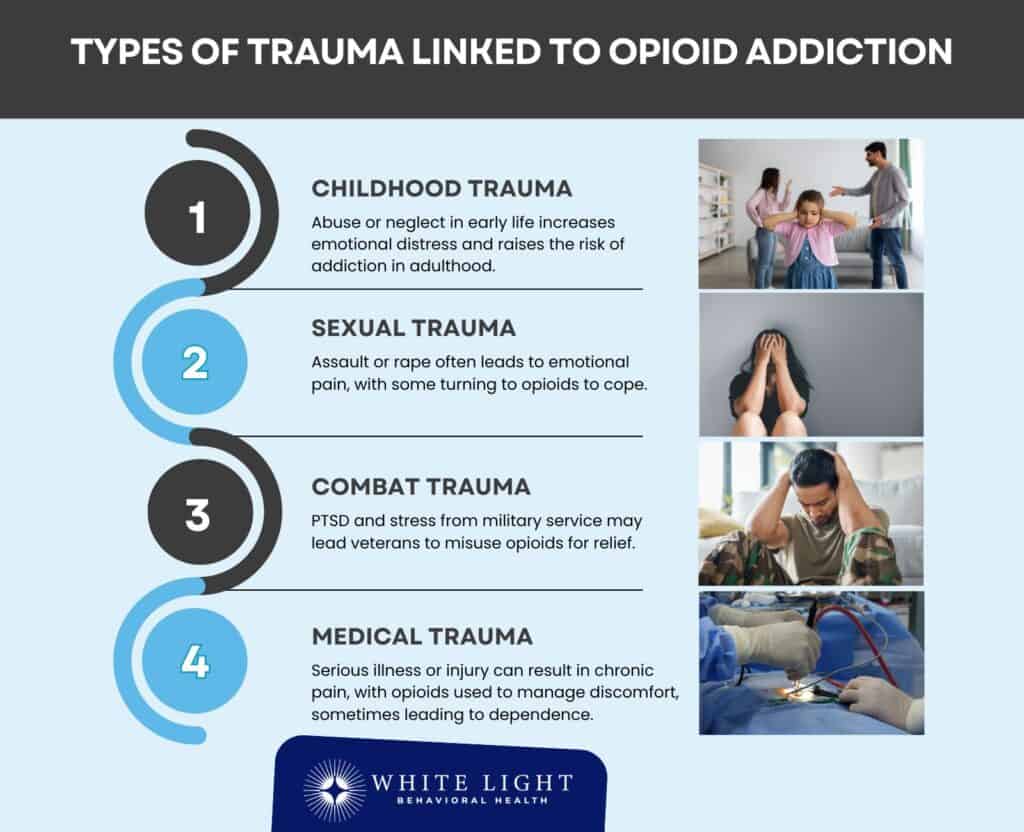
Childhood trauma, such as physical or sexual abuse, causes significant emotional and psychological distress that lasts well into adulthood. Adults who have experienced childhood trauma are at a higher risk of developing opioid addiction.
Sexual trauma, such as rape or sexual assault, causes significant emotional and psychological distress that leads to drug use as a coping mechanism.
Combat trauma, such as post-traumatic stress disorder (PTSD) experienced by veterans, leads to opioid addiction as veterans attempt to manage the symptoms of their condition.
Medical trauma, such as a serious illness or injury, leads to opioid addiction as individuals attempt to manage their pain and suffering.
More Resources on Addiction:
What is Trauma-Informed Care in Addiction Treatment?
Trauma-informed care is an approach to addiction treatment that recognizes the impact of trauma on an individual’s mental and emotional well-being. It involves creating a safe and supportive environment that is sensitive to the unique needs of individuals who have experienced trauma.
Trauma-informed care involves a number of principles, including safety, trustworthiness, choice, collaboration, and empowerment. By incorporating these principles into addiction treatment, individuals feel safe and supported as they work to overcome their addiction and address underlying trauma.
What are the Treatment Options for Trauma and Opioid Addiction In Columbus, Ohio?
The treatment options for trauma and opioid addiction in Columbus, Ohio, are cognitive-behavioral therapy (CBT), eye movement desensitization and reprocessing (EMDR), dialectical behavior therapy (DBT), and group therapy. Treating underlying trauma is a critical component of opioid addiction treatment, particularly for individuals who have experienced significant trauma in their lives.
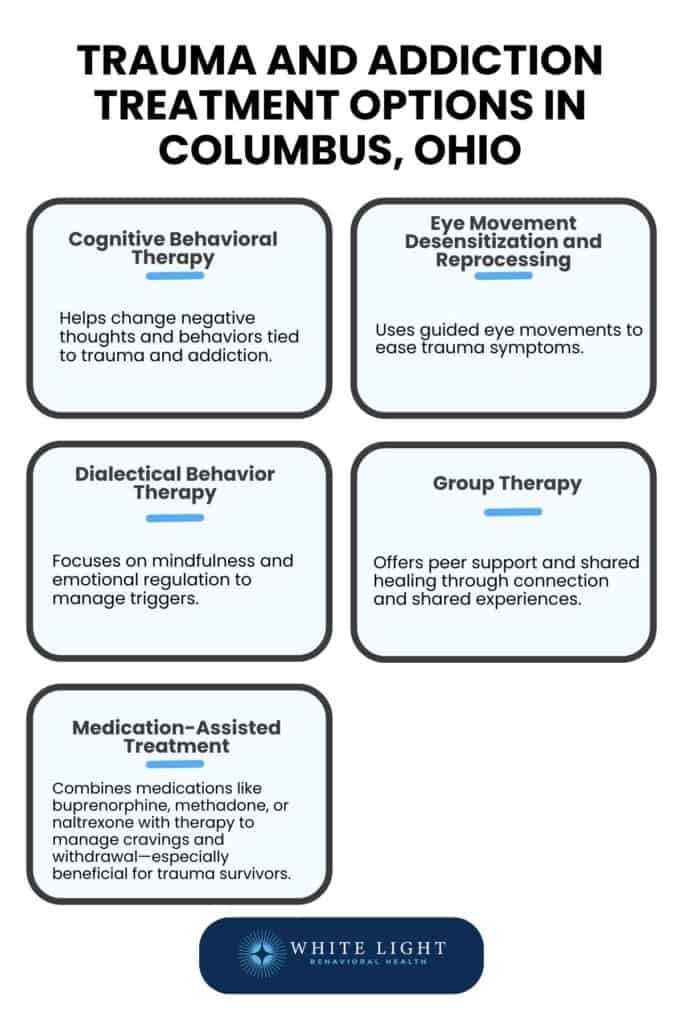
CBT is a type of psychotherapy that can be effective in managing the symptoms of trauma and addiction. CBT focuses on changing negative thought patterns and behaviors that worsen addiction and trauma.
EMDR is a type of psychotherapy that involves a series of eye movements that help reduce the symptoms of trauma and opioid addiction.
DBT is a type of psychotherapy that focuses on mindfulness and emotional regulation. DBT is effective in managing the symptoms of trauma and opioid addiction.
Group therapy is effective in addressing both addiction and trauma. In group therapy, individuals connect with others who have experienced similar trauma and addiction and learn from each other’s experiences.
In addition to psychotherapy, medication-assisted treatment (MAT) can be effective in managing opioid addiction. MAT involves the use of medications such as buprenorphine, methadone, and naltrexone, combined with counseling and other behavioral therapies.
MAT is particularly effective for individuals who have experienced trauma, as it can help to reduce cravings and manage opioid withdrawal symptoms.
What are the Coping Strategies for Managing Trauma and Addiction In Ohio?
Coping strategies for managing trauma and addiction in Ohio include mindfulness techniques, stress reduction strategies, and self-care practices. These strategies reduce stress and anxiety that comes from trauma.
Mindfulness techniques, such as meditation and deep breathing exercises, help to reduce stress and anxiety, which worsen both addiction and trauma. Stress reduction strategies, such as exercise and yoga, can also help to relieve symptoms of both addiction and trauma.
Self-care practices, such as getting enough sleep, eating a healthy diet, and engaging in activities that bring joy and fulfillment, help to improve overall well-being and reduce symptoms of both addiction and trauma.
Trauma is a significant risk factor for opioid addiction, and addressing underlying trauma is a critical component of addiction treatment. By incorporating trauma-informed care into addiction treatment, identifying and addressing underlying trauma, and developing healthy coping strategies, individuals improve their recovery.
How Does Trauma Contribute To Opioid Addiction?
Trauma contributes to opioid addiction by triggering emotional distress and disrupting normal brain function. Individuals turn to opioids as a coping mechanism to alleviate symptoms of trauma, such as anxiety, depression, or intrusive thoughts. Moreover, trauma leads to changes in brain chemistry, making individuals more susceptible to opioid addiction.
Contact us today to schedule an initial assessment or to learn more about our services. Whether you are seeking intensive outpatient care or simply need guidance on your mental health journey, we are here to help.
Can Addressing Trauma Reduce The Risk Of Opioid Addiction?
Yes, addressing trauma can reduce the risk of opioid addiction. By providing trauma-informed care and therapies, individuals can learn healthier coping mechanisms and reduce reliance on opioids to manage their emotional pain.
Additionally, addressing trauma helps individuals heal underlying psychological wounds, making them less vulnerable to substance abuse.
How Can Trauma-Informed Care Help Individuals With Opioid Addiction?
Trauma-informed care recognizes the widespread impact of trauma and integrates this understanding into treatment approaches for opioid addiction.
By creating a safe and supportive environment, trauma-informed care addresses the underlying causes of addiction, helps individuals develop coping skills, and fosters resilience in recovery.
What Types Of Trauma Are Commonly Associated With Opioid Addiction?
The types of trauma associated with opioid addiction include physical, emotional, and sexual abuse, neglect, accidents, natural disasters, and witnessing violence. Each type of trauma can have profound psychological effects, leading individuals to seek relief through substance use, including opioids.
What Role Does Epigenetics Play in the Relationship Between Trauma and Opioid Addiction?
Epigenetic changes, which alter gene expression without changing the underlying DNA sequence, can be influenced by exposure to trauma. These changes may predispose individuals to addictive behaviors, including opioid addiction, by altering the expression of genes related to stress response, reward processing, and emotional regulation.
Is There a Link Between Chronic Pain, Trauma, and Opioid Addiction?
Yes, there is a link between chronic pain, trauma, and opioid addiction. Chronic pain, stemming from traumatic injuries or medical conditions, can increase the risk of opioid addiction due to prolonged opioid use for pain management. Additionally, trauma exacerbates pain perception, leading individuals to seek relief through opioid medications, further fueling addiction.
Rediscover Life at White Light Behavioral Health
Get the compassionate support you deserve. We're here to help you reclaim joy, wellness, and a brighter future.
Our Facility
Can Addressing Trauma Help Combat The Opioid Epidemic In Ohio?
Yes, addressing trauma is essential in combating the opioid epidemic in Ohio. By implementing trauma-informed approaches in prevention, treatment, and recovery services, Ohio addresses the underlying causes of addiction and reduces the demand for opioids. Moreover, trauma-informed care helps individuals heal from past trauma, empowering them to lead healthier, substance-free lives.
Share This Post

White Light Behavioral Health
All author posts
TREATMENTS WE OFFER
Are you covered for treatment?















White Light Behavioral Health is an approved provider for Blue Shield and Tufts, while also accepting many other major insurance carriers.
Check Coverage Now!