Ohio’s Opioid Epidemic: Challenges and Solutions in Addressing the Crisis

The opioid crisis in Ohio has reached epidemic proportions in recent years, with thousands of deaths and countless lives affected by addiction.
According to a report by the Ohio Department of Health, 2024, fentanyl and its analogues were involved in 78% of unintentional drug overdose deaths in Ohio in 2023, accounting for 3,486 fatalities.
A significant challenge in addressing the Ohio opioid crisis is the lack of access to treatment and the pervasive stigma surrounding addiction, particularly in rural areas.
Effectively addressing the crisis requires increasing access to treatment and recovery programs, reducing the stigma, and implementing a comprehensive approach encompassing prevention, intervention, treatment, and recovery.
Opioid Crisis in Ohio
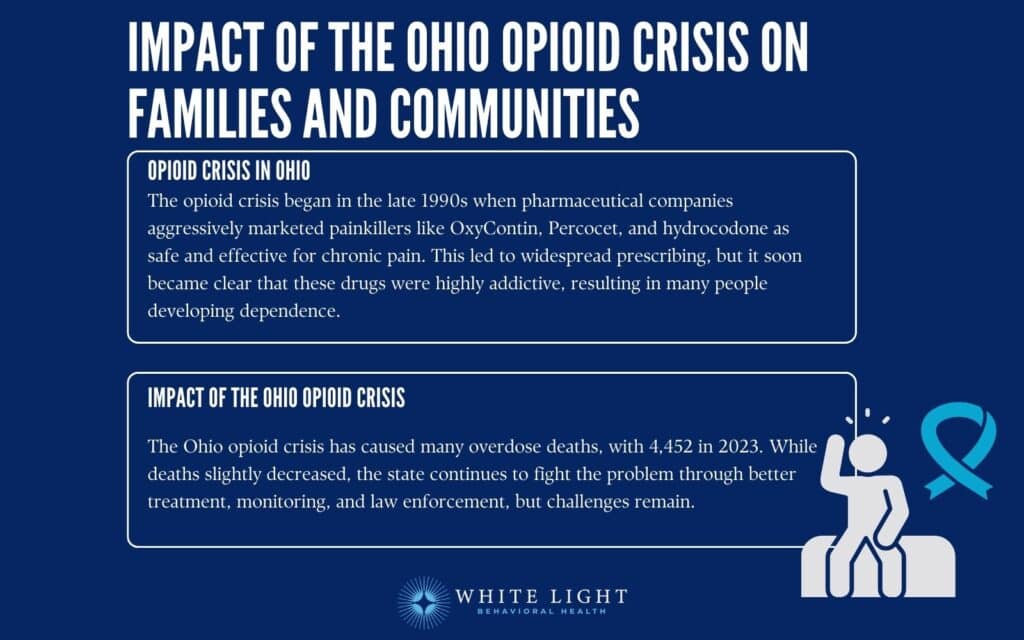
The crisis can be traced back to the late 1990s when pharmaceutical companies began aggressively marketing opioid painkillers such as OxyContin, Percocet, and hydrocodone.
These drugs were promoted as being safe and effective for treating chronic pain, and doctors began prescribing them in large quantities. However, it quickly became apparent that these drugs were highly addictive and that many people were becoming dependent on them.
Did you know most health insurance plans cover substance use disorder treatment? Check your coverage online now.
What Is the Origin of the Ohio Opioid Crisis?
The Ohio opioid crisis originated through the rise of illegal heroin and fentanyl, which are cheaper and more potent alternatives to prescription opioids. Many people who became addicted to prescription opioids turned to these illegal drugs when they could no longer obtain or afford the prescription drugs. This has led to an increase in overdose deaths, as these illicit drugs are much more potent and dangerous.
What Is the Impact of the Ohio Opioid Crisis on Families and Communities?
The impact of the Ohio opioid crisis on families and communities is an increase in drug overdoses. According to a report by the Ohio Department of Health published in 2024, Ohio recorded 4,452 unintentional drug overdose deaths in 2023, marking a 9% decrease from the previous year.
The state of Ohio has taken several steps to address the crisis, including increasing funding for treatment and recovery programs, strengthening prescription drug monitoring programs, and cracking down on illegal drug trafficking. However, the situation continues to evolve, and new challenges have emerged.
For example, the COVID-19 pandemic has made it more difficult for people to access treatment, and there has been an increase in overdose deaths due to the stress and isolation caused by the pandemic.
More Resources on Addiction:
What Are the Challenges in Addressing the Ohio Opioid Crisis?
The biggest challenges in addressing the Ohio opioid crisis are the lack of access to treatment and stigma. Many people who are addicted to opioids cannot get the help they need because there are not enough treatment beds or qualified professionals.
This is particularly true in rural areas, where treatment options are limited. Additionally, many people cannot afford treatment or are not covered by insurance.
To effectively address the opioid crisis in Ohio, it is essential to increase access to treatment and recovery programs, reduce the stigma surrounding addiction, and take a comprehensive approach that addresses all aspects of the crisis, including prevention, intervention, treatment, and recovery.
Early Intervention Is a Key Aspect of Addressing the Crisis
Intervention is also important, as early intervention helps people avoid the worst consequences of addiction. This includes providing people with information about the signs of addiction, encouraging them to seek help, and providing support and resources to help them overcome their addiction.
What are Opioid Addiction Treatment Options?
Opioid addiction treatment options include detox, medication-assisted treatment, behavioral therapy, support groups, and lifestyle changes. This treatment is essential for overcoming addiction and regaining control. Medical detox removes toxins and manages potentially life-threatening withdrawal.
Medication-assisted treatment, using drugs like methadone and buprenorphine, reduces cravings and withdrawal symptoms. Behavioral therapy identifies and changes contributing behaviors, while counseling addresses emotional and psychological issues.
Ultimately, Opioid addiction treatment leads to recovery, making support and resources vital for maintaining recovery and preventing relapse.

Contact us today to schedule an initial assessment or to learn more about our services. Whether you are seeking intensive outpatient care or simply need guidance on your mental health journey, we are here to help.
What Role Does Trauma Play in Opioid Addiction?
The role of trauma in opioid addiction is significant. Trauma, such as abuse or neglect, leads individuals to use opioids as a coping mechanism to numb emotional pain, making trauma-informed care essential in addiction treatment. Addressing trauma through therapy and support services is crucial in comprehensive addiction treatment.
What Are Some Initiatives or Programs in Ohio Aimed at Addressing the Opioid Epidemic?
Ohio has implemented various initiatives and programs to combat the opioid epidemic, including increasing access to naloxone, expanding medication-assisted treatment (MAT) programs, implementing prescription drug monitoring programs (PDMPs), and raising awareness through education and prevention campaigns.
Is There A Connection Between Opioid Addiction and Chronic Pain?
Yes, there is a connection between opioid addiction and chronic pain. While opioids are effective in managing pain initially, prolonged use can lead to tolerance, dependence, and addiction. This link between chronic pain and opioid addiction highlights the importance of alternative pain management strategies and integrating mental health support for those with chronic pain.
What Resources are Available for Individuals and Families Affected by Opioid Addiction in Ohio?

Ohio offers a range of resources for individuals and families affected by opioid addiction, including treatment centers, support groups, helplines, peer recovery services, counselling services, and educational materials on addiction and recovery.
Share This Post

Dr. Ryan Wakim M.D.
All author posts
TREATMENTS WE OFFER
Are you covered for treatment?













White Light Behavioral Health is an approved provider for Blue Shield and Tufts, while also accepting many other major insurance carriers.
Check Coverage Now!