
What is Xanax? Uses, Side Effects and Warnings

Xanax (alprazolam) is a benzodiazepine prescription medication primarily used to treat anxiety disorders and panic attacks by enhancing the activity of gamma-aminobutyric acid (GABA) in the brain, producing a calming effect. It is commonly prescribed for short-term relief but carries a risk of dependence with prolonged use.
Xanax is commonly prescribed to manage anxiety, panic disorders, and sometimes insomnia. When used as directed and for short periods, Xanax effectively alleviates symptoms of anxiety, but misuse or long-term use leads to dependence and addiction.
Xanax is one of the most widely used and misused benzodiazepines in the U.S., though its prescription rates have declined in recent years. According to a report by Statista, alprazolam prescriptions dropped from 29 million in 2014 to approximately 15 million in 2022. Despite this decline, Xanax misuse remains a concern, contributing to dependence and emergency room visits related to its abuse.
Common side effects of Xanax include drowsiness, dizziness, memory problems, difficulty concentrating, and changes in urination. Many users also experience digestive issues, coordination difficulties, and mood changes. While these effects are mild, they significantly impact daily functioning, especially when combined with other sedatives or alcohol.
Serious risks of Xanax include dependence, withdrawal symptoms, overdose, and dangerous drug interactions. Long-term use leads to cognitive impairment, tolerance, and addiction, making it challenging to stop without medical supervision.
Mixing Xanax with alcohol, opioids, or other central nervous system depressants increases the risk of respiratory depression, coma, and fatal overdose. FDA warns about serious risks and death when combining opioid pain or cough medicines with benzodiazepines; requires its strongest warning according to FDA “Drug Safety Communication.”
What Is Xanax?
Xanax, whose generic name is Alprazolam, is a prescription medication classified as a benzodiazepine. It is primarily used to treat anxiety disorders, panic attacks, and generalized anxiety disorder (GAD).
By affecting the central nervous system, Xanax works by enhancing the calming effects of a natural brain chemical called GABA, helping to reduce feelings of anxiety and stress. It is prescribed for short-term use due to its potential for dependence.
Regarding its legal status, Xanax is a controlled substance. It is classified under Schedule IV of the Controlled Substances Act due to its potential for abuse and addiction, even though it has recognized medical uses.
More Resources on Addiction:
Did you know most health insurance plans cover substance use disorder treatment? Check your coverage online now.
How Does Xanax Work in the Brain?
Xanax works in the brain by increasing the activity of gamma-aminobutyric acid (GABA), a neurotransmitter that inhibits activity in the brain’s central nervous system. GABA binds to specific receptors in the brain, which helps to reduce the excessive neural activity that leads to anxiety and stress.
By enhancing GABA’s effects, Xanax produces a sedative and calming effect, helping to relax both the mind and body. This reduction in brain activity leads to relief from anxiety, making it effective for individuals suffering from anxiety disorders and panic attacks.
Research by Delaney AJ, Sah P. et al. 1999, titled “GABA receptors inhibited by benzodiazepines mediate fast inhibitory transmission in the central amygdala,” has shown that benzodiazepines like Xanax work by binding to GABA receptors, which enhance GABA’s natural inhibitory effects, contributing to the sedative and anxiolytic (anxiety-reducing) properties of the drug.
Is Xanax a Narcotic or a Controlled Substance?
No, Xanax is not a narcotic, but it is classified as a Schedule IV controlled substance by the Drug Enforcement Administration (DEA). This classification is due to Xanax’s potential for abuse, dependence, and addiction, even though it has legitimate medical use as a prescription drug. While narcotics refer to opioids, which are derived from opium, Xanax is a benzodiazepine, and its sedative effects lead to misuse if not taken as prescribed. Because of this, it is regulated to ensure it is used safely under the guidance of a healthcare provider.
What Are the Street Names and Slang Terms for Xanax?
The street names and slang terms for Xanax include a variety of informal terms used in illicit markets. Common slang for Xanax includes “Xannies,” “Bars,” “Zanies,” and “Blue Footballs,” referring to its shape, color, or brand. These terms are used by individuals seeking or abusing the drug outside of its prescribed medical use.
What Is Xanax Used For?
Xanax is primarily used for treating anxiety and panic disorders, making it one of the most prescribed medications for these conditions. It works by enhancing the effects of GABA in the brain, leading to a calming effect that helps alleviate symptoms of anxiety and panic attacks. Xanax is prescribed for short-term management due to its effectiveness in rapidly reducing symptoms.
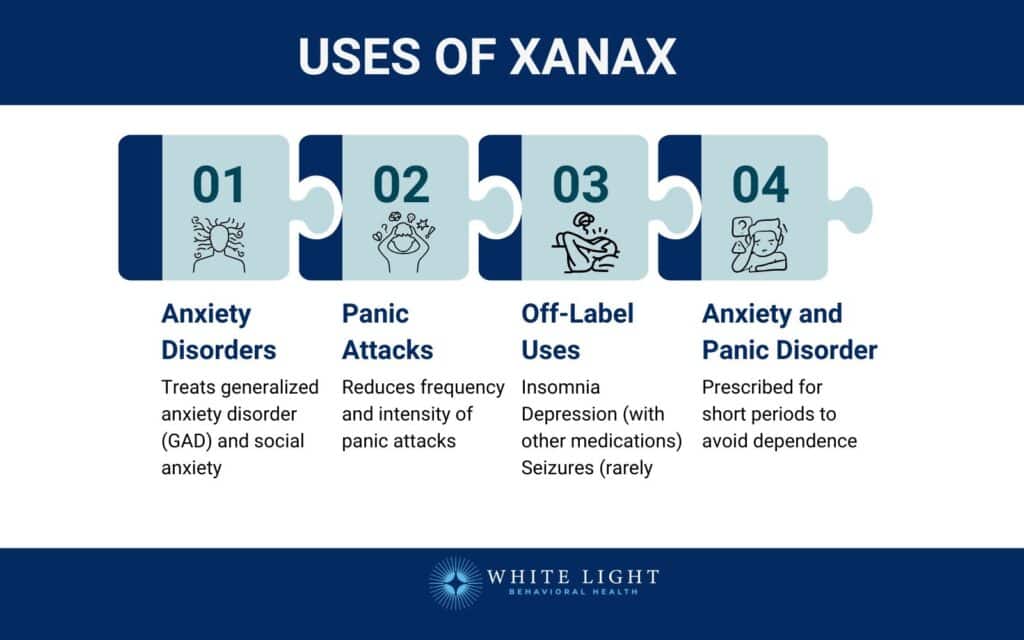
The following are the uses of Xanax:
- Anxiety Disorders: Xanax is FDA-approved for the treatment of generalized anxiety disorder (GAD) and social anxiety, according to Medical News Today. It helps manage excessive worry, restlessness, and physical symptoms associated with anxiety, providing relief within hours of ingestion.
- Panic Attacks: Xanax is FDA-approved for panic disorder, where it is used to reduce the frequency and intensity of panic attacks.
According to Drugs.com, titled “Xanax for Panic Disorder” the calming effect of Xanax helps prevent or shorten the duration of these intense episodes of fear.
- Off-Label Uses: Xanax is also prescribed off-label for other conditions like insomnia, depression, and some types of seizures. While not FDA-approved for these uses, it is prescribed based on the doctor’s judgment for patients with co-occurring conditions or who are not responding to other treatments.
- Anxiety and Panic Disorder: In the U.S., Xanax is one of the most commonly prescribed medications for anxiety and panic disorders, with millions of prescriptions written annually.
However, due to its potential for dependence and misuse, it is prescribed at lower doses for short periods and monitored carefully by healthcare professionals.
Can Xanax Be Used for Insomnia?
Yes, Xanax (alprazolam) can be used for insomnia, but it is not a long-term solution. While Xanax helps individuals fall asleep due to its sedative effect, it is not an ideal treatment for chronic insomnia due to the risks of developing tolerance and dependence. Xanax is not FDA-approved for insomnia, and its use for sleep should be closely monitored, as long-term reliance on the medication leads to addiction or withdrawal symptoms.
Contact us today to schedule an initial assessment or to learn more about our services. Whether you are seeking intensive outpatient care or simply need guidance on your mental health journey, we are here to help.
Does Xanax Help with Depression Symptoms?
Yes, Xanax helps with depression symptoms in the short term, though it is not an antidepressant. While Xanax provides temporary relief by reducing anxiety and promoting relaxation, it does not address the underlying causes of depression. Benzodiazepines like Xanax have a limited role in treating depression and are used for managing anxiety rather than as a long-term treatment for depressive disorders.
What Are the Common Side Effects of Xanax?
The common side effects of Xanax are drowsiness, dizziness, memory loss, constipation, and urination changes. These side effects are mild but affect different people in various ways.
These side effects are temporary as the body adjusts to the medication. However, some individuals experience more persistent symptoms that interfere with daily activities.
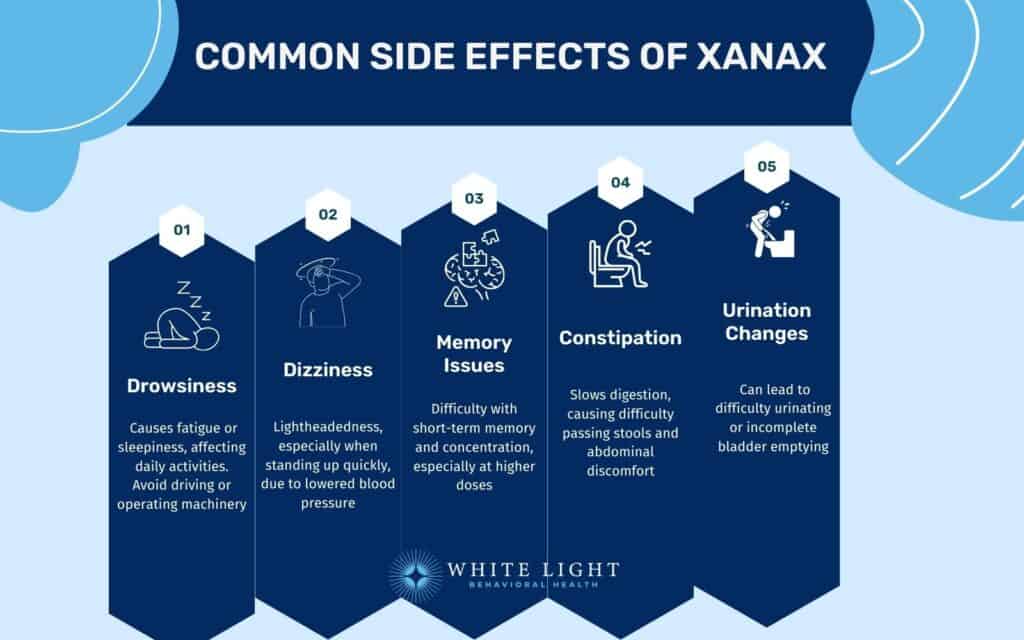
The common side effects of Xanax are as follows:
- Drowsiness: A common side effect of Xanax is feeling excessively sleepy or fatigued, according to WebMD, “Alprazolam (Xanax) – Uses, Side Effects, and More.” This sedative effect is due to the drug’s impact on the central nervous system, helping to calm anxiety and create a feeling of relaxation. However, it leaves users feeling sluggish or overly tired, which interferes with daily activities or work.
It’s important to avoid operating machinery or driving while experiencing this side effect.
- Dizziness: Many individuals experience dizziness or lightheadedness, especially when standing up quickly. According to Medical News Today, “Xanax: Side effects, dosage, uses, interactions, and more,” this is a result of lowered blood pressure caused by the calming effects of the medication, which causes a temporary drop in blood flow to the brain.
It leads to a sensation of spinning or feeling unsteady, and in some cases, it increases the risk of falls or fainting. It’s important to rise slowly from a sitting or lying position to help minimize this effect.
- Memory Issues: Xanax impairs short-term memory and concentration, leading to forgetfulness or difficulty focusing.
These effects are due to Xanax’s influence on the brain’s neurotransmitters, which disrupt cognitive processes. According to a study by Chowdhury ZS. et al. 2016, titled “The Effect of Chronic Alprazolam Intake on Memory, Attention, and Psychomotor Performance in Healthy Human Male Volunteers,” people experience difficulty recalling recent events, names, or tasks, particularly at higher doses or with long-term use.
It’s important to monitor these symptoms and consult a doctor if they become severe.
- Constipation: Some people report digestive issues such as constipation when using Xanax. This happens because the drug slows down the gastrointestinal tract’s motility.
As a result, users experience difficulty in passing stools, leading to discomfort, bloating, and abdominal pain. According to a study by Healthline, “Side Effects of Xanax: What You Need to Know,” staying hydrated and maintaining a high-fiber diet help alleviate this side effect, but medical advice is needed for more persistent cases.
- Urination Changes: Xanax causes changes in urination patterns, such as difficulty urinating, feeling an incomplete bladder void, or a decrease in the frequency of urination.
This occurs because Xanax affects the nervous system, which in turn influences the muscles and nerves responsible for controlling urination. This effect sometimes leads to urinary retention, causing discomfort or difficulty fully emptying the bladder.
If this side effect persists or becomes bothersome, seeking medical attention is recommended.
How Long Do Xanax Side Effects Last?
Xanax side effects last for 4 to 6 hours, depending on factors such as dosage and individual metabolism. As a short-acting benzodiazepine, Xanax is quickly processed by the body, with its effects peaking within a couple of hours.
However, the duration of side effects varies based on half-life, metabolism, and frequency of use. Higher doses, prolonged use, or individuals with slower metabolism experience side effects for longer, while occasional users find the effects wear off more quickly.
What Are Serious Risks and Warnings Associated with Xanax?
Serious risks and warnings associated with Xanax are significant and should be carefully considered before use. While Xanax is effective for treating anxiety and panic disorders, its potential for misuse and dependence makes it a drug that must be managed under the supervision of a healthcare provider.
One of the most notable risks of Xanax is addiction, as it has the potential to be habit-forming. Regular use, particularly at high doses, leads to tolerance, meaning individuals require increasingly larger doses to achieve the same effects.
This increases the likelihood of dependence, where users feel unable to function without the drug. Withdrawal symptoms from Xanax are severe and include anxiety, agitation, seizures, and insomnia, making tapering off the medication under medical guidance required.
An overdose of Xanax is another serious risk, especially when taken in combination with other substances like alcohol or opioids. Overdose results in respiratory depression, unconsciousness, and even death.
As a central nervous system depressant, Xanax significantly slows down the brain’s functions when misused or combined with other sedatives. According to Science News 2019, titled “Overdose deaths tied to antianxiety drugs like Xanax continue to rise”, The number of overdose deaths involving benzodiazepines was close to 11,000.
Xanax also interacts negatively with various substances, including prescription medications, alcohol, and recreational drugs. These interactions enhance the sedative effects, leading to dangerous outcomes like respiratory failure.
Lastly, cognitive impairment is a common side effect of Xanax, particularly with long-term use. It affects memory, concentration, and coordination, impairing a person’s ability to perform everyday tasks safely.
For this reason, long-term use of Xanax is not recommended without close medical monitoring.
What Are the Long-Term Effects of Xanax?
The long-term effects of Xanax are cognitive decline, memory loss, tolerance and dependence, and addiction. Extended use of the drug leads to several physical and psychological risks. While effective in treating anxiety and panic disorders in the short term, its prolonged use results in significant consequences that affect a person’s health and well-being.
The long-term effects of Xanax are as follows:
- Cognitive Decline: Long-term use of Xanax has been associated with cognitive decline, affecting memory, attention, and overall mental functioning. A study by Kaplan K, Hunsberger HC. “Benzodiazepine-induced anterograde amnesia: detrimental side effect to novel study tools,” has shown that chronic benzodiazepine use, including Xanax, contributes to brain changes that impair learning and memory.
- Memory Loss: Memory issues are particularly pronounced with long-term use, with many individuals reporting difficulty recalling recent events or information.
This effect is related to the drug’s impact on the hippocampus, the brain region responsible for memory formation.
- Tolerance: Over time, the body builds a tolerance to Xanax, requiring higher doses to achieve the same effect. This escalates into dependence, which increases the risk of withdrawal symptoms when discontinuing use.
- Dependence and Addiction: The longer Xanax is used, the more likely a person is to become dependent on it.
Dependence leads to addiction, with users unable to function normally without the medication. Research by WebMD, “Benzodiazepine Abuse: Addiction and Side Effects,” indicates that benzodiazepine use results in physical and psychological dependence, which requires professional treatment to address.
Can Xanax Cause Weight Gain?
Yes, Xanax can potentially cause weight gain, though it is not a common or direct side effect.
Some users report appetite and metabolism changes, leading to weight fluctuations. While research on the direct link between Xanax and weight gain is limited, benzodiazepines, including Xanax, affect eating behaviors, causing an increase in appetite or changes in how the body processes food.
The sedative effects of Xanax lead to a more sedentary lifestyle, further contributing to weight gain over time.
Does Xanax Cause Dementia?
No, Xanax does not directly cause dementia, but long-term use contributes to cognitive decline and increases the risk of developing dementia. Research by Stewart SA. et al. 2005, titled “The effects of benzodiazepines on cognition,” has shown that extended use of benzodiazepines, including Xanax, impairs cognitive functions such as memory and attention. A study Hofe IV. et al. 2024 Benzodiazepine use in relation to long-term dementia risk and imaging markers of neurodegeneration: a population-based study” has linked prolonged benzodiazepine use to an increased risk of developing dementia, particularly in older adults, as these medications affect brain structures involved in memory and learning.
Can Xanax Harm Your Kidneys?
No, Xanax cannot harm the kidneys. However, kidney impairment affects the elimination of Xanax from the body.
In individuals with kidney issues, the drug accumulates at higher levels, increasing the risk of side effects. It’s important to adjust dosing or avoid Xanax in severe kidney impairment, as suggested by healthcare professionals and guidelines.
Can You Die From Xanax?
Yes, you can die from a Xanax overdose. While Xanax alone is rarely fatal, the risk of overdose increases significantly when combined with other central nervous system depressants like alcohol or opioids. These combinations lead to respiratory depression, coma, or death. According to the National Institute on Drug Abuse (NIDA), benzodiazepines like Xanax were involved in nearly 11,000 overdose deaths in 2020, with many cases linked to polydrug use.
Rediscover Life at White Light Behavioral Health
Get the compassionate support you deserve. We're here to help you reclaim joy, wellness, and a brighter future.
Our Facility
What Are the Dangers of Xanax Overdose?
The dangers of Xanax overdose are significant and lead to life-threatening consequences. Overdosing on Xanax causes severe respiratory depression, coma, and even death, especially when mixed with other substances such as alcohol or opioids. These combinations amplify the effects of Xanax, making it difficult to reverse the symptoms without immediate medical intervention.
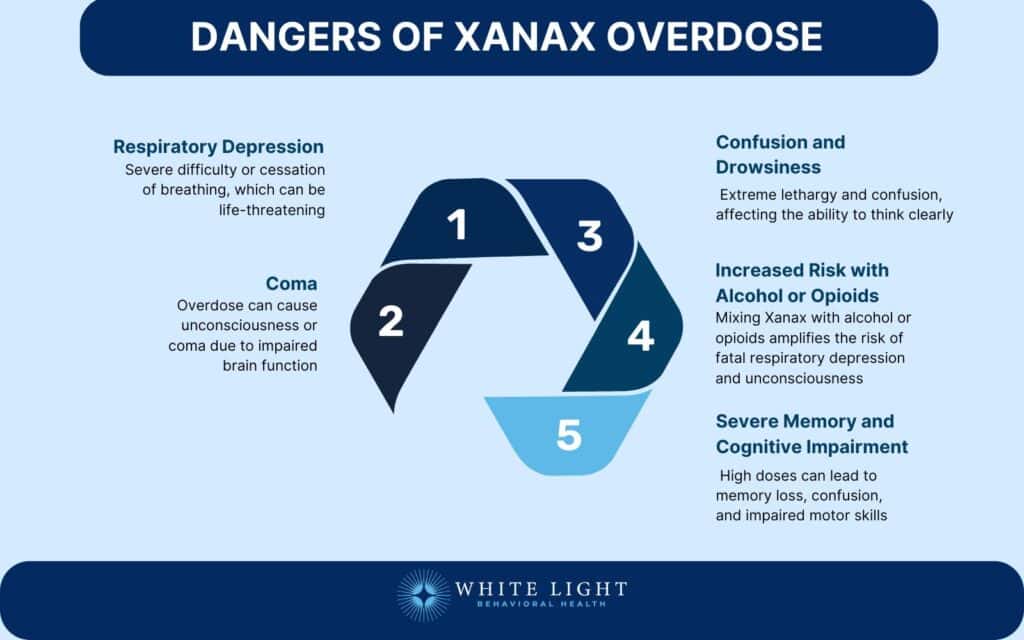
The dangers of Xanax overdose are as follows:
- Respiratory Depression: One of the most severe risks of a Xanax overdose is difficulty breathing or complete cessation of breathing. This occurs because Xanax is a central nervous system depressant, which slows down the respiratory rate to dangerously low levels, according to Medscape’s “Benzodiazepine Toxicity Treatment & Management.”
- Coma: An overdose of alprazolam leads to a state of unconsciousness or coma.
The brain’s ability to function is severely impaired, and without intervention, the individual remains unresponsive or loses consciousness, as mentioned in a case report published in Springer titled “Alprazolam overdose – Coma: a case report.”
- Confusion and Drowsiness: Overdosing on Xanax causes extreme confusion, lethargy, and excessive drowsiness. These symptoms affect an individual’s ability to think clearly or function normally.
- Increased Risk with Alcohol or Opioids: Mixing Xanax with alcohol or opioids significantly increases the risk of overdose.
Both substances depress the central nervous system, and when combined, they cause life-threatening respiratory depression, unconsciousness, or death, according to a study by Ait-Daoud N, Hamby AS, Sharma S, Blevins D. et al. 2018, titled “A Review of Alprazolam Use, Misuse, and Withdrawal.”
- Severe Memory and Cognitive Impairment: High doses of Xanax lead to memory loss, cognitive confusion, and impaired motor skills, which make it difficult to function in everyday life.
How Does Xanax Interact with Other Substances?
Xanax interacts with other substances by enhancing sedation and increasing the risk of dangerous side effects, including overdose. When combined with alcohol, opioids, or other central nervous system (CNS) depressants, Xanax causes extreme drowsiness, respiratory depression, and even fatal overdose. According to a study by the National Institute on Drug Abuse (NIDA) titled “Benzodiazepines and Opioids,” the combination of benzodiazepines and opioids has been extensively studied, with research indicating a significantly increased risk of overdose deaths when both drugs are used together.
Xanax interacts with antidepressants, particularly selective serotonin reuptake inhibitors (SSRIs), potentially leading to serotonin syndrome, a life-threatening condition caused by excessive serotonin levels in the brain. These interactions highlight the dangers of mixing Xanax with other substances, emphasizing the need for caution and medical supervision when using this medication.
Is Xanax Addictive?
Yes, Xanax is highly addictive due to its fast-acting effects on the brain’s GABA receptors, which produce a calming sensation. Over time, users develop tolerance, requiring higher doses to achieve the same effects, leading to dependence and withdrawal symptoms when they stop taking the drug.
The risk of Xanax Addiction is particularly high among those who misuse it or take it for extended periods. According to U.S. data, benzodiazepine misuse is widespread, with the National Survey on Drug Use and Health (NSDUH) reporting that over 5 million Americans misuse prescription benzodiazepines annually. Withdrawal from Xanax is severe, including symptoms like anxiety, seizures, and insomnia, making medical supervision required for discontinuation.
How Should Xanax Be Taken to Minimize Risks?
Xanax should be taken exactly as prescribed by a healthcare professional to minimize risks. Misuse or overuse leads to dependence, withdrawal, and overdose. It is important to follow medical guidance, avoid combining Xanax with alcohol or other depressants, and never increase the dose without consulting a doctor.
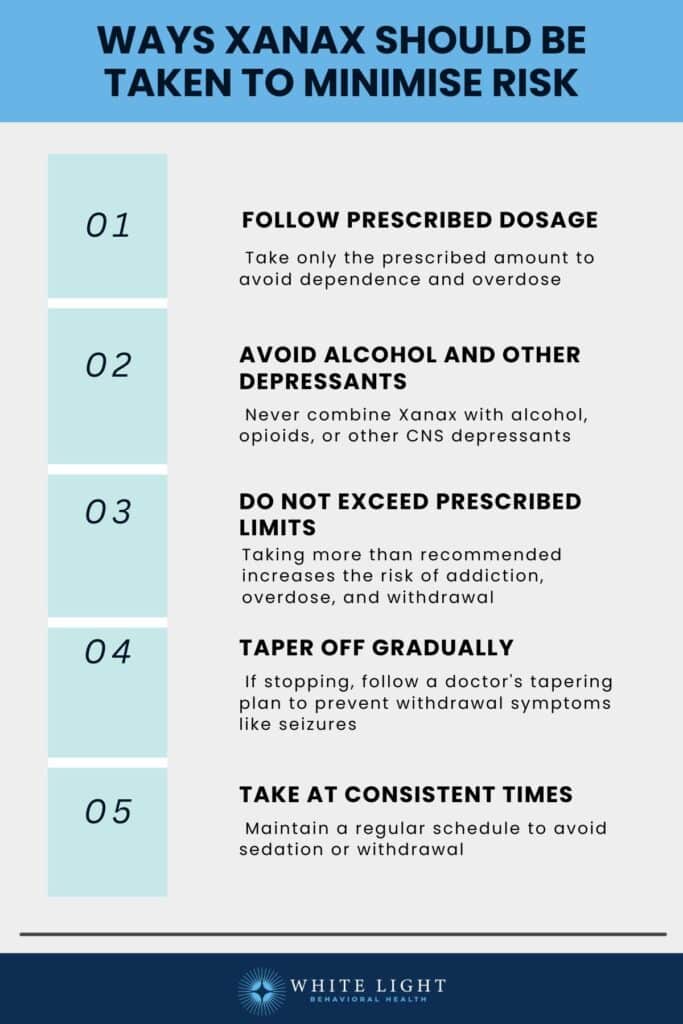
Xanax should be taken in the following ways to minimize risks:
- Follow Prescribed Dosage: Take only the amount prescribed by a doctor, as increasing the dose leads to dependence and overdose.
- Avoid Alcohol and Other Depressants: Combining Xanax with alcohol, opioids, or other central nervous system depressants causes dangerous sedation and respiratory depression.
- Do Not Exceed Prescribed Limits: Taking more than the recommended amount increases the risk of addiction, overdose, and severe withdrawal symptoms.
- Taper Off Gradually: If discontinuing Xanax, follow a doctor-supervised tapering plan instead of stopping abruptly to avoid withdrawal symptoms such as seizures and anxiety.
- Take at Consistent Times: Sticking to a regular schedule helps maintain stable levels of the medication in the body, reducing the risk of withdrawal or excessive sedation.
What Should You Avoid While Taking Xanax?
You should avoid alcohol, certain medications, and activities requiring alertness while taking Xanax. Mixing Xanax with other substances or engaging in risky behaviors increases the chances of dangerous side effects like extreme drowsiness, respiratory depression, or impaired judgment.
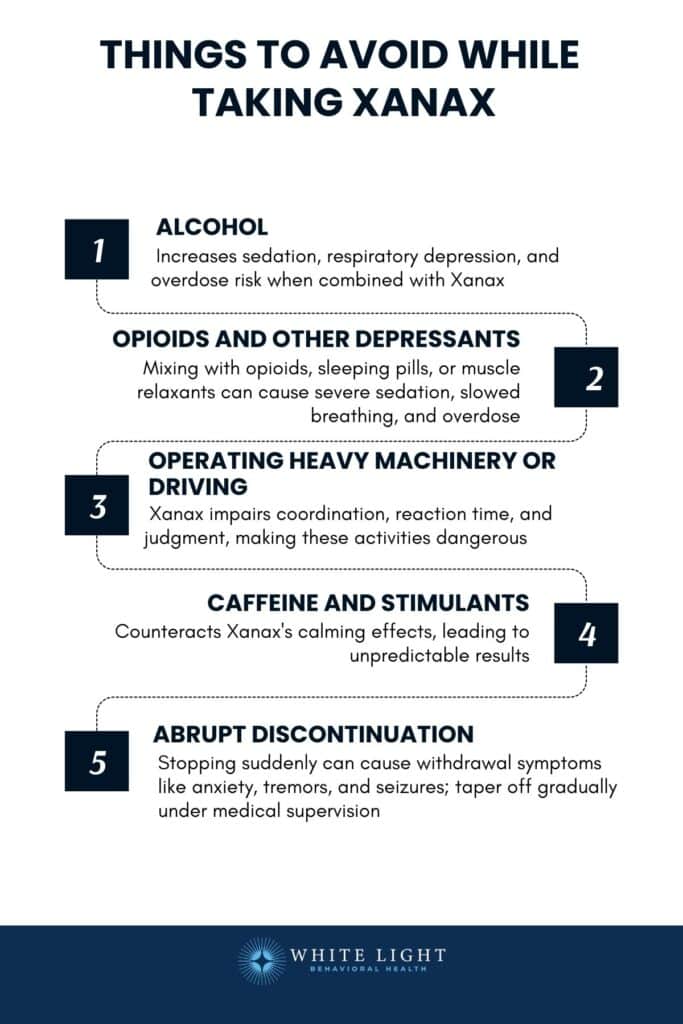
You should avoid the following things while taking Xanax:
- Alcohol: Xanax and alcohol are both central nervous system depressants, and their combination leads to extreme sedation, respiratory depression, and even overdose. According to Healthline’s “Xanax and Alcohol: Side Effects and Risks,” this interaction significantly increases the risk of fatal consequences.
- Opioids and Other Depressants: Mixing Xanax with opioids, sleeping pills, or muscle relaxants causes dangerous drug interactions, leading to severe drowsiness, slowed breathing, and a high risk of overdose.
The FDA warns that combining these substances is life-threatening.
- Operating Heavy Machinery or Driving: Due to its sedative effects, Xanax impairs coordination, reaction time, and judgment. Engaging in activities like driving or operating machinery is hazardous while under its influence, as studied by George, T. T., & Tripp, J. et al. 2021, titled “Alprazolam.”
- Caffeine and Stimulants: Caffeine counteracts the calming effects of Xanax, leading to unpredictable results.
Stimulants reduce Xanax’s effectiveness, causing fluctuations in anxiety levels.
- Abrupt Discontinuation: Suddenly stopping Xanax triggers withdrawal symptoms such as anxiety, tremors, and seizures. According to a study by Pétursson H. et al. 1994, titled “The benzodiazepine withdrawal syndrome,” a gradual tapering plan under medical supervision is recommended to prevent severe withdrawal effects.
Are you covered for treatment?


White Light Behavioral Health is an approved provider for Blue Cross Blue Shield and TUFTS, while also accepting many other major insurance carriers.
Check Coverage Now!Is It Safe to Take Xanax During Pregnancy or Breastfeeding?
No, it is not safe to take Xanax during pregnancy or breastfeeding due to potential risks to the baby. Xanax (alprazolam) is classified as an FDA Pregnancy Category D drug, meaning it causes birth defects or other harm to the developing fetus. A study by the Organization of Teratology Information Specialists al. 1994, titled “ Alprazolam, Mother To Baby | Fact Sheets,” suggests that benzodiazepine use during pregnancy leads to congenital abnormalities, low birth weight, and respiratory issues in newborns.
Infants exposed to Xanax in the womb experience neonatal withdrawal syndrome, exhibiting symptoms like irritability, poor feeding, and breathing difficulties after birth. Xanax also passes into breast milk, potentially causing excessive drowsiness, lethargy, or difficulty feeding in nursing infants. Due to these risks, healthcare providers recommend alternative anxiety treatments for pregnant or breastfeeding individuals.
How Long Does Xanax Stay in Your System?
Xanax stays in your system for approximately 4 days, but detection times vary depending on the test, according to Healthline’s “Alprazolam (Xanax): How Long It Stays in Your System.” The drug has an average half-life of 11 hours, meaning it takes about 50 hours to be mostly eliminated. However, urine tests detect Xanax for up to 4 days, blood tests for 1 day, and hair tests for up to 90 days.
Factors such as metabolism, dosage, and frequency of use influence how long Xanax remains in the body. Individuals with slower metabolism or prolonged use retain the drug longer, extending its drug detection window.
Which Medications Are Considered Alternatives to Xanax?
Medications that are considered alternatives to Xanax include Ativan (lorazepam), Valium (diazepam), and SSRIs (selective serotonin reuptake inhibitors) like Prozac (fluoxetine) and Zoloft (sertraline). These medications are used for anxiety treatment, with benzodiazepines providing short-term relief and SSRIs offering long-term, non-addictive management. Each alternative has different benefits and risks.
The following medications are considered alternatives to Xanax:
- Ativan (lorazepam): Ativan is a benzodiazepine similar to Xanax but with a slightly longer duration of action. It is used for short-term anxiety treatment, but like Xanax, it carries a risk of dependence and withdrawal.
According to Medical News Today, “Ativan dosage: Forms, strengths, for sleep, and more,” Ativan is preferred for patients who need a more gradual effect.
- Valium (diazepam): Valium is another benzodiazepine with a longer half-life than Xanax, meaning it stays in the body longer and requires less frequent dosing. While it has a slower onset, it is easier to taper off, reducing withdrawal risks.
However, it still carries a risk of tolerance and addiction.
- SSRIs (Prozac, Zoloft, Lexapro): SSRIs are non-addictive medications commonly prescribed for generalized anxiety disorders. Unlike benzodiazepines, they take several weeks to become effective but offer long-term relief without the risk of dependence.
A study by Cassano GB, Baldini Rossi N, Pini S. et al. 2002, titled “Psychopharmacology of anxiety disorders,” has shown that SSRIs are more effective for chronic anxiety, though they cause initial side effects like nausea or sleep disturbances.
- Buspirone (Buspar): Buspirone is a non-benzodiazepine anxiolytic that works by affecting serotonin and dopamine receptors. It is less effective for acute anxiety but is a good, non-addictive alternative for long-term use.
Unlike benzodiazepines, it does not cause sedation or withdrawal symptoms.
- Beta-blockers (Propranolol): Beta blockers are used for performance anxiety. They help manage physical symptoms like rapid heart rate and trembling.
They are not habit-forming but are not as effective for generalized anxiety as SSRIs or benzodiazepines.
- Gabapentin (Neurontin): Gabapentin is sometimes used off-label for anxiety. It affects GABA activity but is not classified as a benzodiazepine.
A study by Leung E, Ngo DH, et al. 2022, titled “A Retrospective Study of the Adjunctive Use of Gabapentin With Benzodiazepines for the Treatment of Benzodiazepine Withdrawal,” suggests it helps in reducing benzodiazepine withdrawal symptoms. However, it is not a first-line treatment for anxiety.
Why Do Doctors Prefer Ativan Over Xanax?
Doctors prefer prescribing Ativan over Xanax due to its longer half-life and lower risk of addiction and withdrawal symptoms.
Ativan (lorazepam) remains active in the body for a longer duration, as studied by Ghiasi N, Bhansali RK, Marwaha R. et al. 2024, titled “Lorazepam,” providing more sustained anxiety relief with fewer rebound effects compared to Xanax, which has a shorter half-life and leads to more intense withdrawal symptoms.
Studies comparing Xanax vs Ativan pharmacokinetics, like one by Medical News Today titled “Ativan vs. Xanax: Similarities and differences,” show that Xanax (alprazolam) has a rapid onset and shorter duration, making it more likely to cause dependence and misuse.
Ativan, with its slower onset and extended effect, reduces the risk of withdrawal symptoms and tolerance buildup, making it a safer option for long-term use in treating anxiety disorders. Ativan is preferred in hospital settings for managing acute anxiety and agitation because it does not have the same level of euphoric effect, reducing the likelihood of misuse.
Share This Post

Dr. Ryan Wakim M.D.
All author posts
TREATMENTS WE OFFER
Are you covered for treatment?















White Light Behavioral Health is an approved provider for Blue Shield and Tufts, while also accepting many other major insurance carriers.
Check Coverage Now!