Supporting Veterans in Recovery: Strategies for Family, Friends, and Communities

Supporting veterans in recovery begins with understanding the unique challenges they face, such as PTSD, depression, chronic pain, and substance use, rooted in their service experiences. Recovery is not just a personal journey; it’s deeply impacted by the care and connection offered by those around them. Friends, family members, and communities play a vital role in helping veterans access treatment, navigate civilian life, and rebuild a sense of purpose and stability.
According to the National Center for PTSD (2023), the National Resource Directory offers access to over 10,000 services that aid in recovery and reintegration for veterans and their families. Knowing how to approach conversations, recognize signs of struggle, and connect with the right resources makes the difference between ongoing suffering and meaningful healing.
Advocating for Access to Quality Veteran Care
One of the most important ways that friends, family members, and communities support veterans in recovery in Ohio is by advocating for access to quality mental health and addiction care.
Unfortunately, many veterans face significant barriers to accessing care, including long wait times, lack of resources, and bureaucratic obstacles within the VA system.
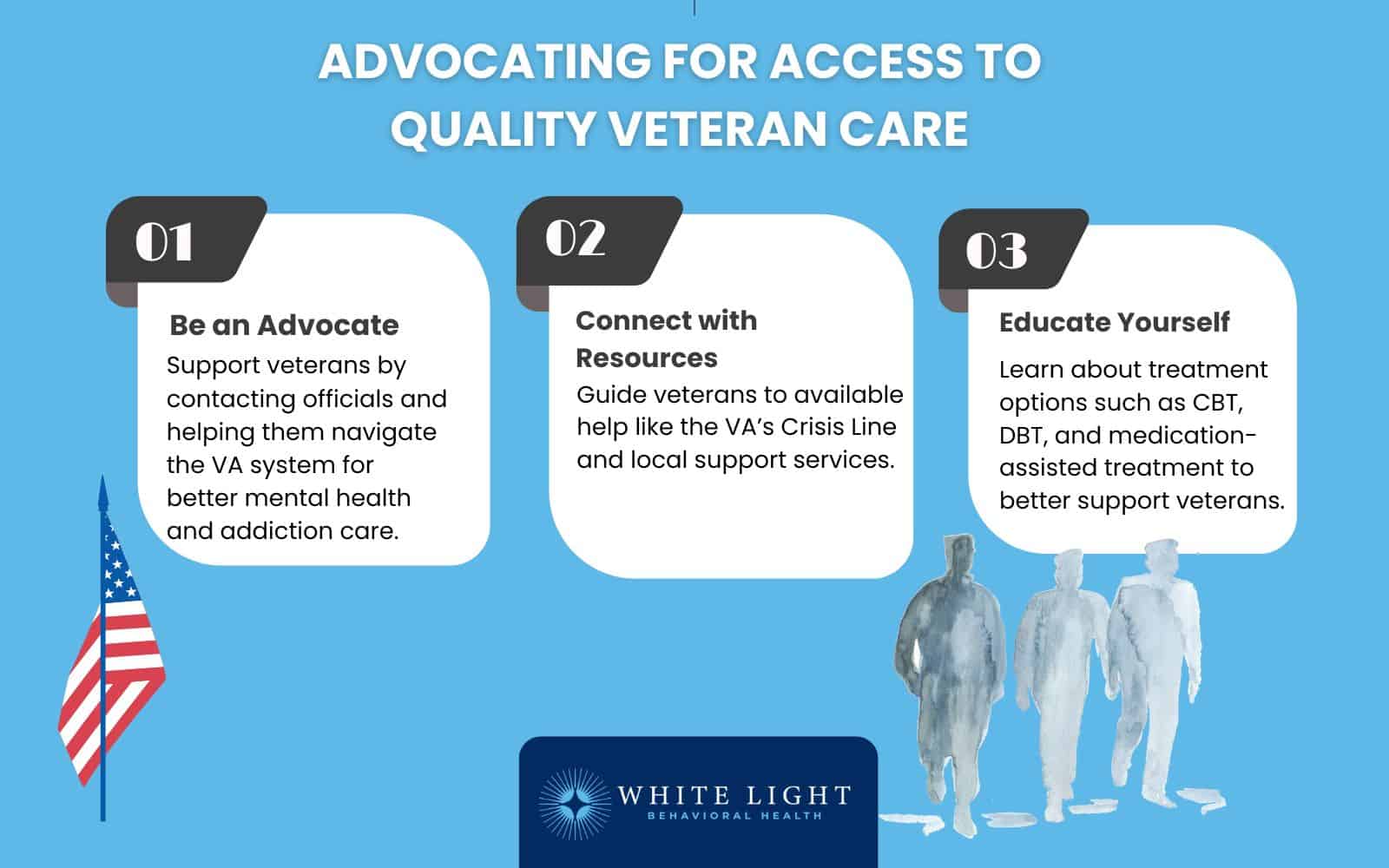
To support veterans in getting the care they need, it’s important to do the following:
- Be an Advocate: Whether it’s contacting your elected officials to voice your support for improved access to mental health and addiction services or helping your loved one navigate the VA system, there are many ways to advocate for access to quality care.
- Connect with Resources: There are many resources available to help veterans access mental health and addiction services, including the VA’s Veterans Crisis Line, which offers confidential support and referrals to local resources.
- Educate Yourself: It’s important to educate yourself on the various treatment options available to veterans, including evidence-based therapies like Cognitive Behavioral Therapy (CBT) and Dialectical Behavioral Therapy (DBT), as well as medication-assisted treatment (MAT) for addiction.
Did you know most health insurance plans cover substance use disorder treatment? Check your coverage online now.
What Are Strategies To Support Ohio Veterans In Recovery?
Strategies to support Ohio veterans in recovery include advocating for care and treatment facilities, emotional support, and promoting self-care. With patience, compassion, and a commitment to helping their loved ones, anyone can make a meaningful difference in the lives of veterans in recovery.
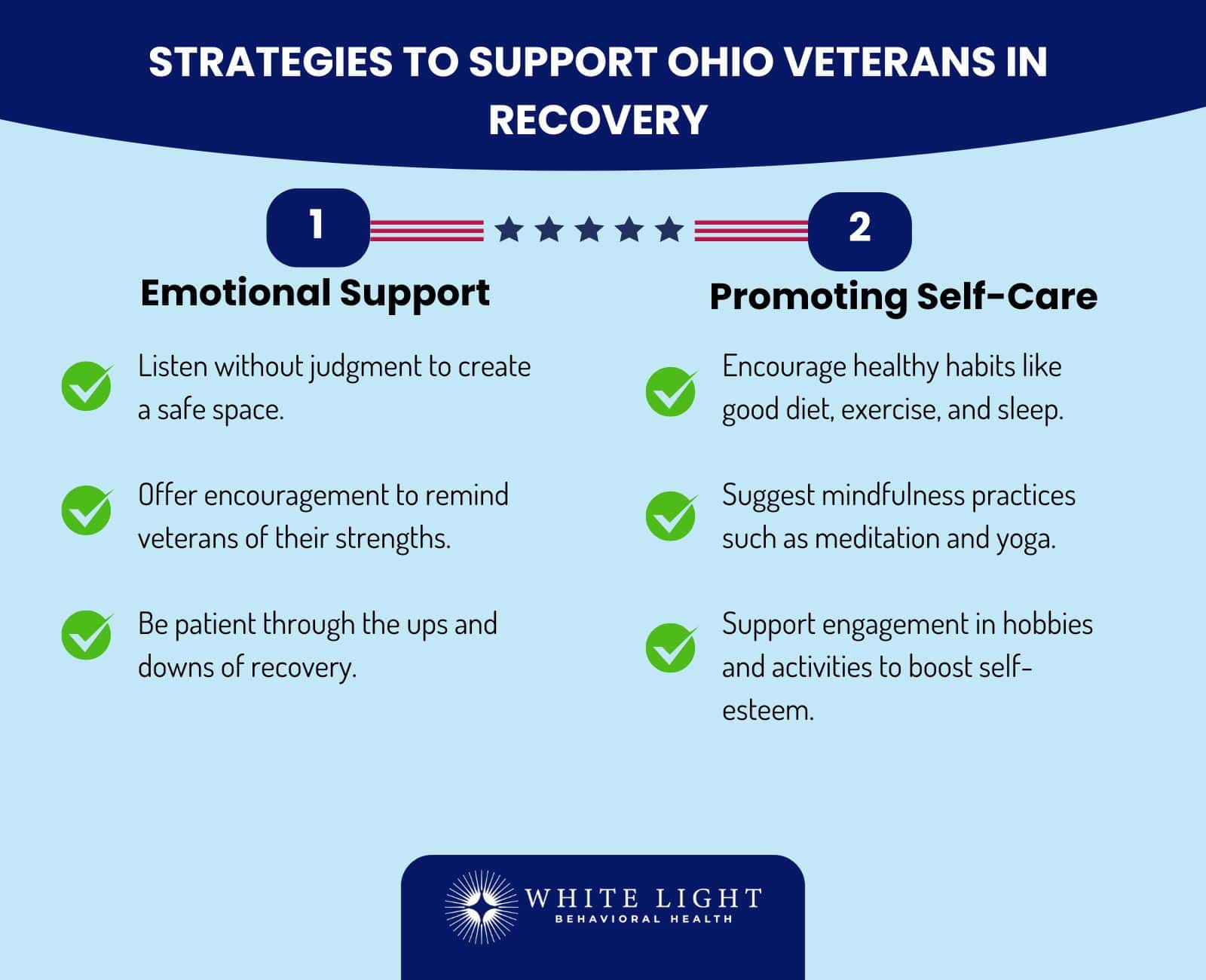
The ways to support Ohio veterans in recovery include:
Emotional Support
In addition to advocating for access to care, friends, family members, and communities can provide valuable emotional support to veterans in recovery. Here are some strategies for providing emotional support:
- Listen Without Judgment: It’s important to create a safe and non-judgmental space for veterans to share their thoughts and feelings. Listen attentively and let them know that you are there to support them.
- Offer Encouragement: Recovery is a long and difficult journey, and veterans need to know that they are not alone.
More Resources on Addiction:
Offer words of encouragement and remind them of their strengths and resilience.
- Be Patient: Recovery is a process, and it’s important to be patient and understanding as your loved one navigates the ups and downs of their journey.
Promoting Self-Care
Finally, promoting self-care is an important strategy for supporting veterans in recovery. Here are some ways to promote self-care:
- Encourage Healthy Habits: Eating a healthy diet, exercising regularly, and getting enough sleep are all important for promoting mental and physical well-being.
- Practice Mindfulness: Mindfulness techniques like meditation, deep breathing, and yoga can help veterans manage stress and improve their mental health.
- Encourage Hobbies and Activities: Engaging in hobbies and activities that bring joy and a sense of accomplishment can be a great way for veterans to practice self-care and boost their self-esteem.
Supporting veterans in recovery is a complex and multifaceted process, but it is also a deeply rewarding one. By advocating for access to quality care, providing emotional support, and promoting self-care, friends, family members, and communities play an important role in helping veterans achieve lasting recovery from mental health and addiction challenges.
Does Health Insurance Cover Addiction and Mental Health Treatment for Veterans?
Yes, health insurance covers addiction and mental health treatment for veterans who are eligible for treatment coverage through VA benefits, TRICARE, or private insurance plans. The U.S. Department of Veterans Affairs covers a wide range of mental health and addiction services, including outpatient care, residential treatment, and medication-assisted therapy.
For veterans not enrolled in VA healthcare or those seeking care through civilian providers, TRICARE and private insurance offer coverage, but eligibility, costs, and covered services vary. Verify insurance coverage before starting treatment to ensure that veterans receive the right care with minimal financial barriers.
Share This Post

Dr. Ryan Wakim M.D.
All author posts
TREATMENTS WE OFFER
Are you covered for treatment?














White Light Behavioral Health is an approved provider for Blue Shield and Tufts, while also accepting many other major insurance carriers.
Check Coverage Now!