
Stages of Alcohol Addiction: Early Stage, Middle Stage, Late Stage, Diagnosis, Treatment in Columbus, Ohio

If you’re struggling with alcohol addiction, knowing what stage you’re in helps guide your next steps. It starts in the early stage, where drinking becomes frequent, often to relieve stress or feel more at ease socially. Over time, tolerance builds, and you need more alcohol to feel the same effects.
In the middle stage, dependence sets in. You may notice cravings, withdrawal symptoms, and a growing struggle to control your drinking. Responsibilities start to slip.
The late stage brings serious health risks like liver damage, memory loss, and total loss of control. According to OhioMHAS (2023), 71% of people treated in Franklin County completed detox and rehab, and 58% continued care for at least 60 days, showing that treatment works, especially when tailored to your stage.
What Behaviors Indicate Early-stage Alcohol Abuse?
The behaviors indicated at the early stage of alcohol abuse include drinking to relieve stress, increased tolerance, and hiding alcohol use. This phase is marked by a progressive increase in drinking frequency and quantity, justified or minimized by the individual.
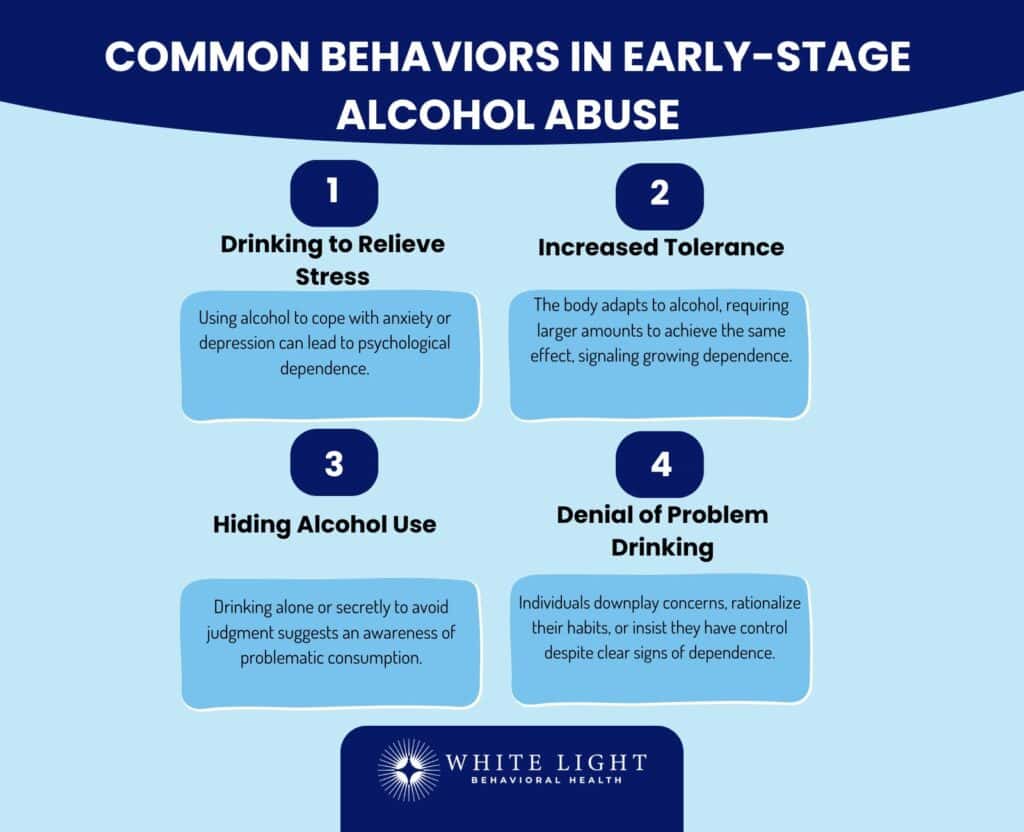
Below are common behaviors associated with the early stage of alcohol abuse:
Drinking to Relieve Stress
Individuals frequently turn to alcohol as a coping mechanism to manage anxiety, depression, or everyday stress. This habitual use of self-medicate gradually transitions into alcohol dependence as the individual becomes psychologically reliant on alcohol for emotional relief.
Increased Tolerance
As alcohol use becomes more frequent and drinking patterns intensify, the body builds a tolerance, requiring higher quantities to achieve the same effects. Increased tolerance is one of the alcohol abuse signs, as it demonstrates the body’s adaptation to excessive alcohol consumption.
Hiding Alcohol Use
Individuals start drinking alone or in secret to avoid judgment or criticism. Concealing alcohol consumption from loved ones or lying about drinking habits are common indicators of problematic drinking patterns that signify alcohol dependence.
Denial of Problem Drinking
Denial is a hallmark of early-stage alcohol abuse, where individuals dismiss concerns about their drinking, rationalize their habits, or convince themselves that their alcohol use is under control despite evident signs of dependence.
Did you know most health insurance plans cover substance use disorder treatment? Check your coverage online now.
What Is the Middle Stage of Alcohol Addiction?
The middle stage of alcohol addiction is marked by heightened alcohol dependence and the emergence of physical cravings. During this phase, individuals experience withdrawal symptoms when not drinking, such as irritability, anxiety, or tremors.
More Resources on Addiction:
Attempts to cut back or quit alcohol use usually fail due to the body’s increasing reliance on alcohol for normal functioning.
Persistent drinking despite negative consequences becomes more apparent, with alcohol consumption taking precedence over responsibilities and relationships. As alcohol dependence intensifies, the risk of developing severe health complications increases, leading to alcohol addiction.
What Are the Warning Signs of Middle-stage Alcoholism?
The warning signs for middle-stage alcoholism include increased drinking despite negative consequences, physical withdrawal symptoms, hiding alcohol use, and neglecting responsibilities. During this phase, individuals struggle to maintain control over their drinking habits, leading to noticeable disruptions in daily life.
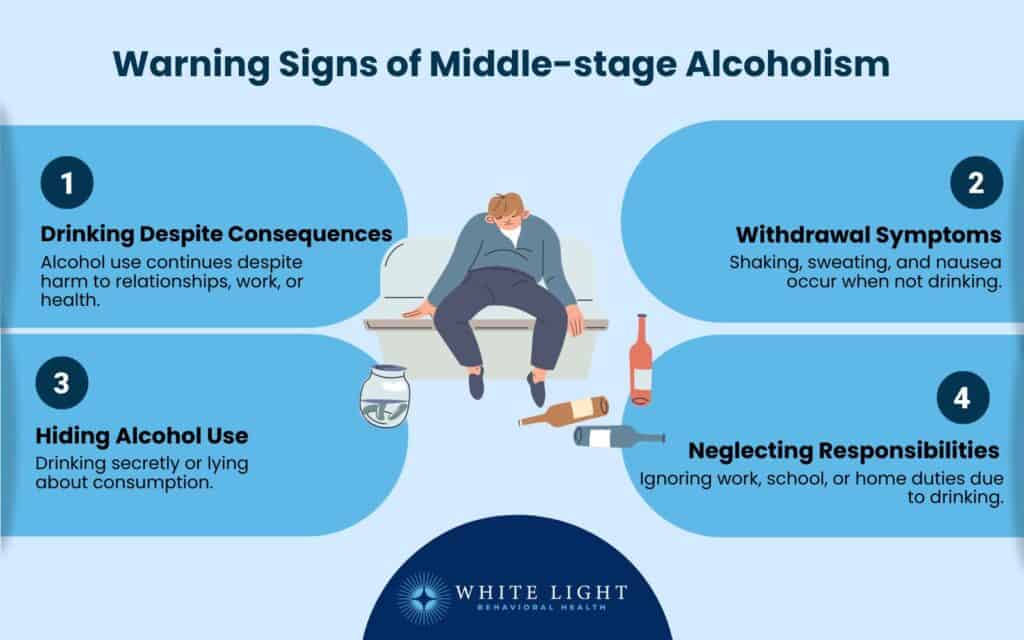
The warning signs for middle-stage alcoholism are as follows:
Increased Drinking Despite Negative Consequences
In middle-stage addiction, individuals continue to consume alcohol even when faced with negative consequences such as strained relationships, job loss, or declining health. This behavior indicates a diminishing ability to prioritize responsibilities over alcohol consumption, further deepening dependence.
Physical Withdrawal Symptoms
Physical withdrawal symptoms manifest as the body becomes accustomed to the presence of alcohol and struggles to function without it. Common symptoms include tremors, sweating, nausea, anxiety, and irritability.
Signaling significant alterations in brain chemistry and physiological adaptation to alcohol. Severe cases result in life-threatening complications such as seizures or delirium tremens.
Hiding Alcohol Use
Individuals in the middle stage of alcoholism attempt to conceal their drinking habits from others to avoid judgment or intervention. This secrecy involves drinking alone, hiding bottles, or lying about alcohol consumption.
Deceptive behaviors are commonly associated with escalating addiction, driven by feelings of shame, denial, or fear of consequences. Such behaviors contribute to social isolation and a deeper reliance on alcohol.
Neglecting Responsibilities
As addiction progresses, fulfilling obligations at work, school, or home becomes increasingly challenging. Individuals miss deadlines, underperform, or abandon important tasks altogether.
gression. According to the United Nations Office on Drugs and Crimes (UNODC), around 18% reported at least 2 personal problems associated with their drug use.
What Is the Late Stage of Alcohol Addiction?
The late stage of alcohol addiction, also known as end-stage addiction or chronic alcohol abuse, is characterized by severe, irreversible physical and cognitive effects.
During this phase, individuals commonly experience extensive organ damage, particularly to the liver, heart, and brain, leading to conditions such as cirrhosis, cardiomyopathy, and alcohol-related dementia.
At this stage, alcohol consumption is usually constant, with individuals drinking to avoid severe withdrawal symptoms rather than to achieve intoxication. The damage inflicted during late-stage alcoholism is permanent, posing life-threatening health risks if left untreated.
What Are the Symptoms of Late-stage Alcoholism?
The symptoms of late-stage alcoholism are liver disease (cirrhosis), memory loss and cognitive impairment, severe withdrawal symptoms, and loss of control over drinking. During this advanced phase, chronic alcoholism inflicts substantial damage to the overall quality of life.
The symptoms of late-stage alcoholism are as follows:
Liver Disease (Cirrhosis)
Liver disease, particularly cirrhosis, is a common and severe consequence of chronic alcoholism. Cirrhosis develops as healthy liver tissue is progressively replaced by scar tissue, impairing the liver’s ability to filter toxins from the blood, produce essential proteins, and store nutrients.
Symptoms of cirrhosis include jaundice, abdominal pain, swelling, and fatigue. If untreated, cirrhosis leads to liver failure, which is fatal without a liver transplant.
Memory Loss and Cognitive Impairment
Memory loss and cognitive impairment are significant symptoms of late-stage alcoholism, primarily resulting from alcohol-induced brain damage. Chronic alcohol abuse disrupts the brain’s neurotransmitter systems, leading to issues such as poor memory retention, difficulty concentrating, and diminished problem-solving abilities.
Severe Withdrawal Symptoms
Severe withdrawal symptoms are prevalent during late-stage alcoholism when alcohol dependence is at its peak. Symptoms include delirium tremens (DTs), seizures, hallucinations, and extreme agitation.
Severe withdrawal leads to alcohol-induced seizures, with an estimated 5 to 15% of individuals experiencing this dangerous symptom during detox. Most alcohol withdrawal seizures occur between 12 and 48 hours after a sharp decline in blood alcohol concentrations.
Loss of Control Over Drinking
Loss of control over drinking is a hallmark of late-stage alcoholism, characterized by compulsive alcohol consumption despite severe physical, mental, and social consequences. At this point, alcohol use is driven primarily by the need to avoid withdrawal symptoms rather than a desire for pleasure or relaxation.
What Are the Effects of Alcoholism?
The effects of alcoholism include liver and heart disease, mental health disorders, job loss and financial instability, and relationship breakdown. Chronic alcohol abuse impacts virtually every aspect of an individual’s life.
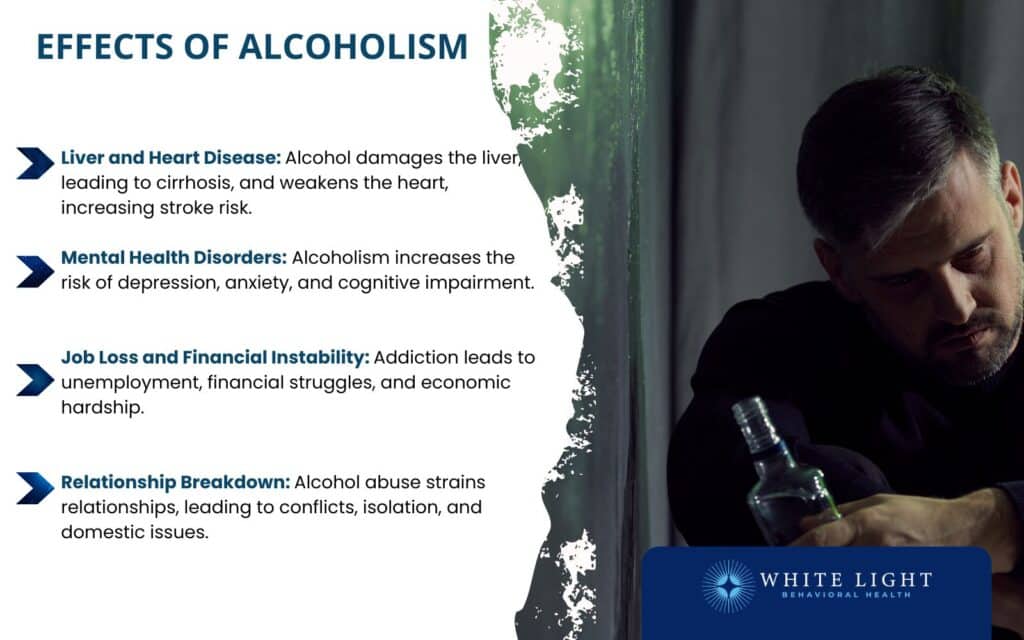
The effects of alcoholism are as follows:
- Liver and Heart Disease: Liver and heart disease are common health consequences of prolonged alcoholism. Excessive alcohol consumption damages the liver through fatty liver disease, hepatitis, and eventually cirrhosis, characterized by irreversible scarring of liver tissue.
- Mental Health Disorders: Alcoholism is closely linked to various mental health disorders, including depression, anxiety, and alcohol-induced psychosis.
- Job Loss and Financial Instability: Job loss and financial instability are frequent socioeconomic consequences of alcoholism.
As alcohol addiction progresses, individuals struggle to maintain consistent employment due to absenteeism, decreased productivity, or workplace conflicts.
- Relationship Breakdown: Relationship breakdown is a significant social consequence of chronic alcoholism. Alcohol abuse leads to strained family dynamics, conflicts, and loss of trust, severely damaging personal relationships.
Contact us today to schedule an initial assessment or to learn more about our services.
Whether you are seeking intensive outpatient care or simply need guidance on your mental health journey, we are here to help.
How Is Alcohol Addiction Diagnosed?
Alcohol addiction is diagnosed through a combination of clinical evaluations, standardized screening tools, and established diagnostic criteria. Medical professionals refer to the Diagnostic and Statistical Manual of Mental Disorders, Fifth Edition (DSM-5), which outlines 11 criteria for diagnosing Alcohol Use Disorder (AUD).
These criteria assess aspects such as loss of control over drinking, unsuccessful attempts to cut down, and continued use despite negative consequences.
Screening tools like the Alcohol Use Disorders Identification Test (AUDIT) are employed to evaluate drinking patterns and identify problematic alcohol use.
How Is AUD Severity Classified?
AUD severity is classified into three levels, mild, moderate, and severe, based on the number of symptoms a person exhibits according to the DSM-5 criteria. This classification helps clinicians assess the extent of alcohol use disorder and determine appropriate treatment strategies.
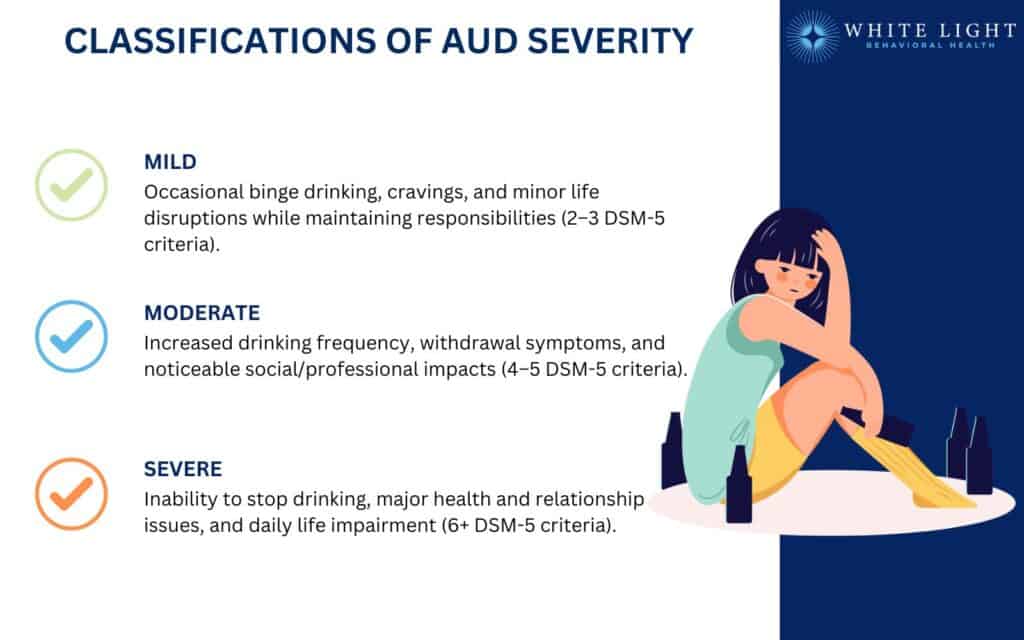
The classifications of AUD severity are as follows:
- Mild: Mild alcohol use disorder is diagnosed when an individual meets 2 to 3 of the DSM-5 criteria. At this stage, signs include occasional binge drinking, cravings, and minor disruptions in daily life.
Individuals still maintain responsibilities but begin to experience negative consequences related to alcohol use.
- Moderate: Moderate alcohol use disorder involves the presence of 4 to 5 criteria. Symptoms become more pronounced, with increased frequency of drinking and difficulty in controlling consumption.
- Severe: Severe alcohol use disorder is characterized by meeting 6 or more of the DSM-5 criteria.
Individuals at this stage experience significant impairment in daily functioning, persistent cravings, and an inability to reduce or stop drinking despite serious consequences.
What Are the Treatment Options for Alcohol Addiction?
The treatment options for alcohol addiction are detoxification, medication-assisted treatment, behavioral therapy, and support groups. Each approach addresses different aspects of addiction, working together to help individuals achieve lasting recovery.
A comprehensive alcohol addiction treatment plan combines these methods for the most effective outcomes.
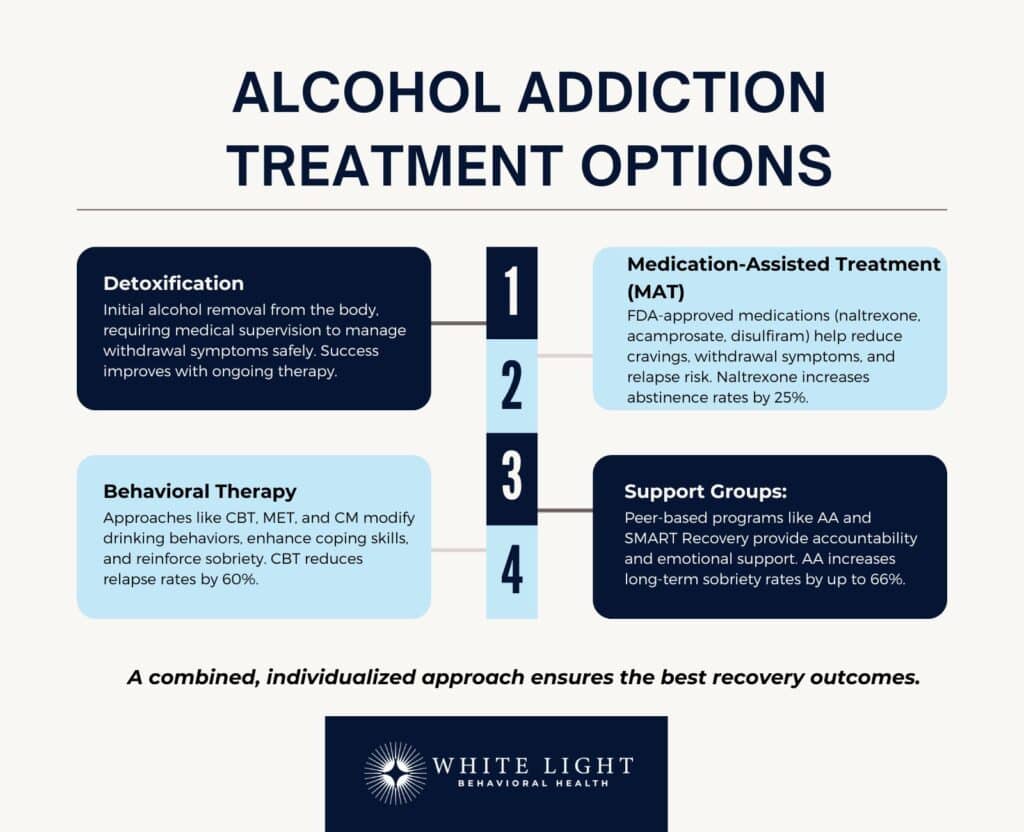
The treatment options for alcohol addiction are as follows:
Detoxification
Detoxification, or detox, is the initial process of removing alcohol from the body, allowing it to adjust to the absence of alcohol. This stage lasts several days to a week, depending on the severity of the addiction.
During detox, individuals experience withdrawal symptoms ranging from mild anxiety to severe complications like seizures or delirium tremens. Medical supervision is necessary to ensure safety and comfort.
Behavioral Therapy
Behavioral therapy encompasses various evidence-based approaches, such as Cognitive Behavioral Therapy (CBT), Motivational Enhancement Therapy (MET), and Contingency Management. These therapies aim to modify harmful drinking behaviors, enhance coping mechanisms, and strengthen motivation for change. CBT, for instance, helps individuals identify and alter negative thought patterns that contribute to alcohol use.
Rediscover Life at White Light Behavioral Health
Get the compassionate support you deserve. We're here to help you reclaim joy, wellness, and a brighter future.
Our Facility
Support Groups
Support groups like Alcoholics Anonymous (AA) and SMART Recovery provide a community-based approach to addiction recovery. These groups offer peer support, encouragement, and accountability, fostering a sense of belonging that can be instrumental in maintaining sobriety.
Why Is Early Intervention Important for Alcohol Addiction?
Early intervention is important for alcohol addiction because it reduces the likelihood of progression to severe dependency and improves treatment outcomes. Timely diagnosis and brief interventions, such as motivational counseling and outpatient therapy, effectively address risky drinking behaviors before they escalate.
Does Alcohol Addiction Lead to Alcohol Intolerance?
Yes, addiction can lead to alcohol intolerance due to prolonged alcohol use, damaging the liver and diminishing the enzyme activity necessary for alcohol metabolism.
Chronic alcohol consumption impairs the liver’s ability to produce enzymes like alcohol dehydrogenase and aldehyde dehydrogenase, resulting in symptoms such as nausea, flushing, and rapid heartbeat when alcohol is consumed. Alcohol intolerance becomes increasingly severe over time, making alcohol consumption progressively more uncomfortable and hazardous.
Share This Post

Dr. Ryan Wakim M.D.
All author posts
TREATMENTS WE OFFER
Are you covered for treatment?















White Light Behavioral Health is an approved provider for Blue Shield and Tufts, while also accepting many other major insurance carriers.
Check Coverage Now!