
What is Marijuana? Definition, Uses, Effects

Marijuana, derived from the Cannabis sativa plant, is one of the most widely used psychoactive substances in the U.S. Its key component, tetrahydrocannabinol (THC), produces mind-altering effects. According to the NCDAS, around 35 million Americans use marijuana monthly, with 16% of adults consuming it regularly for medical or recreational purposes. Due to its widespread availability, marijuana use continues to grow, sparking debates on its benefits and risks.
Marijuana serves both medical and recreational purposes, with its therapeutic potential recognized in treating pain, epilepsy, and nausea. Recreational users seek its euphoric effects, but it carries health risks such as dependency and impaired cognitive function. While many states have legalized marijuana, its federal status remains a subject of legal and scientific scrutiny.
The health effects of marijuana vary, impacting both the brain and body. Short-term use leads to altered perception and increased heart rate, while long-term use has been linked to cognitive decline, respiratory issues, and marijuana addiction. Ongoing research examines its potential risks, particularly for adolescents and frequent users.
What is Marijuana?
Marijuana, scientifically referred to as Cannabis sativa, is a plant that contains a variety of chemical compounds known as cannabinoids. The most well-known of these cannabinoids is tetrahydrocannabinol (THC), which is primarily responsible for marijuana’s psychoactive effects.
THC interacts with receptors in the brain’s endocannabinoid system, leading to mood, cognition, and perception alterations. Another important cannabinoid, cannabidiol (CBD), has been studied for its potential therapeutic effects, although it does not produce the same intoxicating effects as THC. Marijuana has been used for centuries, both recreationally and medicinally, with its cannabinoids offering various therapeutic properties.
Marijuana is known by many alternative names, particularly in street and cultural contexts. Commonly, it is referred to as weed, pot, grass, dope, Mary Jane, bud, and ganja. These names reflect the widespread use of marijuana across different subcultures and regions.
Despite its variety of forms and names, the core active ingredient remains THC, which gives marijuana its characteristic psychoactive effects. As marijuana becomes increasingly legal in many areas for both medical and recreational use, these alternative terms continue to be commonly used by users and within pop culture.
Did you know most health insurance plans cover substance use disorder treatment? Check your coverage online now.
How Does Marijuana Work in the Body?
Marijuana works in the body by interacting with the endocannabinoid system (ECS), regulating various physiological processes, including mood, appetite, and pain. The active compound in marijuana, tetrahydrocannabinol (THC), binds to specific receptors in the ECS, known as CB1 and CB2 receptors. CB1 receptors are primarily found in the brain and central nervous system, while CB2 receptors are mainly in the immune system.
More Resources on Addiction:
When THC binds to CB1 receptors, it triggers the release of dopamine, a neurotransmitter associated with pleasure and reward. This results in the characteristic “high” experienced by users.
THC also affects cognitive functions, motor coordination, and perception. A study by Burggren AC, Shirazi A, Ginder N, London ED. et al. 2019, titled “Cannabis effects on brain structure, function, and cognition: considerations for medical uses of cannabis and its derivatives,” have shown that marijuana’s effects vary based on the individual’s physiology, dosage, and frequency of use.
Is Marijuana a Controlled Substance in the U.S.?
Yes, marijuana is a controlled substance in the U.S. The Drug Enforcement Administration (DEA) classifies marijuana as a Schedule I drug under the Controlled Substances Act. This means it is considered to have a high potential for abuse and no currently accepted medical use at the federal level.
State laws have evolved in recent years, with many states legalizing marijuana for medicinal or recreational use. These state laws conflict with the federal classification, creating a complex legal landscape for marijuana use across the country.
How is Marijuana Consumed?
Marijuana is consumed as smoking, vaping, edibles, and tinctures, each affecting the onset time and duration of its effects.
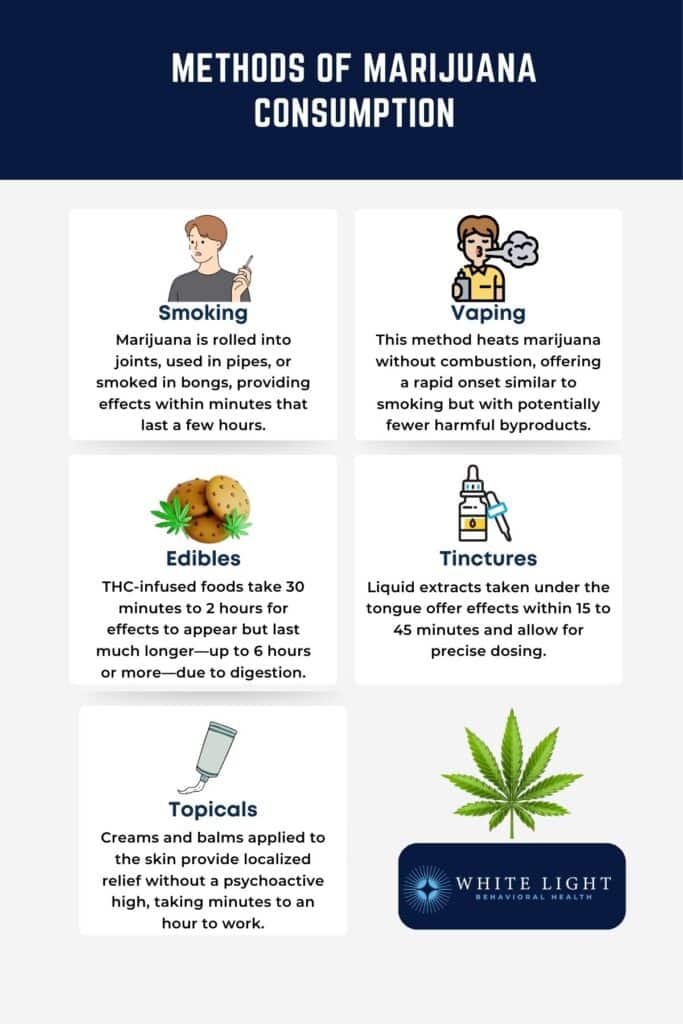
Below are the main consumption methods:
- Smoking: This is one of the most common methods, where marijuana is rolled into a joint, smoked in a pipe, or used in a bong. Smoking provides quick onset of effects within minutes, as THC is rapidly absorbed through the lungs and into the bloodstream.
The effects of smoking marijuana tend to last for a few hours.
- Vaping: Vaping involves heating marijuana to release its active compounds without burning it, through a vaporizer. Like smoking, vaping provides rapid onset, but it is considered a less harmful alternative since it avoids combustion.
The effects usually last for a few hours, similar to smoking.
- Edibles: Edibles are food products infused with marijuana, such as brownies, gummies, or drinks. When consumed, THC is absorbed through the digestive system, resulting in a delayed onset of effects, taking 30 minutes to 2 hours.
The effects last much longer, sometimes up to 6 hours or more, due to slower metabolism in the digestive system. The bioavailability of THC in edibles is lower than smoking or vaping.
- Tinctures: Tinctures are liquid extracts of marijuana that are taken sublingually (under the tongue) for fast absorption.
They provide faster onset than edibles, usually within 15 to 45 minutes, but slower than smoking or vaping. Tinctures allow for more precise dosing.
- Topicals: Topical products like creams, lotions, and balms are applied directly to the skin and are designed for localized effects.
They do not cause a psychoactive high since they do not enter the bloodstream but are used for pain relief or inflammation. Depending on the product, the effects are felt within minutes to an hour.
What Are the Medical Uses of Marijuana?
The medical uses of marijuana include its application in treating chronic pain, epilepsy, multiple sclerosis, chemotherapy-induced nausea, and anxiety. Medical cannabis has gained recognition for its therapeutic properties, providing relief for various conditions that are difficult to manage with conventional treatments.
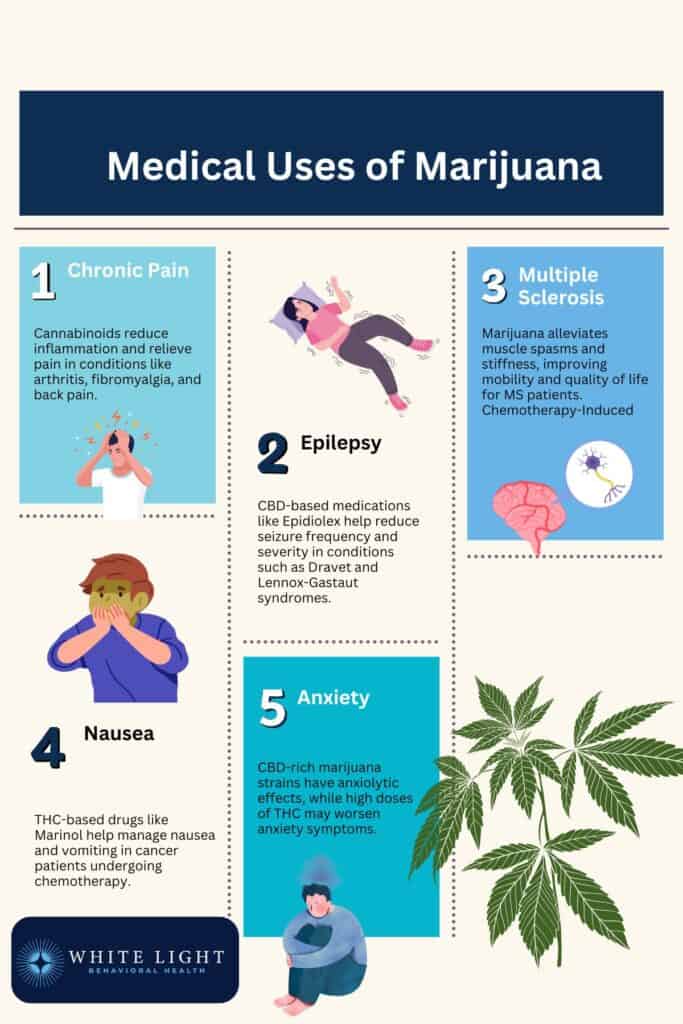
The medical uses of marijuana are as follows:
- Chronic Pain: Marijuana is used to alleviate chronic pain, particularly in conditions like arthritis, fibromyalgia, and back pain. The cannabinoids in marijuana interact with the body’s endocannabinoid system, reducing inflammation and providing pain relief.
- Epilepsy: One of the most significant medical uses of marijuana is in the treatment of epilepsy.
The FDA-approved drug Epidiolex, a cannabidiol (CBD)-based medication, is used to treat certain forms of epilepsy, such as Dravet syndrome and Lennox-Gastaut syndrome. A study by Perucca E. et al. 2017, titled “Cannabinoids in the Treatment of Epilepsy: Hard Evidence at Last?” CBD, a non-psychoactive compound in marijuana, reduces the frequency and severity of seizures.
- Multiple Sclerosis: Marijuana has shown promise in treating the symptoms of multiple sclerosis (MS), particularly muscle spasms and stiffness.
The cannabinoids in marijuana help relax muscles and reduce spasticity, improving mobility and quality of life for MS patients, according to a study by Longoria V, Parcel H, Toma B, Minhas A, Zeine R. et al. 2022, titled “Neurological Benefits, Clinical Challenges, and Neuropathologic Promise of Medical Marijuana: A Systematic Review of Cannabinoid Effects in Multiple Sclerosis and Experimental Models of Demyelination.”
- Chemotherapy-Induced Nausea: Marijuana is also used to treat nausea and vomiting caused by chemotherapy. The FDA-approved drug Marinol, which contains synthetic THC, is prescribed to cancer patients to help manage chemotherapy-induced nausea.
THC’s ability to bind to receptors in the brain helps reduce these symptoms, providing relief, according to a study by BreastCancer.org titled “Adding Cannabis to Standard Medicines Offers Better Nausea Control for People With Cancer.”
- Anxiety: Medical marijuana, particularly CBD-rich strains, is sometimes used to manage anxiety and stress. While some studies like one Lichenstein SD. et al. 2022, titled “THC, CBD, and Anxiety: A review of recent findings on the anxiolytic and anxiogenic effects of cannabis’ primary cannabinoids,” suggest that THC worsens anxiety in high doses, CBD is known to have anxiolytic (anxiety-reducing) effects, making it useful for those with anxiety disorders.
What is the Difference Between Medical and Recreational Marijuana?
The main difference between medical and recreational marijuana is the intended use, legal status, and product composition.
Medical marijuana is used to treat specific health conditions, while recreational marijuana is consumed for pleasure or relaxation. Medical marijuana is regulated for therapeutic purposes, whereas recreational marijuana is legalized in some states for general use.
The main difference between medical and recreational marijuana is described as follows:
- Intended Use: Medical marijuana is prescribed to treat specific medical conditions such as chronic pain, epilepsy, or anxiety. It is used under the guidance of a healthcare professional.
Recreational marijuana, on the other hand, is used primarily for leisure, offering effects like euphoria or relaxation.
- Legal Status: Medical marijuana is legal in many states with a prescription or recommendation from a healthcare provider. In contrast, recreational marijuana is only legal in certain states where it has been explicitly approved for general use.
- Product Composition: Medical marijuana products are specially formulated to provide specific therapeutic effects, with different ratios of cannabinoids like THC and CBD. Recreational marijuana products focus on delivering high or psychoactive effects with higher THC content.
Contact us today to schedule an initial assessment or to learn more about our services.
Whether you are seeking intensive outpatient care or simply need guidance on your mental health journey, we are here to help.
What Are the Short-Term Effects of Marijuana Use?
The short-term effects of marijuana use are immediate physical and cognitive changes that occur shortly after consumption. These effects vary in severity depending on the method of consumption, the individual’s tolerance, and the amount used. While marijuana induces feelings of euphoria, it also impairs physical coordination and cognitive functions, with potential risks for safety during activities like driving.
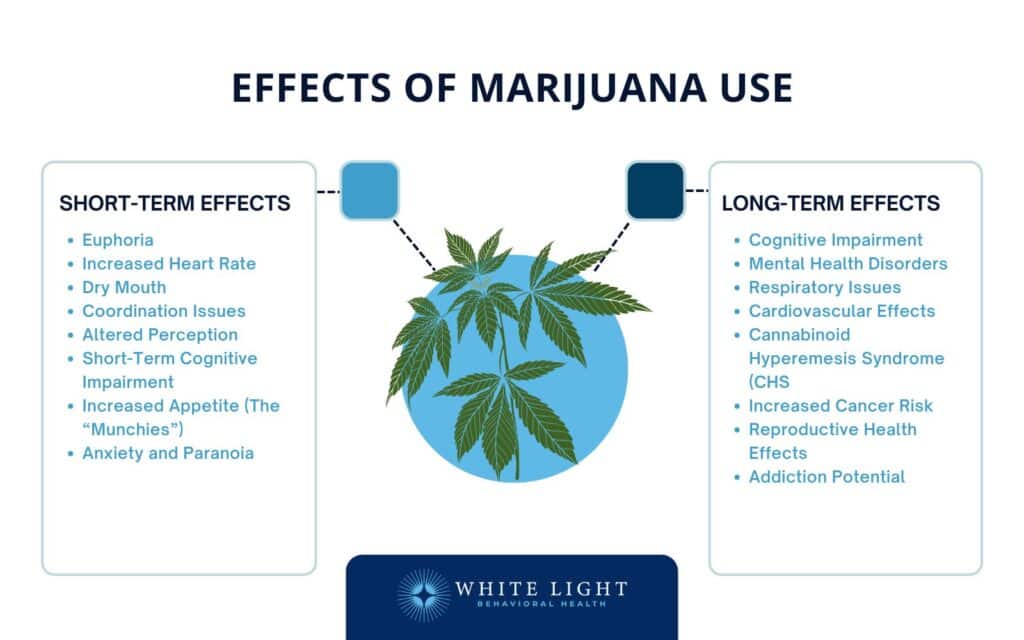
The short-term effects of marijuana use are as follows:
- Euphoria: The most commonly reported effect is a feeling of intense happiness or relaxation. This is caused by the release of dopamine in the brain, which produces pleasurable sensations.
The effect is usually temporary and lasts for a few hours.
- Increased Heart Rate: Marijuana use increases heart rate by 20 to 50 beats per minute, which causes palpitations, according to WebMD 2024, “How Marijuana Affects Your Body.” THC activates the sympathetic nervous system, increasing adrenaline and stimulating the heart.
- Dry Mouth: Often referred to as “cottonmouth,” this sensation occurs because THC interacts with receptors in the mouth, reducing saliva production. This effect is mild or severe, and it lasts for several hours.
- Coordination Issues: Marijuana impairs motor coordination, which affects balance and fine motor skills.
THC interferes with the cerebellum, the part of the brain responsible for coordination, making activities like walking or driving dangerous.
- Altered Perception: Marijuana alters sensory perception, making colors seem brighter or sounds clearer while distorting the sense of time. This happens because THC impacts the brain’s processing of sensory information, particularly in the areas that control visual and auditory stimuli.
- Short-Term Cognitive Impairment: Marijuana affects short-term memory, attention span, and decision-making ability.
Research by Hitchcock, LN. et al. 2021, “Acute Effects of Cannabis Concentrate on Motor Control and Speed: Smartphone-Based Mobile Assessment.” THC reduces reaction time and impairs memory recall, making problem-solving or driving more difficult.
- Increased Appetite (The “Munchies”): THC stimulates the brain’s hunger receptors, increasing appetite. This effect is well-known for causing users to crave unhealthy food or snacks.
- Anxiety and Paranoia: Some users experience heightened anxiety, nervousness, or paranoia, especially with higher THC doses.
This occurs because THC increases heart rate and triggers the body’s stress response, which leads to feelings of unease, according to a study by Freeman D, Dunn G, et al. 2015, “How cannabis causes paranoia: using the intravenous administration of ∆9-tetrahydrocannabinol (THC) to identify key cognitive mechanisms leading to paranoia.”
What Are the Long-Term Effects of Marijuana Use?
The long-term effects of marijuana use are cognitive impairment, mental health disorders, and respiratory issues. These effects are particularly concerning for individuals who use marijuana frequently and in high doses.
Chronic marijuana use has been linked to several long-term health risks, which vary in severity depending on the individual and the duration of use.
The long-term effects of marijuana use are as follows:
- Cognitive Impairment: Chronic marijuana use impairs memory, learning, and attention. Studies, such as those by g, according to a study by Harvard Health Publishing 2022, “Cognitive effects in midlife of long-term cannabis use,” suggest that long-term marijuana use, particularly starting in adolescence, results in a decline in IQ and overall cognitive functioning.
THC affects brain areas like the hippocampus, which is necessary for memory and learning.
- Mental Health Disorders: Long-term marijuana use is associated with an increased risk of anxiety, depression, and psychotic disorders, including schizophrenia. According to a meta-analysis of these longitudinal studies by Moore et al., 2007, marijuana use, especially in individuals with a genetic predisposition, triggers or worsens mental health conditions.
THC’s impact on dopamine levels and brain chemistry is believed to contribute to these effects, according to a research article by Filbey FM et al. 2014, “Long-term effects of marijuana use on the brain.”
- Respiratory Issues: Smoking marijuana regularly leads to chronic bronchitis, coughing, and increased phlegm production due to the inhalation of smoke. Marijuana smoke contains many of the same carcinogens and irritants as tobacco smoke, which damage the lungs over time.
Research by the American Lung Association 2024, “Marijuana and Lung Health,” shows that chronic marijuana use increases the risk of lung diseases, though the risk is lower compared to tobacco.
- Cardiovascular Effects: Marijuana use causes an increase in heart rate and changes in blood pressure, according to the CDC, “Cannabis and Heart Health.” These effects are particularly concerning for individuals with pre-existing heart conditions.
- Cannabinoid Hyperemesis Syndrome (CHS): Cannabinoid Hyperemesis Syndrome is a condition that occurs in heavy, long-term marijuana users, characterized by cycles of severe nausea, vomiting, and abdominal pain, according to a study by Cue L, Chu F, Cascella M., et al. 2023, “Cannabinoid Hyperemesis Syndrome.” This condition is believed to result from prolonged exposure to high levels of THC, which disrupts the gastrointestinal system. The symptoms are severe and require medical intervention.
- Increased Cancer Risk: Long-term marijuana use, particularly through smoking, has been linked to an increased risk of certain cancers, especially lung cancer.
Research by Callaghan RC, Allebeck P, Sidorchuk A., et al. 2013, titled “Marijuana use and risk of lung cancer: a 40-year cohort study,” indicates that marijuana smoke contains carcinogens, which contribute to the development of lung cancer and other respiratory cancers, though the evidence remains mixed compared to tobacco use.
- Reproductive Health Effects: Chronic marijuana use affects both male and female reproductive health. In men, marijuana has been shown to reduce sperm count and motility, potentially impacting fertility in a study by Payne KS, Mazur DJ, Hotaling JM, Pastuszak AW. et al. 2019, titled “Cannabis and Male Fertility: A Systematic Review.” In women, marijuana use leads to hormonal imbalances, irregular menstrual cycles, and an increased risk of pregnancy complications, according to a study by Ryan KS, Bash JC, Hanna CB, Hedges JC, and Lo JO. et al. 2021, titled “Effects of marijuana on reproductive health: preconception and gestational effects.”
- Addiction Potential: While not everyone who uses marijuana becomes addicted, long-term use increases the risk of developing cannabis use disorder (CUD).
A study by the American Psychological Association, “Marijuana and the developing brain,” indicates that approximately 9% of marijuana users will develop an addiction, with the likelihood increasing to around 17% for those who begin using during adolescence. Withdrawal symptoms of marijuana, such as irritability and insomnia, are also common for heavy users.
Can Marijuana Use Lead to Permanent Brain Changes?
Yes, marijuana use can lead to permanent brain changes, particularly when used frequently or during necessary stages of brain development.
Prolonged exposure to THC, the active compound in marijuana, affects brain plasticity and neurodevelopment, especially in adolescents whose brains are still developing. A study by Brumback T, Castro N, Jacobus J, Tapert S., et al. 2016, titled “Effects of Marijuana Use on Brain Structure and Function: Neuroimaging Findings from a Neurodevelopmental Perspective,” has shown that chronic marijuana use leads to alterations in brain structure, particularly in areas associated with memory and learning.
Brain imaging by Battistella G., Giroud C., et al. 2014, titled “Long-term effects of cannabis on brain structure,” has found reduced gray matter density in long-term cannabis users, which is linked to impaired cognitive function, including memory deficits. A study by Filbey FM et al. 2014, titled “ Long-term effects of marijuana use on the brain,” demonstrated these structural changes, which suggest that long-term marijuana use has lasting impacts on brain health, particularly in individuals who began using marijuana at a young age.
Can Marijuana Be Laced with Fentanyl or Other Dangerous Substances?
Yes, marijuana can be laced with fentanyl or other dangerous substances, particularly in the illicit market. Fentanyl contamination is a growing concern, as illegal drug producers mix fentanyl with marijuana to increase potency, leading to life-threatening risks.
Synthetic cannabinoids, marketed as “legal highs,” are also added to marijuana, posing additional health hazards. The DEA has reported instances of fentanyl-laced marijuana appearing in illegal markets, raising alarms about the safety of purchasing marijuana outside regulated sources.
These illicit substances drastically increase the risk of overdose and severe health complications.
Can Marijuana Cause Serotonin Syndrome?
Yes, marijuana can cause serotonin syndrome, especially in combination with other serotonergic drugs. This occurs because marijuana increases serotonin levels in the brain. When combined with other medications that also elevate serotonin, such as certain antidepressants, there is a risk of serotonin syndrome. Serotonin syndrome is a potentially life-threatening condition characterized by symptoms such as agitation, confusion, rapid heart rate, and muscle rigidity, as studied by Nadeem Z, Wu C, Burke S, Parker S., et al. 2024, titled “Serotonin syndrome and cannabis: A case report.” It requires immediate medical attention to avoid serious consequences.
Rediscover Life at White Light Behavioral Health
Get the compassionate support you deserve. We're here to help you reclaim joy, wellness, and a brighter future.

Is Marijuana a Gateway Drug?
Yes, marijuana is considered a gateway drug. A study by Stamates AL, Roberts R, Lau-Barraco C., et al. 2022, titled “Alcohol, cannabis, and tobacco polysubstance use: A latent profile analysis of age of onset,” has shown that early marijuana use increases the likelihood of developing a polysubstance abuse pattern, which means individuals are more likely to experiment with and become addicted to other substances such as alcohol, tobacco, and harder drugs.
The term “gateway drug” refers to substances that lead to the use of more harmful or addictive drugs. Research by the National Institute on Drug Abuse (NIDA) suggests that marijuana use, particularly at an early age, initiates an addiction pathway, setting the stage for future drug abuse.
What Are the Side Effects of Marijuana Use?
The side effects of marijuana use are both short-term and long-term, affecting physical and mental health. Short-term effects include dizziness, dry mouth, and paranoia, while prolonged use leads to cognitive impairment, lung damage, and dependence. Individual responses to marijuana vary, with some users experiencing severe side effects, including acute cannabis intoxication requiring emergency medical attention.
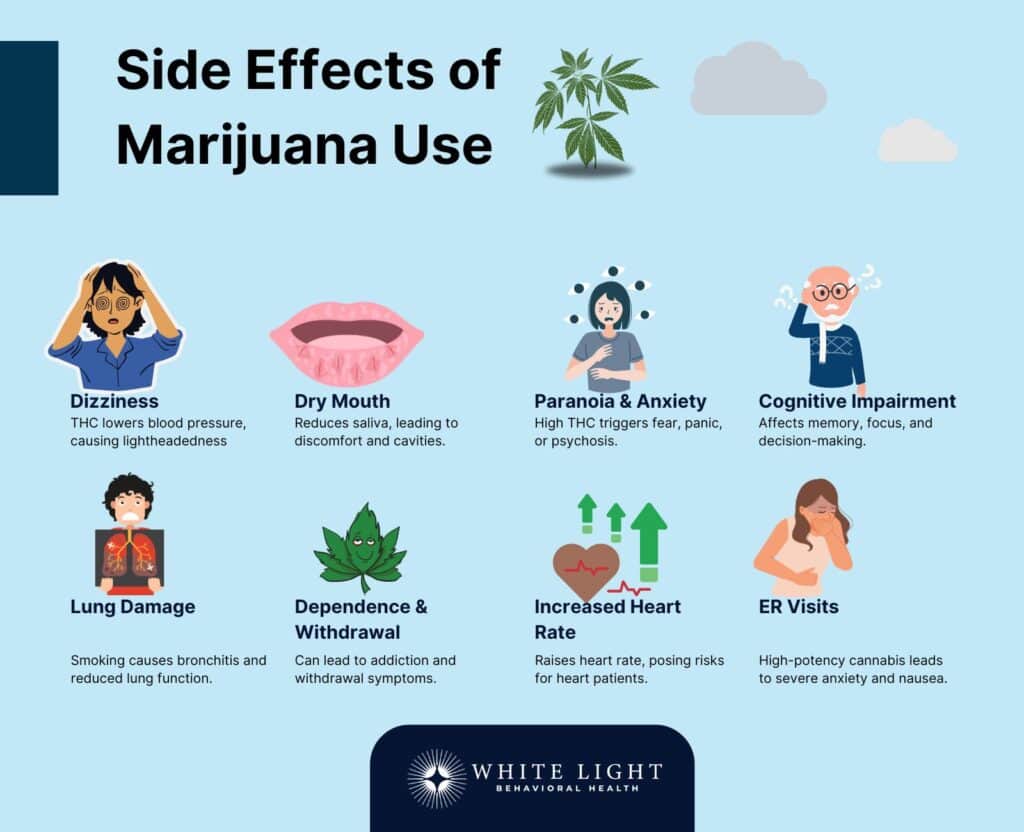
The side effects of marijuana use are as follows:
- Dizziness: THC affects blood pressure by causing a temporary drop, leading to lightheadedness and an increased risk of fainting, especially when standing up quickly. This effect is more pronounced in new or infrequent users, according to a study by Sewell RA, Poling J, Sofuoglu M., et al. 2009, titled “The effect of cannabis compared with alcohol on driving.”
- Dry Mouth: Marijuana reduces saliva production by interacting with cannabinoid receptors in the salivary glands, causing a persistent dry sensation known as cottonmouth, which leads to discomfort and an increased risk of cavities or gum disease.
- Paranoia and Anxiety: High doses of THC overstimulate brain receptors, increasing activity in the amygdala, a region responsible for fear and emotions.
This leads to heightened anxiety, paranoia, panic attacks, and even temporary psychotic episodes in some individuals, according to a study by Volkow ND, Baler RD, Compton WM, Weiss SR., et al. 2014, titled “Adverse health effects of marijuana use.”
- Cognitive Impairment: Long-term marijuana use negatively affects memory, attention span, and decision-making abilities. THC alters hippocampal function, leading to difficulties retaining new information and impaired problem-solving skills.
According to a study by Crean RD, Crane NA, and Mason BJ. et al. 2011, titled “An evidence-based review of acute and long-term effects of cannabis use on executive cognitive functions,” these effects are more pronounced in adolescent users.
- Lung Damage: Smoking marijuana exposes the lungs to tar, carcinogens, and other harmful toxins, increasing the risk of chronic bronchitis, coughing, and lung infections; according to the Mayo Clinic, “Does smoking marijuana increase lung cancer risk?” Long-term use also causes airway inflammation and reduced lung function.
- Dependence and Withdrawal: Frequent marijuana use leads to cannabis use disorder (CUD), with withdrawal symptoms including irritability, insomnia, mood swings, and cravings when trying to quit. This is due to THC’s impact on the brain’s dopamine system, which regulates pleasure and reward.
- Increased Heart Rate: THC causes a temporary spike in heart rate, sometimes by 20 to 50 beats per minute.
This effect lasts for several hours, increasing the risk of heart complications, particularly in individuals with existing cardiovascular conditions.
- Marijuana-Related ER Visits: The increasing potency of cannabis products has led to a rise in emergency room visits due to severe anxiety, hallucinations, dangerously high heart rates, and cannabinoid hyperemesis syndrome (CHS), a condition characterized by severe nausea and vomiting, Keung MY. et al. 2023, titled “Cannabis-Induced Anxiety Disorder in the Emergency Department.”
Is Secondhand Marijuana Smoke Harmful?
Yes, secondhand marijuana smoke is considered harmful, as it contains many of the same toxic chemicals found in tobacco smoke, including carcinogens and fine particulate matter. A study by Herrmann ES. et al. 2015, titled “Non-smoker exposure to secondhand cannabis smoke II: Effect of room ventilation on the physiological, subjective, and behavioral/cognitive effects,” have detected THC in the blood and urine of non-smokers exposed to secondhand marijuana smoke, raising concerns about unintentional psychoactive effects.
Children and pets are particularly vulnerable, with research linking passive exposure to respiratory issues and cognitive impairments. Poor ventilation in enclosed spaces further increases exposure risks.
Can Marijuana Interact With Medications?
Yes, marijuana can interact with various medications, altering their effects and potentially causing harmful consequences. The interactions primarily occur through THC and CBD, which influence liver enzymes responsible for drug metabolism.
- Blood Thinners (e.g., Warfarin, Heparin): Marijuana enhances the effects of anticoagulants by inhibiting enzyme metabolism, increasing the risk of excessive bleeding.
- Antidepressants (e.g., SSRIs, MAOIs, Tricyclics): THC amplifies serotonin levels, increasing the risk of serotonin syndrome, a potentially dangerous condition causing agitation, confusion, and rapid heart rate.
- Sedatives (e.g., Benzodiazepines, Barbiturates): The combination of marijuana with CNS depressants results in excessive drowsiness, dizziness, and impaired motor function.
- Opioids (e.g., Morphine, Oxycodone): Concurrent use of marijuana potentiates sedative effects, leading to respiratory depression and increased overdose risk.
- Immunosuppressants (e.g., Cyclosporine, Tacrolimus): CBD in marijuana affects drug metabolism, potentially altering the effectiveness of medications used in organ transplants.
What Is the Risk of Marijuana Addiction?
The risk of marijuana addiction increases with frequent and prolonged use, particularly among adolescents and individuals with a predisposition to substance use disorders. Regular use leads to cannabis use disorder (CUD), characterized by cravings, withdrawal symptoms, and difficulty controlling consumption despite negative consequences.
Are you covered for treatment?


White Light Behavioral Health is an approved provider for Blue Cross Blue Shield and TUFTS, while also accepting many other major insurance carriers.
How Long Does Marijuana Stay in Your System?
Marijuana stays in your system for different durations depending on factors such as usage frequency, metabolism, and the type of drug test administered. THC has a half-life of 24 to 48 hours, but its metabolites linger in body fluids and hair for much longer.
In blood, THC is detected for up to 3 days in occasional users and up to 25 days in chronic users. Urine tests detect marijuana use for 3 to 30 days, depending on frequency.
In saliva, THC remains detectable for 24 to 72 hours, while in hair, traces of marijuana persist for up to 90 days, making hair testing the most extended detection method.
How Does Marijuana Differ From Other Cannabinoids Like THC and CBD?
Marijuana differs from other cannabinoids like THC and CBD in composition, effects, and legality. Marijuana refers to the cannabis plant containing multiple cannabinoids, including tetrahydrocannabinol (THC) and cannabidiol (CBD). THC is the primary psychoactive compound responsible for marijuana’s mind-altering effects by binding to CB1 receptors in the brain.
It is federally illegal but permitted for medical or recreational use in many states. CBD is non-psychoactive, meaning it does not produce a “high.” Its medicinal benefits include pain relief, anti-inflammatory properties, and seizure reduction.
CBD is legal in the U.S. if derived from hemp with less than 0.3% THC.
Is Synthetic Marijuana the Same as Natural Marijuana?
No, synthetic marijuana is not the same as natural marijuana; they differ significantly in composition, effects, and safety. Synthetic cannabinoids, sold as K2, Spice, or Black Mamba, are lab-created chemicals that bind more aggressively to cannabinoid receptors, making them far more potent and unpredictable than natural THC.
The key differences are as follows:
- Composition: Natural marijuana contains organic cannabinoids; synthetic versions use unregulated, artificial chemicals.
- Effects: Synthetic marijuana causes extreme paranoia, seizures, hallucinations, and even death, whereas natural cannabis has milder psychoactive effects.
- Regulation: Synthetic cannabinoids are illegal and unregulated, making them riskier than marijuana.
What Is the Legal Status of Marijuana in the U.S.?
The legal status of marijuana in the U.S. varies by jurisdiction. Federally, marijuana remains a Schedule I controlled substance under the Controlled Substances Act, meaning it is classified as having no accepted medical use and a high potential for abuse.
However, individual states have legalized marijuana for medical and/or recreational use. As of recent updates, over 38 states allow medical marijuana, and 24 states permit recreational use, reflecting shifting public and legislative perspectives.
How Many People Die from Marijuana Overdose Each Year?
No deaths from overdose of marijuana each year have been reported by DAE.org. According to the CDC, marijuana overdose is not fatal, as THC does not cause respiratory depression like opioids.
Excessive consumption leads to severe complications, such as psychosis, panic attacks, or dangerously high heart rates, especially when combined with other substances (polysubstance use). Indirect deaths occur due to impaired driving and risky behaviors while under the influence.
Did you know most health insurance plans cover substance use disorder treatment? Check your coverage online now.
How Does Marijuana Addiction Differ from Alcohol Addiction?
Marijuana addiction differs from alcohol addiction in its physiological effects, withdrawal symptoms, and impact on behavior. While alcohol addiction leads to severe physical dependence, including dangerous withdrawal symptoms like delirium tremens, marijuana addiction is primarily psychological, with cravings and mood disturbances but no life-threatening withdrawal. Alcohol addiction impairs motor functions more significantly, increasing the risk of accidents and long-term organ damage, particularly to the liver. In contrast, marijuana primarily affects cognitive functions, potentially leading to memory issues and decreased motivation. Alcohol addiction is more socially and legally regulated, while marijuana addiction varies in perception and legality depending on state laws.
Share This Post

Dr. Ryan Wakim M.D.
All author posts
TREATMENTS WE OFFER
Are you covered for treatment?















White Light Behavioral Health is an approved provider for Blue Shield and Tufts, while also accepting many other major insurance carriers.
Check Coverage Now!