What Is the First Step Toward Getting Treatment for Alcohol Addiction?

The first step towards getting treatment for alcohol addiction is admitting you have a problem, which can feel overwhelming. If you’ve found yourself drinking even when it’s hurting your health, your relationships, or your peace of mind, you’re not alone. Recognising that you need help isn’t a sign of weakness—it’s a turning point, and it’s where real recovery begins.
It’s completely understandable to feel scared, ashamed, or even in denial. Many of us avoid getting help because we fear being judged or we’re unsure of what comes next.
But the truth is, taking that first step lifts a huge weight off your shoulders. It’s the start of a new chapter—one where you don’t have to face everything on your own.
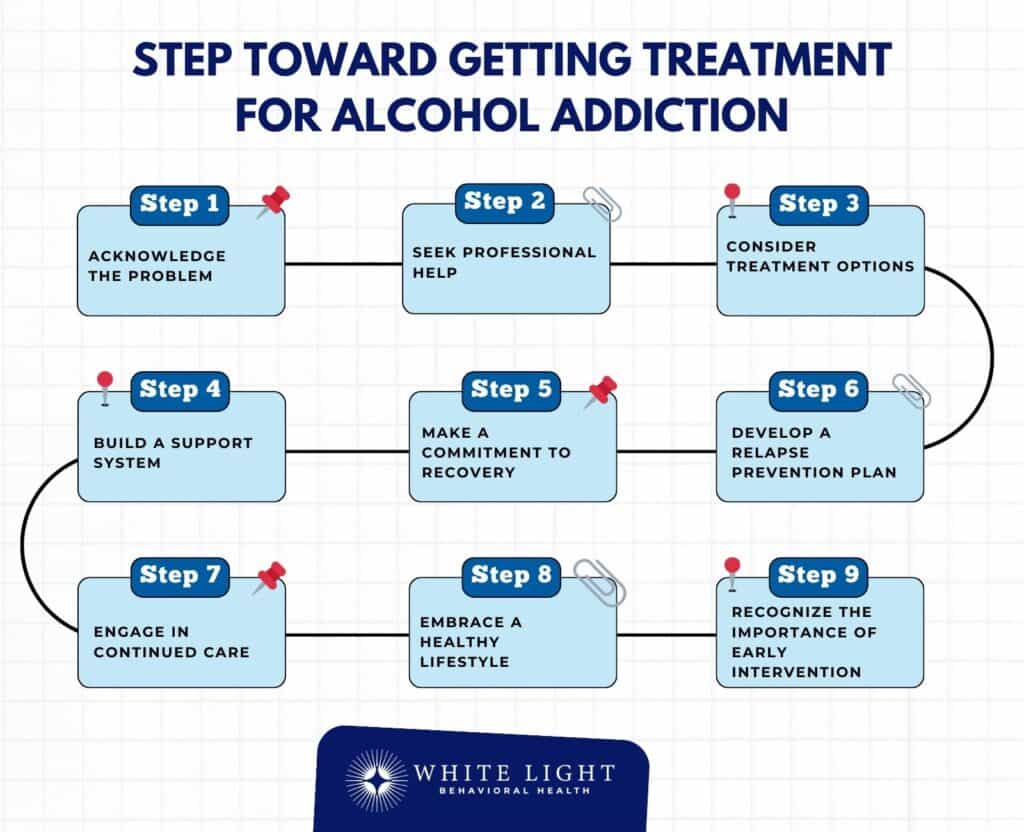
First Step: Acknowledge the Problem
Acknowledging that alcohol has become a problem in your life is the hardest—but most crucial—step toward recovery. It’s easy to tell yourself that you’re just blowing off steam, socialising, or coping with stress.
But deep down, if you feel like things are slipping out of control, that self-awareness matters more than you think. Denial keeps so many people stuck, stopping them from getting the support they truly need.
It takes real courage to be honest with yourself, but doing so changes everything. For example, research by Dindo. L et al. 2017, titled “Acceptance and Commitment Therapy: A Transdiagnostic Behavioural Intervention for Mental Health and Medical Conditions,” found that individuals who accepted their addiction were more likely to remain in recovery for a year or longer.
Did you know most health insurance plans cover substance use disorder treatment? Check your coverage online now.
Step 2: Seek Professional Help
Once you’ve recognised that alcohol is taking a toll on your life, reaching out for professional help is the next vital step. It’s not something you have to face alone. Speaking to a doctor, addiction specialist, or rehab centre gives you the chance to fully understand what’s going on and get a clear diagnosis based on your specific symptoms and experiences.
Professional support matters because alcohol addiction progresses quickly if left untreated, affecting both your physical and mental health. According to The Ridge Ohio in their Alcohol Treatment Levels of Care & Rehab Considerations report (2023), only 6.7% of adults in Ohio who had an alcohol use disorder in the past year received treatment, showing significant barriers to accessing care.
With the right guidance, you get a personalised treatment plan and take the first real steps toward recovery—steps that protect your health and help you regain control.
More Resources on Addiction:
Step 3: Consider Treatment Options
Choosing the right treatment plan is a life-changing step in your recovery process. What works best depends on your personal needs and the severity of your addiction. Alcohol addiction treatment includes inpatient and outpatient programs.
Inpatient rehab gives you a safe, structured space to fully focus on healing, especially helpful if your addiction is severe or you’re also dealing with mental health challenges.
If you need more flexibility, outpatient treatment lets you keep up with daily responsibilities while getting support through therapy and medical care. Options like Cognitive Behavioral Therapy (CBT), group sessions, and Medication-Assisted Treatment (MAT) also help tackle both the mental and physical sides of addiction, giving you a strong foundation to build a healthier life.
Step 4: Build a Support System
Having people in your corner makes a huge difference when you’re recovering from alcohol addiction. Support from loved ones or groups like Alcoholics Anonymous (AA) and SMART Recovery gives you the emotional strength and accountability to stay on track.
The key is finding a support system that feels right for you, whether peer-led, professional, or family-based. When your support aligns with your values and goals, it becomes easier to open up and grow.
Family therapy is also incredibly helpful, giving your loved ones a better understanding of your journey and creating space for honest, healing conversations.
Step 5: Make a Commitment to Recovery
Staying committed to long-term recovery takes daily effort, patience, and the courage to keep going, even when it gets tough. Relapse happens, but it doesn’t mean failure.
What matters is how you respond. Building resilience through therapy, healthy routines, and positive thinking helps you bounce back stronger and stay focused on your progress.
Making lasting changes also means finding what works for you—whether that’s mindfulness, regular exercise, or setting small, achievable goals. These habits not only support your mental and physical health but also lower your risk of relapse.
Celebrating your wins, no matter how small, keeps you motivated and reminds you how far you’ve come.
Step 6: Develop a Relapse Prevention Plan
Creating a relapse prevention plan is one of the best ways to protect your sobriety and stay on track in the long run. While relapse is a part of many recovery journeys, having a clear plan in place can make all the difference in preventing setbacks.
Your plan should include identifying situations that trigger a relapse, learning healthy ways to cope, and keeping access to support networks like therapy or peer groups to help guide you through tough times. With the right strategies in place, you’ll feel more confident and prepared for whatever comes your way.
Contact us today to schedule an initial assessment or to learn more about our services. Whether you are seeking intensive outpatient care or simply need guidance on your mental health journey, we are here to help.
Step 7: Engage in Continued Care
Ongoing care is necessary to prevent relapse and support lasting recovery. Regular therapy sessions, support groups, or periodic check-ins with healthcare professionals help keep you on track and allow for adjustments when needed.
Regular support and monitoring strengthen your recovery efforts and also provide the encouragement and accountability needed to stay sober over time.
Step 8: Embrace a Healthy Lifestyle
Adopting a healthier lifestyle is key to staying sober and building a strong foundation for long-term recovery. Routines that include good nutrition, regular exercise, and mental wellness activities not only boost overall health but also help you manage alcohol cravings.
Exercise, in particular, improves your mood and reduces urges to drink, making it a powerful ally in your recovery. Mindfulness practices like meditation and yoga are also proven to help with emotional regulation and stress management.
Step 9: Recognize the Importance of Early Intervention
Addressing alcohol addiction early on greatly boosts your chances of a successful recovery. The sooner you seek help, whether through brief interventions, outpatient treatment, or counselling, the less likely addiction is to escalate to more severe stages.
People who act early in their recovery journey are far more likely to achieve long-term sobriety compared to those who wait or ignore the signs. Taking action now makes all the difference in preventing further struggles and setting you on a path to lasting change.
What Is Alcohol Addiction?
Alcohol addiction, also known as Alcohol Use Disorder (AUD), is a chronic disease characterized by physical and psychological dependence on alcohol. It involves an uncontrollable urge to drink, difficulty in limiting consumption, and persistent alcohol use despite harmful consequences.
According to the Ohio Department of Mental Health and Addiction Services (ODMHAS) in their Ohio Alcohol and Drug Use Statistics report (2023), approximately 5.1% of Ohio residents struggle with alcohol use disorder annually.
As a chronic disease, alcoholism alters brain chemistry and function over time, making it difficult for individuals to quit without intervention. Adolescents who grow up in environments where alcohol consumption is frequent are more likely to begin drinking at an earlier age, increasing their risk of developing alcohol dependence.
In fact, the Ohio Department of Health (ODH) in their 2023 Behavioral Risk Factor Surveillance System Questionnaire report (2023) states that 0.5% of Ohio youth ages 12 to 17 reported heavy alcohol use in the past month.
What Are the Early Signs of Alcohol Addiction?
The early signs of alcohol addiction are increased tolerance, drinking to cope with stress, and neglecting responsibilities. These behaviors indicate the onset of dependence, as individuals progressively require more alcohol to achieve the desired effects.
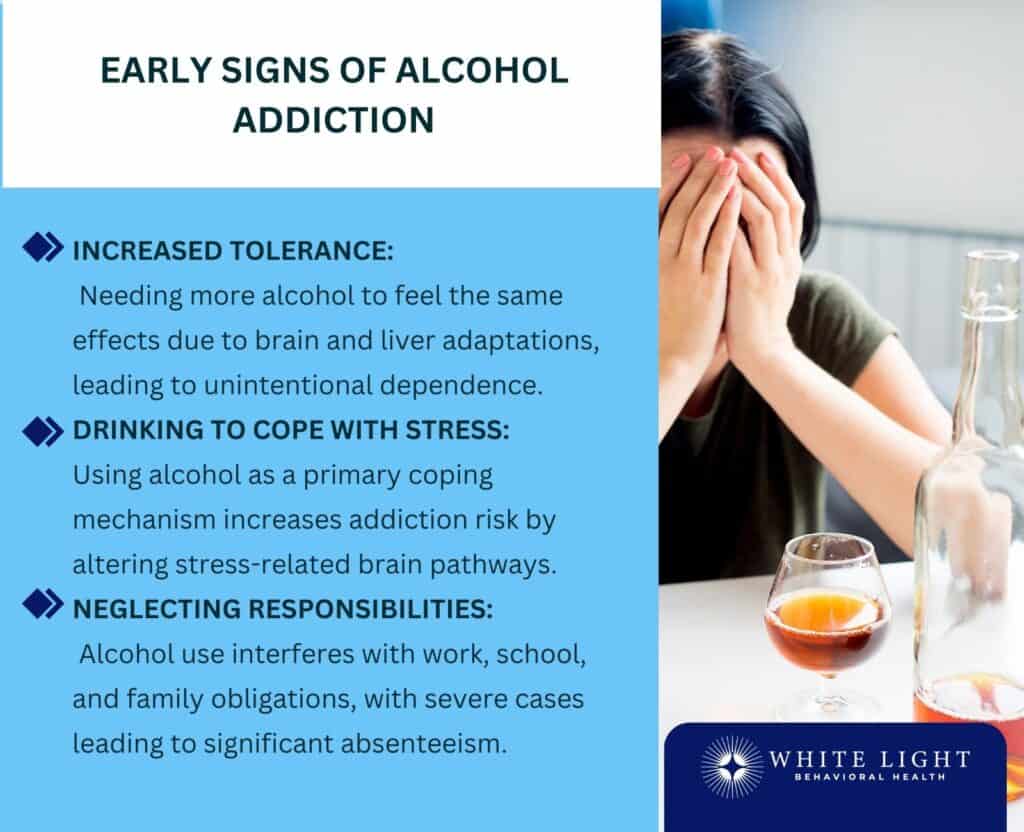
- Increased Tolerance: Developing a higher tolerance means that you need to consume more alcohol to experience the same effects. This leads to heavier and more frequent drinking, which accelerates dependency.
- Drinking to Cope with Stress: Using alcohol as a coping mechanism for stress, anxiety, or emotional pain is a common early sign of addiction.
This behavior quickly evolves into reliance, particularly if alcohol becomes the primary method for managing difficult emotions.
- Neglecting Responsibilities: As alcohol use escalates, individuals start to neglect work, school, or family obligations. Ignoring important responsibilities to prioritize drinking is a warning sign that addiction is developing.
Rediscover Life at White Light Behavioral Health
Get the compassionate support you deserve.
We're here to help you reclaim joy, wellness, and a brighter future.
Our Facility
What Are the Long-term Effects of Alcohol Addiction?
The long-term effects of alcohol addiction are chronic liver disease, cardiovascular problems, and cognitive impairment. These effects result from prolonged alcohol abuse, which gradually damages various organs and systems.
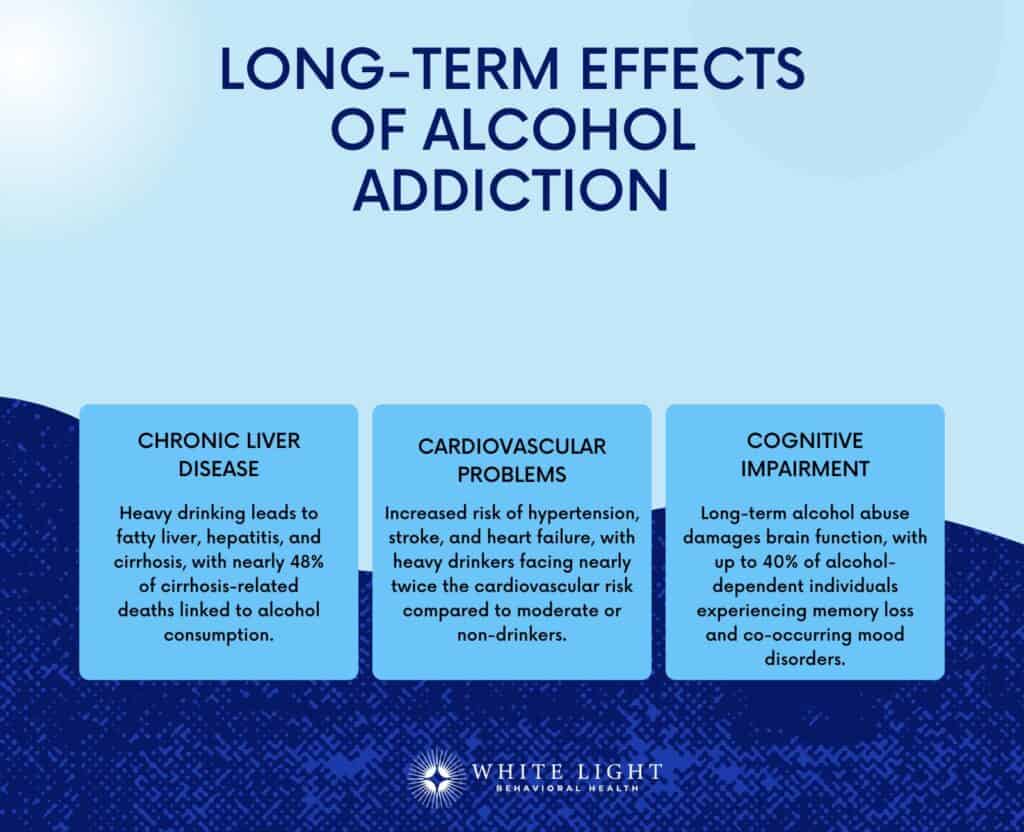
- Chronic Liver Disease: Prolonged alcohol consumption leads to liver diseases such as fatty liver, hepatitis, and cirrhosis. Over time, the liver’s ability to process alcohol and other toxins diminishes, resulting in irreversible damage and potentially life-threatening complications.
- Cardiovascular Problems: Alcohol addiction significantly increases the risk of developing hypertension, cardiomyopathy, and atrial fibrillation.
Chronic heavy drinking weakens the heart muscle, impairs blood circulation, and contributes to life-threatening conditions like stroke and heart failure. Chronic alcohol abuse damages heart muscles, disrupts blood circulation, and increases the risk of heart attacks and strokes.
- Cognitive Impairment: Long-term alcohol abuse negatively impacts brain function, causing memory loss, difficulty concentrating, and poor decision-making.
Persistent damage to neural pathways results in lasting cognitive deficits and increased susceptibility to mental health disorders.
What Are the Withdrawal Symptoms of Alcohol Addiction?
The withdrawal symptoms of alcohol addiction are anxiety, insomnia, sweating, nausea, tremors, and irritability. These symptoms are varied and range from mild to severe, depending on the level of dependency.
In severe cases, you experience seizures, hallucinations, and delirium tremens (DTS), a life-threatening condition that requires immediate medical intervention. Medical detox is important to safely manage these symptoms, as abrupt cessation of alcohol without supervision is dangerous or even fatal.
Where can I Seek Alcohol Addiction Treatment in Columbus, Ohio?
You can seek alcohol addiction treatment in Columbus, Ohio, through several reputable facilities offering both inpatient and outpatient services. There are government facilities and rehabilitation centres, such as White Light Behavioural Health, that provide individual therapy, group counselling, and medication-assisted treatment.
Will My Insurance Cover Alcohol Addiction Treatment In Columbus, Ohio?
Yes, your insurance is likely to cover alcohol addiction treatment in Columbus, Ohio, as mandated by the Mental Health Parity and Addiction Equity Act.
According to the Ohio Department of Mental Health and Addiction Services (2023), most health plans in Ohio are required to provide comparable coverage for mental health and substance use disorders, including detoxification, inpatient rehab, outpatient counselling, and medication-assisted treatment. Your coverage levels vary based on your plan, so contact the treatment center to verify your insurance with your insurer and any required authorizations.
Share This Post

Dr. Ryan Wakim M.D.
All author posts
TREATMENTS WE OFFER
Are you covered for treatment?













White Light Behavioral Health is an approved provider for Blue Shield and Tufts, while also accepting many other major insurance carriers.
Check Coverage Now!