
What Is a Drug? Definition, Usage, Types, Effects, Addiction

A drug, whether natural or synthetic, changes how your body or mind works once it’s taken. While some drugs are used medically, others are used recreationally or experimentally. The effects depend on the type, dosage, and how it’s taken.
According to OhioMHAS (2023), opioids are the most misused drugs in Columbus, with over 1,000 overdose deaths in Franklin County in 2022. In treatment centres, 42% of people cited opioids as their main drug, followed by meth (18%) and cocaine (12%).
Common usage patterns range from occasional experimentation to chronic dependence, especially when substances are misused. Drugs are classified into major types: stimulants (e.g., cocaine), depressants (e.g., alcohol, benzodiazepines), hallucinogens (e.g., LSD), and opioids (e.g., heroin, prescription painkillers). Each type affects the central nervous system in different ways, influencing mood, perception, or physical function. However, repeated use, especially in high doses or outside medical guidance, leads to harmful effects such as organ damage, mental health deterioration, and behavioral changes.
Addiction occurs when the brain’s reward circuitry is hijacked, leading to compulsive use despite negative consequences. Drugs fall into categories like stimulants, depressants, hallucinogens, and opioids. Eventually, quitting becomes difficult, and addiction takes hold, needing medical and emotional support to recover.
What Is a Drug?
A drug is any substance that alters physiological or psychological functions when introduced into the body. Scientifically, drugs interact with biological systems to produce effects ranging from therapeutic benefits to dependency.
Medically, drugs treat, prevent, or manage diseases, such as antibiotics for infections or pain relievers for discomfort.
Socially, drugs are consumed recreationally for pleasure or relaxation, with substances like alcohol, cannabis, or stimulants commonly used in social settings.
Prolonged or improper use of drugs leads to addiction, where the body and mind become dependent, resulting in serious health and societal consequences.
Did you know most health insurance plans cover substance use disorder treatment? Check your coverage online now.
What Are the Different Types of Drugs?
The different types of drugs are stimulants, depressants, opioids, hallucinogens, cannabinoids, inhalants, dissociative anesthetics, antidepressants, and antipsychotics. Their uses range from medical treatment to recreational consumption, leading to abuse and addiction.
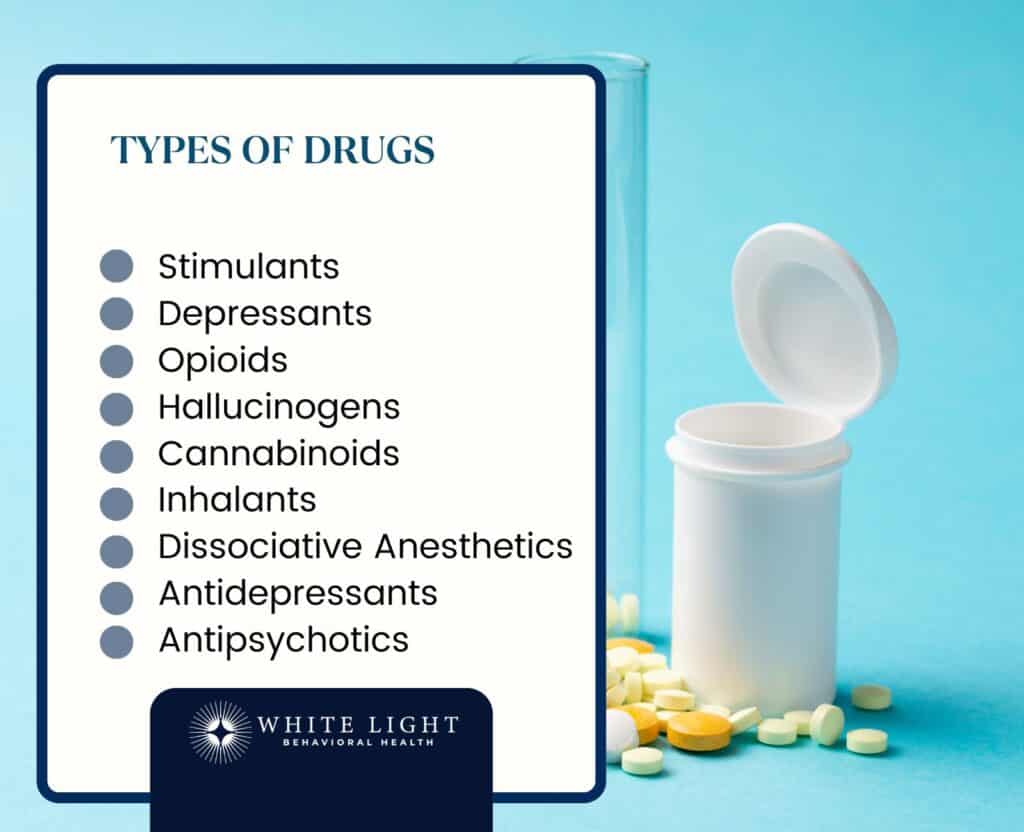
The different types of drugs include:
More Resources on Addiction:
1. Stimulants
Stimulants are drugs that increase brain activity, boost energy, and enhance alertness.
They stimulate the central nervous system and increase dopamine levels, leading to heightened focus and euphoria. However, they are highly addictive and misused, particularly among students and professionals seeking enhanced performance.
The common types of stimulants are as follows:
- Cocaine: Cocaine is a powerful stimulant that increases dopamine levels, leading to intense energy and euphoria. It is widely abused due to its addictive properties.
Of the 10.3 million Americans abusing stimulants, roughly 33.3% used cocaine only, according to results from the 2020 National Survey on Drug Use and Health by SAMHSA.
- Amphetamines: Prescription drugs like Adderall are used to treat ADHD, but are misused by students to enhance concentration.
- Methamphetamine: An illicit stimulant with a high addiction potential, known for its severe health consequences, including rapid weight loss and cognitive decline.
2. Depressants
Depressants are drugs that slow down brain function, producing a calming effect.
They work by enhancing the activity of GABA, a neurotransmitter that induces relaxation and sedation.
The common types of depressants are as follows:
- Benzodiazepines: Benzodiazepines are depressants that produce sedation and hypnosis, relieve anxiety and muscle spasms, and reduce seizures.
- Barbiturates: Barbiturates were once widely used for sleep disorders, now less common due to their high overdose risk.
- Alcohol: Alcohol is a widely consumed depressant that impairs cognitive function and motor skills, with excessive use leading to dependence and liver damage.
3. Opioids
Opioids are drugs known for their powerful pain-relieving properties, but they also have a high potential for addiction.
They work by binding to opioid receptors in the brain, increasing the release of endorphins and reducing pain perception. Examples of opioids include morphine, heroin, codeine, oxycodone, hydrocodone, and fentanyl.
4. Hallucinogens
Hallucinogens are substances that alter perception, mood, and cognitive function. A study by Columbia University researchers found that over 5.5 million people in the U.S. used hallucinogens in 2019, rising from 1.7% of the population aged 12 and older in 2002 to 2.2% in 2019.
The common types of hallucinogens are as follows:
- LSD: LSD is a potent psychedelic that alters perception and cognition. It is used recreationally for its mind-expanding effects
- Psilocybin (Magic Mushrooms): Psilocybin is a naturally occurring hallucinogen known for inducing profound psychological experiences.
- DMT: DMT is a short-lasting but intense hallucinogenic substance.
It is sometimes used in spiritual rituals.
Contact us today to schedule an initial assessment or to learn more about our services. Whether you are seeking intensive outpatient care or simply need guidance on your mental health journey, we are here to help.
5. Cannabinoids
Cannabinoids affect brain function by interacting with the endocannabinoid system, leading to both therapeutic and psychoactive effects. They are used medicinally for pain relief, anxiety, and epilepsy, but also recreationally for relaxation and euphoria.
The common types of cannabinoids are as follows:
- Marijuana (THC): THC is the primary psychoactive component responsible for the euphoric effects of cannabis.
- CBD: CBD is a non-psychoactive cannabinoid known for its therapeutic benefits, including anxiety and pain relief.
- Synthetic Cannabinoids: Synthetic Cannabinoids are lab-made chemicals that mimic THC but with unpredictable and harmful effects.
6. Inhalants
Inhalants are volatile substances that produce mind-altering effects when inhaled. These substances act rapidly on the brain and are commonly misused by adolescents due to their easy accessibility.
The common types of inhalants are as follows:
- Nitrous Oxide: Nitrous Oxide is commonly known as “laughing gas.” It is used in medical settings, but sometimes people abuse it recreationally.
- Glue and Paint Thinners: Glue and Paint Thinners contain toxic chemicals that produce a brief but intense high, leading to severe neurological damage.
- Gasoline and Solvents: Solvents or gasoline are highly dangerous inhalants that cause sudden sniffing death syndrome due to heart failure.
7. Dissociative Anesthetics
Dissociative anesthetics are drugs that distort perception and cause feelings of detachment from reality.
They work by blocking NMDA receptors, leading to altered sensory experiences. Phencyclidine (PCP) and ketamine are dissociative anesthetics that have been both therapeutically used and abused.
The common types of dissociative anesthetics are as follows:
- PCP: PCP was initially developed as an anesthetic, but now it is widely abused for its hallucinogenic and dissociative effects.
- Ketamine: Ketamine is used in medicine for anesthesia and depression treatment, but is misused recreationally.
8. Antidepressants
Antidepressants are drugs used to regulate mood by affecting serotonin and dopamine levels in the brain. While effective for treating depression and anxiety, some types have the potential for misuse.
The common types of antidepressants are as follows:
- SSRIs (Selective Serotonin Reuptake Inhibitors): Selective serotonin reuptake inhibitors (SSRIs) like Prozac and Zoloft increase serotonin levels to improve mood. SSRIs increase serotonin levels by blocking its reuptake, allowing more serotonin to pass messages between nerve cells.
According to the Mayo Clinic, they are called selective because they primarily affect serotonin rather than other neurotransmitters.
- SNRIs (Serotonin-Norepinephrine Reuptake Inhibitors): Serotonin and norepinephrine reuptake inhibitors (SNRIs) treat both depression and anxiety by enhancing serotonin and norepinephrine activity.
- MAOIs (Monoamine Oxidase Inhibitors): Monoamine Oxidase Inhibitors (MAOIs) are older antidepressants that require dietary restrictions but remain effective for severe depression.
9. Antipsychotics
Antipsychotics are medications used to manage schizophrenia, bipolar disorder, and severe mood disorders.
Antipsychotic medications work by changing brain chemistry to reduce psychotic symptoms. According to Mind, antipsychotics do this by blocking the action of dopamine, a neurotransmitter in the brain.
The common antipsychotics are as follows:
- Risperidone: Risperidone treats schizophrenia and bipolar disorder by balancing dopamine and serotonin levels.
- Clozapine: Clozapine is used for treatment-resistant schizophrenia but requires monitoring due to potential side effects.
- Haloperidol: Haloperidol is an older antipsychotic effective for severe psychiatric conditions but associated with movement disorders.
Rediscover Life at White Light Behavioral Health
Get the compassionate support you deserve. We're here to help you reclaim joy, wellness, and a brighter future.
Our Facility
How Are Drugs Scheduled in Ohio and the U.S.?
In ohio and the U.S., drugs are scheduled under the Controlled Substances Act (CSA), which classifies them into five categories based on their potential for abuse, accepted medical use, and safety. Schedule I drugs have the highest abuse potential and no medical use, while Schedule V drugs have the lowest abuse risk and accepted medical benefits.
The drugs are scheduled in the U.S. in the following way:
| Schedule | Potential for Abuse | Accepted Medical Use | Safety | Examples |
| Schedule I | High | No | Unsafe | Heroin, LSD |
| Schedule II | High | Yes | Risky | Oxycodone, Methamphetamine |
| Schedule III | Moderate | Yes | Moderate | Ketamine, Anabolic Steroids |
| Schedule IV | Low | Yes | Safer | Xanax, Valium |
| Schedule V | Lowest | Yes | Safest | Cough syrups with codeine |
What Are Prescription Drugs and Over-the-Counter Drugs?
Prescription drugs and over-the-counter drugs are medications used to treat various health conditions, but they differ in availability and regulation. Prescription drugs are FDA-approved medications that require a doctor’s prescription, such as antibiotics or painkillers, and are classified as controlled substances due to potential misuse.
Over-the-counter (OTC) drugs, like ibuprofen or allergy medications, are available without a prescription and are considered safe for self-use. However, misuse of both types leads to health risks, including dependency and overdose.
How Are Drugs Administered?
Drugs are administered through various methods, including oral, injection, inhalation, and topical. The method of administration determines how quickly and effectively a drug reaches the bloodstream and its target site.
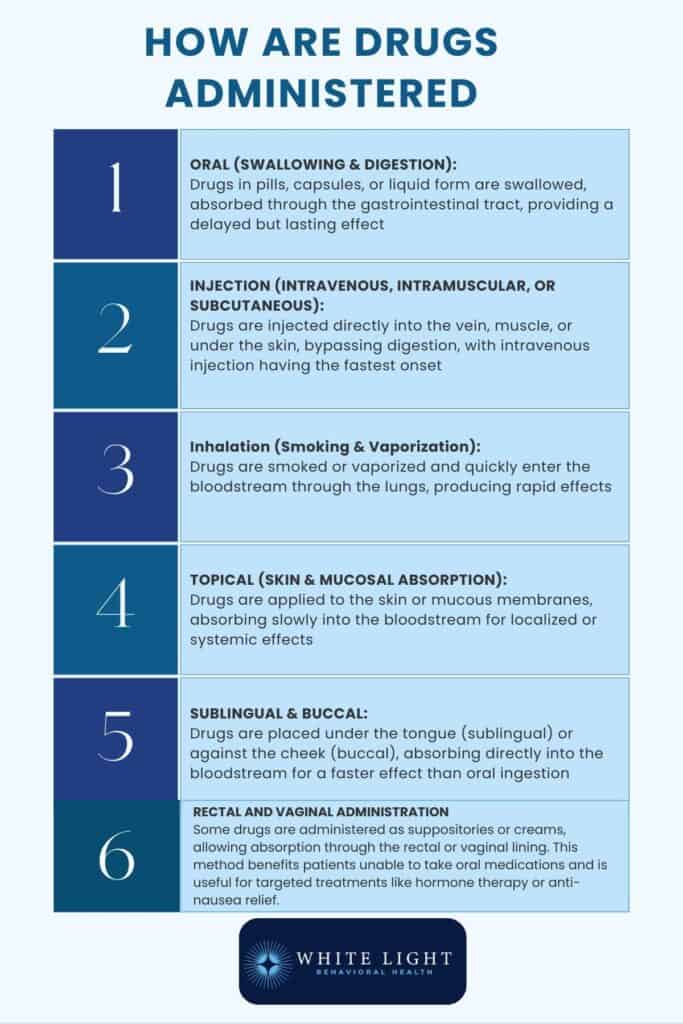
The drugs are administered through the following methods:
- Oral Administration: Oral administrated is the most common method, where drugs are taken by mouth in the form of tablets, capsules, or liquids. They pass through the digestive system before being absorbed into the bloodstream, leading to slower onset but prolonged effects.
- Injection (Intravenous, Intramuscular, Subcutaneous): Drugs are also injected directly into the body to provide rapid or controlled absorption.
Intravenous (IV) administration delivers the drug directly into the bloodstream for immediate effect, while intramuscular (IM) and subcutaneous (SC) injections allow slower absorption.
- Inhalation: Drugs are breathed in as vapors, aerosols, or smoke, allowing rapid absorption through the lungs into the bloodstream. This method provides almost immediate effects, commonly used for asthma medications, nicotine, and some recreational drugs.
- Topical Application: Drugs are applied directly to the skin, eyes, or mucous membranes, allowing localized effects with minimal systemic absorption.
Creams, patches, and ointments are commonly used for pain relief, skin conditions, or hormone therapy.
What Are the Short-Term and Long-Term Effects of Drugs?
The short-term and long-term effects of drugs impact both physical and mental health, ranging from temporary changes in mood and perception to lasting organ damage and cognitive decline. Short-term effects occur immediately or within hours of use, while long-term effects develop over prolonged use, sometimes leading to irreversible harm.
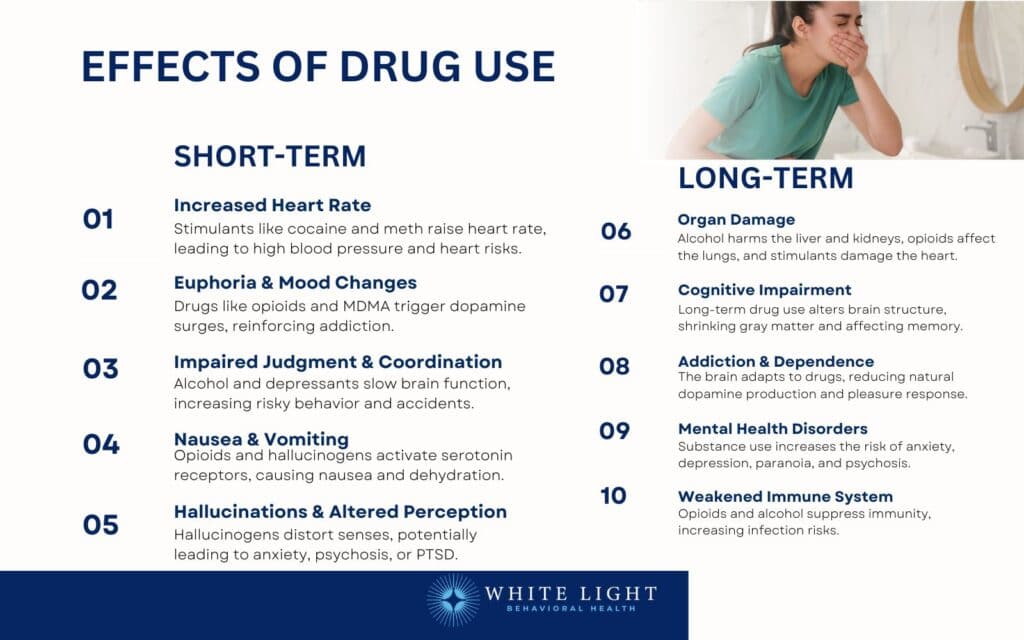
The short-term effects of drugs are as follows:
- Increased Heart Rate: Many stimulants, such as cocaine and methamphetamine, cause a rapid increase in heart rate by stimulating the central nervous system. This leads to palpitations, high blood pressure, and, in severe cases, heart attack or stroke.
- Euphoria and Mood Changes: Drugs like opioids, cannabis, and MDMA cause a surge in dopamine, creating intense pleasure and altered mood.
This reinforcement mechanism contributes to repeated use and potential addiction.
- Impaired Judgment and Coordination: Alcohol and depressants like benzodiazepines slow down brain function by enhancing GABA, a neurotransmitter responsible for relaxation. This leads to poor decision-making, accidents, and risky behavior.
- Nausea and Vomiting: Opioids and hallucinogens trigger nausea by interacting with serotonin receptors in the brain and gut, leading to discomfort and dehydration.
The long-term effects of drugs are as follows:
- Organ Damage: Chronic alcohol use leads to liver disease, opioids suppress respiration and cause lung infections, and stimulants like methamphetamine damage the heart and blood vessels, increasing stroke risk.
- Cognitive Impairment: Long-term drug use alters brain structure and function, particularly in areas responsible for memory and decision-making.
- Mental Health Disorders: Prolonged substance use increases the risk of anxiety, depression, and psychosis. Hallucinogen use causes persistent hallucinations, while stimulant abuse is linked to paranoia and mood swings.
What Are the Risks of Drug Use?
The risks of drug use are addiction, overdose, and long-term health complications, as well as legal and financial consequences.
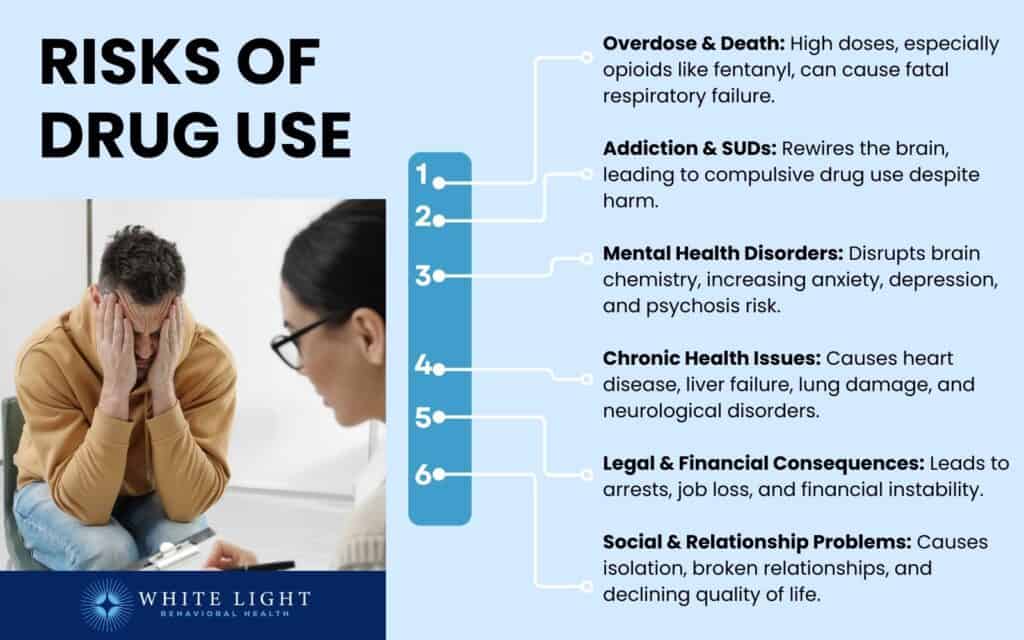
The risks of drug use are as follows:
- Overdose and Death: Drug overdoses, particularly from opioids and synthetic drugs like fentanyl, have surged. Overdoses occur when high doses of a substance overwhelm the body, leading to respiratory failure, organ shutdown, or fatal poisoning.
- Addiction and Substance Use Disorders (SUDs): Repeated drug use rewires the brain’s reward system, leading to substance use disorders, where a person compulsively seeks and uses drugs despite harmful consequences.
- Mental Health Disorders: Many drugs disrupt brain chemistry, leading to anxiety, depression, psychosis, and cognitive impairment.
Long-term stimulant or hallucinogen use, for example, triggers permanent psychiatric conditions, increasing the risk of self-harm or suicidal thoughts.
- Chronic Physical Health Problems: Drug use is linked to serious conditions such as heart disease, liver failure, lung damage, and neurological disorders. Long-term alcohol use, for instance, causes cirrhosis, while chronic stimulant abuse leads to cardiovascular failure and stroke.
What Are the Risks of Combining Multiple Drugs?
The risks of combining multiple drugs are severe and lead to dangerous drug interactions, heightened side effects, and an increased risk of overdose.
Polydrug use, such as mixing opioids with alcohol or benzodiazepines, causes respiratory depression, unconsciousness, or even death.
Are you covered for treatment?


White Light Behavioral Health is an approved provider for Blue Cross Blue Shield and TUFTS, while also accepting many other major insurance carriers.
Check Coverage Now!How Does Drug Addiction Develop?
Drug addiction develops when repeated drug use alters the brain’s reward system, leading to compulsive substance use despite harmful consequences. Initially, drugs trigger a surge of dopamine, reinforcing pleasurable experiences and encouraging repeated use. Over time, the brain adapts, leading to tolerance, where higher doses are needed to achieve the same effect.
As dependence grows, withdrawal symptoms emerge when drug use stops, driving continued use to avoid discomfort. This cycle results in psychological dependence, where cravings and compulsive behavior make quitting drug addiction difficult, ultimately leading to addiction.
What Is the Difference Between Drug Use, Misuse, and Abuse?
Drug use, misuse, and abuse differ in terms of intent and levels of interaction with substances. Drug use refers to taking medications or substances as prescribed or intended, such as using antibiotics for an infection.
Misuse involves using a drug in a way not prescribed or intended, like taking higher doses of painkillers for faster relief. Abuse is the intentional use of a substance for its psychoactive effects, leading to harm, such as using opioids to get high.
Misuse escalates into abuse, increasing the risk of addiction and health complications.
Share This Post

Dr. Ryan Wakim M.D.
All author posts
TREATMENTS WE OFFER
Are you covered for treatment?














White Light Behavioral Health is an approved provider for Blue Shield and Tufts, while also accepting many other major insurance carriers.
Check Coverage Now!