
Ketamine, originally developed as an anesthetic, has gained notoriety as a recreational drug due to its hallucinogenic properties. Despite its medical benefits, ketamine’s addictive nature has led to widespread misuse and dependency among users.
HIGHLIGHTS:
- Ketamine addiction, commonly referred to as “Special K,” has devastating consequences on physical health, mental well-being, and social functioning.
- A complex interplay of biological, behavioral, and environmental factors contributes to the development of ketamine addiction.
- The side effects of ketamine addiction are far-reaching, impacting physical health, mental well-being, social relationships, and overall quality of life.
- Recovery from ketamine addiction is possible through comprehensive treatment and aftercare, addressing both physical and psychological dependencies.
What Is Ketamine?
Ketamine is a powerful dissociative anesthetic initially developed in the 1960s, primarily for use in anesthesia and sedation during medical procedures. It acts quickly and has a short duration of action, making it suitable for emergencies and short-duration surgeries, as discussed by Morgan, C. J. A. et al. 2012, “Ketamine use: a review”.
Despite its medical utility, ketamine has also gained popularity as a recreational drug due to its hallucinogenic and dissociative effects. Commonly known as “Special K,” ketamine is often abused illicitly, leading to serious health consequences.
Did you know most health insurance plans cover substance use disorder treatment? Check your coverage online now.
Is Ketamine Addictive?
There is increasing evidence that ketamine causes psychological addiction. Despite its medical benefits, ketamine has a high potential for abuse and dependence.
Regular use of ketamine often leads to tolerance, where higher doses are needed to achieve the desired effects, and dependence, where individuals experience withdrawal symptoms when they stop using the drug. According to Bokor, G. et al. 2014, “Ketamine: An Update on Its Abuse,” prolonged ketamine abuse results in addiction, characterized by compulsive drug-seeking behavior despite negative consequences.
Ketamine addiction has serious implications for physical and mental health, as well as social and occupational functioning. Therefore, it is essential to recognize the addictive potential of ketamine and seek help if struggling with its misuse.
WHAT ARE THE SIGNS AND SYMPTOMS OF KETAMINE ADDICTION?
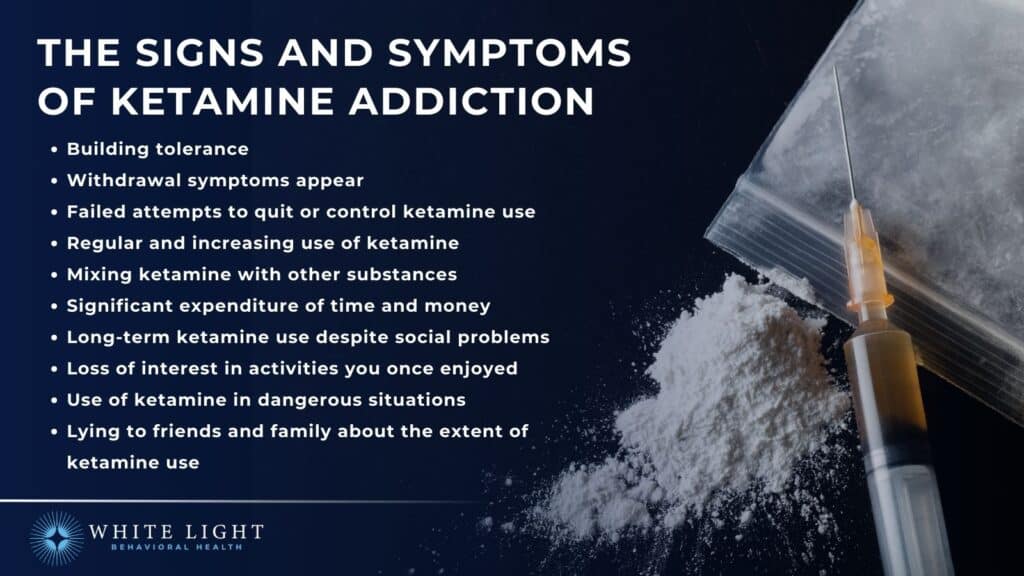
Recognizing the signs and symptoms of ketamine addiction is crucial for early intervention and treatment. Individuals struggling with ketamine addiction often exhibit various physical, psychological, and behavioral changes indicative of their dependence on the drug.
These symptoms vary in severity and presentation from person to person, but their presence indicates a developing or established ketamine addiction that requires professional intervention and support.
- Building tolerance, requiring larger doses for the same effects.
- Experiencing withdrawal symptoms when attempting to stop or reduce ketamine use.
- Unsuccessful attempts to quit or control ketamine use.
- Regular and escalating ketamine use, not limited to specific occasions.
- Mixing ketamine with other substances to enhance effects or mitigate side effects.
- Spending significant time and money acquiring, using, and recovering from ketamine use.
- Continued ketamine use despite relationship problems, poor performance at work or school, and legal or financial difficulties.
- Loss of interest in activities once enjoyed.
- Using ketamine in hazardous situations, such as while driving or operating machinery.
- Lying to friends and family about the extent of ketamine use.
WHAT ARE THE EFFECTS OF KETAMINE ADDICTION?
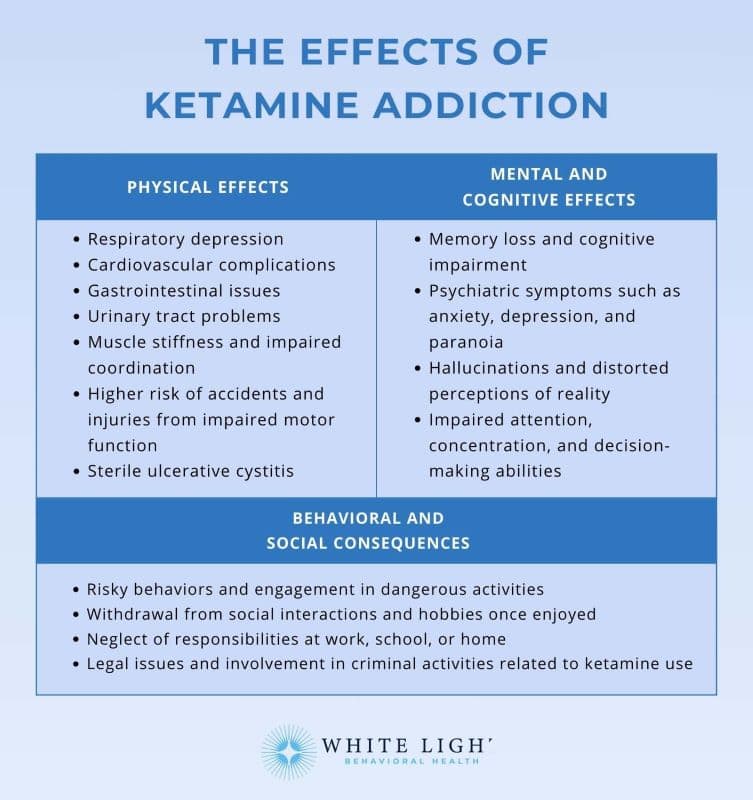
Ketamine addiction has profound effects on both physical and mental health, as well as social and behavioral aspects of an individual’s life; according to Beerten, S. G. et al. 2023, “Ketamine misuse: an update for primary care.”
What Are The Physical Effects of Ketamine Addiction?
Physically, ketamine addiction leads to a range of adverse effects. These effects vary in severity depending on the duration and intensity of ketamine use.
- Respiratory depression
- Cardiovascular complications such as elevated heart rate and high blood pressure
- Gastrointestinal issues like abdominal pain and nausea
- Urinary tract problems are often referred to as “Ketamine bladder syndrome.”
- Muscle stiffness and impaired coordination
- Increased risk of accidents and injuries due to impaired motor function
- Sterile ulcerative cystitis
What Are The Mental And Cognitive Effects of Ketamine Addiction?
Ketamine addiction also impacts mental health and cognitive function, significantly impairing daily functioning and quality of life.
- Memory loss and cognitive impairment
- Psychiatric symptoms such as anxiety, depression, and paranoia
- Hallucinations and distorted perceptions of reality
- Impaired attention, concentration, and decision-making abilities
Contact us today to schedule an initial assessment or to learn more about our services. Whether you are seeking intensive outpatient care or simply need guidance on your mental health journey, we are here to help.
What Are The Behavioral And Social Consequences Of Ketamine Use?
Socially, ketamine addiction strains relationships with family, friends, and coworkers, leading to isolation and social withdrawal. It also contributes to financial difficulties and social stigma associated with substance abuse.
- Risky behaviors and engagement in dangerous activities
- Withdrawal from social interactions and hobbies once enjoyed
- Neglect of responsibilities at work, school, or home
- Legal issues and involvement in criminal activities related to ketamine use
How Does Ketamine Affect The Brain?
Ketamine affects the brain by interfering with transmitting neurotransmitters such as glutamate and dopamine. It binds to receptors in the brain, particularly NMDA receptors, leading to altered perception, mood, and cognition.
A study from Wang, C. et al. 2013, “Brain damages in ketamine addicts as revealed by magnetic resonance imaging,” revealed lesions in many regions of the brain of ketamine addicts. Chronic ketamine use disrupts normal brain function and contributes to the development of addiction and other mental health disorders.
More Resources on Addiction:
WHAT ARE THE CAUSES OF KETAMINE ADDICTION?

Ketamine addiction stems from a combination of biological, behavioral, and environmental factors.
What are the Biological Causes of Ketamine Addiction?
Biologically, some individuals are predisposed to ketamine addiction. When the following biological factors interact with environmental and behavioral influences, they contribute to the development of ketamine addiction.
- Genetic factors: Family history of substance use disorders or mental health issues increases the likelihood of developing addiction.
- Neurochemical imbalances: Ketamine affects neurotransmitter systems in the brain, altering mood and reward pathways. Variations in these systems often influence susceptibility to addiction.
What are the Behavioral Causes of Ketamine Addiction?
Behaviorally, certain patterns and habits increase the risk of ketamine addiction. These behavioral factors reinforce the cycle of ketamine use and contribute to the progression of addiction over time.
- Seeking escape or self-medication: Individuals use ketamine as a way to cope with stress, trauma, or underlying mental health issues.
- Social influences: Peer pressure and exposure to social environments where ketamine use is normalized encourages experimentation and continued use.
- Reinforcement: The pleasurable effects of ketamine, such as euphoria and dissociation, reinforce drug-seeking behavior and contribute to the development of addiction.
Rediscover Life at White Light Behavioral Health
Get the compassionate support you deserve. We're here to help you reclaim joy, wellness, and a brighter future.
Our Facility
What are the Environmental Causes of Ketamine Addiction?
Environmentally, various factors influence the likelihood of ketamine addiction, including:
- Availability and accessibility: Easy access to ketamine, whether through social networks, clubs, or illicit markets, increases the likelihood of experimentation and regular use.
- Socioeconomic factors: Social deprivation, poverty, and unemployment also contribute to the normalization of ketamine use as a coping mechanism or form of escapism.
- Cultural attitudes: Shifting cultural norms and attitudes toward drug use influence perceptions of ketamine and contribute to its acceptance and prevalence in certain communities.
WHAT ARE THE TREATMENT OPTIONS FOR KETAMINE ADDICTION?
Treatment options for ketamine addiction typically involve evidence-based approaches aimed at addressing problematic patterns of ketamine use and promoting recovery. Here are some common treatment options:
- Outpatient treatment: Many individuals find outpatient treatment programs beneficial, as they offer structured support without requiring residential stays. Outpatient therapy sessions address the psychological aspects of addiction and provide tools for managing cravings and triggers.
- Inpatient rehab: Individuals with severe ketamine addiction or co-occurring mental health disorders often benefit from inpatient rehabilitation (residential rehab).
This involves staying at a treatment center for an extended period and engaging in intensive therapy, medical supervision, and support.
- Behavioral therapies: Since there are no FDA-approved medications specifically for ketamine addiction, behavioral interventions play a crucial role in treatment. Cognitive-behavioral therapy (CBT), dialectical behavior therapy (DBT), and motivational interviewing (MI) are commonly used to help individuals identify triggers, develop coping strategies, and modify addictive behaviors.
- Holistic therapies: Many treatment programs incorporate holistic therapies such as yoga, mindfulness meditation, art therapy, and acupuncture alongside traditional treatments.
These holistic approaches address the physical, emotional, and spiritual aspects of addiction and promote overall well-being.
- Support groups: Participation in peer support groups like Narcotics Anonymous (NA) or SMART Recovery provides valuable support, accountability, and encouragement during recovery. These groups offer opportunities to share experiences, learn from others, and build a supportive network.
- Medication-assisted treatment (MAT): While there are no medications approved specifically for ketamine addiction, certain drugs are found helpful in managing withdrawal symptoms or co-occurring mental health disorders.
These medications are typically part of a comprehensive treatment plan tailored to the individual’s needs.
- Aftercare planning: Comprehensive aftercare planning is essential for maintaining long-term sobriety. This involves ongoing therapy, participation in support groups, regular medical check-ups, and developing strategies to prevent relapse.
Aftercare helps individuals transition back to daily life and provides ongoing support as they navigate challenges in recovery.
What Are The Benefits Of Cognitive Behavioral Therapy For Ketamine Addiction Intervention?
Cognitive Behavioral Therapy (CBT) is one of the most effective treatments for individuals struggling with ketamine use disorder. CBT focuses on changing the thought patterns and behaviors that contribute to substance abuse.
Here are key aspects of CBT in the context of ketamine addiction treatment:
- Identifying Triggers: CBT helps individuals identify the situations, thoughts, and feelings that trigger ketamine use. By recognizing these triggers, individuals can develop strategies to avoid or manage them more effectively.
- Coping Strategies: CBT equips individuals with coping mechanisms to deal with cravings and the urge to use ketamine.
This can include relaxation techniques, mindfulness, and other stress-reduction practices.
- Behavioral Modification: The therapy aims to change the behavior associated with drug use by encouraging healthier activities and routines. This might involve setting goals, monitoring progress, and rewarding oneself for staying drug-free.
- Addressing Underlying Issues: CBT often delves into underlying issues such as anxiety, depression, or trauma that may contribute to ketamine use.
Addressing these root causes can significantly reduce the likelihood of relapse.
- Relapse Prevention: CBT includes training in recognizing early warning signs of relapse and developing a solid plan to prevent it. This may involve support networks, continued therapy sessions, and lifestyle adjustments.
Numerous studies have demonstrated the effectiveness of CBT in treating various substance use disorders, including ketamine addiction.
It provides individuals with practical tools to manage their addiction, improve their mental health, and enhance their overall quality of life. By focusing on both the psychological and behavioral aspects of addiction, CBT helps individuals build a strong foundation for long-term recovery.
WHAT ARE THE FORMS OF KETAMINE?
| Form | Description |
| Powder | Ketamine is commonly found in powder form and is snorted, smoked, or dissolved in liquid. |
| Liquid | Ketamine is also available in liquid form, typically used for intravenous administration. |
| Capsules | Powdered ketamine is sometimes encapsulated for oral consumption. |
| Glass Vials | Liquid ketamine is stored and distributed in glass vials. |
Ketamine is often cut with various substances to increase its volume or alter its effects. Common cutting agents include:
- Chalk
- Acetaminophen (paracetamol)
- Aspirin
- Opioid-based prescription medicines
- Procaine (a local anesthetic)
These substances are added to dilute the ketamine and pose additional health risks to users.
WHAT ARE THE STREET NAMES FOR KETAMINE?
- K
- Special K
- Cat Valium
- Kit Kat
- Super K
- Super Acid
- Purple
- Vitamin K
- Jet
- Jet K
- Special La Coke
- Blind Squid
- K-Ways
- K-Hold
- Kelly’s Day
- Honey Oil
- Barry Farrell
- Donkey
- Green
- Green K
- Keller
- Kitty Flip
- Super C
- Wonky
- Wobble
Are you covered for treatment?








White Light Behavioral Health is an approved provider for Blue Cross Blue Shield and TUFTS, while also accepting many other major insurance carriers.
Check Coverage Now!CAN YOU OVERDOSE ON KETAMINE?
Ketamine overdose is possible and often results in severe health complications or even death, as discussed by Chaves, T. V. et al. 2022, “Overdoses and deaths related to the use of ketamine and its analogues: a systematic review”. Symptoms of ketamine overdose include respiratory depression, vocal cord spasms (more common with intravenous delivery), low blood pressure, slow heart rate, seizures, and coma.
Overdoses are more likely when taking extremely high doses or combining ketamine with other substances such as alcohol or cocaine. Illicitly manufactured ketamine also contains dangerous adulterants, such as fentanyl, which increases the risk of overdose and death.
What is Ketamine Bladder Syndrome
Long-term ketamine use leads to a condition known as Ketamine Bladder Syndrome or ‘K Bladder.’ This syndrome is characterized by damage to the bladder and urinary tract, which results in symptoms such as frequent urination, pain during urination, and urinary incontinence.
If left untreated, Ketamine Bladder Syndrome progresses to severe bladder damage, requiring surgical intervention or even complete removal of the bladder. Additionally, heavy ketamine use has been linked to liver damage, abdominal pain, and tolerance, increasing the risk of serious health complications over time.
WHAT ARE THE WITHDRAWAL SYMPTOMS OF KETAMINE?
The withdrawal symptoms of ketamine vary in severity and duration depending on factors such as the individual’s usage patterns and physiology. It’s important to note that these withdrawal symptoms are often challenging to manage alone, and seeking professional help from a healthcare provider or addiction specialist is recommended for support during the withdrawal process.
Common withdrawal symptoms include:
- Anxiety
- Depression
- Cravings
- Insomnia
- Fatigue
- Irritability
- Difficulty Concentrating
- Sweating
- Headaches
- Nausea
HOW LONG DOES KETAMINE STAY IN YOUR SYSTEM?
Ketamine typically remains detectable in the system for one to three days after use. However, individual variations affect this timeframe. While the drug is usually cleared from the body within a few days, it persists in hair follicles for longer, allowing for detection over an extended time.
CAN KETAMINE ADDICTION CO-OCCUR WITH OTHER SUBSTANCE ADDICTIONS?
Ketamine addiction frequently co-occurs with other substance addictions, such as cocaine addiction. Individuals struggling with addiction often turn to multiple substances to achieve the desired effects or alleviate the side effects of one drug with another. This poly-substance use complicates addiction treatment and increases the risk of adverse health effects.
Did you know most health insurance plans cover substance use disorder treatment? Check your coverage online now.
HOW TO PREVENT KETAMINE ADDICTION In The First Place?

Preventing ketamine addiction involves adopting proactive strategies to avoid the pitfalls of substance abuse. Here are five key ways to prevent ketamine addiction:
- Understanding the risks: Educate yourself about the potential dangers of ketamine use, including its addictive nature and possible health consequences. Recognize that recreational use of ketamine leads to addiction and other adverse effects.
- Avoiding temptation and peer pressure: Surround yourself with positive influences and avoid environments where ketamine or other drugs are readily available.
Develop effective strategies for resisting peer pressure and saying no to substance use.
- Seeking help for mental health issues: Address underlying mental health issues such as anxiety, depression, or trauma through professional support and therapy. Learn healthy coping mechanisms to manage stress and emotional challenges without relying on drugs like ketamine.
- Identifying and addressing risk factors: Be aware of personal and environmental factors that increase your susceptibility to ketamine addiction, such as family history of substance abuse, social isolation, or high-stress environments.
Take proactive steps to mitigate these risk factors and build a supportive network of friends and family.
- Cultivating a balanced lifestyle: Focus on maintaining a healthy and balanced life by setting goals, pursuing hobbies and interests, and building strong relationships. Engage in activities that bring fulfillment and joy without the need for substance use—practice stress management techniques to cope with life’s challenges without turning to drugs like ketamine.
WHAT ARE THE FACTS AND STATISTICS ON THE PREVALENCE OF KETAMINE ABUSE?
Ketamine abuse has become a significant concern, with various statistics shedding light on its prevalence and impact:
Age Group Year Number of Users Reported Adolescents (12th grade) 2014 1.5%* Youth (12-17 years old) 2013 Approximately 41,000** Young Adults (18-25 years old) 2013 Almost 540,000**
How does ketamine addiction compare to Ritalin addiction in terms of symptoms and treatment approaches?
Ketamine addiction and Ritalin addiction both involve the misuse of medications but differ in their effects and treatment approaches. Ketamine addiction symptoms include dissociation, hallucinations, bladder issues, and cognitive impairments.
Treatment typically involves behavioral therapies, counseling, and support groups. Ritalin addiction, commonly associated with misuse by individuals seeking increased focus and energy, leads to symptoms such as insomnia, increased heart rate, and potential for anxiety or paranoia.
Treatment for Ritalin addiction also involves behavioral therapies and counseling, with an emphasis on managing withdrawal symptoms and addressing the underlying reasons for misuse.
What are the long-term effects of ketamine use on mental health?
Long-term use of ketamine can have significant adverse effects on mental health. Chronic use is associated with cognitive impairments, including memory deficits and difficulties with attention and learning.
Psychological effects such as depression, anxiety, and persistent dissociation may also occur. Additionally, prolonged use increases the risk of developing ketamine-induced psychosis, a condition characterized by hallucinations and delusions.
Addressing these mental health issues requires comprehensive treatment, including psychotherapy and support from mental health professionals.
Can tobacco addiction increase the risk of developing ketamine addiction?
Tobacco addiction may increase the risk of developing ketamine addiction due to shared behavioral and psychological factors. Both addictions involve the use of substances to cope with stress, anxiety, or other underlying issues.
The presence of one addiction can lower inhibitions and increase the likelihood of experimenting with other substances, including ketamine. Understanding the interplay between different addictions is crucial for developing effective prevention and treatment strategies that address all aspects of an individual’s substance use and mental health.
Contact us today to schedule an initial assessment or to learn more about our services. Whether you are seeking intensive outpatient care or simply need guidance on your mental health journey, we are here to help.
Are there any long-term effects of ketamine addiction on physical health?
Yes, long-term ketamine addiction can lead to various physical health complications, including respiratory depression, cardiovascular issues, gastrointestinal problems, urinary tract damage, and muscle stiffness.
How does ketamine addiction affect cognitive function and mental health?
Ketamine addiction can impair memory, attention, and decision-making abilities. It may also contribute to psychiatric symptoms such as anxiety, depression, paranoia, and hallucinations.
Is ketamine addiction more prevalent among certain age groups?
Ketamine abuse is reported across different age groups, with adolescents and young adults being particularly at risk. Statistics show significant ketamine use among both high school seniors and young adults aged 18-25.