Hydrocodone Addiction In Columbus, Ohio: Symptoms, Causes, Effects, and Treatment

Hydrocodone addiction, commonly found in medications like Vicodin, is characterized by an intense craving for the drug due to its euphoric effects and pain-relieving properties. Over time, you lose control over drug use, continuing despite significant negative impacts on your health and well-being.
According to a report by the Ohio Department of Health (2024), unintentional drug overdose deaths involving natural and semi-synthetic opioids (e.g., hydrocodone) decreased by 20% from 2022 to 2023 in Ohio.
Common signs of hydrocodone include behavioral changes like compulsive drug-seeking and using hydrocodone despite harmful consequences.
Treatment for hydrocodone addiction involves a comprehensive approach, including detoxification, medications, behavioral therapies, and support systems.
What is Hydrocodone Addiction?
Hydrocodone addiction is a condition developed from the misuse and dependency on hydrocodone, a key ingredient in medications like Vicodin. This addiction starts with the drug’s pain-relieving and euphoric effects, which lead to intense cravings.
According to Cofano, S. & Patel, P., et al. 2024, “Hydrocodone,” With repeated use, hydrocodone alters brain chemistry, resulting in tolerance and dependence, making it difficult to control consumption despite harmful health impacts.
The drug’s legitimate medical use and easy accessibility significantly contribute to its high addiction potential, progressing from prescribed use to dependency and severe withdrawal symptoms when use is stopped.
Did you know most health insurance plans cover substance use disorder treatment? Check your coverage online now.
What are the Symptoms of Hydrocodone Addiction?
The symptoms of Hydrocodone addiction include compulsive drug-seeking behaviors, drowsiness and poor coordination, mood swings, and anxiety. These symptoms manifest through behavioral, physical, and psychological symptoms.
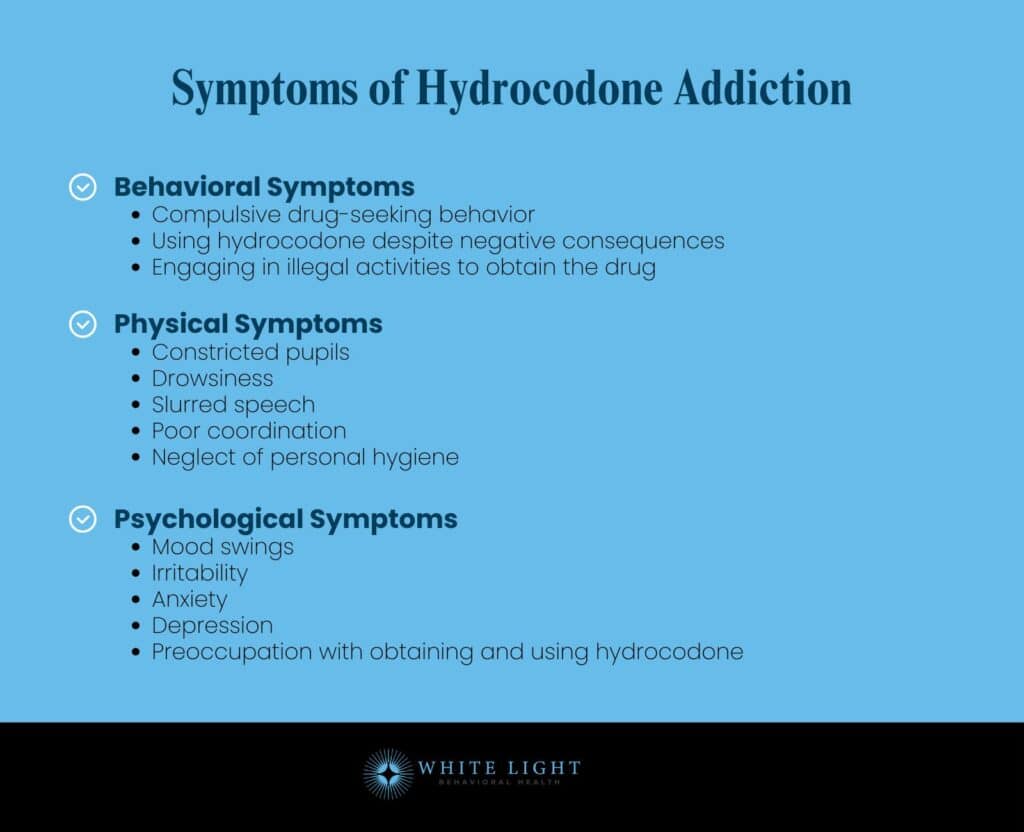
The behavioral symptoms of Hydrocodone addiction include:
- Compulsive drug-seeking behavior
- Using hydrocodone despite negative consequences
- Engaging in illegal activities to obtain the drug
The physical symptoms of Hydrocodone addiction include:
More Resources on Addiction:
- Constricted pupils
- Drowsiness
- Slurred speech
- Poor coordination
- Neglect of personal hygiene
The psychological symptoms of Hydrocodone addiction include:
- Mood swings
- Irritability
- Anxiety
- Depression
- Preoccupation with obtaining and using hydrocodone
What are the Causes of Hydrocodone Addiction?
The causes of Hydrocodone addiction include genetic predisposition, depression or PTSD, chronic pain management needs, and environmental factors. A combination of these factors contributes to hydrocodone dependency and addiction patterns.
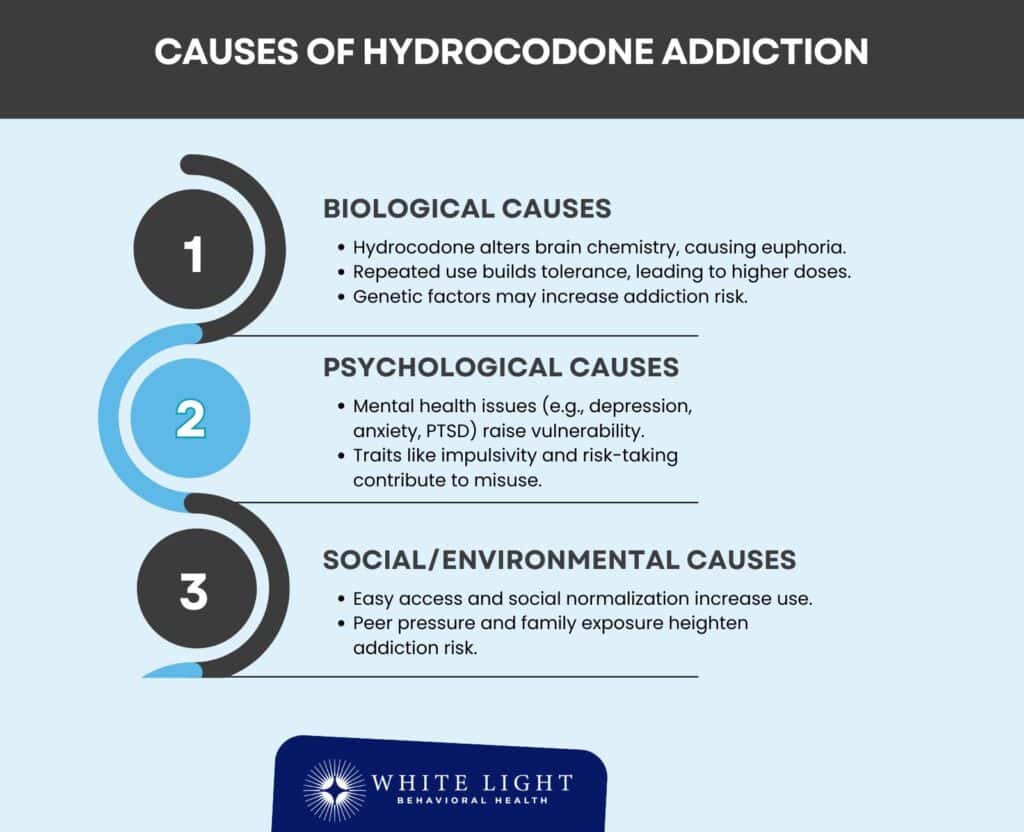
The causes of hydrocodone addiction are explained below:
- Biological Causes of Hydrocodone Addiction: Hydrocodone functions as a semi-synthetic opioid. Hydrocodone binds to opioid receptors in the brain and spinal cord.
This binding alters neurotransmitter levels.The interaction blocks pain signals and induces euphoria and relaxation.
Repeated hydrocodone use leads to tolerance. Tolerance necessitates higher doses to achieve the same effects.
Variations in opioid receptor genes and inherited traits related to dopamine regulation predispose individuals to opioid dependence, including hydrocodone addiction. - Psychological Causes of Hydrocodone Addiction: Psychologically, individuals with underlying mental health conditions such as depression, anxiety disorders, or post-traumatic stress disorder (PTSD) are particularly vulnerable to hydrocodone addiction.
- Certain personality traits, such as impulsivity, sensation-seeking behavior, and risk-taking, contribute to addiction development.
- Social and Environmental Causes of Hydrocodone Addiction: The availability and cultural acceptance of hydrocodone influence addiction risk.
Peer influence in environments where hydrocodone misuse normalizes prompts individuals to experiment with the drug.Access to prescription opioids in home settings and familial influences expose individuals to substances like Vicodin.
This exposure increases the likelihood of addiction.
What are the Effects of Hydrocodone Addiction?
The effects of hydrocodone addiction include various physical, psychological, and social impacts that significantly affect an individual’s well-being over time.
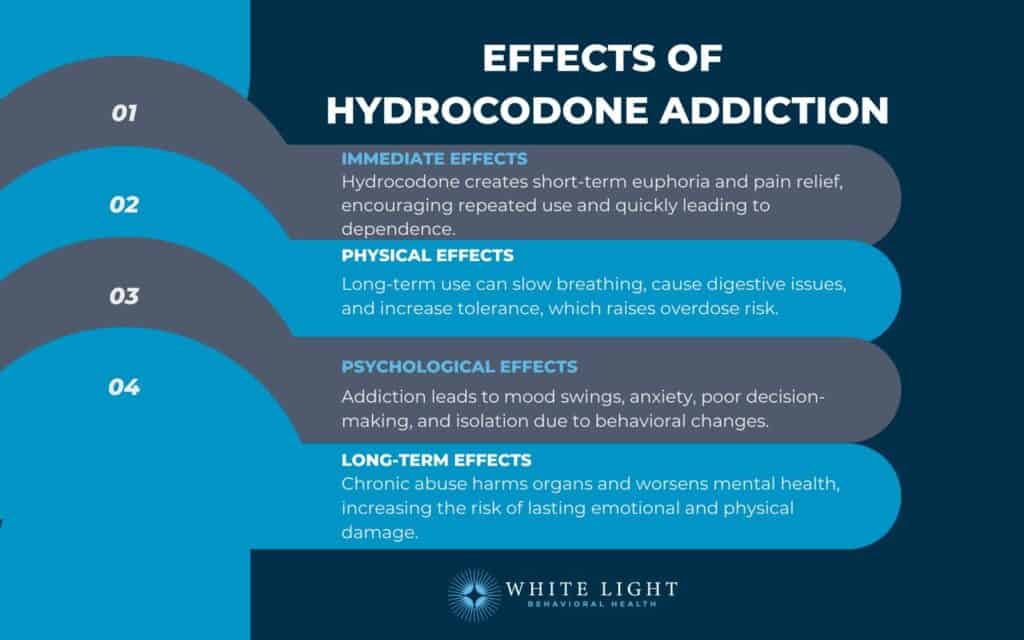
The effects of hydrocodone addiction are explained below:
- Immediate Effects of Hydrocodone Addiction: Hydrocodone ingestion induces feelings of euphoria, calmness, and pain relief. These immediate effects serve as reinforcing factors for continued use.
Individuals seeking pain relief or euphoric properties often pursue these effects.However, initial benefits lead to dependence and addiction as the body acclimates to the drug’s effects.
- Physical Effects of Hydrocodone Addiction: Long-term hydrocodone use results in various physical complications.
Respiratory depression represents one of the most serious complications, causing dangerously slow and shallow breathing. This condition leads to life-threatening situations.
Other physical effects include nausea, vomiting, constipation, and tolerance development.Tolerance necessitates higher doses to achieve the desired effects.
Increased tolerance elevates overdose risk and complicates treatment efforts, as higher doses become essential for pain management or achieving euphoric effects. - Psychological Effects of Hydrocodone Addiction: Hydrocodone addiction leads to profound changes in mood, cognition, and behavior. Users experience frequent mood swings, anxiety, and depression, exacerbating existing mental health conditions or triggering new ones.
Cognitive function impairment affects decision-making abilities and overall mental clarity.Behavioral changes, such as secrecy about drug use and engaging in risky behaviors to obtain the drug, strain relationships and result in social isolation.
- Long-term Effects of Hydrocodone Addiction: Chronic hydrocodone abuse causes lasting and severe consequences.
Physical health deteriorates, with potential long-term damage to the liver and urinary tract, among other organs.
The toll on mental health remains profound, with increased risks of anxiety disorders, depression, and other psychiatric conditions.
What are the Treatment Options for Hydrocodone Addiction?
Treatment options for hydrocodone addiction include detoxification, medications, behavioral therapies, and support systems. These treatments manage cravings and help to change the psychological triggers or factors leading to the addiction.
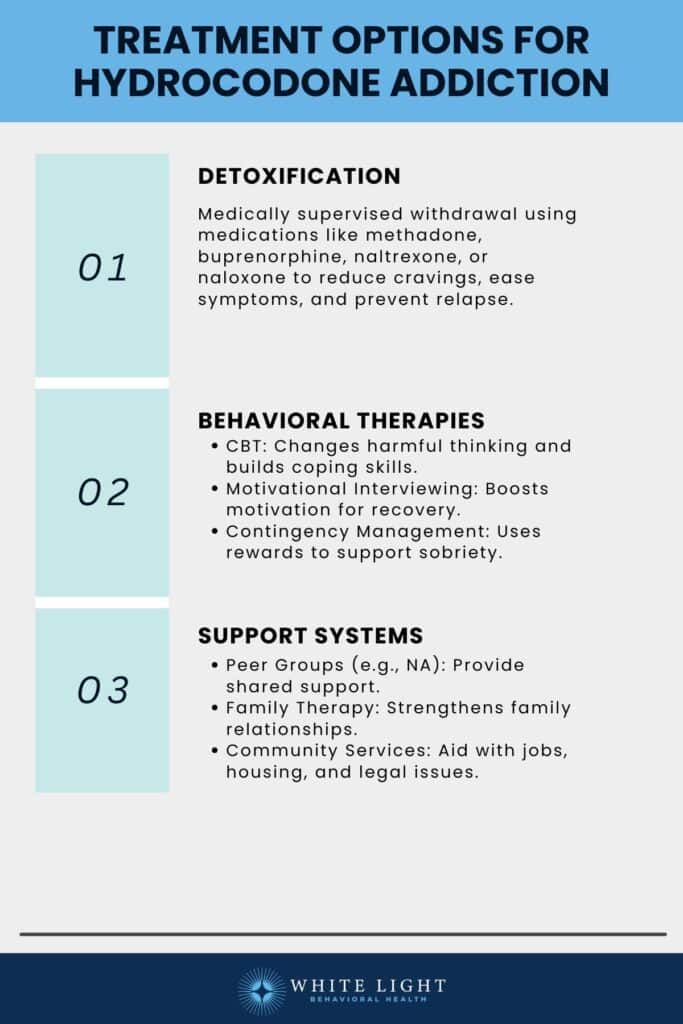
The treatment options for hydrocodone addiction are explained below:
Detoxification
Detoxification is the initial step in treatment and involves medically supervised withdrawal management to alleviate physical dependence on hydrocodone safely.
During detox, individuals experience a range of withdrawal symptoms, such as nausea, sweating, insomnia, and intense cravings. Medically supervised settings ensure these symptoms are managed effectively, minimizing discomfort and health risks.
The commonly used medications include:
- Methadone
- Buprenorphine
- Naltrexone
- Naloxone
Methadone and buprenorphine are opioid agonists that help reduce cravings and withdrawal symptoms by acting on the same brain receptors as hydrocodone but with a more controlled and safer profile. Naltrexone and naloxone, on the other hand, are opioid antagonists that block the effects of opioids, helping to prevent relapse.
Contact us today to schedule an initial assessment or to learn more about our services. Whether you are seeking intensive outpatient care or simply need guidance on your mental health journey, we are here to help.
Behavioral Therapies
Cognitive Behavioral Therapy Improves Treatment Outcomes for Prescription Opioid Users in Primary Care Buprenorphine Treatment. Behavioral therapies are integral to addressing the psychological aspects of addiction.
The types of behavioral therapies for treating hydrocodone addiction include:
- Cognitive-behavioral therapy (CBT) helps individuals recognize and modify negative thought patterns and behaviors associated with substance use. It teaches coping skills, stress management techniques, and strategies to avoid relapse triggers.
- Motivational interviewing (MI) enhances intrinsic motivation to change by exploring ambivalence and helping individuals resolve their uncertainties about treatment.
- Contingency management utilizes positive reinforcement to encourage abstinence and adherence to treatment goals.
Support Systems
Support systems provide essential resources for ongoing recovery. They include the following:
- Peer support groups such as Narcotics Anonymous (NA) offer mutual aid, understanding, and encouragement from others with similar experiences.
- Family therapy addresses familial dynamics affected by addiction, improving communication and fostering a supportive environment for recovery.
- Community resources such as vocational training, housing assistance, and legal aid help individuals rebuild their lives and reintegrate into society after treatment.
What are the Withdrawal Symptoms of Hydrocodone Addiction?
Withdrawal symptoms of Hydrocodone addiction include physical discomfort, emotional changes, and digestive issues within the first few days. These symptoms can vary in intensity and duration as the body adjusts.
Here are the withdrawal symptoms of Hydrocodone addiction:
- Early Symptoms: Within hours of the last dose, individuals experience anxiety, agitation, muscle aches, and sweating.
- Peak Symptoms: Withdrawal symptoms typically peak within 72 hours and include nausea, vomiting, diarrhea, and intense drug cravings.
- Protracted Withdrawal: Psychological symptoms such as depression, insomnia, and cravings persist for weeks to months after discontinuing Hydrocodone.
How quickly can someone become addicted to Hydrocodone?
Someone can become addicted to hydrocodone within a few weeks of regular use, especially at higher doses. The withdrawal symptoms reinforce the addiction as it makes it difficult to stop taking the drug.
Can Hydrocodone addiction be treated successfully in Columbus, Ohio?
Yes, hydrocodone addiction can be treated successfully in Columbus, Ohio, with a combination of medical treatment, behavioral therapy, and support systems.
Medical treatment can help manage withdrawal symptoms and cravings, behavioral therapy can address the psychological aspects of addiction, and support systems provide a network of individuals who can offer guidance and encouragement throughout the recovery process.
Rediscover Life at White Light Behavioral Health
Get the compassionate support you deserve. We're here to help you reclaim joy, wellness, and a brighter future.
Our Facility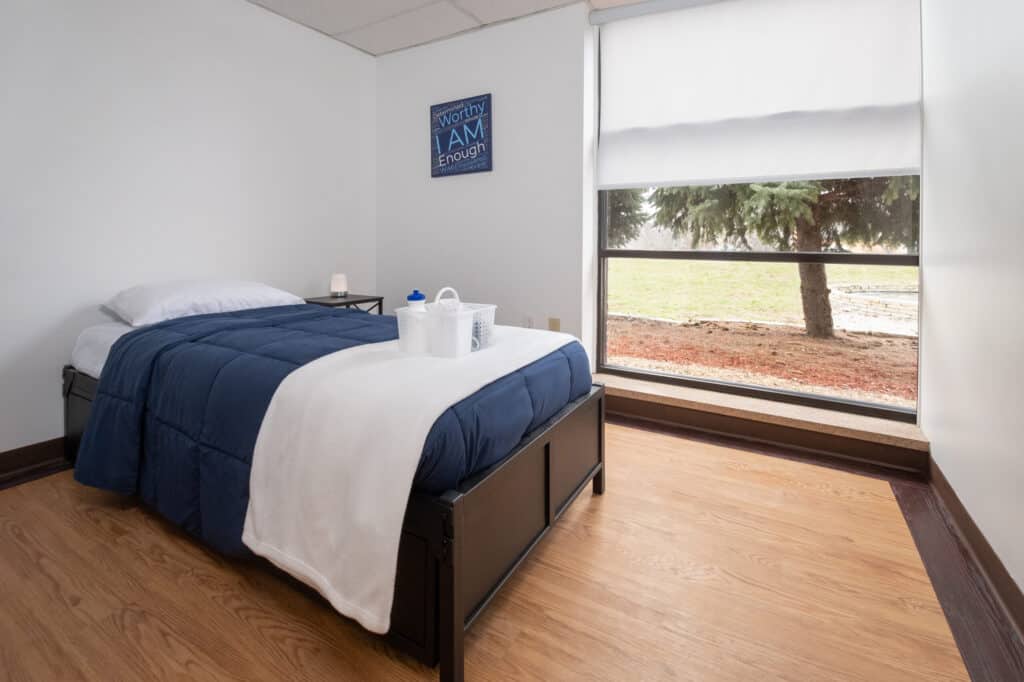
Are There Non-Opioid Alternatives for Pain Management?
Yes, there are non-opioid alternatives for pain management. These include non-opioid medications, physical therapy, acupuncture, and lifestyle changes such as exercise and diet modifications.
Can Someone Overdose on Hydrocodone?
Yes, someone can overdose on hydrocodone. An overdose occurs, especially if the drug is taken in higher doses or combined with other substances, leading to life-threatening respiratory depression.
Share This Post

Dr. Ryan Wakim M.D.
All author posts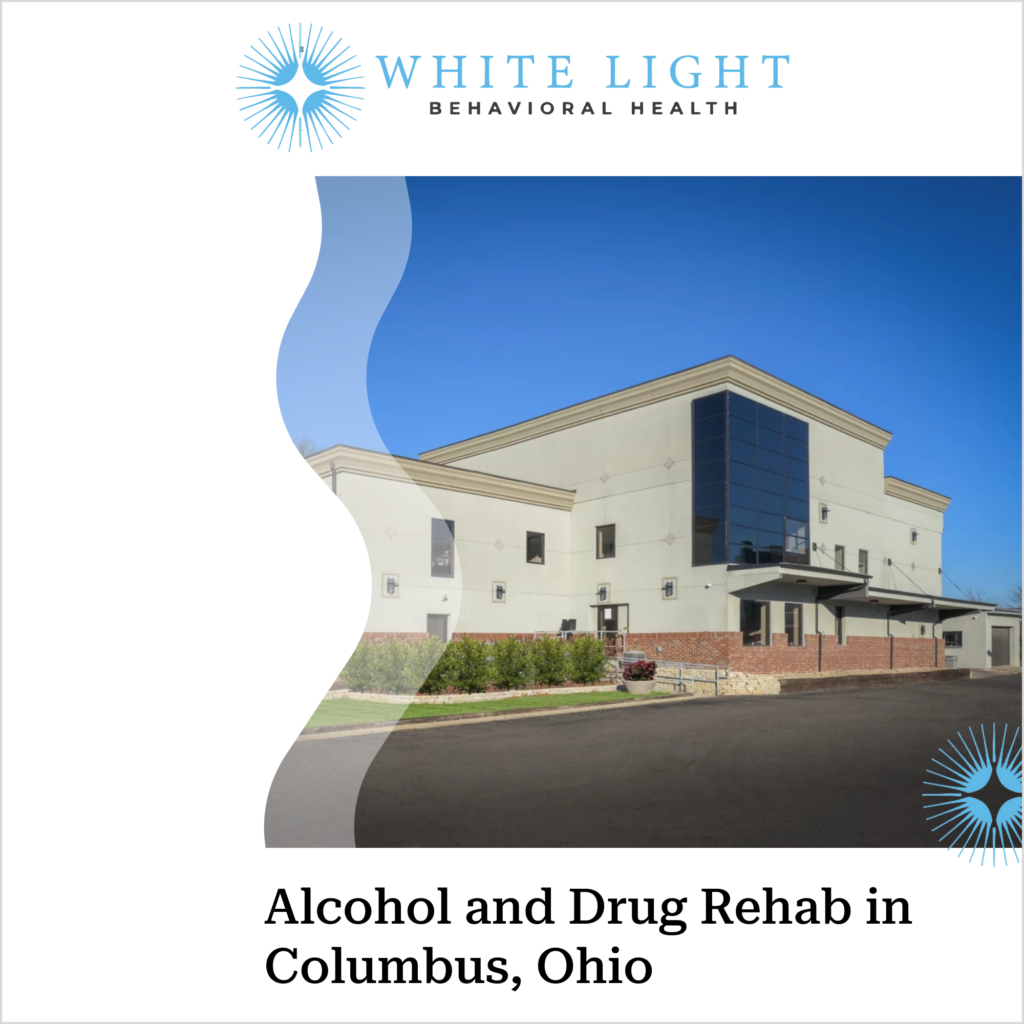
TREATMENTS WE OFFER
Are you covered for treatment?














White Light Behavioral Health is an approved provider for Blue Shield and Tufts, while also accepting many other major insurance carriers.
Check Coverage Now!