What Are The Long-term Strategies To Prevent Relapse In Cocaine Addiction?

Cocaine addiction is characterized by a compulsive pattern of use that leads to significant impairment or distress. Relapse involves the return to cocaine use after a period of abstinence, which occurs even after successful treatment. According to Schwartz EKC et al.’s 2022 study titled “Cocaine Use Disorder (CUD),” published in the Substance Abuse & Rehabilitation Journal, relapse is a common occurrence, with estimates indicating that 40-60% of individuals relapse within a year following treatment for cocaine use disorder (CUD).
Recognizing warning signals is for preventing relapse. Key behavioral signs include increased cravings for cocaine, spending more time with individuals who use substances, and engaging in high-risk behaviors reminiscent of past addiction patterns.
Emotional withdrawal from family and friends, along with feelings of depression or isolation, also indicate an increased risk for relapse. Denial about recovery status or the need for help is another significant warning sign.
The stages of relapse are categorized into three phases: emotional, mental, and physical. Emotional relapse involves negative feelings that lead to cravings but does not yet include thoughts of using cocaine.
According to Melemis SM’s 2015 research, titled “Relapse Prevention and the Five Rules of Recovery,” published in the Yale Journal of Biology and Medicine, 40-60% of individuals recovering from cocaine addiction experience a relapse within one year after completing treatment for any substance use disorder. Mental relapse occurs when an individual begins to think about using again and rationalizes it internally.
Finally, physical relapse is the actual return to cocaine use. Recognizing these early stages helps individuals implement preventive measures before a full relapse occurs.
10 Strategies to Prevent Relapse in Cocaine Adiction
To effectively prevent relapse in cocaine addiction, several long-term strategies are implemented, including developing a solid support network, engaging in ongoing therapy (such as cognitive-behavioral therapy), and practicing healthy coping mechanisms to handle stress and cravings.
Did you know most health insurance plans cover substance use disorder treatment? Check your coverage online now.
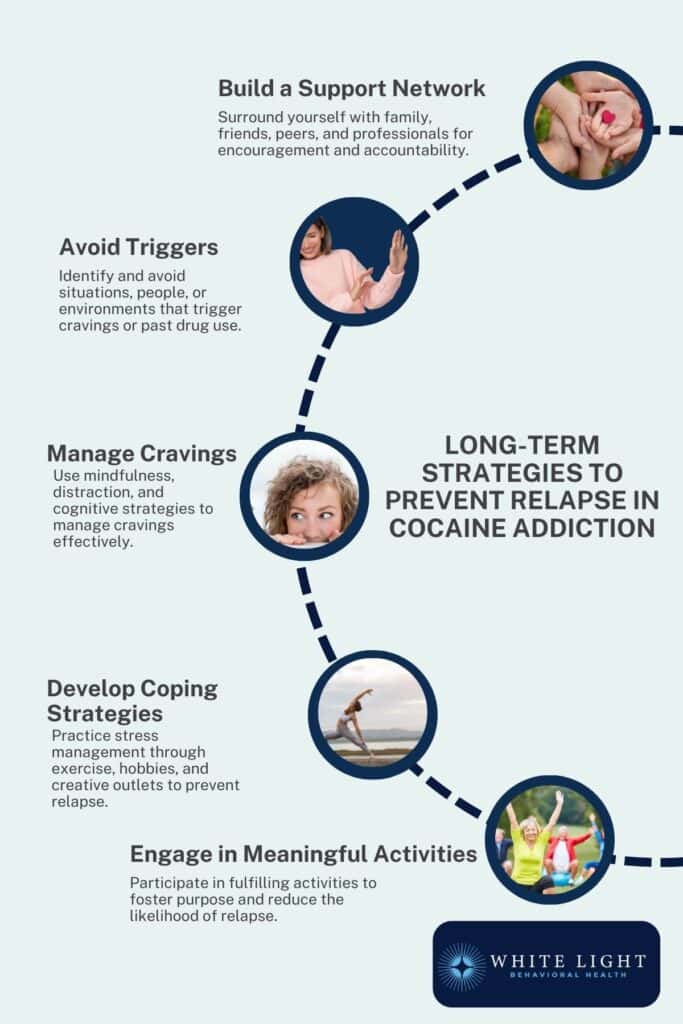
1. Build a Support Network
A strong support network is for individuals recovering from cocaine addiction.
More Resources on Addiction:
It provides emotional and practical assistance, helping to reduce feelings of isolation and loneliness. Family and friends offer encouragement and accountability.
Peer groups, such as Narcotics Anonymous (NA) or SMART Recovery, provide a sense of community and shared experience, which are important for maintaining motivation and commitment to sobriety. Research shows that 94% of attendees report benefits related to substance use, with 71% indicating a reduction in alcohol or drug use since their last meeting, according to Dekkers A et al.’s study titled, “Personal Recovery Depends on NA Unity” published in the Substance Abuse Treat Prevention Policy Journal.
Therapists and counselors play an essential role in recovery by offering professional guidance, coping strategies, and therapeutic interventions tailored to individual needs.
2. Avoid Triggers
Triggers include specific people, places, or emotional states associated with past drug use. Recognizing these triggers is important for effective relapse prevention.
To manage triggers, individuals should develop strategies such as avoiding high-risk environments and situations that lead to cravings.
Changing daily routines, avoiding specific social settings, or engaging in alternative activities help minimize exposure to triggers. Examples of these triggers include parties where drugs are present, certain TV shows or music that is associated with past drug use, and even people who have enabled the individual’s drug use in the past.
3. Manage Cravings
Cravings are intense desires for cocaine that occur due to its impact on the brain’s reward system. Environmental cues or emotional states often trigger them.
Effective techniques include distraction methods, mindfulness practices, and cognitive-behavioral strategies that focus on reframing thoughts related to cravings.
Apps designed for addiction recovery provide tools for tracking cravings and connecting with support networks. Examples of apps designed for addiction are Sober Time, SoberTool, and Nomo.
Some tools for tracking cravings and connecting with support networks include Quite That, which provides personalized tips and reminders for managing cravings, and Sober Grid, which connects users with a global community of people in recovery. These tools are helpful for individuals who are just starting their journey toward sobriety and benefit from additional support and guidance.
4. Develop Coping Strategies
Developing coping strategies is important for managing stress and emotional challenges without resorting to substance use.
Engaging in regular exercise, pursuing hobbies, or exploring creative outlets serve as healthy alternatives to drug use. Having a proactive plan in place helps individuals navigate challenging situations effectively.
Coping strategies help individuals manage stress and emotional challenges by providing healthy and productive outlets for their emotions. For example, Research has shown that people report being 30% less stressed and 10% happier when involved in leisure activities, according to Pressman SD et al.’s 2009 study titled “Association of Enjoyable Leisure Activities With Psychological and Physical Well-being” published in the Psychosomatic Medicine Journal.
5. Engage in Meaningful Activities
Engaging in meaningful activities fosters a sense of purpose and fulfillment, which reduces the likelihood of relapse.
Participating in community service, learning new skills, or pursuing personal interests enhances well-being and distracts from cravings. This helps in building new, positive habits and routines that replace old, destructive behaviors.
It also provides opportunities for social interaction and connection with others, which combat feelings of isolation and loneliness.
Engaging in useful activities for 8 days is associated with life satisfaction, subjective vitality and purpose in life, according to Hooker A S et al’s 2019 study titled, “Engaging in Personally Meaningful Activities is Associated with Meaning Salience and Psychological Well-being” published in the Journal of Positive Psychology.
Contact us today to schedule an initial assessment or to learn more about our services. Whether you are seeking intensive outpatient care or simply need guidance on your mental health journey, we are here to help.
6. Practice Self-Care
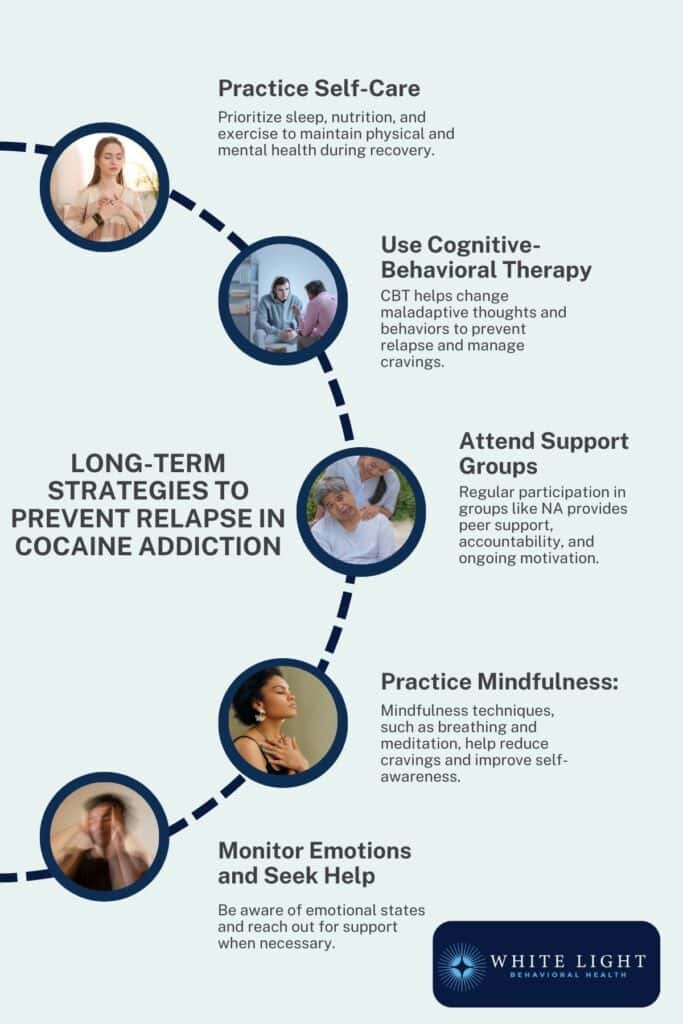
Prioritizing self-care is vital for maintaining both physical and mental health during recovery. Establishing regular sleep patterns, balanced nutrition, and consistent exercise routines supports overall health and resilience against cravings.
Getting 7 to 9 hours of sleep, keeping a regular sleep/wake pattern, having a regular bedtime, exercising frequently, and developing a contemplative practice are all suggestions for better sleep. Avoiding many substances late in the day can also help you sleep better, according to Baranwal N et al.’s 2023 study titled “Sleep Physiology, Pathophysiology, and Sleep Hygiene” published in the Progress in Cardiovascular Diseases Journal.
7. Use Cognitive-Behavioral Therapy
Cognitive-behavioral therapy is an evidence-based approach that helps individuals identify and change maladaptive thoughts related to drug use. CBT techniques include cognitive restructuring, behavioral activation, and skills training that equip individuals with tools to manage cravings and prevent relapse.
In 28 randomized controlled studies, 3938 individuals were involved. Relapse/recurrence rates were 31.6% in the CBT and its modifications group and 41.3% in the control group. The probability of experiencing a new depressive episode was considerably decreased by CBT and its modifications (RR, 0.73, 95%CI, 0.64-0.83), as seen in Chen H et al. ‘s study titled, “Effectiveness of CBT and its Modifications for Prevention of Relapse/Recurrence in Depression” published in the Journal of Affective Disorders.
This highlights the effectiveness of CBT in not just preventing relapse for substance use disorders but also for other mental health issues such as depression.
8. Attend Support Groups
Support groups like NA and SMART Recovery offer structured environments where individuals share experiences and receive peer encouragement. Regular participation in support groups fosters accountability and provides ongoing motivation for maintaining sobriety.
People who had friend networks made up of peers who engaged in negative behaviors were three and a half times more likely to experience relapse than those whose friend networks consisted of peers who engaged in positive behaviors, according to a study that looked at women six months after residential treatment, according to Lookatch SJ et al.’s 2019 review titled, “Effects of Social Support and 12-Step Involvement on Recovery among People in Continuing Care for Cocaine Dependence” published in the Substance Use Misuse Journal. This highlights the importance of surrounding oneself with a positive and supportive community while in recovery.
Being part of a support group also provides individuals with the opportunity to share their experiences and receive peer encouragement. Hearing about others’ struggles and successes can provide valuable insights and help individuals feel less alone in their journey towards sobriety.
9. Practice Mindfulness
Mindfulness involves being present in the moment without judgment. Simple exercises such as breathing techniques or guided meditation help individuals manage cravings effectively.
A systematic review of 30 experimental studies found that various forms of mindfulness practice can effectively reduce cravings for substances such as food, cigarettes, and alcohol. The findings suggest that while immediate craving reductions result from working memory load, longer-term benefits are linked to the inhibition of craving-related responses, according to Tapper K’s 2017 study titled, “Mindfulness and Craving”, published in the Clinical Psychology Review Journal.
Incorporating mindfulness into daily routines can improve overall well-being, as it helps reduce stress and increase self-awareness. This is beneficial during recovery, as it allows individuals to focus on self-care and prioritize their mental health.
10. Monitor Emotions and Seek Help
Awareness of one’s emotions is crucial for recognizing when additional support is needed. Developing a plan for reaching out to professionals or support networks when experiencing emotional distress prevents relapse.
Incorporating these strategies into daily life creates a robust framework for sustaining recovery from cocaine addiction over the long term. Peer support plays a significant role in mitigating emotional distress.
A qualitative study among medical interns revealed that informal debriefing sessions led by senior residents provided essential emotional support. Interns noted that when senior residents openly shared their emotional experiences, it fostered a safe environment for them to express their feelings.
This mutual sharing strengthened their emotional resilience and coping mechanisms during challenging situations, according to Moore, K.A., et al.’s study titled “I Wish They Had Asked”: a Qualitative Study of Emotional Distress and Peer Support During Internship” Journal of General Internal Medicine.
Rediscover Life at White Light Behavioral Health
Get the compassionate support you deserve. We're here to help you reclaim joy, wellness, and a brighter future.
Our Facility
What are the Warning Signs of Cocaine Relapse?
The warning signs of cocaine relapse are emotional, mental, behavioral, and social, according to McKay JR et al.’s 1995 study titled, “An Examination of the Cocaine Relapse Process,” published in the Drug & Alcohol Dependence Journal.
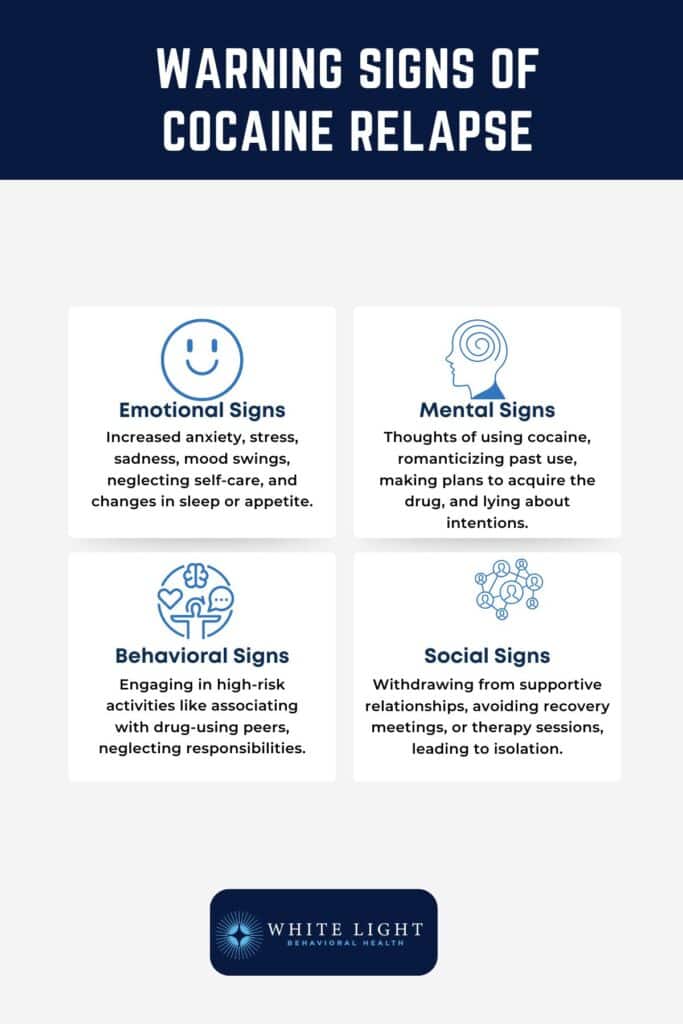
Emotional signs manifest as negative feelings such as anxiety, stress, or sadness, along with declining self-care and changes in sleep or appetite. Individuals experience mood swings and increased isolation, which heighten their vulnerability to relapse.
Mental signs include thoughts about using cocaine again, romanticizing past use while ignoring its negative consequences, and making plans to acquire the drug. This internal conflict leads to lying about their intentions or desires regarding substance use.
Behavioral signs involve a return to high-risk activities associated with past substance use, such as spending time with drug-using peers or neglecting responsibilities. Lastly, social signs include withdrawing from supportive relationships and avoiding recovery meetings or therapy sessions, which further isolate the individual and increase the likelihood of relapse.
What Behaviors Lead To Cocaine Relapse?
Behaviors that lead to cocaine relapse stem from emotional and situational triggers. Within a year of therapy, almost 85% of people relapse and resume drug usage, according to Sinha R’s 2011 study titled “New Findings on Biological Factors Predicting Addiction Relapse Vulnerability.” published in the Current Psychiatry Reports Journal.
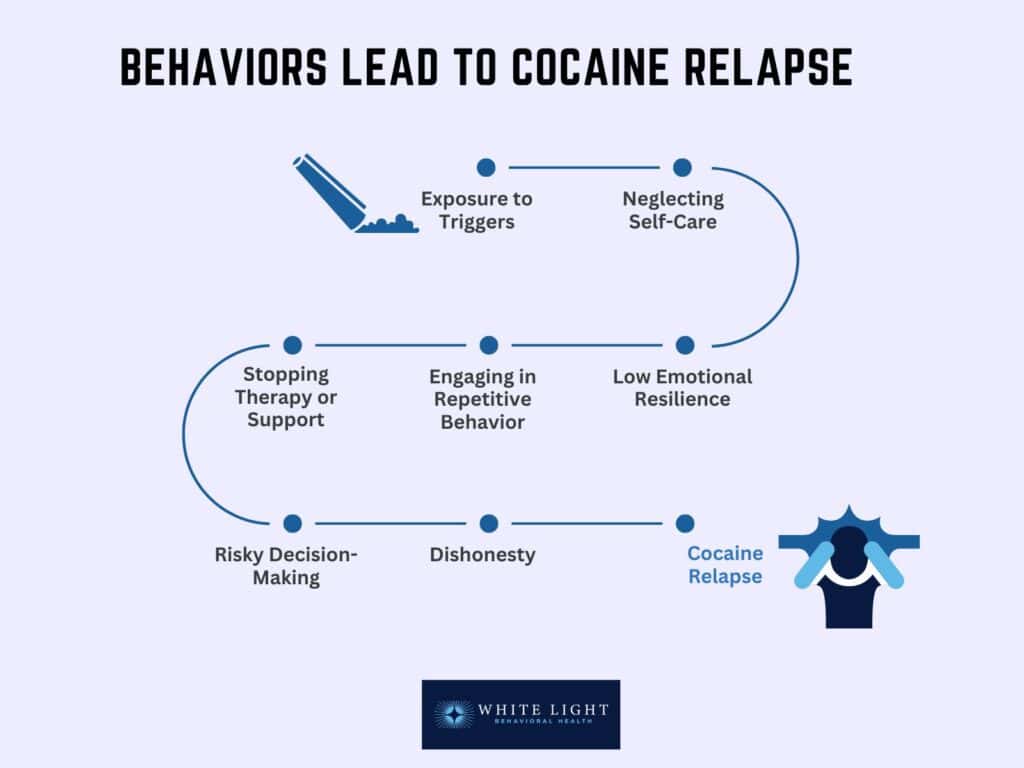
Triggers such as exposure to environments or people associated with past drug use provoke cravings. Additionally, neglecting self-care, including poor hygiene and lack of proper nutrition, diminishes emotional resilience, making relapse more likely. Stopping therapy or reducing participation in support groups further isolates individuals, leaving them without crucial coping mechanisms.
Fifty cocaine addicts were interviewed to assess their mental health. A modified questionnaire was used to diagnose Repetitive Reuse Syndrome and Behavior and measure its severity. Results showed that 38% had RRSB, and 8% were identified as those who engage in repetitive and compulsive behavior involving purchasing or acquiring items, often beyond their financial means, according to Fasano A. et al.’s 2008 study titled “Cocaine Addiction” published in the drug and alcohol dependence journal. It is clear that addiction is a complex and multifaceted issue, with both biological and environmental factors playing a role in its development and maintenance.
A critical aspect of addiction that needs to be addressed in treatment is emotional resilience. This refers to an individual’s ability to adapt and cope with stressors and challenges without resorting to substance use. Those who lack emotional resilience struggle more with maintaining abstinence, as they turn to drugs or alcohol as a coping mechanism when facing difficult emotions or situations.
Individuals with lower levels of emotional resilience are more likely to relapse after completing treatment or during the recovery process. This highlights the importance of addressing this aspect of addiction through therapy and support groups. By developing healthy coping mechanisms for
Punters are a subgroup of people with RRSB who engage in repetitive and compulsive behavior involving purchasing or acquiring items, often beyond their financial means.
Engaging in risky decision-making, such as spending time in high-risk situations or with users, increases vulnerability to relapse. Lastly, dishonesty, whether about one’s feelings or recovery status, creates a disconnect from support systems and leads to a downward spiral toward substance use.
How Do You Deal With Cocaine Relapse In Recovery?
To deal with cocaine relapse in recovery, acknowledge the relapse without self-judgment and practice self-forgiveness, according to Penberthy JK et al.’s 2010 study titled, “Review of Treatment for Cocaine Dependence,” published in the Current Drug Abuse Review-Journal. This helps to mitigate feelings of guilt and shame that often accompany a relapse.
Following this, individuals should seek support from trusted sources such as a sponsor, therapist, or close friends. Engaging with a support network provides emotional backing and practical advice on navigating this setback.
Additionally, it is important to monitor your thoughts for negative patterns and remind yourself of the reasons for quitting cocaine in the first place, focusing on the negative consequences associated with its use. Identifying what led to the relapse is essential for future prevention.
Should I Be Ashamed if I Relapse on Cocaine?
No, you should not be ashamed of cocaine relapse, and it is important to understand that relapse is a part of the recovery process, according to Sinha R et al.’s 2006 study titled, “Stress-Induced Cocaine Craving and Hypothalamic-Pituitary-Adrenal Responses are Predictive of Cocaine Relapse Outcomes” published in the Archives of General Psychiatry Journal. Individuals in recovery experience setbacks, and these moments serve as critical opportunities for learning from mistakes.
By reflecting on the circumstances that led to a relapse, individuals identify their triggers and develop strategies to cope with similar situations in the future. This process not only fosters personal growth but also helps to reduce the stigma associated with addiction and recovery. Embracing these experiences as growth opportunities leads to a deeper understanding of oneself and ultimately strengthens one’s commitment to sobriety.
What Do You Say When Someone Relapses on Cocaine?
When someone relapses on cocaine, it is important to approach the situation with supportive communication, according to Washton AM. et al.’s 1988 research titled “Preventing Relapse to Cocaine,” published in the Journal of Clinical Psychiatry. This means expressing empathy and understanding rather than judgment or criticism.
This study suggests that effective communication is crucial when supporting someone who has relapsed on cocaine, emphasizing empathy and understanding over judgment. Key strategies include expressing empathy for their struggle, avoiding blame by acknowledging addiction as a complex disease, encouraging open dialogue about their feelings, and reaffirming your support.
Acknowledging that recovery is a challenging journey helps individuals feel less isolated and more willing to discuss their struggles. For instance, instead of saying, “You need to stop using,” you might say, “I see you’re having a tough time right now; I’m here for you.”
“I know you’ve been working hard on your recovery, and I understand that relapses can happen. Let’s discuss what has triggered this and how to work through it together.”
“I’m here to support you in any way I can. Do you want to discuss ways to prevent future relapses or just talk about what’s happening?”
“Recovery is not a straight line, and I admire your strength in continuing to fight for sobriety despite this setback.”
These dialogues foster trust and create a safe space to share their feelings and experiences without fear of reprimand.
Are you covered for treatment?


White Light Behavioral Health is an approved provider for Blue Cross Blue Shield and TUFTS, while also accepting many other major insurance carriers.
Check Coverage Now!How to Reverse Cocaine Use
To reverse cocaine use requires a medically supervised process where the body clears the drug and manages withdrawal symptoms, according to Sofuoglu M et al.’s 2005 study titled “Novel Approaches to the Treatment of Cocaine Addiction,” published in the CNS Drugs Journal.
According to Sofuoglu’s study, Cocaine addiction affects over 1.7 million users in the U.S., prompting exploration of pharmacotherapeutic approaches to treatment. Emerging strategies to reverse it include dopaminergic agents like disulfiram, GABAergic medications such as tiagabine, and immunotherapies involving cocaine vaccines, all showing potential in clinical trials.
This requires a stay in a rehabilitation facility, where healthcare professionals monitor mental and physical health, provide medications, and support behavioral therapy. The detox duration ranges from one to two weeks, depending on usage severity, with ongoing lifestyle changes essential for sustained recovery.
Share This Post

Dr. Ryan Wakim M.D.
All author posts
TREATMENTS WE OFFER
Are you covered for treatment?














White Light Behavioral Health is an approved provider for Blue Shield and Tufts, while also accepting many other major insurance carriers.
Check Coverage Now!