
Is Cocaine An Opioid?

No, cocaine is not an opioid, but an addictive stimulant extracted from the leaves of the Erythroxylon coca plant, which is native to South America. It has historical and modern significance, especially in medicine, culture, and drug use. According to the article “Cocaine”, from the United States Drug Enforcement Administration (DEA), cocaine comes in two forms: a white crystalline powder, and small, white irregularly-shaped rocks known as crack or cocaine base.
Cocaine is a central nervous system stimulant that produces feelings of euphoria, increased energy, and reduced appetite. In contrast, opioids are a class of drugs that are derived from the opium poppy plant (Papaver somniferum), or synthesized in laboratories to produce similar effects. These include heroin, morphine, and fentanyl. According to the 2023 article “Opioid Overdose”, from the World Health Organization, synthetic and natural opioids are used for their pain-relieving properties but also produce euphoric effects, leading to their misuse and potential for addiction.
Cocaine exerts its effects on the brain’s reward system by blocking the reabsorption of dopamine, which causes a surge in dopamine levels. The 2005 study by Nestler, E. J., “ The Neurobiology of Cocaine Addiction”, published in the Science & Practice Perspectives Journal, shows that cocaine acts on the limbic system, a region of the brain that regulates motivation and pleasure. Opioids bind to opioid receptors in the brain and nervous system to produce pain-relieving (analgesic) and euphoric effects).
A common misconception about cocaine holds that cocaine is a “party drug” and not as harmful as other substances. A second misconception about cocaine says that cocaine is a stimulant, so it won’t make you sleepy.
Common misconceptions about opioids claim that opioid addiction is a moral failing or that opioids are only harmful when they are misused. According to a 2000 study by Matano, R. A.,” Addiction Is A Treatable Disease, Not A Moral Failing”, published in the Western Journal of Medicine, drug addiction is a disease, not a moral failing.
The differences between cocaine and opioid addiction are that cocaine is a stimulant, while opioids are analgesics. The effects of cocaine are euphoria, increased energy, alertness, and decreased appetite, while the effects of opioids are pain relief, sedation, and drowsiness.
The differences between treatment for cocaine and opioid addiction are that there are no FDA-approved medications for cocaine addiction, while FDA-approved medications methadone, buprenorphine, and naltrexone to manage withdrawal symptoms and cravings. According to the article “ Medication-Assisted Treatment FAQ”, from the Illinois Department of Public Health, buprenorphine, naltrexone, and methadone, are considered essential medications for treating opioid use disorder (OUD).
Additionally, cocaine is not classified as an opioid as it is not a sedative. Cocaine is classified as a stimulant.
What is Cocaine?
Cocaine is an addictive, stimulant drug extracted from the leaves of the Erythroxylon coca plant, which is native to South America. It has historical and modern significance, especially in medicine, culture, and drug use. According to the article “Cocaine”, from the United States Drug Enforcement Administration (DEA), is a crystalline powder derived from the coca plant.
More Resources on Addiction:
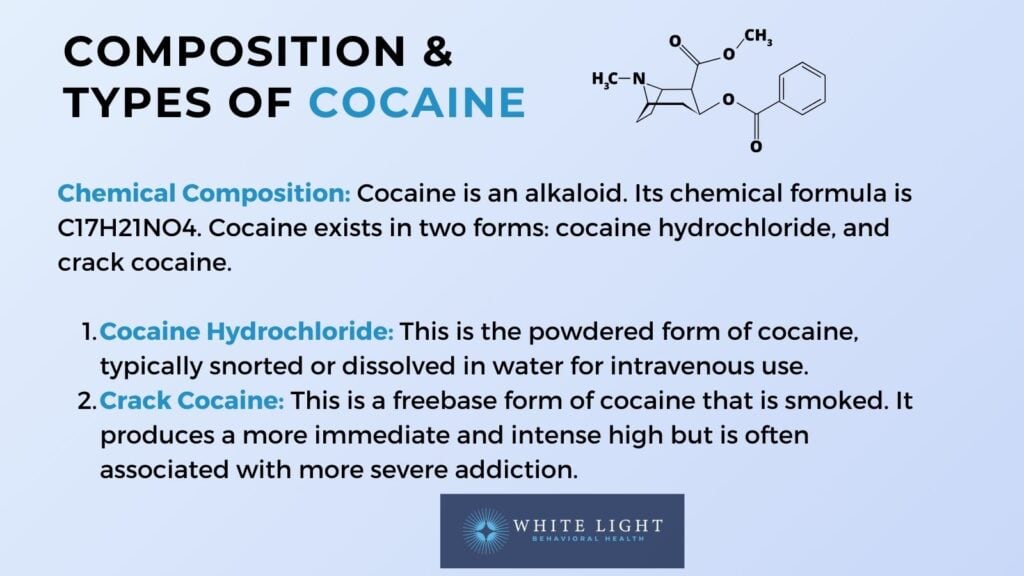
- Chemical Composition: Cocaine is an alkaloid. Its chemical formula is C17H21NO4.
Cocaine exists in two forms: cocaine hydrochloride, and crack cocaine.
- Cocaine Hydrochloride: This is the powdered form of cocaine, typically snorted or dissolved in water for intravenous use.
- Crack Cocaine: This is a freebase form of cocaine that is smoked. It produces a more immediate and intense high but is often associated with more severe addiction.
Did you know most health insurance plans cover substance use disorder treatment?
The Effects of Cocaine on the Dopamine System
The effects of cocaine on the dopamine system include blocking the dopamine transporters, increasing dopamine levels, and alterations to the dopamine system.
According to the 2005 study by Nestler, E. J., “ The Neurobiology of Cocaine Addiction”, published in the Science & Practice Perspectives Journal, cocaine blocks dopamine transporters, increases dopamine levels causing intense pleasure, and changes the dopamine structure, making it hard to enjoy daily pleasures, and cause cravings.
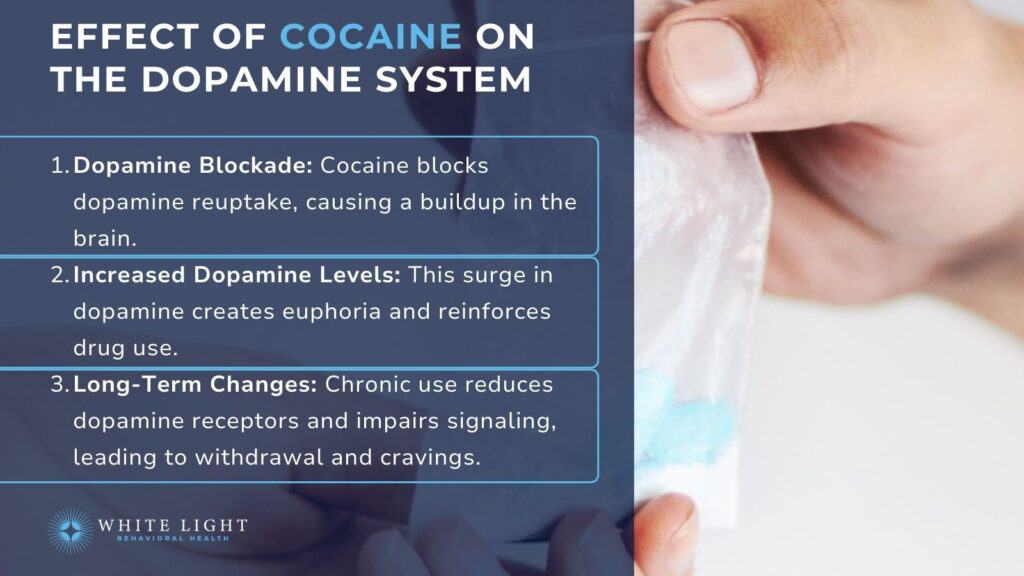
- Dopamine Blockade: Cocaine blocks the dopamine transporter proteins, which are responsible for the reuptake of dopamine into nerve cells after it has been released. This blockage leads to a surge of dopamine in the synaptic cleft (the space between neurons).
- Increased Dopamine Levels: The elevated dopamine levels in the brain’s reward centers, such as the nucleus accumbens, produce the euphoric effects associated with cocaine use.
This intense pleasure reinforces the desire to use the drug again.
- Long-Term Changes: Chronic cocaine use leads to long-term changes in the dopamine system. These changes include reduced dopamine receptors where the brain downregulates dopamine receptors in response to the excessive dopamine levels, making it harder to experience pleasure from natural rewards.
Additionally, cocaine impairs dopamine signaling. This is the brain’s ability to produce and transmit dopamine contributing to withdrawal symptoms and cravings.
Cocaine is a stimulant drug, while opioids are a class of drugs that produce a pain-relieving effect.
According to the article “ Opioids”, from Johns Hopkins Medicine, opioids are extracted or imitate the natural substances found in the poppy plant. They work on different receptors in the brain and have distinct effects compared to stimulants.
Opioids include substances like heroin, morphine, and prescription pain relievers like oxycodone.
The benefits of cocaine include its use as local anesthesia, vasoconstriction, and alleviating gastrointestinal problems. According to the article from the DEA Museum, cocaine was popular in Western medicine and tonics.
It was an ingredient in early versions of Coca-Cola beverages. However, as its addictive properties and potential for abuse became evident, governments began to restrict its use, culminating in its ban in many countries by the early 20th century.
The coca plant (Erythroxylon coca) has been used by indigenous peoples in South America for thousands of years, especially in the Andes. According to the article “ Coca”, from the Drug Enforcement Administration Museum, South Americans chewed the leaves for their stimulant effects, which help alleviate fatigue, hunger, and altitude sickness.
Additionally, the 2022 study by Glass A., “Medical Advantages and Disadvantages of Cocaine Drug”, published in the Journal of Drug Abuse, shows that cocaine has anesthetic, sedative and vasoconstricting properties. Despite its medicinal properties, cocaine’s use in the medical field is limited due to its addictive capabilities.
Cocaine use causes euphoria, reduced appetite, nausea, vomiting, and serious health risks like heart problems, addiction, and mood disorders. According to the 2024 article “Cocaine” from NHS Inform, the drug also leads to anxiety, dilated pupils, and mood swings. Short-term effects include increased energy, cardiovascular issues, and nausea, while long-term effects include addiction, heart attacks, nasal damage, weight loss, depression, anxiety, increased infection risk, and the potential for overdose, which can result in seizures, coma, or respiratory failure.
What Are Opioids?
Opioids are a class of drugs that are derived from the opium poppy plant (Papaver somniferum), or synthesized in laboratories to produce similar effects. These include heroin, morphine, and fentanyl. According to the 2023 article “Opioid Overdose”, from the World Health Organization, synthetic and natural opioids are used for their pain-relieving properties but also produce euphoric effects, leading to their misuse and potential for addiction.
Opioids act on opioid receptors in the brain and nervous system to produce pain-relieving (analgesic) and euphoric effects). According to the 2024 article” Physiology, Opioid Receptor”, from StatPearls, these drugs exert their effect through binding to opioid receptors in the brain, spinal cord, and other parts of the body.
When opioids bind to these receptors, they inhibit the transmission of pain signals in the central nervous system and alter the emotional response to pain. At the same time, opioids release large amounts of dopamine, the brain’s reward chemical, leading to feelings of euphoria and relaxation. This powerful combination of pain relief and euphoria makes opioids both medically valuable and highly addictive.
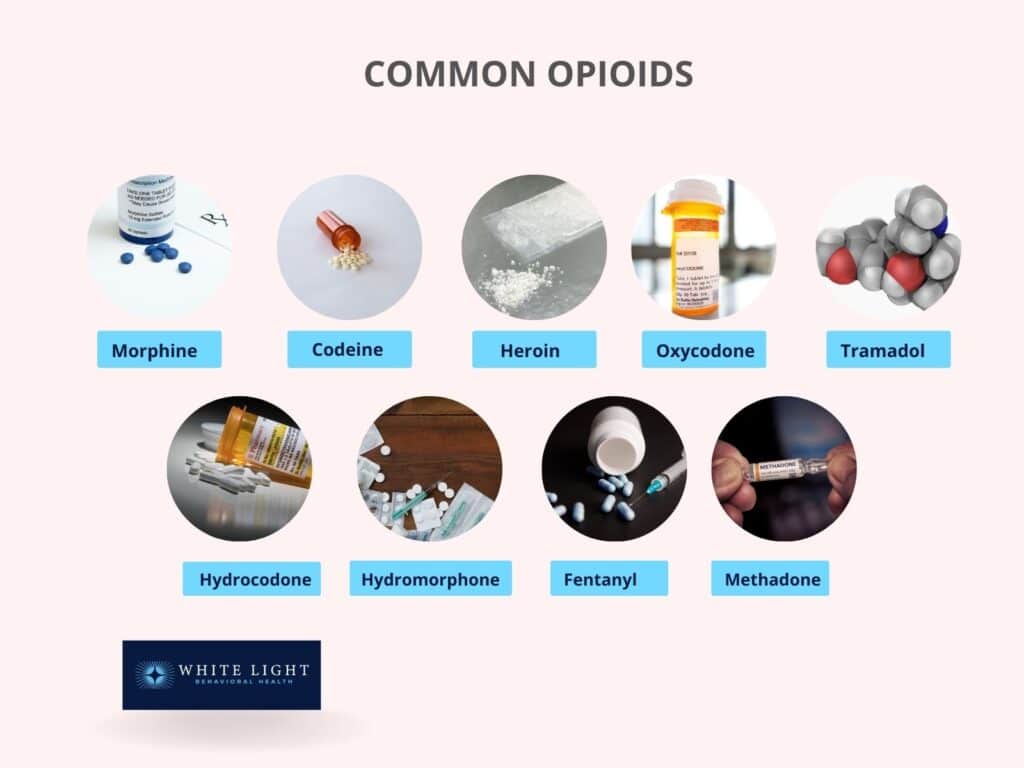
Here are examples of common opioids:
- Morphine: Extracted from the opium poppy, used in severe pain relief.
- Codeine: A weaker opioid, used in some pain relief and cough medicines.
- Heroin: An illicit drug derived from morphine, known for its high potential for addiction and abuse.
- Oxycodone (OxyContin): A prescription opioid used for moderate to severe pain management.
- Hydrocodone: It is commonly combined with acetaminophen for pain relief.
- Hydromorphone (Dilaudid): A potent opioid used in severe pain management.
- Fentanyl: A synthetic opioid that is 50 to 100 times stronger than morphine. It is used medically but has been linked to many overdose deaths when used illicitly.
- Methadone: Used in opioid addiction treatment and chronic pain management.
- Tramadol: A weaker opioid used for pain management, often considered less addictive than other opioids.
How Do Cocaine And Opioids Differ?
Cocaine and opioids differ because cocaine is a Schedule II substance, while opioids are Schedule I to Schedule V substances. Cocaine has limited medicinal potential as a local anesthesia while opioids are widely used as analgesics and highly effective in pain management. Additionally, cocaine is illegal in all countries, while the legal status of opioids varies depending on the specific substance and the country or jurisdiction.
| Criteria | Cocaine | Opioids |
| Drug Classification | Schedule II substance: This is due to its high potential for abuse | Schedule I to Schedule V: This is due to differences in their medical use, abuse potential, and risk of addiction |
| Effects on the Body | Increased heart rate and blood pressure. Restlessness and anxiety. Euphoria Paranoia and anxiety Psychosis | Pain relief Euphoria Drowsiness Slowed breathing Liver damage Cognitive impairment |
| Primary Mechanism | Cocaine blocks the reuptake of neurotransmitters, primarily dopamine, in the brain. | Opioids bind to specific brain and spinal cord receptors as part of the body’s natural pain-relief system. |
| Addiction Potential | High addiction potential due to the rapid increase in dopamine levels in the brain. | High addiction potential due to interactions with specific receptors in the brain. |
| Medication Potential | Limited medicinal potential | High medication potential |
| Medical Uses | Cocaine is used as local anesthesia | Opioids are highly effective in pain management |
| Examples | Cocaine hydrochlorideCrack cocaine | MorphineHeroinFentanyl |
| Legal Status | Illegal in all countries | Varies depending on the specific substance and the country or jurisdiction |
| Withdrawal Symptoms | DepressionDifficulty concentratingSuicidal thoughtsSleep disturbancesSlowed movements | SweatingRunny noseNausea and vomitingGoosebumpsTremors |
While both cocaine and opioids are highly addictive substances, they belong to entirely different drug classes with distinct effects on the body and mind.
Differences In Chemical Structure
The difference In the chemical structure of cocaine and opioids is that cocaine is C17H21NO4, while opioid chemical structures include morphine: C17H19NO3, oxycodone: C18H21NO4, and fentanyl: C22H28N2O. Cocaine and opioids are two distinct classes of drugs, each with unique chemical structures and properties.
According to the article “Cocaine And Crack Drug Profile” from the European Union Drugs Agency (EUDA), cocaine’s chemical formula is C17H21NO4. This indicates that a molecule of cocaine consists of 17 carbon (C) atoms, 21 hydrogen (H) atoms, one nitrogen (N) atom, and four oxygen (O) atoms.
Opioids encompass a broad range of substances, including both natural and synthetic compounds. Each opioid has its specific formula, but it contains a similar framework based on the morphinan structure derived from opium.
- Morphine: It is a benzylisoquinoline alkaloid and the most abundant opiate present in the opium plant. According to the article “ Morphine”, from the National Library of Medicine, morphine’s chemical formula is C17H19NO3.
- Oxycodone: The chemical formula for oxycodone is C18H21NO4.
According to the article “ Oxycodone”, from the National Library of Medicine, oxycodone is a semisynthetic opioid derived from thebaine, a natural alkaloid found in opium.
- Fentanyl: It is a synthetic opioid that is significantly more potent than morphine. According to the article “ Fentanyl Drug Profile”, from the European Union Drugs Agency (EUDA), the chemical formula of fentanyl is C22H28N2O.
Key Differences: Cocaine is classified as a tropane alkaloid, characterized by a bicyclic structure that includes a nitrogen atom in a ring.
Opioids share a structure derived from morphine, which provides for multiple fused rings and an aromatic system.
Differences In Effects
Differences in cocaine and opioid effects occur due to their mechanisms of action: cocaine is a stimulant that increases levels of dopamine in the brain. In contrast, opioids are depressants that bind to opioid receptors in the brain.
According to a 2021 study by “Opioids and Stimulants: What Are They and How Are People Using Them”, cocaine and opioids effects differ because one is a stimulant, and the other is a depressant.
What Are The Short-Term Effects of Cocaine?
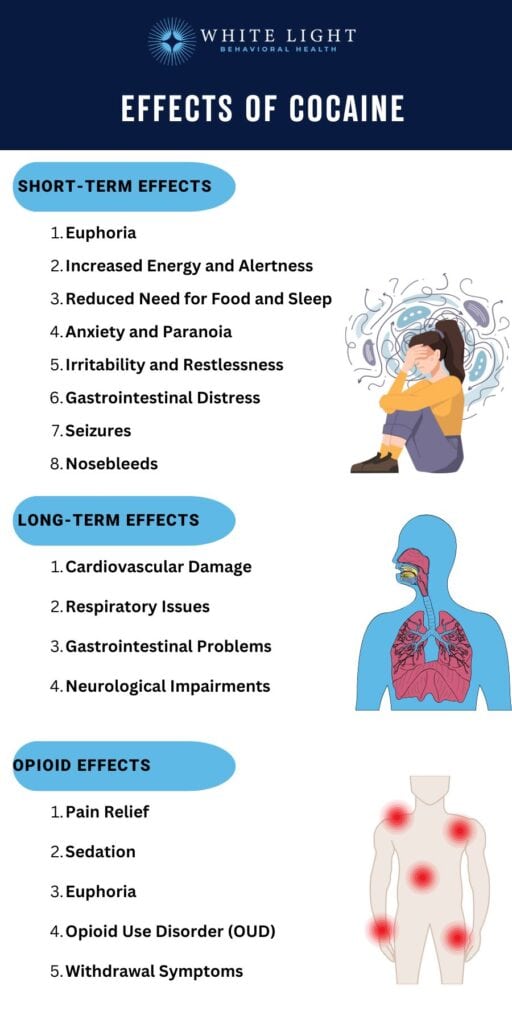
The short-term effects of cocaine include euphoria, loss of appetite, anxiety and paranoia, and gastrointestinal distress. According to the article “Powdered Cocaine Fast Facts ”, from the National Drug Intelligence Center, cocaine reaches the brain within 5-30 seconds after use, resulting in euphoria, increased energy, anxiety, and paranoia.
- Euphoria: Users often experience intense feelings of happiness and pleasure.
- Increased Energy and Alertness: Cocaine enhances physical and mental performance, leading to heightened energy levels and alertness.
- Reduced Need for Food and Sleep: Users may feel less hungry and require less sleep during the high.
- Anxiety and Paranoia: Many users report feelings of fear, panic attacks, or paranoia.
- Irritability and Restlessness: Increased irritability and restlessness are common.
- Gastrointestinal Distress: Symptoms like abdominal pain, nausea, and vomiting may occur.
- Seizures: High doses of cocaine trigger seizures.
- Nosebleeds: Snorting cocaine damages the nasal lining
What are The Long-Term Effects of Cocaine?
- Cardiovascular Damage: Long-term use can result in heart disease, arrhythmias, increased blood pressure, and a heightened risk of heart attack and stroke due to constricted blood vessels.
- Respiratory Issues: Smoking cocaine can damage lung tissue, leading to chronic cough, asthma, and increased susceptibility to infections like pneumonia.
- Gastrointestinal Problems: Reduced blood flow can cause severe gastrointestinal complications like bowel decay or ulcers.
- Neurological Impairments: Long-term use may lead to cognitive deficits including memory loss, poor decision-making skills, and an increased risk of movement disorders like Parkinson’s disease.
Opioid Effects
Opioid effects include pain relief, sedation, euphoria, opioid use disorder, and withdrawal symptoms. According to the article “Opioids” from John Hopkins Medicine, opioid effects include pain relief, sedation, and euphoria.
- Pain Relief: Opioids effectively dull pain, making them useful in medical settings following surgeries or for chronic pain conditions.
- Sedation: Users often experience drowsiness and a sense of calmness. This soothing effect can lead to decreased physical activity and social withdrawal.
- Euphoria: Many individuals report feelings of intense pleasure or euphoria, which can contribute to the risk of misuse.
- Opioid Use Disorder (OUD): Characterized by a problematic pattern of opioid use that leads to significant impairment or distress.
Symptoms may include cravings, increased tolerance, and withdrawal symptoms when not using opioids5.
- Withdrawal Symptoms: When someone stops using opioids after prolonged use, they may experience uncomfortable withdrawal symptoms such as anxiety, muscle aches, nausea, and diarrhea.
Contact us today to schedule an initial assessment or to learn more about our services. Whether you are seeking intensive outpatient care or simply need guidance on your mental health journey, we are here to help.
Addiction To Cocaine Vs. Opioids
Addiction to cocaine versus opioids is different due to their mechanism of action (cocaine is a stimulant, opioids are sedatives), physical effects (cocaine increases heart rate, and blood pressure, while opioid slows heart rate, breathing, and digestion), and withdrawal symptoms (cocaine cessation causes fatigue, depression, anxiety, while opioids cessation causes pain, anxiety, restlessness, muscle aches).
According to the 2012 study by Kreek, M. J., et al., “Opiate Addiction And Cocaine Addiction: Underlying Molecular Neurobiology And Genetics”, published in the Journal of Clinical Investigation, cocaine and opioid addiction such as heroin, results in anxiety, anhedonia, and withdrawal symptoms.
Mechanism of Action
- Cocaine: A stimulant that blocks the reuptake of dopamine, serotonin, and norepinephrine in the brain, leading to a euphoric rush.
- Opioids: Sedatives that bind to opioid receptors in the brain, reducing pain and inducing a sense of euphoria.
Physical Effects
- Cocaine: Increased heart rate, blood pressure, and body temperature; dilated pupils; insomnia; loss of appetite; decreased libido.
- Opioids: Slowed heart rate, breathing, and digestion; constipation; constricted pupils; drowsiness; decreased pain sensitivity.
Withdrawal Symptoms
- Cocaine: Fatigue, depression, anxiety, irritability, cravings, insomnia, increased appetite.
- Opioids: Pain, anxiety, restlessness, muscle aches, sweating, nausea, vomiting, diarrhea, chills, fever.
Cocaine Addiction
Cocaine addiction is characterized by symptoms( euphoria, mood swings, depression, tachycardia) and behaviors (compulsive drug-seeking behavior, aggression, violence, psychosis). According to a 2022 survey,” Number Of People In The U.S. Who Used Cocaine In Their Lifetime From 2009 To 2022”, published in Statista, 42 million US residents had abused cocaine in their lifetime. The 2024 article “Cocaine” from the National Institute on Drug Abuse (NIDA), indicates that symptoms and behaviors of cocaine addiction include euphoria, mental alertness, increased heart rate, aggression, violence, and drug-seeking behavior.
1. Cocaine Addiction Symptoms
- Euphoria: Intense feelings of happiness or excitement.
- Mood Swings: Rapid changes in emotional state, often swinging from high to low.
- Anxiety and Paranoia: Increased feelings of unease or fear, often without cause.
- Dilated Pupils: Enlarged pupils that do not constrict in bright light.
- Increased Heart Rate and Blood Pressure: Elevated vital signs due to stimulant effects.
- Loss of Appetite and Weight Loss: Reduced desire to eat, leading to significant weight loss.
- Tachycardia: Rapid heart rate that can lead to serious cardiovascular issues.
- Increased Energy and Alertness: Heightened levels of activity and wakefulness.
2. Cocaine Addiction Behaviors
- Compulsive Drug-Seeking Behavior: This refers to a condition where an individual feels an intense urge or compulsion to obtain and use a particular substance. Individuals often engage in frequent disappearances to use cocaine, as the drug’s effects are short-lived, leading to repeated use within a short timeframe.
- Aggression and Violence: Cocaine abusers frequently exhibit increased irritability and aggression.
The aggression is linked to the drug’s impact on neurotransmitter systems that regulate mood and behavior.
- Psychosis: Cocaine users experience paranoia, hallucinations, and delusions. Paranoia manifests as suspiciousness, leading to impaired reasoning and heightened anxiety about perceived threats in their environment.
- Cognitive Impairments: Chronic exposure to cocaine leads to memory loss, difficulty concentrating, and impaired decision-making abilities.
Cocaine abusers struggle with logical thinking and maintaining focus, which affects their personal and professional lives.
- Neglect of Responsibilities: As addiction deepens, users neglect personal hygiene, relationships, and professional responsibilities. This withdrawal from social interactions further isolates them and perpetuates the cycle of addiction.
Opioid Addiction
Opioid addiction, clinically referred to as Opioid Use Disorder (OUD), is characterized by the compulsive use of opioids despite harmful consequences.
According to the article “ Opioid Use Disorder”, from Johns Hopkins Medicine, OUD arises from the misuse of opioids, which include both legal prescriptions (such as oxycodone and morphine) and illegal substances (like heroin). OUD manifests as cravings for opioids, tolerance where the abuser requires larger doses for the same effect, and withdrawal symptoms upon cessation of use, which is highly uncomfortable and leads to relapse.
According to the article, 800, 000 people in the US died from OUD overdose between 1999 and 2020.
- Physiological Dependence on Opioids: Physiological dependence on opioids occurs when the body adapts to the presence of the drug, leading to a state where the absence of opioids results in withdrawal symptoms. This adaptation is primarily due to the drug’s interaction with opioid receptors in the brain, which are responsible for pain relief and feelings of euphoria.
Over time, continuous use leads to tolerance, meaning that higher doses are required to achieve the same effects, and withdrawal symptoms manifest when opioid use is reduced or stopped.
- Differences Between Dependence And Addiction: It is crucial to differentiate between physiological dependence and opioid use disorder (OUD), which is characterized by compulsive drug-seeking behavior despite negative consequences. While both conditions involve changes in brain function, physiological dependence exists without addiction.
A person is physically dependent on opioids due to long-term medical use for pain management but still retains control over their drug use.
Can Opioid Addiction Lead To Cocaine Addiction?
Yes, opioid addiction has the potential to result in cocaine addiction, as evidenced by the overlapping neurobiological mechanisms and behavioral patterns associated with both substances. According to the 2012 study by Yoo, J. H., “The Endogenous Opioid System In Cocaine Addiction: What Lessons Have Opioid Peptide And Receptor Knockout Mice Taught Us”, published in the British Journal of Pharmacology, neuroadaptive alterations in the opioid system play a part in the gradual progress from spontaneous use to compulsive abuse of cocaine.
Opioids and cocaine affect the brain’s reward systems, particularly through the modulation of dopamine. Cocaine blocks the reuptake of dopamine, leading to increased levels in the synapse, which reinforces drug-seeking behavior.
Opioids also activate these reward pathways by releasing endorphins, creating feelings of pleasure and reinforcing use. According to the 2024 study “ A Common Pathway in the Brain That Enables Addictive Drugs to Hijack Natural Reward Processing Has Been Identified by Mount Sinai”, from Icahn School of Medicine at Mount Sinai, researchers found a link in the brain between cocaine and morphine, an opioid, that enables hijacking of the reward system.
Co-Use Patterns: Individuals in opioid maintenance treatment also abuse cocaine. According to the 2003 study by Leri F., et al, “ Understanding Polydrug Use: Review Of Heroin And Cocaine Co-Use”, published in the National Library of Medicine, co-use of cocaine and opioids is driven by the desire to mitigate withdrawal symptoms from opioids or to enhance the euphoric effects of either substance.
Withdrawal and Cravings: Individuals who are dependent on opioids often experience withdrawal symptoms that drive them to seek other substances like cocaine. The need to avoid withdrawal discomfort leads to increased use of stimulants, including cocaine, particularly in environments where both drugs are accessible.
Psychological Factors: The psychological aspects of addiction, including cravings and compulsive drug-seeking behavior, are common in both opioid and cocaine use disorders. This overlap suggests that individuals addicted to one substance are more vulnerable to developing an addiction to another due to similar underlying mechanisms.
How To Treat Cocaine And Opioid Addiction?
To treat cocaine and opioid addiction, substance abusers need detoxification, psychotherapy, and medication-assisted treatment (MAT). According to the article “Principles of Effective Treatment for Substance Use Disorders”, treating substance abuse includes detoxification, medication-assisted therapy, and behavioral therapies.
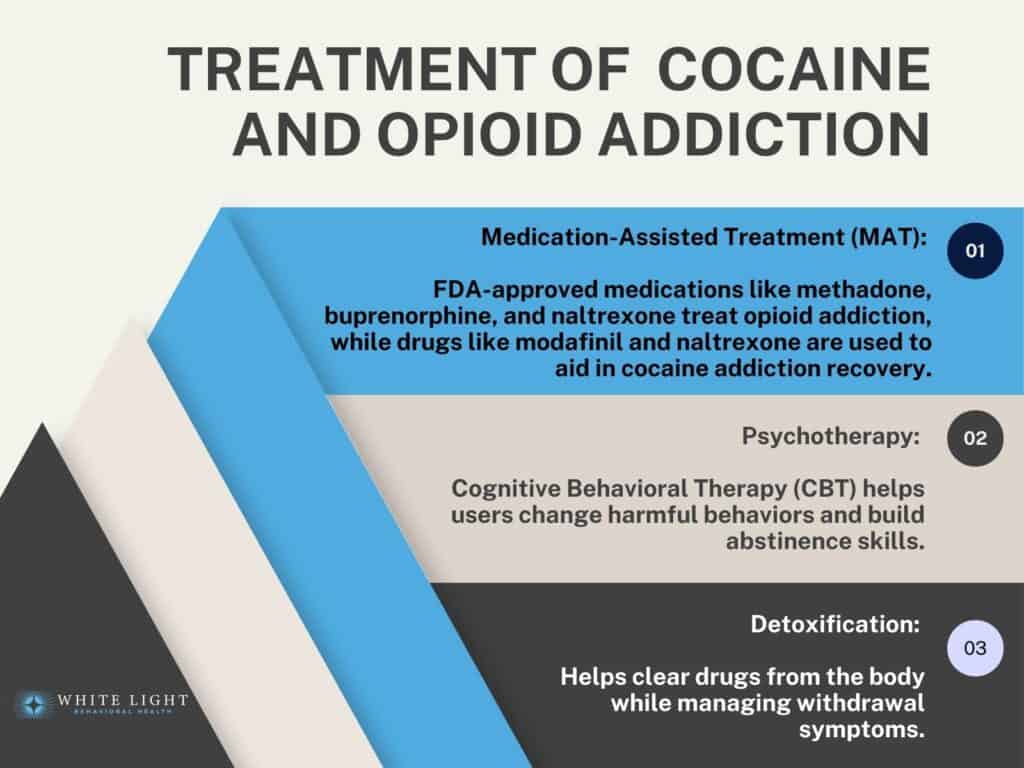
- Detoxification (Detox): Detox is used to treat cocaine and opioid addiction as it allows the body to remove the drugs in its system while managing withdrawal symptoms. According to the article “Overview, Essential Concepts, and Definitions in Detoxification”, from Substance Abuse and Mental Health Services Administration, detoxification is aimed at clearing toxins from the body of substance abusers and helping to manage withdrawal symptoms.
- Psychotherapy: Cognitive Behavioral Therapy (CBT) is a highly effective, evidence-based, psychological treatment that helps cocaine and opioid users identify and change negative thinking patterns and behaviors related to drug use.
According to the 2024 article, “Cocaine”, from National Institute on Drug Abuse, CBT helps recovering substance abusers develop long-term abstinence skills.
- Medication-Assisted Treatment (MAT): Medication-assisted treatment (MAT) is used for cocaine and opioid addiction. According to the article, “Information about Medications for Opioid Use Disorder (MOUD)”, FDA-approved medications for opioid addiction include methadone, buprenorphine, and naltrexone for opioid addiction.
In contrast, there are no FDA-approved medications for cocaine addiction. However, medications such as modafinil, topiramate, disulfiram, and naltrexone help improve treatment outcomes.
Cocaine Detox And Rehab
Cocaine detox (evaluation, stabilization, and monitoring) and rehab (therapeutic interventions-modafinil, topiramate, disulfiram, and naltrexone-life skills training, and relapse prevention), are critical components of a substance abuse recovery process.
According to the article “Overview, Essential Concepts, and Definitions in Detoxification”, from the National Library of Medicine, detox seeks to help the recovering substance user to manage the withdrawal symptoms experienced after drug cessation.
1. Cocaine Detox
Cocaine detox is the initial step in recovery, focusing on safely removing cocaine from the body. According to the 2024 study by Heberle, B. A., “ Examining Predictors Of Cocaine Withdrawal Syndrome At The End Of Detoxification Treatment In Women With Cocaine Use Disorder”, published in the Journal of Psychiatric Research, detoxification is important as part of the treatment for substance abusers recovering from cocaine.
- Evaluation: An intake exam to assess physical and mental health, including blood tests and discussions about substance use history.
- Stabilization: Medical supervision to manage withdrawal symptoms, which may involve medications tailored to specific substances. Regularly monitor vital signs such as temperature, blood pressure, and heart rate.
- Support Services: Emotional support and counseling to help patients cope with the psychological aspects of withdrawal.
2. Cocaine Rehab
Cocaine rehab involves a combination of medical, psychotherapeutic, and educational approaches. Rehab programs are designed to help individuals overcome their addiction to cocaine.
According to the 2022 article “ What Is Drug And Alcohol Rehabilitation”, from Healthdirect, substance abuse rehabilitation offers psychotherapy, medication, and support. Rehab programs are aimed at minimizing harm due to drug use and equipping the recovering drug user with skills to live without using substances.
- Medications: Medications such as topiramate are used to alleviate symptoms like cravings or anxiety. According to the 2013 study by Johnson B.A., et al, “ Topiramate for the Treatment of Cocaine Addiction: A Randomized Clinical Trial”, published in the JAMA Psychiatry Journal, topiramate is highly effective in increasing the rate of cocaine abstinence among people dependent on cocaine.
- Psychotherapy: One-on-one sessions with a therapist help individuals understand the root causes of their addiction and develop coping mechanisms. Apart from individual sessions, group therapy sessions help share experiences with others in recovery and provide support and a sense of community. Psychotherapy approaches used to help recovering substance abusers include cognitive-behavioral therapy (CBT), and dialectical behavior therapy (DBT).
- Life Skills Training: Life skills training teaches individuals practical skills necessary for everyday living.
This training is vital for those recovering from addiction, as it addresses the loss of basic competencies that often occur during substance abuse. These skills include rebuilding essential skills, enhancing coping mechanisms, and promoting independence.
If you are seeking professional rehab services for treating cocaine addiction in Ohio, Cocaine Addiction Treatment, Detox and Rehab Center in Ohio is the place to be.
Rediscover Life at White Light Behavioral Health
Get the compassionate support you deserve. We're here to help you reclaim joy, wellness, and a brighter future.
Our Facility
Opioid Detox and Treatment Programs
Opioid detox (evaluation, stabilization, transition to treatment) and treatment programs (medication, counseling, behavioral therapies, and support services).
1. Opioid Detoxification
- Evaluation: Upon entering a detox program, patients undergo a thorough assessment to understand their substance use history, living conditions, and overall health. This information guides the treatment plan.
- Stabilization: Medical supervision is provided to manage acute withdrawal symptoms, often using medications to alleviate discomfort and reduce cravings.
Medicines used to treat OUD include methadone, buprenorphine, and naltrexone.
- Transition to Treatment: Detox alone is not sufficient for long-term recovery; patients are typically encouraged to enter further treatment programs that address both physical and psychological aspects of addiction.
2. Opioid Treatment Programs (OTP )
- Medication: Opioid treatment utilizes FDA-approved medications including methadone to reduce cravings and withdrawal symptoms while blocking the effects of opioids, buprenorphine, a partial agonist to suppress cravings and withdrawal symptoms, and naltrexone, an opioid antagonist to block the euphoric effects of opioids. According to the article “ Opioid Use Disorder (OUD) Treatment”, from MedlinePlus, medications for opioid use disorder (MOUD), these medications help to stabilize the regions of the brain affected by addiction.
- Counseling and Behavioral Therapies: OTPs offer individual, group, and family therapy to address underlying issues contributing to addiction, help in behavior modification, and develop coping skills including enhancing self-esteem.
According to the article “ Opioid Use Disorder (OUD) Treatment”, cognitive behavioral therapy helps patients recognize and change negative thought patterns related to drug use. At the same time, contingency management incentivizes positive behaviors including remaining drug-free.
- Support Services: Support services for recovering opioid abusers are case management which includes connecting individuals with resources, providing support throughout the recovery process, and helping individuals find stable housing to promote recovery.
In addition, it includes assisting with job training and placement.
If you or your loved one is struggling with opioid addiction, and searching for professional opioid detox and treatment services in Ohio to help break the cycle of addiction, contact Opioid Detox and Addiction Treatment in Ohio.
Share This Post

Dr. Ryan Wakim M.D.
All author posts
TREATMENTS WE OFFER
Are you covered for treatment?















White Light Behavioral Health is an approved provider for Blue Shield and Tufts, while also accepting many other major insurance carriers.
Check Coverage Now!