
How Can Family Therapy Contribute To The Treatment Of Cocaine Addiction?

Family therapy helps you repair the emotional damage cocaine addiction causes in your home. In Columbus, where rising stimulant uses strains families daily, addressing dysfunction together, not in isolation, restores stability faster.
If you’re unsure whether addiction is tearing your family apart, it likely already is. You don’t have to face it alone. According to the Franklin County Community Health Assessment (2023), over 3,000 families engaged in behavioral health counseling, with family-based therapy accounting for 38% of addiction treatment referrals.
What Is Family Therapy?
Family therapy is a therapeutic approach that focuses on enhancing the emotional and psychological well-being of the entire family unit. It views your family as an interconnected system, where each person’s actions influence the group’s well-being. The method targets how you interact, communicate, solve problems, and maintain roles within the household, especially under stress caused by addiction.
The core aim is to help you develop better communication and resolve the conflict that addiction amplifies. In family therapy, you address blame cycles, clarify responsibilities, and reorganize unhealthy roles, such as the caretaker, scapegoat, or avoider.
Sessions help you reframe chaotic family dynamics into understandable, manageable problems. Over time, this process reduces emotional reactivity and builds stability.
Therapists use a method called partializing, where complex issues are broken into manageable pieces. This lets each family member’s impact on the addiction be examined without judgment.
For example, you might explore how shielding a sibling from consequences or staying silent during conflict unknowingly supports their cocaine use. Through this lens, each person becomes part of the solution.
Did you know most health insurance plans cover substance use disorder treatment? Check your coverage online now.
What’s The State Of Cocaine Addiction In Columbus, Ohio?
The state of cocaine addiction in Columbus, Ohio, is alarming. According to the Columbus and Franklin County Addiction Plan (2023), there was a rise in stimulant-involved overdose deaths, with 34% involving cocaine mixed with opioids like fentanyl.
More Resources on Addiction:
Young adults in Columbus face sharp exposure risks. Most cocaine-related ER visits involved people aged 18–34, with college-age populations reporting dual use of alcohol and stimulants. Black men in urban neighborhoods accounted for the largest demographic group in cocaine-related probation cases, per Franklin County Court data.
Cocaine addiction strains your relationships, destabilizes your household, and breaks down trust fast. You experience missed work, emotional withdrawal, financial instability, and cycles of conflict.
It’s common to hide the problem out of shame or fear, which only deepens the damage. Mental health deteriorates as anxiety, paranoia, or aggression increase under prolonged cocaine use.
What Are The Roles And Benefits Of Family Therapy In Treating Cocaine Addiction?
The roles and benefits of family therapy in treating cocaine addiction include identifying triggers, breaking toxic interaction cycles, promoting accountability, teaching listening skills, and improving conflict resolution. Each of these roles addresses a specific breakdown in family functioning that supports the addiction.
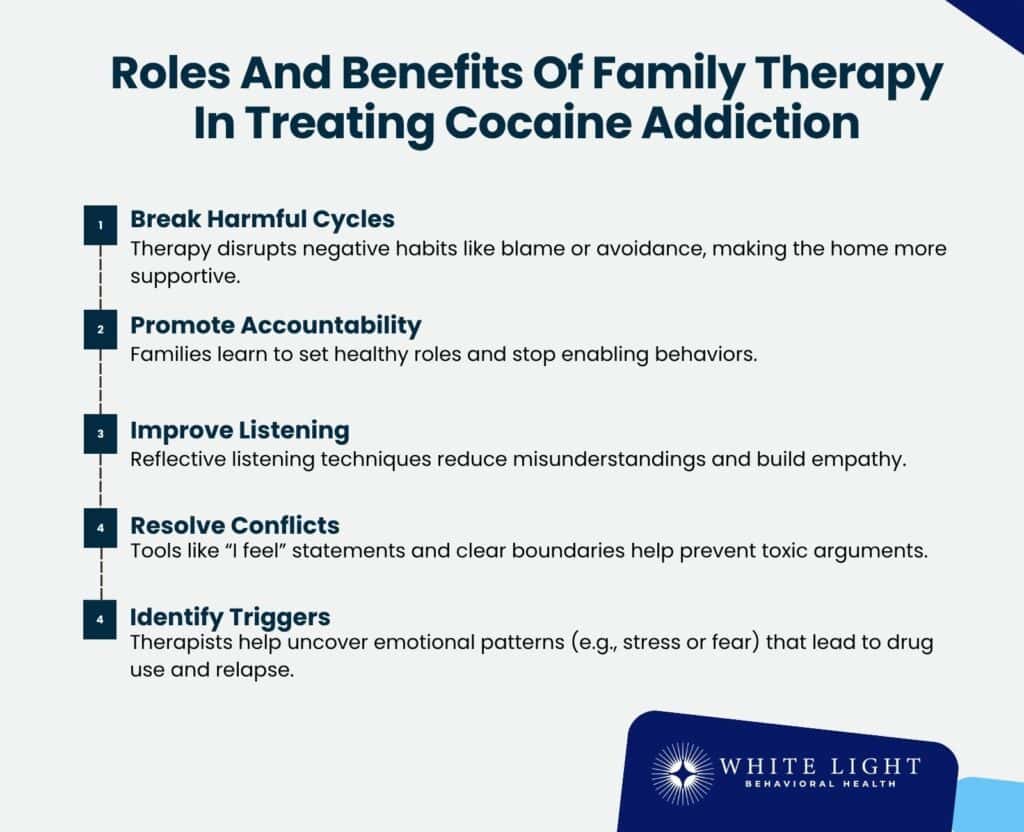
The roles and benefits of family therapy in treating cocaine addiction are explained below:
- Identify Triggers: Family therapists help you pinpoint events or emotional patterns, like abandonment fears or stress, that push a loved one toward cocaine use. By recognizing these triggers, you reduce hidden relapse risks.
- Break Interaction Cycles: Therapy works to interrupt destructive loops like blame, withdrawal, or silent treatment.
When these patterns are addressed, your home becomes a safer and more supportive space for healing.
- Promote Accountability: Sessions assign clear roles and stop family members from enabling addiction through overprotection or denial. This builds responsibility across the family.
- Teaching Listening Skills: You practice reflective listening, which teaches you to repeat and validate what others say.
This method lowers defensiveness and improves understanding.
- Conflict Resolution: You receive tools such as “I feel” statements and boundary-setting techniques to calm confrontations. These skills help you de-escalate arguments before they grow toxic.
What Are The Types of Family Therapy And Their Uses?
The types of family therapy and their uses include structural family therapy, strategic/brief family therapy, and multidimensional family therapy (MDFT).
Each method addresses cocaine addiction from a different lens, giving your family specific tools depending on age, patterns, and relationship dynamics.
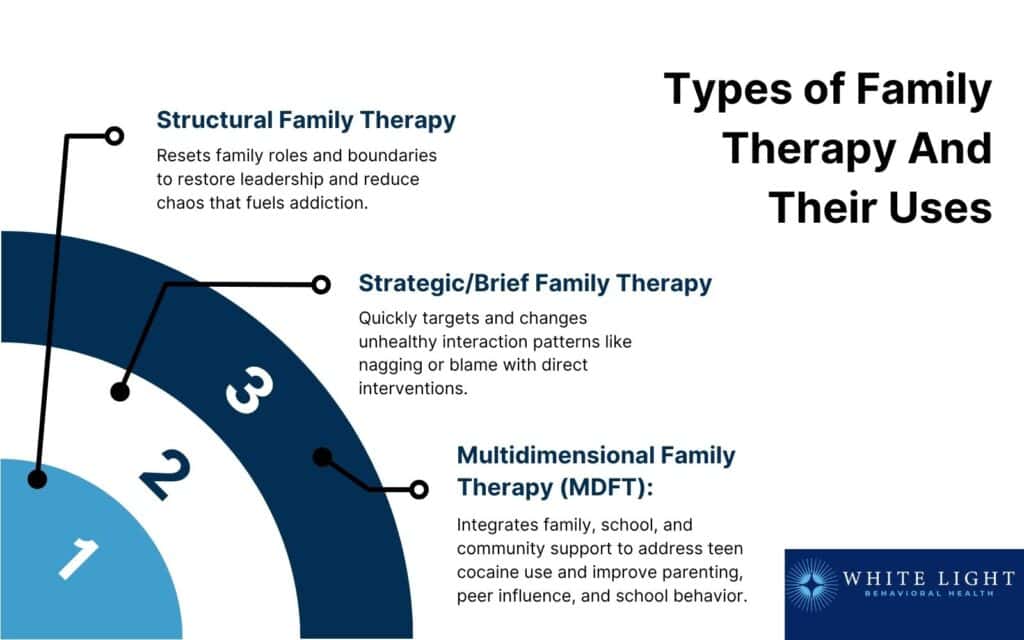
The types of family therapy and their uses are:
- Structural Family Therapy: This model reorganizes your family’s internal structure by redefining boundaries, authority roles, and subsystems like parenting or sibling groups. It’s used when chaos, blurred roles, or weak leadership fuel addiction behaviors.
- Strategic/Brief Family Therapy: This form focuses on changing your specific interaction patterns fast, such as nagging, avoidance, or scapegoating.
You use direct interventions to shift power balances or reframe negative behaviors in real-time.
- Multidimensional Family Therapy (MDFT): MDFT combines therapy with school, peer, and community systems and is applied when your teen is using cocaine. You receive tools to manage peer pressure, school behavior, and parenting skills simultaneously.
Where Can I Find Family Therapy For Cocaine Addiction In Columbus, Ohio?
You can find family therapy for cocaine addiction in Columbus, Ohio, at most treatment centers, community health centers. The Ohio Counseling Association and Psychology Today’s Columbus listings offer up-to-date directories of licensed therapists.
Franklin County hosts specialized clinics, such as White Light Behavioral Health, which offers structured family therapy as part of its intensive outpatient programs for cocaine addiction. You also have access to community health centers, which offer therapy services with sliding-scale fees.
Many centers across Columbus accept Medicaid, Medicare, and private insurance, giving you flexibility in choosing a provider. You also have telehealth options to accommodate your work and family responsibilities.
Can I Schedule A Family Therapy Session Online Or By Phone?
Yes, you can schedule a family therapy session online or by phone in Columbus through most providers. Telehealth platforms such as Talkspace, MDLive, and BetterHelp offer full online scheduling, allowing you to select your therapist, view available slots, and confirm appointments with a few clicks.
If you’re covered under Medicaid or using sliding-scale services, most community clinics require an intake phone call before scheduling. You’ll speak with an intake coordinator who assigns a therapist based on your family’s needs, availability, and insurance type.
Contact us today to schedule an initial assessment or to learn more about our services. Whether you are seeking intensive outpatient care or simply need guidance on your mental health journey, we are here to help.
How Long Until I See Results From Family Therapy?
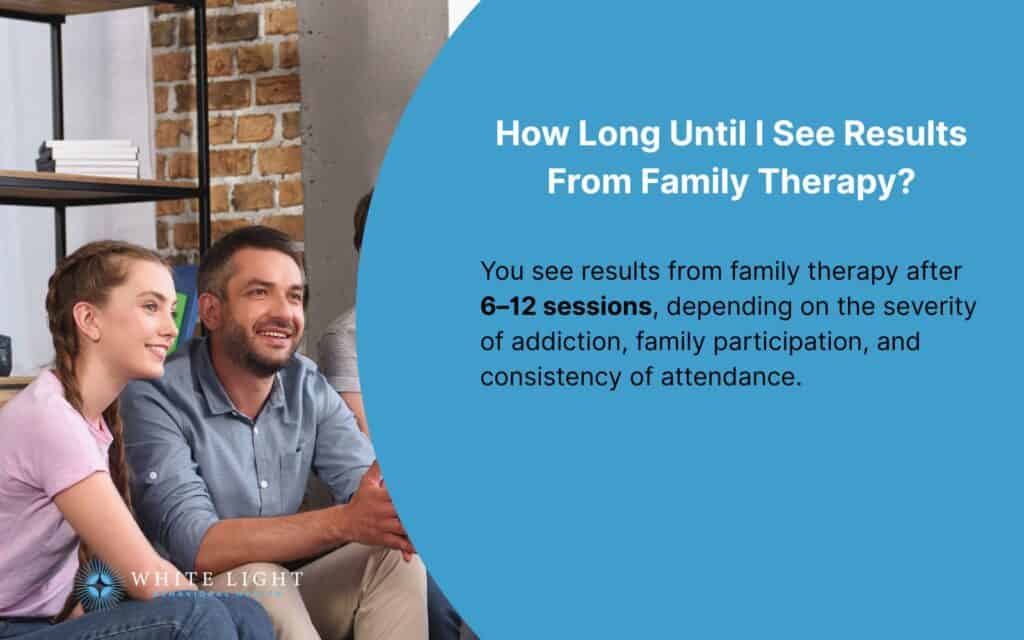
You see results from family therapy after 6–12 sessions, depending on the severity of addiction, family participation, and consistency of attendance.
According to the Substance Abuse and Mental Health Services Administration (SAMHSA) (2025), families participating in weekly sessions report improvements in communication and boundary setting after the first four weeks.
Early progress appears as fewer arguments, reduced secrecy, or more accountability from the person using cocaine. It’s vital to maintain consistent sessions and apply skills at home.
Many families report that relapse risk drops once trust improves and family roles are clarified. If all members stay committed, results become more stable over time.
What If My Family Member Refuses To Attend Therapy?
If your family member refuses to attend therapy, you can still begin sessions without them. Family therapy does not require every member to be present at the start.
You work on improving your communication, boundaries, and response patterns independently. Change in one part of the system pressures the rest to adapt. Your therapist guides you in setting new boundaries, stopping enabling behavior, and protecting your emotional health.
If your loved one’s cocaine use creates safety concerns, like domestic violence, child neglect, or financial harm, take protective action. Ohio law allows you to file for a civil protection order, seek emergency custody changes, or involve Adult Protective Services for vulnerable dependents.
In severe cases, you request a court-ordered assessment or treatment under Ohio’s involuntary commitment statutes. This applies when a person’s drug use poses a direct danger to themselves or others. Speak to an addiction-informed attorney or the Franklin County Probate Court for help with this process.
Share This Post

Dr. Ryan Wakim M.D.
All author posts
TREATMENTS WE OFFER
Are you covered for treatment?














White Light Behavioral Health is an approved provider for Blue Shield and Tufts, while also accepting many other major insurance carriers.
Check Coverage Now!