
What is Cocaine? Definition, Usage, Effects, Addiction

Cocaine is a powerful stimulant derived from the coca plant, known for its intense but short-lived effects on the brain and body. It rapidly increases alertness, energy, and euphoria, making it a sought-after substance of abuse despite its well-documented risks. Classified as a controlled substance, it carries severe health and legal consequences.
The Centers for Disease Control and Prevention (CDC) reports a 12% increase in overdose deaths from 2021 to 2022, reaching 8.2 per 100,000 people. NSDUH estimates that 4.3 million Americans, or 1.5% of the population, used cocaine in 2022.
Medically, cocaine is still used as a local anesthetic in some surgeries, particularly in ear, nose, and throat procedures. Recreationally, it is consumed in different forms: powder cocaine is snorted or injected, while crack cocaine is smoked. Each method affects the body differently, but all pose serious risks.
The drug’s effects include increased heart rate, heightened confidence, and euphoria, but also paranoia, anxiety, and cardiovascular strain. Long-term use damages the brain, heart, and respiratory system, leading to severe health complications. Psychological effects, such as depression and cognitive impairment, further contribute to its destructive potential.
Cocaine addiction develops quickly due to the drug’s impact on the brain’s reward system, according to a study by Nestler EJ. t al. 2005, titled “The neurobiology of cocaine addiction.” By flooding the brain with dopamine, cocaine rewires neural pathways, creating intense cravings and dependence. This leads to compulsive use despite harmful consequences, making it one of the most addictive substances, with high relapse rates and long-term neurological damage.
What is Cocaine?
Cocaine is a potent stimulant derived from the leaves of the Erythroxylum coca plant, which is native to South America. The production of cocaine involves extracting the alkaloid from the coca leaves, which is then processed into two main forms: a white crystalline powder or a solidified “crack” form, the latter being smoked for more intense effects. As a stimulant, cocaine works by increasing dopamine levels in the brain, leading to heightened energy, euphoria, and increased alertness. Cocaine has a high potential for addiction, as prolonged use leads to dependency and severe health consequences.
Historically, cocaine was used for medicinal purposes, including as a local anesthetic. However, due to its addictive properties and the potential for abuse, it is now classified as an illicit drug in many parts of the world, including the United States.
In the U.S., cocaine is classified as a Schedule II controlled substance under the Controlled Substances Act. This classification acknowledges that while the drug has some legitimate medical uses (such as local anesthesia), it also carries a high risk of abuse and addiction, making recreational use illegal.
Cocaine remains a significant public health issue due to its addictive nature and its harmful impacts on physical and mental health. Efforts to combat its abuse include prevention, treatment programs, and public education campaigns to mitigate its widespread societal consequences.
The Centers for Disease Control and Prevention (CDC) reported a more than 12% increase in cocaine-related overdose deaths from 2021 to 2022, with the rate growing from 7.3 to 8.2 deaths per 100,000 individuals. The National Survey on Drug Use and Health (NSDUH) revealed that approximately 4.3 million Americans aged 12 and older used cocaine in the past year, making up about 1.5% of the population.
More Resources on Addiction:
Did you know most health insurance plans cover substance use disorder treatment? Check your coverage online now.
What Are the Different Forms of Cocaine?
The different forms of cocaine are powder cocaine, crack cocaine, and freebase cocaine. These forms vary in purity, method of use, and intensity of effects.
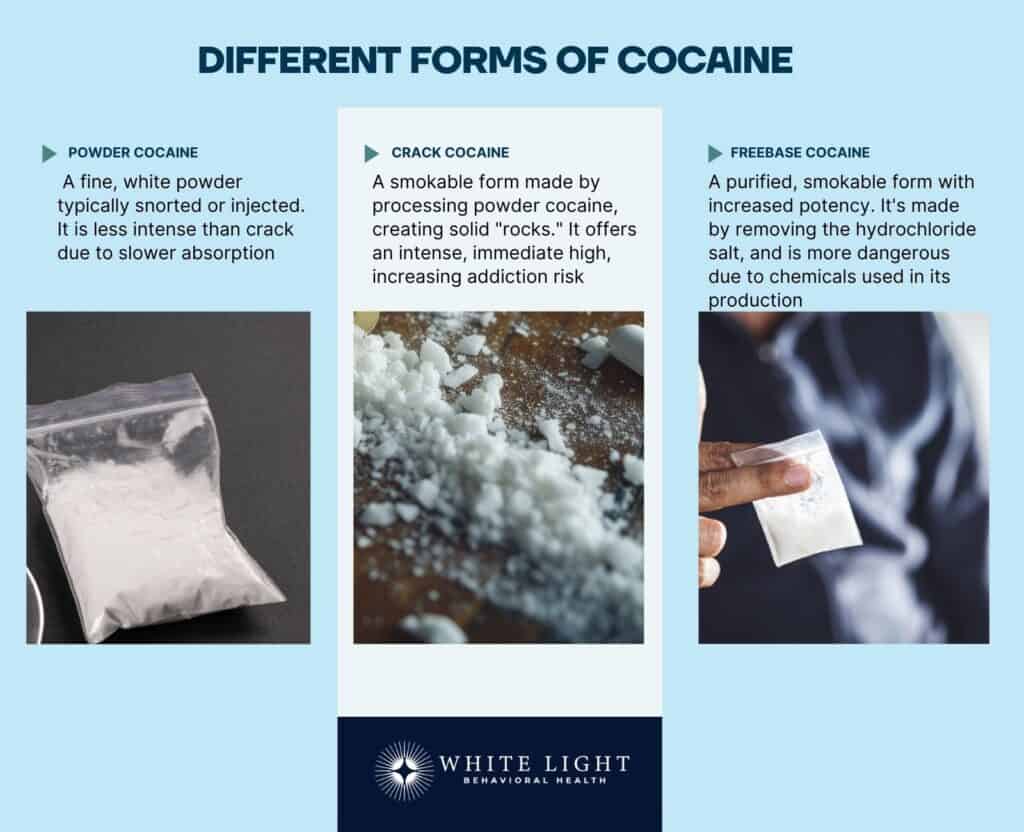
The different forms of cocaine are as follows:
- Powder Cocaine: Powder cocaine, referred to as cocaine hydrochloride, is the most common form of the drug. It appears as a fine, white, crystalline powder and is snorted or dissolved in water for injection.
The purity of powder cocaine varies depending on its source, with lower purity versions being “cut” with other substances to increase weight. This form is usually less intense than crack cocaine due to the slower absorption rate in the bloodstream.
- Crack Cocaine: Crack cocaine is a potent, smokable form of cocaine that is made by processing powder cocaine with baking soda or ammonia, resulting in the formation of solid “rocks.” Crack cocaine is smoked, producing an immediate and intense high as it is rapidly absorbed into the bloodstream.
Due to its high potency and quick onset of effects, crack cocaine is known for its increased potential for addiction and abuse.
- Freebase Cocaine: Freebase cocaine is a purified form of the drug that has been processed to remove the hydrochloride salt, allowing it to be smoked. This method of processing increases the drug’s potency and produces a powerful, quick high.
Freebase cocaine is made by converting the powder form of cocaine into a base form using a chemical solvent like ether. While similar to crack cocaine, freebase cocaine is usually more potent and more dangerous due to the chemicals used in its production.
What Are the Street Names of Cocaine?
The street names of cocaine are Coke, Blow, Snow, and Crack.
These names reflect the drug’s appearance, form, or method of use. They also depend on the region or the form of the drug.
The street names of cocaine are as follows:
- Coke
- Blow
- Snow
- Rock
- Crack
- Powder
- Nose Candy
- White
- Flake
- Bump
- Charlie
- Dust
- Pearl
- Yayo
- Base
What Are the Medical Uses of Cocaine?
The medical uses of cocaine are limited, primarily serving as a local anesthetic in certain surgeries. Cocaine is a controlled substance, meaning its medical use is strictly regulated due to its potential for abuse and addiction. In medical settings, cocaine is used for numbing specific areas of the body, particularly in procedures involving the eyes, nose, or throat.
It works as an effective anesthetic by blocking nerve signals, which prevents pain sensation. Cocaine causes vasoconstriction, or the narrowing of blood vessels, which helps reduce bleeding during surgery. Despite its effectiveness, due to the risks of addiction and its potent effects, cocaine is used sparingly in modern medicine.
How Do People Use Cocaine Recreationally?
People use cocaine recreationally by snorting, injecting, or smoking it, with each method affecting the body differently in terms of onset and intensity of effects. Cocaine is commonly abused for its stimulating and euphoric effects, but its method of use influences the speed and strength of the high, as well as the risks involved.
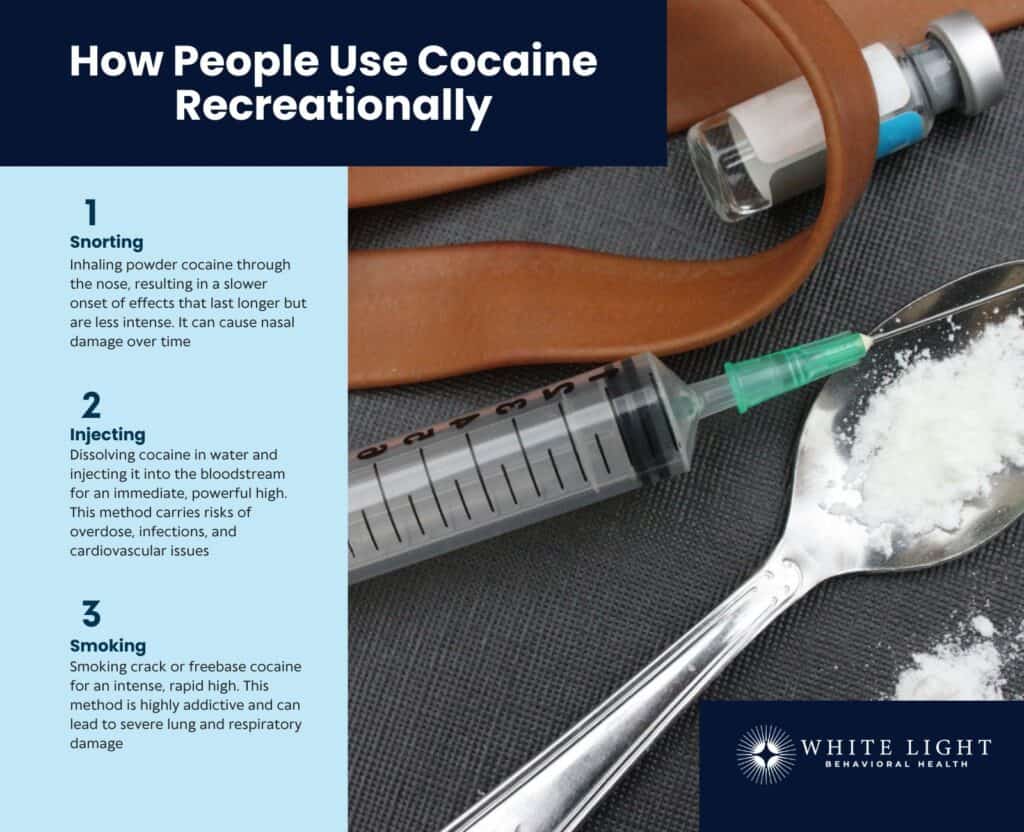
People use cocaine recreationally in the following ways:
- Snorting: Snorting cocaine, or inhaling the powder form through the nose, is one of the most common methods of use. This allows the drug to be absorbed through the nasal tissues, leading to a slower onset of effects within a few minutes.
The high lasts longer than other methods but is less intense. Frequent snorting causes damage to the nasal passages, including ulcers and perforation of the septum.
- Injecting: Some users dissolve cocaine in water and inject it directly into the bloodstream with a syringe.
This method produces an immediate and powerful high, but it also carries significant risks, including overdose, infections, and the transmission of diseases like HIV or hepatitis from shared needles. Injecting cocaine also increases the chances of cardiovascular issues, such as heart attacks and strokes.
- Smoking: Cocaine is smoked in its freebase or crack cocaine form, producing a rapid and intense high within seconds.
This method delivers the drug quickly to the brain, leading to an intense but short-lived euphoria, prompting repeated use in binges. Smoking cocaine is highly addictive and causes severe lung damage and respiratory issues.
How Does Cocaine Make You Feel?
Cocaine makes you feel a surge of euphoria, increased energy, and heightened confidence.
As a powerful stimulant, it rapidly enhances dopamine levels in the brain, creating a sense of alertness and excitement. Users feel more talkative, energetic, and mentally sharp, but these effects are short-lived.
As the drug wears off, it leads to irritability, anxiety, and intense cravings, making it highly addictive.
Contact us today to schedule an initial assessment or to learn more about our services. Whether you are seeking intensive outpatient care or simply need guidance on your mental health journey, we are here to help.
What Are the Immediate Effects of Cocaine Use?
The immediate effects of cocaine use are heightened energy, increased heart rate, alertness, and paranoia. As a powerful stimulant, cocaine rapidly affects the central nervous system, creating an intense but short-lived sense of euphoria and hyperactivity.
Users experience dilated pupils, restlessness, and elevated blood pressure, significantly strain the heart and circulatory system. The intensity and duration of these effects depend on the method of use and the individual’s tolerance to the drug.
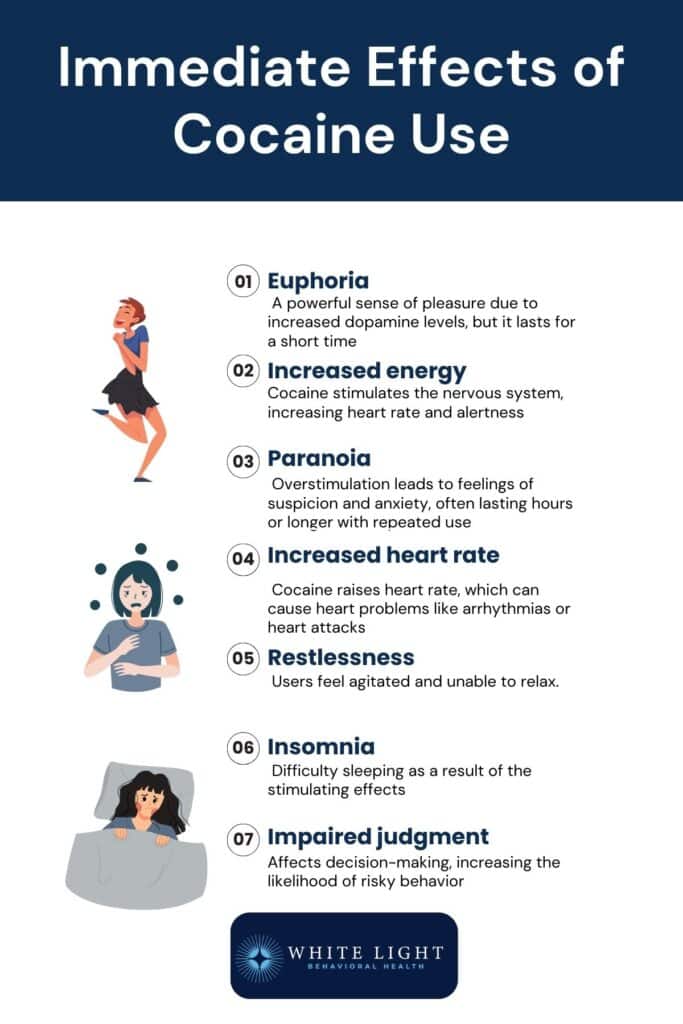
The immediate effects of cocaine use are as follows:
- Euphoria: Cocaine induces a powerful sense of euphoria due to the surge in dopamine levels in the brain. This is a short-term effect, lasting minutes to an hour, depending on the method of use.
Over time, repeated use leads to dependence, as the brain becomes accustomed to the heightened dopamine levels, requiring more of the drug to achieve the same effect, according to a study by Nestler EJ. et al. 2005, titled “The neurobiology of cocaine addiction.”
- Increased energy: Cocaine stimulates the central nervous system, increasing the heart rate and blood pressure, leading to heightened energy levels. This short-term effect makes users feel more alert, active, and talkative, as studied by NIDA in “Mind Matters: The Body’s Response to Cocaine.” However, prolonged use leads to exhaustion and physical wear, as the body is under constant stress.
- Paranoia: Cocaine use causes paranoia due to the overwhelming stimulation of the brain.
This is a short-term effect, but repeated use leads to lasting psychological disturbances. Paranoia occurs in 68% to 84% of patients using cocaine, according to a study by Satel SL, Southwick SM, and Gawin FH. et al. 1999, titled “Clinical features of cocaine-induced paranoia.” Cocaine-induced paranoia is transient, lasting a few hours or as long as days or weeks.
- Increased heart rate: Cocaine increases the heart rate by stimulating the sympathetic nervous system.
This is a short-term effect, but it is dangerous, increasing the risk of heart-related issues like arrhythmias or heart attacks, particularly with chronic use, as studied by Mersereau EJ et al. 2015, in “The effects of cocaine on heart rate and electrocardiogram in zebrafish (Danio rerio).”
- Restlessness: Cocaine is a stimulant, leading to feelings of restlessness, fidgeting, and a lack of calm. This short-term effect is exacerbated by increased doses, making it difficult for users to relax or sleep.
- Insomnia: Due to its stimulating nature, cocaine causes insomnia.
This short-term effect persists for several hours, and chronic use disrupts the body’s natural sleep-wake cycle, leading to long-term sleep disorders. A study by Morgan PT, Malison RT. et al. 2007, titled “Cocaine and sleep: early abstinence,” polysomnographic (PSG) reports show after only two days of cocaine cessation, cocaine users begin experiencing increased sleep onset latency, slow wave sleep, decreased sleep efficiency, and total sleep time.
- Impaired judgment: Cocaine impairs judgment by affecting brain regions involved in decision-making and risk assessment.
This is a short-term effect but seriously affects users’ behavior, increasing the likelihood of engaging in risky activities.
What Are the Long-Term Effects of Cocaine Use?
The long-term effects of cocaine use are severe cardiovascular issues, lung damage, nasal deterioration, and significant mental health disorders such as anxiety, paranoia, depression, and psychosis. Chronic use leads to lasting brain changes, increasing the risk of cognitive impairment and addiction. Long-term cocaine use weakens the immune system, making users more susceptible to infections.
Over time, these effects contribute to serious health complications, many of which are irreversible.
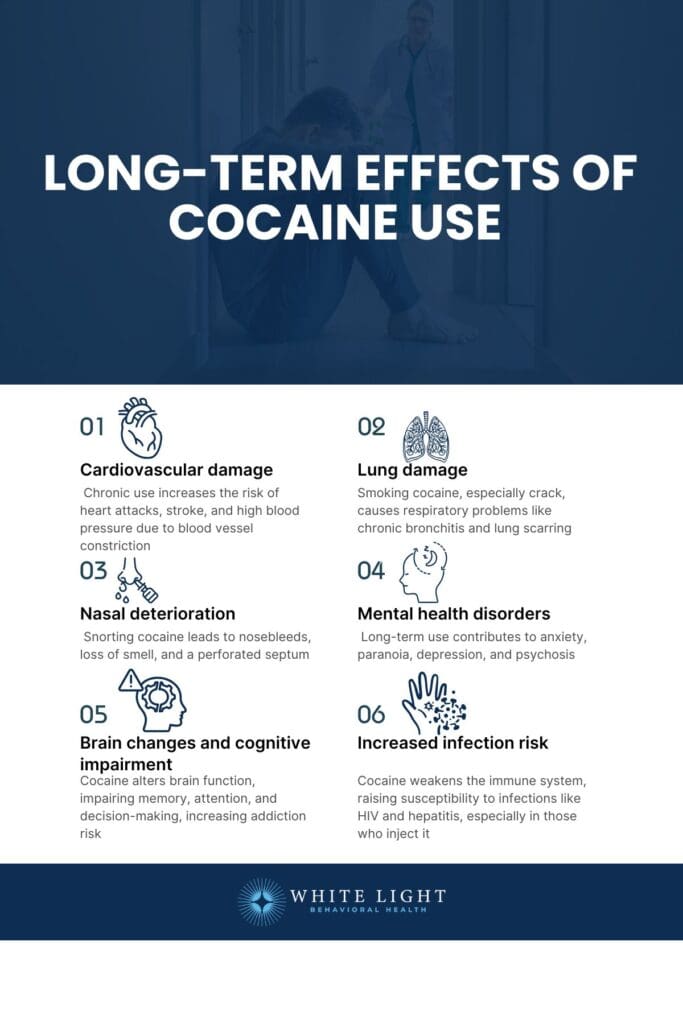
The long-term effects of cocaine use are as follows:
- Cardiovascular damage: Chronic cocaine use significantly increases the risk of high blood pressure, heart attacks, and stroke. Cocaine constricts blood vessels, leading to long-term damage to the heart and arteries.
A study by Mittleman MA et al. 1999, titled “Triggering of Myocardial Infarction by Cocaine,” found that cocaine use increases the risk of heart attacks by up to 24 times within the first hour of use.
- Lung damage: Smoking cocaine, particularly in its crack form, damages lung tissue, leading to chronic respiratory conditions such as bronchitis and pulmonary hypertension. A study by Perper JA and Van Thiel DH. et al. 1992, titled “Respiratory complications of cocaine abuse,” highlights the long-term effects of cocaine smoking on lung health, including lung infections and permanent scarring.
- Nasal deterioration: Repeated snorting of cocaine destroys the mucous membranes in the nose, leading to chronic nosebleeds, loss of smell, and, in severe cases, a perforated septum.
This occurs due to cocaine’s vasoconstrictive properties, which reduce blood flow to nasal tissues, causing them to die over time.
- Mental health disorders: Long-term cocaine use disrupts brain chemistry, contributing to anxiety, paranoia, depression, and even psychosis. According to a study by Satel SL, Southwick SM, and Gawin FH. et al. 1999, titled “Clinical features of cocaine-induced paranoia,” between 68% and 84% of regular cocaine users experience paranoia, sometimes lasting days or weeks.
- Brain changes and cognitive impairment: Prolonged cocaine use alters brain function, reducing cognitive abilities such as memory, attention, and decision-making.
These changes increase impulsivity and the likelihood of addiction. Research by Ersche KD et al. 2013, in “The Skinny on Cocaine: Insights into Eating Behavior and Body Weight in Cocaine-dependent Men,” shows that cocaine disrupts normal brain function, leading to long-term deficits in cognitive performance.
- Increased infection risk: Cocaine weakens the immune system, making users more susceptible to infections like HIV and hepatitis C, especially among those who inject the drug.
Shared needles increase the spread of bloodborne diseases, while cocaine’s impact on the body’s natural defenses heightens overall infection risks.
How Does Cocaine Affect the Brain?
Cocaine affects the brain by disrupting normal dopamine function, leading to neurotoxicity and cognitive impairments. When consumed, cocaine blocks the reuptake of dopamine, a neurotransmitter associated with pleasure and reward, causing an accumulation in the brain, as studied by Nestler EJ. et al. 2005, titled “The neurobiology of cocaine addiction.” This results in intense feelings of euphoria and increased energy.
Chronic use of cocaine diminishes the brain’s ability to regulate dopamine naturally, leading to reduced sensitivity to the drug and necessitating higher doses to achieve the same effect.
Over time, this disruption causes significant cognitive impairments, including attention, memory, and decision-making difficulties. Research published in The Journal of Neuroscience indicates that prolonged cocaine use leads to a predominance of stimulatory D1 receptor signaling over inhibitory D2 receptor signaling during intoxication, which facilitates compulsive intake in addiction.
What Are the Dangers of Cocaine Overdose?
The dangers of cocaine overdose are severe and include life-threatening conditions such as seizures and heart failure. An overdose manifests through symptoms like elevated heart rate, high blood pressure, severe agitation, hallucinations, and hyperthermia. In extreme cases, it leads to cardiac arrest, stroke, or fatal respiratory failure.
The risk of overdose has escalated with the increasing prevalence of cocaine laced with fentanyl, a potent synthetic opioid. According to the Centers for Disease Control and Prevention (CDC), synthetic opioids other than methadone, primarily illegally made fentanyl, were involved in approximately 68% of overdose deaths in the U.S. in 2022.
Immediate medical attention is necessary during a suspected overdose to improve the chances of survival.
Can Secondhand Exposure to Cocaine Be Harmful?
Yes, secondhand exposure to cocaine, particularly through passive inhalation of its smoke, can be harmful. Individuals in close proximity to users who smoke cocaine inadvertently inhale airborne particles, leading to unintentional absorption of the drug.
According to a study by Mirchandani HG. et al. 1991, titled “Passive inhalation of free-base cocaine (‘crack’) smoke by infants,” this passive exposure causes health effects such as respiratory issues, increased heart rate, and elevated blood pressure. Vulnerable populations, including children, pregnant women, and individuals with pre-existing health conditions, are especially at risk.
Why Is Cocaine So Addictive?
Cocaine is highly addictive because it significantly alters the brain’s reward system by increasing dopamine levels, leading to intense cravings and dependence. Upon consumption, cocaine blocks the reuptake of dopamine, resulting in its accumulation and prolonged stimulation of neurons associated with pleasure and reward. According to a study by Nestler EJ. et al. 2005, titled “The neurobiology of cocaine addiction,” this artificial elevation of dopamine reinforces drug-taking behavior as the brain begins to associate cocaine use with intense euphoria.
Over time, the brain’s natural ability to regulate dopamine diminishes, causing users to require higher doses to achieve the same pleasurable effects. This cycle of escalating use and diminishing returns encourages dependence and makes cessation challenging, eventually resulting in cocaine addiction. A study by DOng Y et al. 2014, titled “The Neural Rejuvenation Hypothesis of Cocaine Addiction,” has shown that chronic cocaine use leads to neuroadaptive changes, effectively “rewiring” the brain to prioritize drug-seeking behaviors over natural rewards.
Rediscover Life at White Light Behavioral Health
Get the compassionate support you deserve. We're here to help you reclaim joy, wellness, and a brighter future.
Our Facility
What Are the Legal and Social Consequences of Cocaine Use?
The legal and social consequences of cocaine use are substantial, encompassing criminal charges, social stigma, and employment challenges. Legally, cocaine is classified as a Schedule II controlled substance under the Controlled Substances Act in the United States, indicating a high potential for abuse and severe legal penalties for possession, distribution, or manufacture. Convictions result in significant fines and lengthy prison sentences, particularly for trafficking offenses.
Socially, individuals face stigmatization, strained relationships, and isolation due to the negative perceptions associated with drug use. Employment-wise, cocaine use leads to job loss, difficulty securing future employment, and professional license revocations, especially in fields requiring regular drug testing or high levels of responsibility. These factors severely impact an individual’s quality of life and societal standing.
What is the Legal Status of Cocaine in the U.S.?
The legal status of cocaine in the U.S. is that it is classified as a Schedule II controlled substance under the Controlled Substances Act. This classification indicates that cocaine has a high potential for abuse but also recognizes its limited medical use in specific contexts, such as a local anesthetic in certain surgical procedures.
Despite this, unauthorized possession, distribution, or manufacture of cocaine is illegal and subject to severe legal penalties, including fines and imprisonment. In New Jersey, as in other states, state laws align with federal regulations, imposing strict penalties for cocaine-related offenses.
The enforcement of these laws reflects the substance’s high potential for abuse and the significant risks associated with its non-medical use.
How Many People Die from Cocaine Each Year?
Approximately 24,538 people died from cocaine-involved overdoses in the United States in 2021, up from 19,927 in 2020, according to a report by the CDC. Globally, the number of cocaine-related deaths has been increasing, driven in part by the rising prevalence of cocaine adulterated with potent synthetic opioids like fentanyl. These alarming statistics underscore the urgent need for effective prevention and intervention strategies to address cocaine use and its associated risks.
How Long Does Cocaine Stay in Your System?
Cocaine stays in your system for approximately 1 to 4 days, depending on various factors. The drug has a relatively short half-life, averaging about an hour, but its metabolites, such as benzoylecgonine, are detected longer.
Factors influencing detection time include the frequency and amount of use, individual metabolism, and the type of drug test employed. For instance, while cocaine itself is undetectable after a day, its metabolites are identified in urine for up to four days post-use.
Chronic or heavy users have longer detection windows due to accumulation in the body.
Can Cocaine Be Detected in Drug Tests?
Yes, cocaine can be detected in drug tests, with detection times varying by test type. In urine tests, cocaine metabolites like benzoylecgonine are detected for 1 to 4 days after use. However, chronic users test positive for up to two weeks, according to the National Institute on Drug Abuse.
Blood tests have a shorter detection window, up to 48 hours. Hair follicle tests detect cocaine use for up to 90 days, making them the most extended detection method.
While drug tests are accurate, false positives occur due to cross-reactivity with certain medications or substances, requiring confirmatory testing.
Share This Post

Dr. Ryan Wakim M.D.
All author posts
TREATMENTS WE OFFER
Are you covered for treatment?















White Light Behavioral Health is an approved provider for Blue Shield and Tufts, while also accepting many other major insurance carriers.
Check Coverage Now!