Alcohol Recovery: Definition, Stages, Techniques, Benefits

Alcohol Use Disorder (AUD) recovery is more than just quitting; it’s a transformative journey that helps you reclaim your health, mindset, and daily life. It takes medical support, emotional strength, and real lifestyle changes to heal fully.
Yet according to the NSDUH (2022), only 10.3% of adults with AUD in Ohio received treatment last year, showing how many go without the help they need.
Recovery moves through four key stages: abstinence, post-acute withdrawal (PAWS), repair, and growth. Along the way, you rebuild your mental health, physical strength, and relationships. Over time, you’ll see gains in your career, finances, and emotional stability, because recovery isn’t just possible, it’s life-changing.
What Is Alcohol Recovery?
Alcohol recovery is more than just detox or quitting alcohol; it’s a long-term process focused on healing and lasting change. While detox helps manage withdrawal, true recovery addresses the emotional and behavioural roots of addiction.
It involves therapy, lifestyle changes, and relapse prevention strategies that support you beyond early abstinence. Recovery helps you understand why you drank in the first place and gives you the tools to build a healthier, more stable life.
Abstinence alone isn’t enough. Full recovery means learning to live well without alcohol, regaining control, and creating a future that supports your mental, emotional, and physical well-being.
Did you know most health insurance plans cover substance use disorder treatment? Check your coverage online now.
Why Is Alcohol Recovery Necessary?
Alcohol recovery is necessary because untreated alcohol addiction leads to severe health risks, including liver disease, mental health disorders, and even overdose.
Chronic alcohol use eventually damages an individual’s vital organs, weakens the immune system, and increases the likelihood of fatal conditions such as cirrhosis and cardiovascular disease.
What Are the Stages of Alcohol Recovery?
The stages of alcohol recovery are Abstinence, Post-Acute Withdrawal, Repair, and Growth. These phases help you overcome addiction by addressing both physical withdrawal and long-term sobriety.
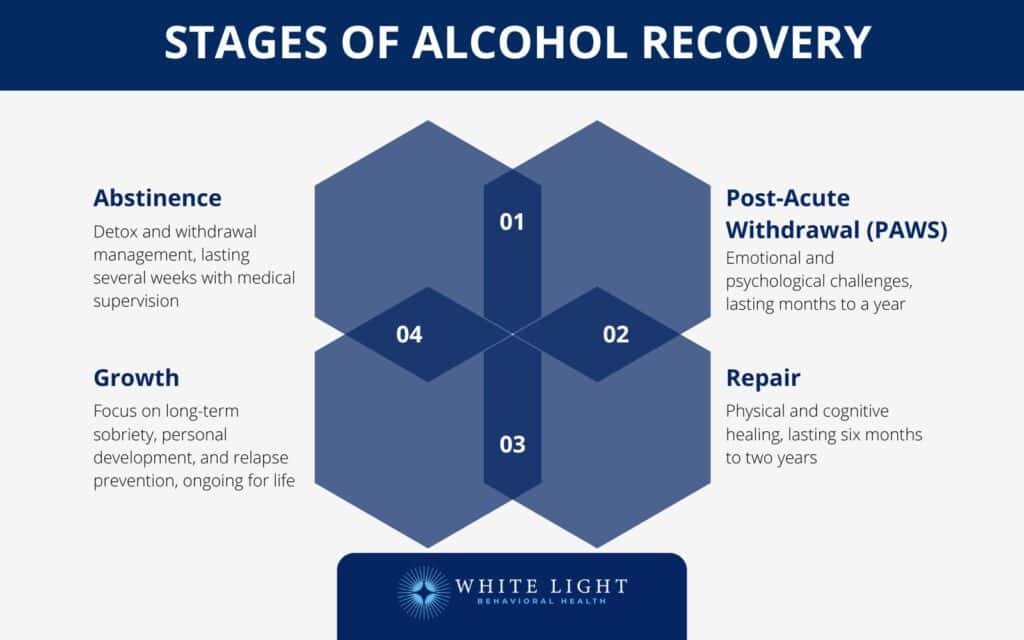
The stages of alcohol recovery are explained below:
More Resources on Addiction:
Stage 1: Abstinence
Abstinence is an initial phase where you have to focus on withdrawal management, detox, and resisting cravings. Many individuals with AUD experience withdrawal symptoms, like anxiety, tremors, and seizures, with severe cases affecting up to 20% of heavy drinkers.
Stage 2: Post-Acute Withdrawal
Post-acute withdrawal Syndrome (PAWS) begins after the initial detox phase. Here, you experience emotional and psychological challenges like mood swings, depression, and sleep disturbances.
Stage 3: Repair
During the repair stage, your physical healing and cognitive function improve. The liver, brain, and other organs begin to recover from alcohol-related damage, leading to better energy levels. Many people experience renewed mental clarity and better decision-making.
Contact us today to schedule an initial assessment or to learn more about our services. Whether you are seeking intensive outpatient care or simply need guidance on your mental health journey, we are here to help.
Stage 4: Growth
Growth is the final stage, where you focus on long-term sobriety, personal development, and relapse prevention. Therapy, peer support groups, and new coping strategies help individuals build a fulfilling, alcohol-free life. This stage is ongoing and lasts a lifetime.
What Are the Most Effective Techniques for Alcohol Recovery?
The most effective techniques for alcohol recovery are behavioral therapies, medication-assisted treatment (MAT), 12-step programs and alternatives, and holistic approaches. Combining multiple approaches increases the chances of successful recovery.
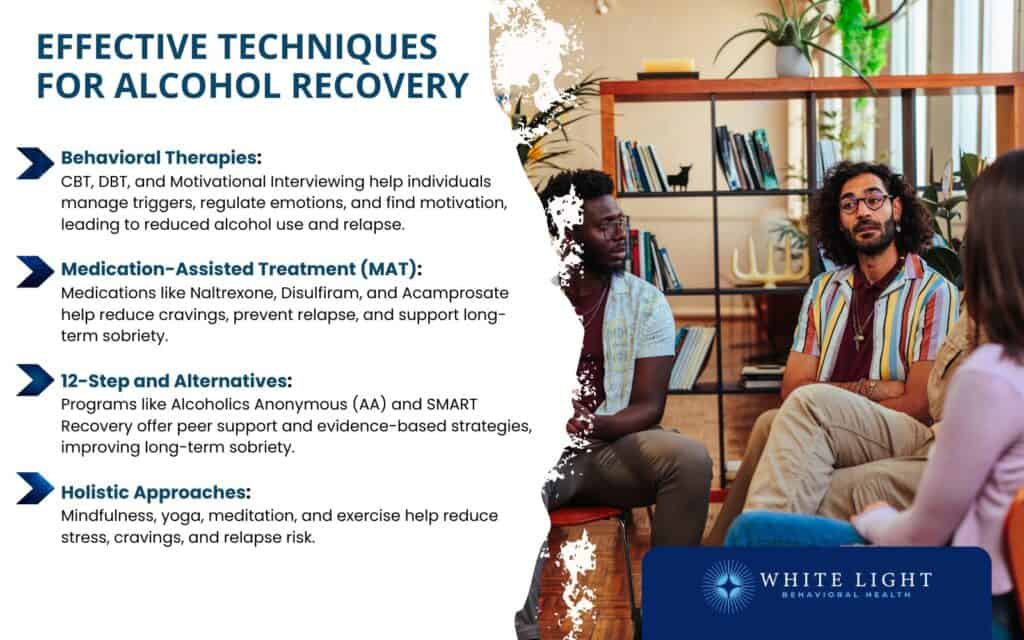
The most effective techniques for alcohol recovery include:
Behavioral Therapies
Behavioral therapies help individuals develop coping skills and change negative thought patterns related to alcohol use. Cognitive Behavioral Therapy (CBT) focuses on identifying triggers and developing healthier responses. Motivational Interviewing (MI) encourages individuals to find internal motivation for change.
Dialectical Behavior Therapy (DBT) helps with emotional regulation. It has also shown particular success in treating those with co-occurring mental health conditions, as it aids in emotional regulation and minimizes impulsive drinking.
Medication-Assisted Treatment (MAT)
FDA-approved medications help manage withdrawal symptoms and reduce cravings. Naltrexone blocks alcohol’s euphoric effects, disulfiram causes unpleasant reactions to alcohol consumption, and acamprosate helps maintain sobriety.
Disulfiram triggers adverse reactions when alcohol is consumed, discouraging drinking behavior. Its effectiveness rises high in patients who adhere to the prescribed regimen. Acamprosate helps restore brain chemistry disrupted by alcohol dependence and is linked to higher abstinence rates.
12-Step Programs and Alternatives
Support groups like Alcoholics Anonymous (AA) provide peer support, accountability, and a structured recovery framework based on spirituality and self-improvement. Non-12-step alternatives like SMART Recovery offer evidence-based techniques to help individuals maintain sobriety.
Rediscover Life at White Light Behavioral Health
Get the compassionate support you deserve. We're here to help you reclaim joy, wellness, and a brighter future.
Our Facility
Holistic Approaches
Mind-body techniques complement medical treatments by reducing stress and improving overall well-being. Practices such as meditation, mindfulness, yoga, exercise, and acupuncture help individuals regulate emotions and prevent relapse.
What Are the Benefits of Alcohol Recovery?
The benefits of alcohol recovery include improving overall well-being and quality of life. Recovery leads to better physical and mental health, stronger relationships, and increased career and financial stability, allowing individuals to regain control over their lives.
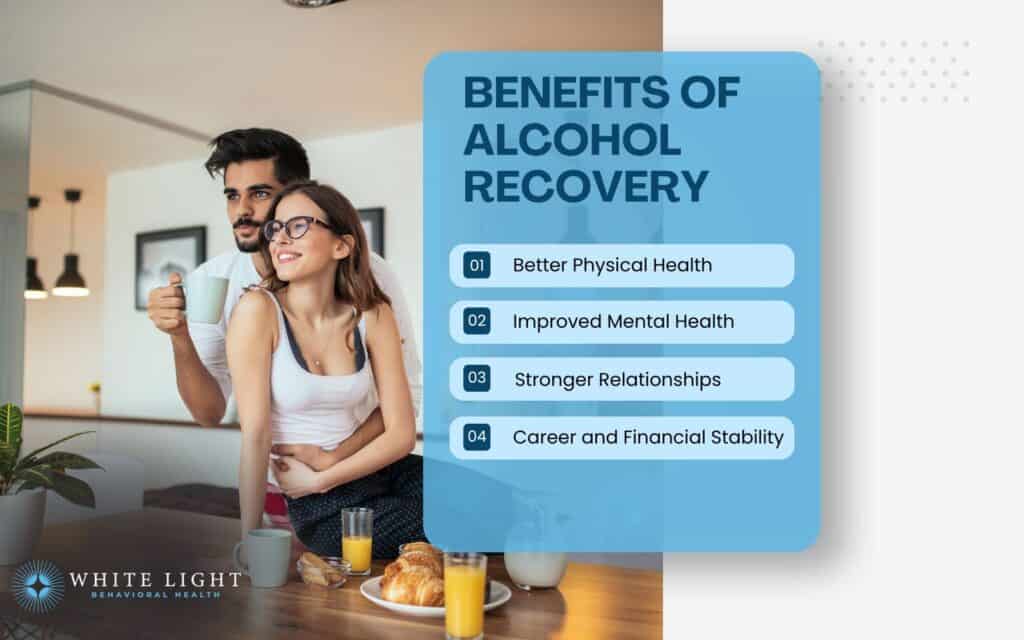
The benefits of alcohol recovery are explained below:
- Improve Physical Health: Sobriety reduces the risk of liver disease, cardiovascular issues, and weakened immune function caused by prolonged alcohol use. reducing the risk of conditions such as cirrhosis and fatty liver disease.
- Enhance Mental and Emotional Health: Alcohol recovery helps stabilize mood, reduce anxiety, and improve cognitive function.
- Strengthen Relationships: Alcohol addiction strains personal relationships, leading to conflict and isolation. Recovery allows individuals to rebuild trust, communicate more effectively, and develop healthier social connections with family, friends, and loved ones.
- Improve Career and Financial Stability: Sobriety enhances work performance, increases productivity, and opens opportunities for career growth.
How Can You Prevent Alcohol Relapse and Maintain Long-Term Sobriety?
You can prevent alcohol relapse and maintain long-term sobriety by building healthy habits, managing emotions, and staying connected to support systems.
Research by NIAAA, 2023, indicates that approximately 40% to 60% of individuals treated for alcohol use disorder experience relapse within the first year.
Ways to prevent alcohol relapse and maintain long-term sobriety include:
- Develop Healthy Habits: Establishing a structured routine that includes exercise, balanced nutrition, and regular sleep helps stabilize mood and reduce cravings.
- Emotional Regulation: Managing stress, anxiety, and negative emotions is paramount in relapse prevention.
- Avoid Triggers: Identifying and avoiding high-risk situations, such as social settings where alcohol is present, will help you minimize relapse chances.
- Therapy and Counseling: Professional therapy, including CBT and Dialectical Behavior Therapy (DBT), helps address underlying psychological issues.
- Build a Strong Support Network: Connecting with supportive friends, family, and recovery groups like Alcoholics Anonymous (AA) provides accountability and encouragement.
What Are the Most Common Relapse Triggers for Alcohol?
The most common relapse triggers for alcohol are stress, social pressure, emotional distress, and environmental cues. All these lead individuals back to drinking if not properly managed.
The most common relapse triggers for alcohol include:
- Stress: High-stress levels, whether from work, relationships, or financial difficulties, increase cravings. Practicing relaxation techniques like deep breathing, meditation, or exercise helps manage stress effectively.
- Social Pressure: Being around people who drink or in environments where alcohol is present leads to relapse.
Setting boundaries, bringing a sober support partner, or declining social invitations that involve alcohol helps avoid temptation.
- Emotional Distress: Negative emotions such as sadness, anger, or loneliness drive individuals to use alcohol as a coping mechanism. Therapy, journaling, and engaging in healthy hobbies help process emotions constructively.
- Environmental Cues: Certain places, smells, or routines associated with past drinking habits trigger cravings.
Creating new habits, avoiding high-risk locations, and seeking alternative activities reduce exposure to these cues.
Is Alcohol Recovery Possible Without Rehab?
Yes, alcohol recovery is possible without rehab, but it presents significant challenges and risks. Some individuals successfully quit alcohol through self-managed recovery methods such as lifestyle changes, support groups, and behavioral therapy.
However, alcohol addiction recovery is difficult because of withdrawal symptoms, cravings, and emotional distress.
Are you covered for treatment?

White Light Behavioral Health is an approved provider for Blue Cross Blue Shield and TUFTS, while also accepting many other major insurance carriers.
Check Coverage Now!What Are the Best Resources for Alcohol Recovery Support in Ohio?
The best resources for alcohol recovery support in Ohio include SAMHSA, NIAAA, Alcoholics Anonymous (AA), SMART Recovery, and online support forums. Many of these organizations offer free or low-cost services nationwide.
The best resources for alcohol recovery support in Ohio include:
- Substance Abuse and Mental Health Services Administration (SAMHSA): SAMHSA is a government agency that provides a national helpline, treatment locator, and funding for addiction programs.
- National Institute on Alcohol Abuse and Alcoholism (NIAAA): NIAAA offers research-based information, treatment options, and self-help resources for alcohol addiction.
- Alcoholics Anonymous (AA): AA is a 12-step program that provides peer support meetings worldwide, helping individuals maintain long-term sobriety through community and accountability.
- SMART Recovery: SMART Recovery is a science-based alternative to AA, focusing on self-empowerment and cognitive-behavioral strategies to manage addiction.
- Online Support Forums: Platforms like r/stopdrinking on Reddit, In The Rooms, and other virtual communities provide 24/7 peer support for those in recovery.
Where Can You Find Alcohol Recovery Support in Ohio?
You can find alcohol recovery support in Ohio through resources, including rehabilitation centers, Alcoholics Anonymous (AA) meetings, and state-funded programs. Ohio offers numerous rehab facilities providing evidence-based treatments for alcohol addiction.
AA meetings are widely available across Ohio, offering peer support through the 12-step program. In the Greater Cleveland area, meetings are held daily in various locations, including Bay Village, Chagrin Falls, and Willoughby. These gatherings provide a supportive community for individuals seeking sobriety.
The Ohio Department of Mental Health and Addiction Services (OhioMHAS) oversees state-funded programs offering support for alcohol recovery in Ohio. These programs include counseling, outpatient services, and residential treatment options, ensuring accessible care for residents across the state.
Share This Post

Dr. Ryan Wakim M.D.
All author posts
TREATMENTS WE OFFER
Are you covered for treatment?













White Light Behavioral Health is an approved provider for Blue Shield and Tufts, while also accepting many other major insurance carriers.
Check Coverage Now!