
Nalmefene: Definition, Mechanism of Action, Uses, Dosage, Side Effects, Alternatives

Nalmefene is the drug that helps you reduce your drinking without committing to complete sobriety right away. Unlike other treatments, you only take Nalmefene when you plan to drink, giving you more control over your alcohol use and flexibility in your recovery process.
It works by blocking certain brain receptors, reducing the pleasurable effects of alcohol, which helps curb cravings and makes it easier to cut down on drinking. You’d take 18 mg of Nalmefene an hour or two before drinking. Other medication-assisted treatment options for alcohol abuse include Naltrexone, Acamprosate, or Disulfiram.
While it’s generally well tolerated, some people experience mild side effects like nausea or dizziness. If you’re not ready for full abstinence but want to take steps toward healthier drinking, Nalmefene might be a good fit.
What Is Nalmefene?
Nalmefene, marketed under the brand name Selincro in some regions, is a prescription opioid receptor modulator and opioid antagonist used primarily to reduce alcohol consumption in individuals with alcohol dependence.
Nalmefene functions by selectively binding to mu (μ), delta (δ), and kappa (κ) opioid receptors, exhibiting antagonistic effects at the mu- and delta-opioid receptors and partial agonist activity at the kappa-opioid receptor.
This mechanism of Nalmefene distinguishes it from naltrexone, another opioid antagonist, as Nalmefene’s kappa partial agonism contributes to reducing withdrawal-related dysphoria. Due to its unique receptor profile, it helps modulate the brain’s reward system while minimizing the negative emotional effects associated with opioid blockade.
Nalmefene is taken on an as-needed basis before anticipated alcohol consumption, differing from continuous daily treatments like naltrexone.
Did you know most health insurance plans cover substance use disorder treatment? Check your coverage online now.
Is Nalmefene FDA-approved in Ohio, U.S?
No, Nalmefene is not FDA-approved in Ohio or the United States for the treatment of alcohol dependence or any other condition. However, it is approved in Europe under the brand name Selincro. It has been authorized by the European Medicines Agency (EMA) since 2013 for the reduction of alcohol consumption in individuals with alcohol dependence who have a high drinking risk level (≥60g/day for men and ≥40g/day for women).
Despite its European approval, regulatory submissions for FDA approval have not been pursued or granted, limiting its availability in the U.S.
What Is the Mechanism of Action of Nalmefene?
Nalmefene’s mechanism of action targets the parts of your brain that make alcohol feel rewarding. When you drink, your brain releases chemicals like endorphins and dopamine that give you that “feel-good” effect. Nalmefene blocks this process.
More Resources on Addiction:
It works by stopping certain brain receptors—mu and delta—from getting activated by alcohol. These are the same receptors that trigger the release of dopamine in the brain’s reward centre. By blocking them, Nalmefene reduces the pleasure you get from drinking, which weakens your cravings.
So, instead of pushing your brain into a full chemical shutdown, it balances things out, helping you manage the urge without overwhelming withdrawal or emotional crashes.
Does Nalmefene Reduce Alcohol Cravings?
Yes, Nalmefene reduces alcohol cravings and overall consumption in individuals with alcohol dependence.
The drug’s ability to modulate opioid receptor activity without requiring total abstinence makes it particularly effective for individuals seeking to gradually reduce alcohol consumption rather than quitting outright.
What Are the Uses of Nalmefene?
The uses of Nalmefene are primarily in the treatment of alcohol dependence and the management of opioid overdose. It is mostly prescribed to reduce alcohol consumption in individuals with alcohol use disorder (AUD).
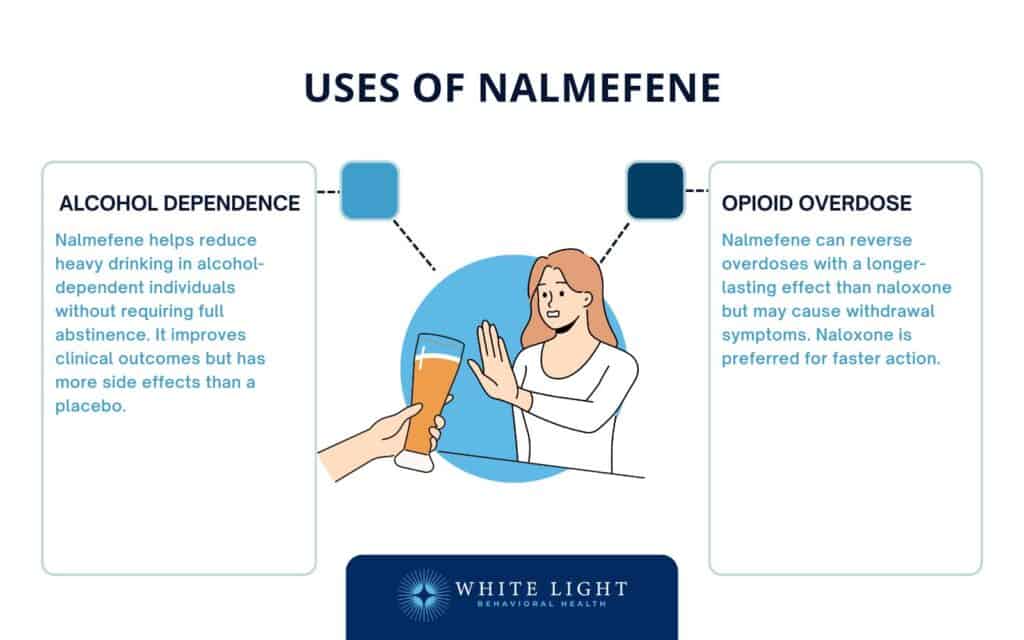
The uses of nalmefene include:
- Alcohol Dependence Treatment: Nalmefene is approved in Europe for the reduction of alcohol consumption in individuals with alcohol dependence who do not require immediate detoxification. Unlike abstinence-based treatments, it is taken on an as-needed basis to reduce heavy drinking episodes rather than enforcing complete sobriety.
- Potential Use in Opioid Overdose: Although not as commonly used as naloxone, Nalmefene is an opioid antagonist for reversing opioid overdoses.
It has a longer half-life than naloxone, which theoretically makes it more effective for preventing the recurrence of respiratory depression caused by long-acting opioids.
What Other Conditions Can Nalmefene Treat?
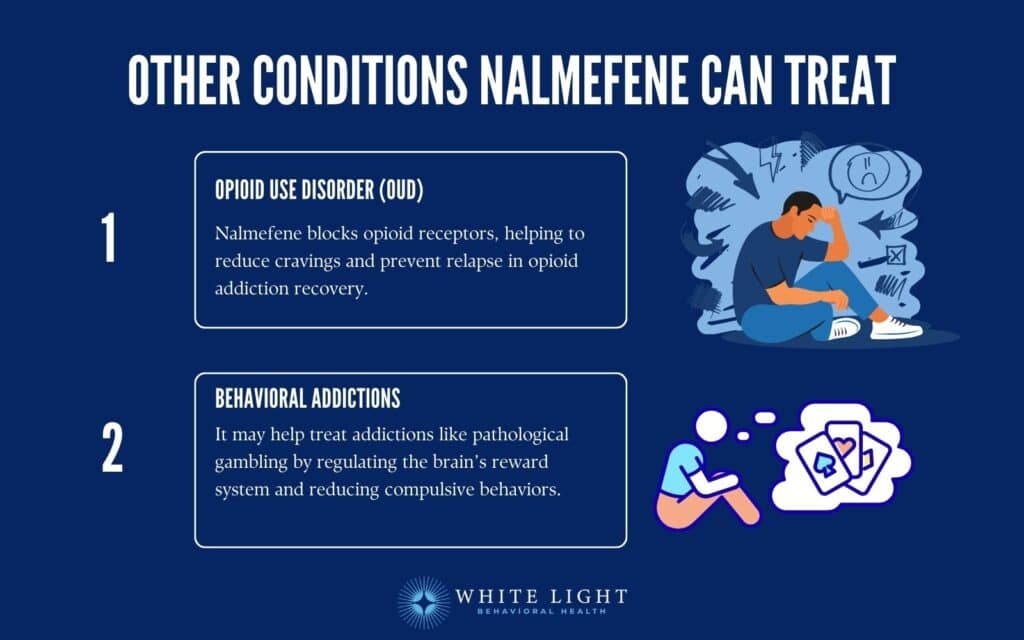
Other conditions Nalmefene can treat include managing opioid use disorder and certain behavioural addictions. As an opioid receptor antagonist, nalmefene has been explored as a treatment option for OUD. Nalmefene is also beneficial in treating certain behavioral addictions, such as pathological gambling.
Contact us today to schedule an initial assessment or to learn more about our services. Whether you are seeking intensive outpatient care or simply need guidance on your mental health journey, we are here to help.
What Are the Dosage Guidelines for Nalmefene?
The dosage guidelines for Nalmefene are one 18 mg tablet taken on an as-needed basis, ideally 1 to 2 hours before an anticipated drinking episode, for the reduction of alcohol consumption in individuals with alcohol dependence.
Unlike daily medications such as naltrexone, Nalmefene follows a targeted dosing approach, allowing for flexible use based on drinking risk.
How Is Nalmefene Administered?
Nalmefene is administered orally in tablet form, as an 18 mg dose taken on an as-needed basis before anticipated alcohol consumption. Unlike daily treatments, it is used flexibly to help reduce alcohol intake rather than enforce abstinence.
Ways nalmefene is administered include:
- Oral Administration (Tablets): The most common form of Nalmefene is an 18 mg oral tablet, taken 1 to 2 hours before drinking to reduce alcohol cravings and consumption.
- Intravenous (IV) Administration (Investigational Use): Although not widely used, Nalmefene has been studied for IV administration in opioid overdose reversal due to its opioid antagonist properties.
What Are the Side Effects and Risks of Nalmefene?
The side effects and risks of Nalmefene include nausea, dizziness, and insomnia. In contrast, severe risks involve psychiatric disturbances and liver toxicity in vulnerable patients. Most side effects are mild to moderate.
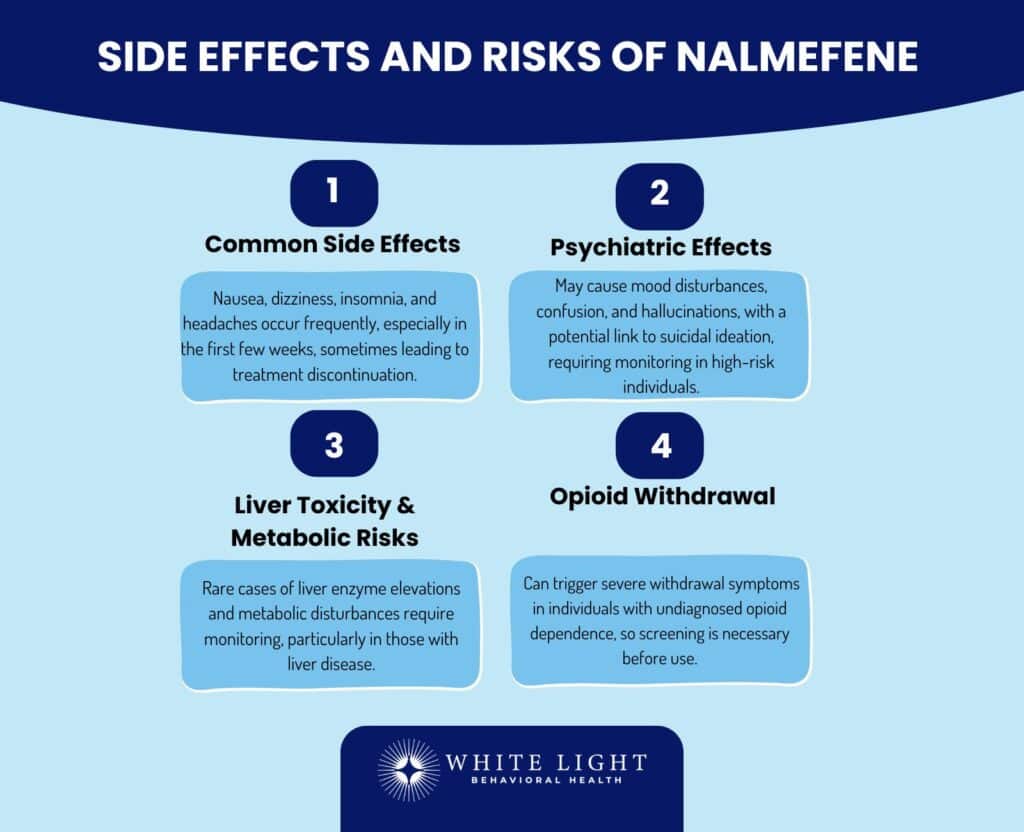
The side effects and risks of nalmefene are explained below:
- Common Side Effects: Nalmefene causes nausea, dizziness, insomnia, and headache in most users, especially during the first few weeks of treatment. These symptoms lessen with continued use but lead to treatment discontinuation in some cases.
- Psychiatric Effects: Nalmefene causes mood disturbances, including anxiety, confusion, and hallucinations, particularly in patients with a history of psychiatric disorders.
- Liver Toxicity and Metabolic Risks: While rare, hepatic enzyme elevations have been observed, necessitating liver function monitoring in patients with pre-existing liver disease.
- Withdrawal and Precipitated Opioid Withdrawal: In individuals with undiagnosed opioid dependence, Nalmefene triggers acute withdrawal symptoms, including severe agitation, vomiting, and sweating, due to its opioid antagonist properties.
Patients should be screened for opioid use before initiating treatment.
Who Should Avoid Taking Nalmefene?
People with opioid dependence, severe liver or kidney impairment, or certain psychiatric conditions should avoid taking Nalmefene due to the risk of serious adverse effects. Its opioid antagonist properties trigger withdrawal in opioid users.
People who should avoid taking nalmefene include:
- Opioid-Dependent Individuals: Nalmefene is a pure opioid antagonist, meaning it precipitates sudden and severe withdrawal symptoms in individuals who are currently using or dependent on opioids. Symptoms include vomiting, sweating, agitation, and severe pain, making it unsafe for those with active opioid use.
- Individuals with Severe Liver or Kidney Impairment: Since Nalmefene is metabolized in the liver and excreted through the kidneys, patients with severe hepatic (Child-Pugh Class C) or renal impairment (eGFR < 30 mL/min) experience toxic accumulation of the drug.
- Patients with Uncontrolled Psychiatric Disorders: Individuals with a history of severe depression, suicidal ideation, or psychotic disorders experience worsened mood symptoms, hallucinations, or increased suicidal thoughts when taking Nalmefene.
- Pregnant or Breastfeeding Women: There is limited clinical data on the safety of Nalmefene during pregnancy and lactation.
- Individuals with a Known Hypersensitivity to Nalmefene: Patients with a history of severe allergic reactions to Nalmefene or its excipients should avoid it to prevent anaphylactic reactions, which include rash, difficulty breathing, and swelling.
Which Medications Are the Alternatives to Nalmefene for Alcohol Addiction Treatment?
Medications that are alternatives to Nalmefene for alcohol addiction include Naltrexone, Acamprosate, and Disulfiram, all of which are FDA-approved treatments for alcohol use disorder (AUD). These alcohol addiction treatment drugs work through different mechanisms.
The alternative medications to nalmefene for alcohol addiction include:
- Naltrexone: Like Nalmefene, Naltrexone is an opioid receptor antagonist, but it is taken daily rather than on an as-needed basis. It reduces the pleasurable effects of alcohol by blocking endorphin release, thereby decreasing the urge to drink.
- Acamprosate (Campral): Acamprosate modulates glutamate and GABA activity in the brain, helping to restore the neurochemical balance disrupted by chronic alcohol use.
Unlike Nalmefene and Naltrexone, which focus on reducing drinking, Acamprosate is best suited for maintaining abstinence after detox.
- Disulfiram (Antabuse): Disulfiram blocks alcohol metabolism, leading to a severe reaction (flushing, nausea, vomiting, and palpitations) when alcohol is consumed. This creates a deterrent effect, making drinking highly unpleasant.
Unlike Nalmefene, Disulfiram does not reduce cravings but is effective for individuals committed to abstinence who need external reinforcement to avoid alcohol.
Rediscover Life at White Light Behavioral Health
Get the compassionate support you deserve. We're here to help you reclaim joy, wellness, and a brighter future.
Our Facility
How Does Nalmefene Compare to Naltrexone for Alcohol Addiction Treatment?
Nalmefene compares to Naltrexone for alcohol addiction treatment as both are opioid antagonists that reduce alcohol consumption by blocking opioid receptors and decreasing the brain’s reward response to drinking.
Naltrexone has stronger evidence for long-term abstinence support and is FDA-approved in the U.S., whereas Nalmefene is not FDA-approved but is available in Europe under the brand name Selincro.
Both medications are effective, but Naltrexone is more widely used due to FDA approval and extensive clinical support, while Nalmefene offers an alternative for those seeking a non-daily alcohol addiction treatment approach.
Can You Buy Nalmefene Over the Counter in Ohio?
No, you cannot buy Nalmefene over the counter (OTC) in Ohio. It is a prescription drug and has not been FDA-approved for alcohol addiction treatment in the country. As a controlled medication, it requires a doctor’s prescription and is currently only available in Europe under the brand name Selincro for alcohol dependence.
Can You Drink Alcohol While Taking Nalmefene?
Yes, you can drink alcohol while taking Nalmefene, but it reduces the pleasurable effects of alcohol, helping to lower consumption. It does not cause an adverse reaction like Disulfiram. However, patients should follow physician recommendations, as heavy drinking while on Nalmefene still poses health risks such as liver strain and intoxication.
How Long Does Nalmefene Stay in Your System?
Nalmefene stays in your system for about 24 hours, with a half-life of approximately 10 to 14 hours. It is metabolized in the liver and primarily eliminated through urine. Its effects on opioid receptors last longer than its presence in the bloodstream, meaning it influences alcohol consumption patterns for several days after use.
Is Nalmefene Safe for Long-term Use?
Yes, Nalmefene is safe for long-term use, with most side effects (nausea, dizziness) being mild to moderate and decreasing over time. Its effectiveness in reducing alcohol consumption persists for at least 6 to 12 months, making it a viable long-term treatment for alcohol dependence when monitored by a healthcare provider.
Share This Post

Dr. Ryan Wakim M.D.
All author posts
TREATMENTS WE OFFER
Are you covered for treatment?














White Light Behavioral Health is an approved provider for Blue Shield and Tufts, while also accepting many other major insurance carriers.
Check Coverage Now!