Alcohol Detox: Definition, Stages, Types, Medications, Side Effects, Timeline

Alcohol detox is an effective way to consider if you want to treat alcohol use disorder (AUD), the body’s process of adjusting to the absence of alcohol in the blood. Alcohol detox is necessary for those overcoming dependence. It is the first step in addiction recovery, helping to manage withdrawal symptoms and prevent complications.
According to data from the Ohio Department of Mental Health and Addiction Services (2023), approximately 35% of individuals entering state-funded alcohol treatment programs in Ohio in 2022 began with medically supervised detox services.
The alcohol detox process occurs in three primary stages. Early withdrawal begins within hours after the last drink, bringing mild symptoms like anxiety and nausea.
Peak withdrawal, occurring within 24-72 hours, is the most intense stage, with severe symptoms such as tremors and seizures. Late withdrawal gradually subsides, though cravings and mood changes persist.
There are several types of alcohol detox programs you should consider, customized to different needs. Medical detox in inpatient facilities provides 24/7 supervision for severe cases. Outpatient detox allows you to receive medical monitoring while you stay at home.
What Is Alcohol Detox?
Alcohol detox is the body’s natural process of eliminating alcohol from the system, leading to withdrawal symptoms as the body adjusts to the absence of alcohol. It is the first and most important step in addiction treatment, helping individuals achieve physical stability before further rehabilitation and recovery efforts. According to the 2023 NSDUH, 2.2 million adults ages 18 and older who had AUD in the past year (7.8% of those with past-year AUD in this age group) received alcohol use treatment, including alcohol detox, in the past year.
Did you know most health insurance plans cover substance use disorder treatment? Check your coverage online now.
How Does Alcohol Detox Work?
Alcohol detox works by allowing the body to metabolize and eliminate alcohol while adjusting to its absence. The liver breaks down alcohol into acetaldehyde and then into harmless substances, but prolonged heavy drinking impairs this process.
When you stop consuming alcohol, the body experiences withdrawal symptoms as the central nervous system readjusts. Healthcare providers monitor vital signs, manage symptoms, and administer medications when necessary to ensure a safer detox process, especially in severe cases.
More Resources on Addiction:
Who Needs Alcohol Detox?
Individuals with alcohol dependence, severe binge drinking habits, or a high withdrawal risk need alcohol detox to safely remove alcohol from their system and manage potential complications. Detox is necessary for those who experience withdrawal symptoms or are at risk of life-threatening effects like seizures or delirium tremens.

What Are the Stages of Alcohol Detox?
The stages of alcohol detox are early withdrawal, peak withdrawal, and late withdrawal, each marking different phases of the body’s response to the absence of alcohol. These stages progress in severity, requiring careful management, especially for those at risk of complications.
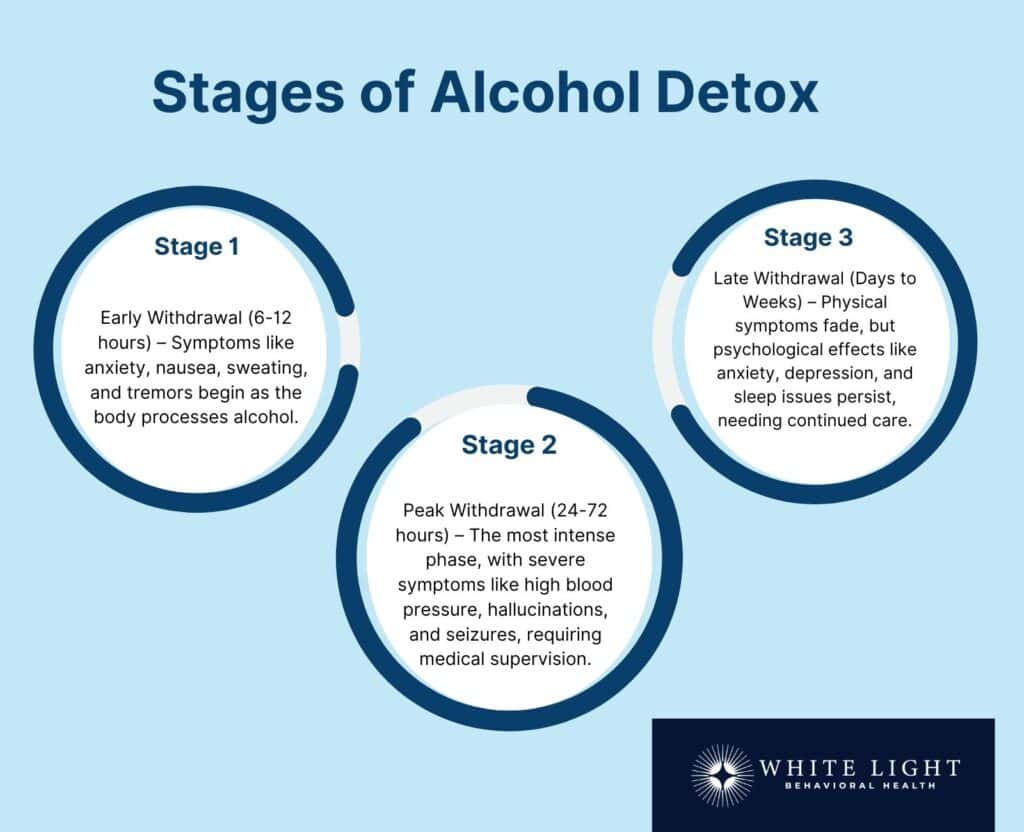
The stages of alcohol detox are as follows:
Stage 1: Early Withdrawal
This stage begins within 6 to 12 hours after the last drink, as the body starts metabolizing alcohol. Common symptoms include anxiety, nausea, sweating, and mild tremors. The severity of symptoms varies depending on the individual’s level of alcohol dependence.
Stage 2: Peak Withdrawal
Occurring between 24 to 72 hours, this is the most intense phase, where symptoms peak. Severe withdrawal effects, such as high blood pressure, confusion, hallucinations, and seizures, develop, requiring medical supervision to prevent life-threatening complications.
Contact us today to schedule an initial assessment or to learn more about our services. Whether you are seeking intensive outpatient care or simply need guidance on your mental health journey, we are here to help.
Stage 3: Late Withdrawal
Lasting from several days to weeks, this stage involves lingering symptoms such as fatigue, mood swings, and sleep disturbances. While physical symptoms gradually subside, psychological withdrawal effects like anxiety and depression persist, requiring ongoing treatment and support.
What Are the Different Types of Alcohol Detox?
The different types of alcohol detox are medical detox (inpatient), outpatient detox, and social/supportive detox, each offering varying levels of care and supervision based on the severity of withdrawal symptoms. Choosing the right detox approach depends on individual needs, medical history, and withdrawal risk.

1. Medical Detox (Inpatient)
Medical detox, also known as inpatient detox, is a supervised process in a rehab facility where individuals receive 24/7 medical support to manage withdrawal symptoms safely. This approach is ideal for those experiencing severe alcohol withdrawal, as it provides continuous monitoring, medication management, and emergency care if complications arise.
2. Outpatient Detox
Outpatient detox allows individuals to detox at home while receiving medical monitoring and support from healthcare providers.
It is best suited for individuals with mild to moderate withdrawal symptoms who do not require intensive medical supervision. This method includes regular check-ins with doctors, medication management, and counseling to ensure a safe detox process.
3. Social/Supportive Detox
Social or supportive detox is a non-medical detox approach that relies on peer support, counseling, and emotional guidance rather than medical intervention. This method is suitable for individuals with mild withdrawal symptoms who do not require medication but benefit from structured support in a safe, alcohol-free environment.
Rediscover Life at White Light Behavioral Health
Get the compassionate support you deserve. We're here to help you reclaim joy, wellness, and a brighter future.
Our Facility
What Medications Are Used for Alcohol Detox?
Medications that are used for alcohol detox include benzodiazepines, diazepam, lorazepam, and naltrexone. These medications help manage withdrawal symptoms, reduce cravings, and prevent severe complications.

The following medications are used for alcohol detox:
- Benzodiazepines: Benzodiazepines are sedatives that include diazepam and lorazepam. They are FDA-approved medications for managing alcohol withdrawal symptoms.
Benzodiazepines help prevent seizures, control anxiety, and stabilize the central nervous system.
- Diazepam: Diazepam is a long-acting benzodiazepine that helps smooth the withdrawal process by maintaining stable blood levels of medication. It is commonly used in inpatient detox settings for individuals at high risk of severe withdrawal symptoms.
- Lorazepam: Lorazepam is a short-acting benzodiazepine that is preferred for patients with liver disease since it does not rely heavily on liver metabolism.
- Naltrexone: Naltrexone is an FDA-approved medication that helps reduce alcohol cravings and relapse risk.
What Are the Most Common Physical Symptoms of Alcohol Detox?
The most common physical symptoms of alcohol detox are nausea, headaches, tremors, sweating, and increased heart rate.
These symptoms arise as the body adjusts to the absence of alcohol.

The most common physical symptoms of alcohol detox are as follows:
- Nausea: The body reacts to the sudden absence of alcohol by triggering gastrointestinal distress, leading to nausea and, in some cases, vomiting. This is due to alcohol’s impact on the digestive system and central nervous system.
- Headaches: As the body undergoes withdrawal, dehydration and fluctuations in blood pressure cause persistent headaches.
These range from mild discomfort to severe migraines.
- Tremors: Shaking or tremors, especially in the hands, occur due to disruptions in the nervous system’s functioning, peaking within the first 24 hours of detox. This is a sign of heightened withdrawal severity.
- Sweating: Profuse sweating results from the body’s stress response as it removes alcohol toxins.
Chills and fluctuating body temperature accompany it.
What Are the Risks of Severe Alcohol Withdrawal?
The risks of severe alcohol withdrawal are life-threatening conditions such as delirium tremens (DTs), seizures, hallucinations, and cardiovascular complications. Delirium tremens, occurring in about 3 to 5% of individuals experiencing withdrawal, is characterized by confusion, tremors, fever, and extreme agitation, requiring emergency medical intervention. Seizures resulting from sudden changes in brain activity further increase the risk of injury or death.
What Is the Typical Timeline for Alcohol Detox?
The typical timeline for alcohol detox is a structured process that unfolds over several days, with withdrawal symptoms peaking and then gradually subsiding. The severity and duration depend on factors like alcohol dependence, overall health, and history of withdrawal.
The typical timeline for alcohol detox is as detailed below:
- 6-12 Hours: During the first 12 hours of detox, the early withdrawal symptoms begin, including anxiety, nausea, headaches, sweating, and irritability. Individuals also experience increased heart rate and mild tremors as the body starts to adjust to the absence of alcohol.
- Day 1: On day 1, symptoms intensify, with heightened anxiety, restlessness, tremors, and possible high blood pressure.
Sleep disturbances, mood swings, and gastrointestinal discomfort also occur, making this stage particularly challenging.
- Day 2: On day 2, symptoms peak, and individuals experience severe tremors, confusion, hallucinations, or even seizures in some cases. This is the most difficult phase, requiring medical supervision for those at risk of severe withdrawal complications.
- Days 3-5: Between days 3 and 5, symptoms gradually decline, though some still struggle with fatigue, depression, and lingering anxiety.
Cravings for alcohol persist, and some experience post-acute withdrawal symptoms (PAWS), which last for weeks or months.
- Beyond Day 5: After day 5, most physical withdrawal symptoms fade, but psychological symptoms like anxiety, depression, and cravings continue. Long-term support and treatment are necessary to prevent relapse and support recovery.
How Long Does Alcohol Detox Take?
Alcohol detox takes anywhere from 3 to 7 days, depending on the severity of alcohol dependence, overall health, and previous withdrawal history.
While mild withdrawal symptoms subside within a few days, more severe cases, especially those involving delirium tremens (DTs) or seizures, last longer.
Factors such as age, metabolism, mental health, and the duration of alcohol abuse also play a role in how long detox lasts. In some cases, post-acute withdrawal symptoms (PAWS) like anxiety and cravings persist for weeks or months, requiring ongoing support and treatment.
Are you covered for treatment?


White Light Behavioral Health is an approved provider for Blue Cross Blue Shield and TUFTS, while also accepting many other major insurance carriers.
Check Coverage Now!What Happens After Alcohol Detox?
After alcohol detox, individuals transition into ongoing treatment to address the psychological and behavioral aspects of addiction. Detox alone does not guarantee long-term sobriety, and without follow-up care, the risk of relapse remains high. Comprehensive alcohol addiction treatment improves recovery outcomes significantly.
The following steps are taken after alcohol detox:
- Rehabilitation Programs: Structured inpatient or outpatient rehab programs provide therapy, education, and support to help individuals maintain sobriety.
- Therapy and Counseling: Behavioral therapies, such as Cognitive Behavioral Therapy (CBT) and Motivational Interviewing (MI), help individuals identify triggers, develop coping strategies, and change unhealthy thought patterns associated with alcohol use.
- Medication-Assisted Treatment (MAT): FDA-approved medications like naltrexone, acamprosate, and disulfiram are prescribed to help reduce alcohol cravings and prevent relapse. These medications are combined with therapy for better long-term success.
How Can You Transition from Alcohol Detox to Treatment?
You can transition from alcohol detox to addiction treatment by enrolling in inpatient rehab, outpatient programs, therapy, or support groups to ensure long-term recovery.
Rehab facilities provide structured care, while outpatient programs offer flexibility with medical supervision. Therapy, such as cognitive-behavioral therapy (CBT), helps address underlying triggers, and support groups like Alcoholics Anonymous (AA) offer peer encouragement.
This transition is important for preventing relapse and building coping strategies for sustained sobriety.
How Can You Prevent Relapse After Alcohol Detox?
You can prevent relapse after alcohol detox by building a strong support system, engaging in therapy, and adopting healthy lifestyle changes. Ongoing treatment, such as counseling and participation in Alcoholics Anonymous (AA), helps address triggers and reinforce coping mechanisms. Developing relapse prevention strategies ensures long-term recovery and minimizes the risk of returning to alcohol use.
You can prevent relapse after alcohol detox by following these strategies:
- Therapy: Continued counseling, including cognitive-behavioral therapy (CBT), helps individuals identify and manage triggers effectively.
- Support Groups: Programs like Alcoholics Anonymous (AA) provide peer support and accountability to maintain sobriety.
- Healthy Lifestyle Changes: Regular exercise, a balanced diet, and stress management techniques promote mental and physical well-being.
- Relapse Prevention Plan: Creating a personalized plan with coping strategies and emergency contacts helps navigate high-risk situations.
- Medication-Assisted Treatment (MAT): FDA-approved medications like naltrexone help reduce cravings and support long-term abstinence.
Are There Holistic and Alternative Approaches to Alcohol Detox?
Yes, there are holistic and alternative approaches to alcohol detox, which focus on supporting the body and mind through natural detox methods, lifestyle changes, and mind-body therapies. While these approaches help ease withdrawal symptoms and promote overall well-being, they are used alongside medical guidance for safety and effectiveness.

The following are the holistic and alternative approaches to alcohol detox:
- Acupuncture: This traditional Chinese medicine technique involves inserting thin needles into specific points on the body to reduce cravings, relieve stress, and improve overall well-being during detox.
- Meditation and Mindfulness: Practicing mindfulness techniques, such as guided meditation and deep breathing exercises, helps manage stress, anxiety, and emotional triggers that arise during withdrawal.
- Nutritional Therapy: A balanced diet rich in vitamins and minerals helps repair the body from the damage caused by alcohol. Foods high in B vitamins, magnesium, and antioxidants support liver function and brain health.
- Herbal Remedies: Natural herbs such as milk thistle, kudzu root, and ashwagandha are believed to support liver detoxification, reduce cravings, and promote relaxation. However, medical supervision is necessary to ensure safety.
How Much Does Alcohol Detox Cost in the U.S.?
Alcohol detox costs in the U.S. range from $250 to $800 for 30 days of detox, according to Alcohol Help. The cost varies based on the type of program and individual needs.
The cost of alcohol detox in the U.S. is as follows:
- Inpatient Detox Programs: These programs provide 24/7 medical supervision in a residential setting. The average cost ranges from $6,000 to $20,000 for a 30-day program.
- Outpatient Detox Programs: Designed for individuals with milder withdrawal symptoms, these programs allow patients to live at home while attending treatment sessions. Costs range from $1,000 to $10,000 for a 30-day program.
Several factors influence the cost of alcohol detox in the U.S. The type of facility plays a significant role, as luxury or private centers with upscale amenities tend to have higher fees compared to standard treatment centers.
Did you know most health insurance plans cover substance use disorder treatment? Check your coverage online now.
How Much Does Alcohol Detox Cost in Ohio?
Alcohol detox costs in Ohio range from $500 to $1,500, depending on the program’s complexity and duration. This is more affordable compared to the national average, where inpatient detox programs cost between $6,000 and $20,000 for a 30-day program. Ohio inpatient treatment programs range between $6,000 to $20,000 for short-term and between $12,000 to $60,000 for long-term, as mentioned by the State of Ohio on their official website “Substance Use Disorder – Costs Of Treatment.”
Does Insurance Cover Alcohol Detox Programs?
Yes, insurance does cover alcohol detox programs. The Affordable Care Act (ACA) requires most insurance plans to include coverage for substance use disorder treatments, including detoxification. Contact your insurance company and inquire about benefits related to substance use treatment to confirm coverage.
Share This Post

Dr. Ryan Wakim M.D.
All author posts
TREATMENTS WE OFFER
Are you covered for treatment?














White Light Behavioral Health is an approved provider for Blue Shield and Tufts, while also accepting many other major insurance carriers.
Check Coverage Now!