
Alcohol Use Disorders Identification Test (AUDIT): Definition, Components, How It Works, Applications, Benefits

The Alcohol Use Disorders Identification Test (AUDIT) is a trusted tool by the World Health Organization (WHO) for identifying risky drinking patterns and early signs of alcohol use disorder (AUD). According to OhioMHAS (2023), over 70% of public health providers in Ohio use AUDIT in substance use assessments.
The components of AUDIT include alcohol consumption, drinking behavior, and alcohol-related harm.
AUDIT consists of 10 questions about drinking habits and alcohol-related problems, resulting in a score from 0 to 40. A higher score indicates a greater risk of developing AUD.
Used in clinics, workplaces, and community programs, AUDIT identifies problems early and offers clear feedback. This supports tailored treatment plans, improving long-term recovery chances.
AUDIT’s limitations include self-reporting inaccuracies, cultural biases, and its inability to definitively diagnose alcohol use disorder (AUD). In contrast, CAGE is shorter, and MAST focuses on lifetime issues, making AUDIT more comprehensive for current drinking patterns.
What Is the Alcohol Use Disorders Identification Test (AUDIT)?
The Alcohol Use Disorders Identification Test (AUDIT) is a globally trusted tool developed by the World Health Organization (WHO) to identify risky drinking patterns and early signs of alcohol use disorder (AUD). Though simple, its 10 questions cover alcohol intake, signs of dependence, and related harm, making it highly effective.
In Ohio, AUDIT is widely used in both clinical and community settings, helping healthcare providers, counsellors, and even individuals assess their alcohol use. It’s part of routine health screenings in many countries.
According to the National Institute on Alcohol Abuse and Alcoholism (NIAAA, 2023), AUDIT has a 92% sensitivity and 94% specificity, making it one of the most reliable tools for spotting harmful drinking before it becomes a bigger issue.
Did you know most health insurance plans cover substance use disorder treatment? Check your coverage online now.
Who Developed the AUDIT Screening Test?
The Alcohol Use Disorders Identification Test (AUDIT) was developed by the World Health Organization (WHO) in the 1980s as part of an international collaborative study on early alcohol use detection.
Led by researchers Thomas Babor, John Higgins-Biddle, John Saunders, and Maristela Monteiro, AUDIT was created to provide a standardized screening tool for identifying harmful and hazardous drinking patterns.
More Resources on Addiction:
What Are the Components of the Alcohol Use Disorders Identification Test?
The key components of the Alcohol Use Disorders Identification Test (AUDIT) include alcohol consumption, drinking behavior, and alcohol-related harm. These components are structured to assess various aspects of alcohol use.

The components of the alcohol use disorders identification test are:
- Alcohol Consumption: This section evaluates the frequency and quantity of alcohol intake, including how often you drink and the number of drinks consumed per occasion. Assessing drinking patterns helps determine whether alcohol use falls within low-risk or hazardous levels.
- Drinking Behaviors: This part of the test focuses on alcohol dependence and problematic behaviors, such as the inability to stop drinking once started, experiencing cravings, or needing alcohol in the morning.
These questions help assess the level of control you have over your drinking habits.
- Alcohol-Related Harm: The final section examines the negative consequences of alcohol use, including its impact on personal relationships, responsibilities, and health. It also identifies any past instances of injury or concerns raised by others due to drinking.
What Are The Questions Asked in the AUDIT?
The questions asked in AUDIT include a structured set of 10 inquiries designed to assess alcohol consumption patterns, drinking behaviors, and alcohol-related harm.
Each question provides insight into a person’s risk level for alcohol use disorder (AUD).
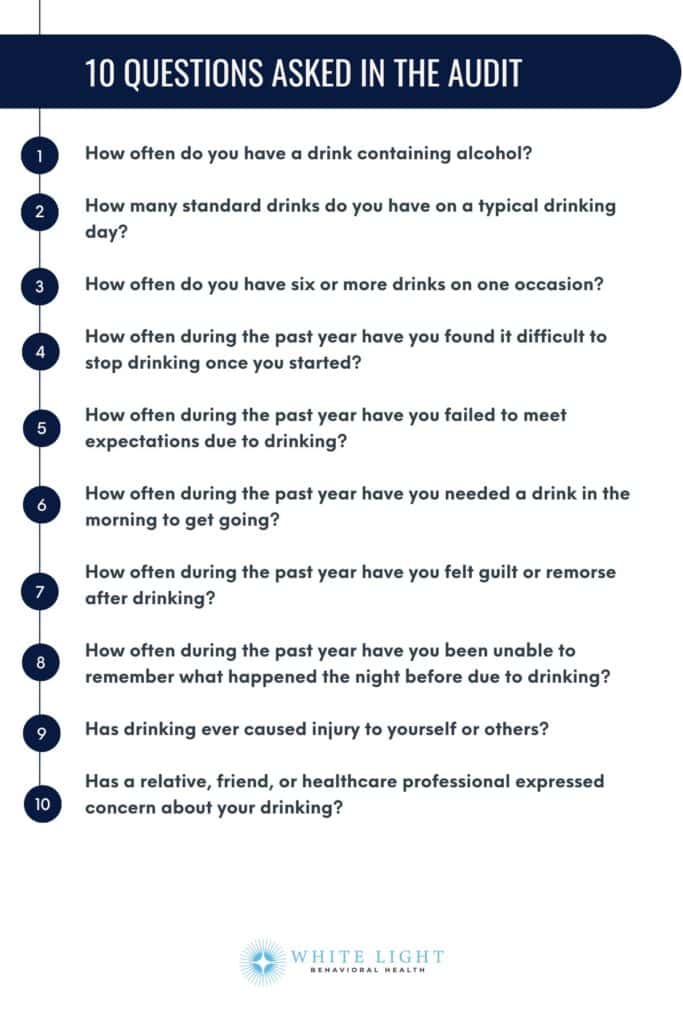
These questions are:
- How often do you have a drink containing alcohol? This question assesses your drinking frequency to determine if alcohol use is occasional, habitual, or excessive.
- How many standard drinks do you have on a typical drinking day?It helps evaluate the quantity of alcohol consumed in one session to identify binge or heavy drinking patterns.
- How often do you have six or more drinks on one occasion? It identifies binge drinking behavior, which increases the risk of alcohol dependence and related harm.
- How often during the past year have you found it difficult to stop drinking once you started?It helps determine your loss of control over alcohol consumption, a key indicator of alcohol dependence.
- How often during the past year have you failed to meet expectations due to drinking? It assesses alcohol’s impact on your work, home, or social responsibilities.
- How often during the past year have you needed a drink in the morning to get going?It helps detect withdrawal symptoms and physical alcohol dependence.
- How often during the past year have you felt guilt or remorse after drinking? It helps identify emotional consequences associated with drinking habits.
- How often during the past year have you been unable to remember what happened the night before due to drinking?It helps evaluate blackouts, a sign of problematic drinking, and potential alcohol-induced cognitive impairment.
- Has drinking ever caused injury to yourself or others? It determines if alcohol use has led to risky behaviors or physical harm.
- Has a relative, friend, or healthcare professional expressed concern about your drinking? It measures external recognition of problematic drinking, indicating the social and personal impact of alcohol use.
How Is the AUDIT Scored?
The AUDIT is scored by assigning points to each response, with a total score ranging from 0 to 40. Each question is scored on a scale of 0 to 4, depending on the frequency or severity of alcohol use.
Higher scores indicate higher risk levels, with thresholds distinguishing between low-risk drinking (0-7), hazardous drinking (8-15), harmful drinking (16-19), and possible alcohol dependence (20-40). This scoring system helps identify individuals who need intervention or treatment.
How Long is the Alcohol Use Disorders Identification Test?
The AUDIT typically takes about 2 to 5 minutes to complete, depending on the method of administration and the individual’s response time. Factors such as literacy level, familiarity with the test, and whether it is self-administered or conducted by a clinician influence completion time.
Contact us today to schedule an initial assessment or to learn more about our services. Whether you are seeking intensive outpatient care or simply need guidance on your mental health journey, we are here to help.
Can the AUDIT Be Used for All Age Groups?
Yes, the AUDIT can be used for all age groups after slight modification. The AUDIT is primarily designed for adults, but modified versions exist for adolescents, such as the AUDIT-C and the CRAFFT screening tool, which better address youth drinking behaviors. In elderly populations, its effectiveness is limited due to differences in drinking patterns, metabolism, and alcohol-related risks.
How Is the Alcohol Use Disorders Identification Test Applied in Alcohol Addiction Treatment in Ohio?
The Alcohol Use Disorders Identification Test (AUDIT) is applied in alcohol addiction treatment in Ohio as a clinical screening tool to assess the severity of alcohol use and guide intervention strategies.
By determining a person’s risk level, AUDIT results help healthcare providers recommend appropriate treatments, from brief interventions to comprehensive rehab programs as a part of alcohol addiction treatment.
What Are the Benefits of The Alcohol Use Disorders Identification Test for Alcohol Addiction?
The benefits of the Alcohol Use Disorders Identification Test (AUDIT) for alcohol addiction include early detection, personalized treatment planning, and relapse prevention. By identifying alcohol misuse at an early stage, AUDIT helps individuals and healthcare providers take proactive steps toward alcohol addiction recovery.
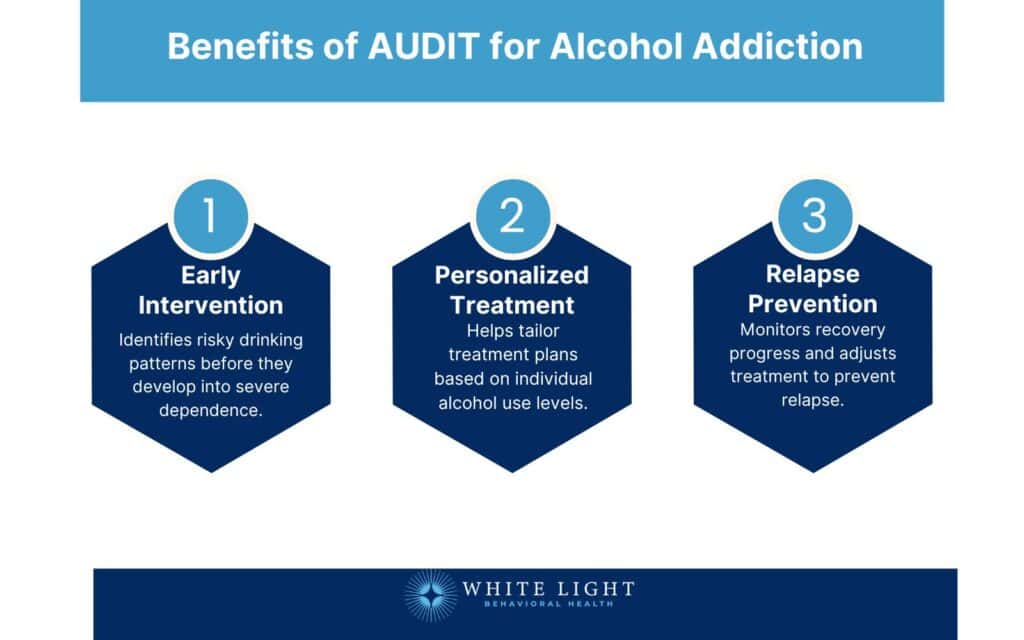
The benefits of the alcohol use disorders identification test for alcohol addiction include:
- Early Intervention: AUDIT helps detect problematic drinking patterns before they escalate into severe alcohol dependence. By assessing risk levels early, you seek help sooner, improving your chances of successful recovery.
- Personalized Treatment: The test provides a structured evaluation of alcohol use, allowing healthcare professionals to tailor treatment recommendations.
Individuals receive brief counseling, outpatient therapy, or more intensive rehabilitation based on the AUDIT score.
- Relapse Prevention: Regular use of AUDIT in follow-up assessments helps track progress in recovery. It enables healthcare providers to adjust treatment plans and provide additional support if a person shows signs of relapse, ensuring long-term sobriety.
What Are the Limitations of the AUDIT?
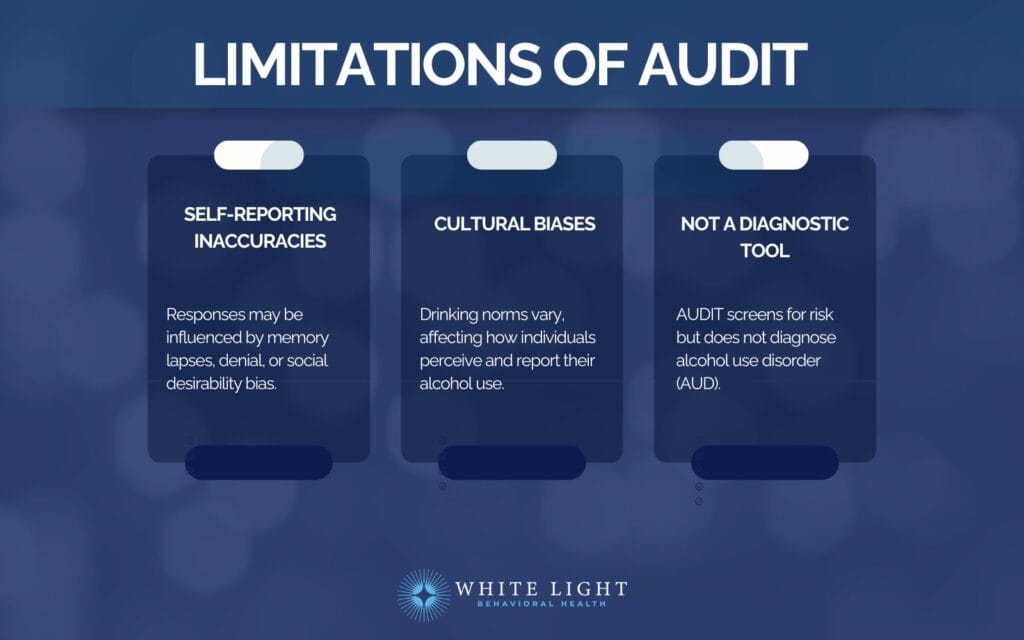
The limitations of the AUDIT are self-reporting inaccuracies, cultural biases, and its inability to provide a definitive diagnosis of alcohol use disorder (AUD).
While the test is a valuable screening tool, it relies on individuals to honestly assess their drinking habits, which sometimes leads to underreporting or overreporting. Cultural differences in drinking patterns and perceptions of alcohol use affect the accuracy of results.
A study by the Centers for Disease Control and Prevention (CDC) (2022) found that less than 25% of adults in Ohio are routinely screened for alcohol misuse in primary care, despite recommendations to use tools like AUDIT.
How Does AUDIT Compare to Other Alcohol Screening Tools Like The CAGE and MAST?
AUDIT compares to other alcohol screening tools like CAGE and MAST by offering a more comprehensive assessment of alcohol use patterns, risk levels, and related harm.
Unlike brief tools like CAGE, which consists of only four yes-or-no questions focusing on alcohol dependence, AUDIT evaluates drinking behaviors, frequency, and consequences, making it more suitable for identifying a broader range of alcohol-related issues.
Compared to the Michigan Alcohol Screening Test (MAST), which consists of up to 25 questions primarily assessing lifetime alcohol problems, AUDIT is shorter (10 questions) and focuses on current drinking patterns. This makes it more practical for early detection and intervention in both clinical and non-clinical settings.
While MAST is more effective for diagnosing long-term alcohol dependence, AUDIT provides a clearer picture of hazardous drinking before severe alcohol use disorder (AUD) develops.
Rediscover Life at White Light Behavioral Health
Get the compassionate support you deserve. We're here to help you reclaim joy, wellness, and a brighter future.
Our Facility
What Is the Difference Between AUDIT and AUDIT-C?
The main difference between AUDIT and AUDIT-C is that AUDIT-C is a shorter version of the original test, focusing only on alcohol consumption patterns rather than the broader consequences of alcohol use.
While the full Alcohol Use Disorders Identification Test (AUDIT) consists of 10 questions assessing alcohol intake, drinking behaviors, and alcohol-related harm, AUDIT-C includes only the first three questions, which measure frequency and quantity of alcohol consumption.
Due to its brevity, AUDIT-C is commonly used in primary care settings for quick screening. In contrast, the full AUDIT provides a more detailed risk assessment for hazardous drinking and alcohol use disorder.
Share This Post

Dr. Ryan Wakim M.D.
All author posts
TREATMENTS WE OFFER
Are you covered for treatment?













White Light Behavioral Health is an approved provider for Blue Shield and Tufts, while also accepting many other major insurance carriers.
Check Coverage Now!