Alcohol Addiction Therapy: Definition, Types, Benefits, Alternatives

If you struggle with alcohol addiction, therapy serves as a powerful tool for regaining control. Alcohol addiction therapy provides structured treatment through psychological, behavioral, and medical interventions. In Ohio, approximately 5.1% of residents experience alcohol use disorder annually, according to the Ohio Department of Mental Health and Addiction Services (ODMHAS) (2023).
Alcohol addiction therapy works through a step-by-step treatment process that starts with a personal assessment to understand your needs, then moves into therapy sessions. There are different types of therapy, such as Cognitive Behavioral Therapy (CBT), Dialectical Behavioral Therapy (DBT), and Motivational Interviewing (MI).
The benefits of Alcohol addiction therapy are improved mental health and coping skills, but it presents challenges such as withdrawal symptoms and the risk of relapse.
Alcohol addiction therapy is an effective treatment option, but alternatives include holistic therapies, support groups, and medication-assisted treatments.
What Is Alcohol Addiction Therapy?
Alcohol addiction therapy is a structured, evidence-based treatment approach designed to help individuals overcome Alcohol Use Disorder (AUD) through psychological, behavioral, and medical interventions.
It addresses your underlying psychological triggers, increases coping mechanisms, and provides you with necessary support for sustained sobriety. Its benefits make it a reliable and important part of addiction treatment.
According to The Ridge Ohio in their Alcohol Treatment Levels of Care & Rehab Considerations report (2023), only 6.7% of adults in Ohio who had an alcohol use disorder in the past year received treatment. These numbers are low and show significant barriers to accessing care.
Did you know most health insurance plans cover substance use disorder treatment? Check your coverage online now.
How Does Alcohol Addiction Therapy Affect Quality of Life?
Alcohol addiction therapy affects quality of life by helping you regain clarity, stability, and control. It doesn’t just help you stop drinking—it addresses the emotional pain, damaged relationships, and mental health struggles that come with addiction.
Through therapy, you rebuild confidence, reconnect with loved ones, and develop healthier habits that make everyday life more fulfilling and less overwhelming.
According to the National Institute on Drug Abuse (NIDA), individuals who complete a 90-day inpatient program have a 40 to 60% higher chance of long-term sobriety.
More Resources on Addiction:
How Does Alcohol Addiction Therapy Work?
Alcohol addiction therapy works through a step-by-step treatment process that starts with a personal assessment to understand your needs, then moves into therapy sessions, medical support, and long-term aftercare to keep you on track.
You’ll work with proven tools like Cognitive Behavioral Therapy (CBT), 12-step support, and Medication-Assisted Treatment (MAT) to heal both mind and body. Approaches like motivational interviewing and contingency management also give you the encouragement and structure needed to stay committed to your recovery goals.
What Is the Purpose of the Initial Assessment in Alcohol Addiction Therapy?
The purpose of the initial assessment in alcohol addiction therapy is to evaluate an individual’s alcohol use history, physical and mental health status, and treatment needs.
This process allows clinicians to develop a personalized treatment plan based on standardized screening tools like the Alcohol Use Disorders Identification Test (AUDIT) and DSM-5 criteria for AUD.
Alcohol addiction therapy assessments include medical evaluations, psychiatric screenings, and discussions about social and environmental factors influencing alcohol use.
What Are the Different Types of Alcohol Addiction Therapy Used During Alcohol Detox?
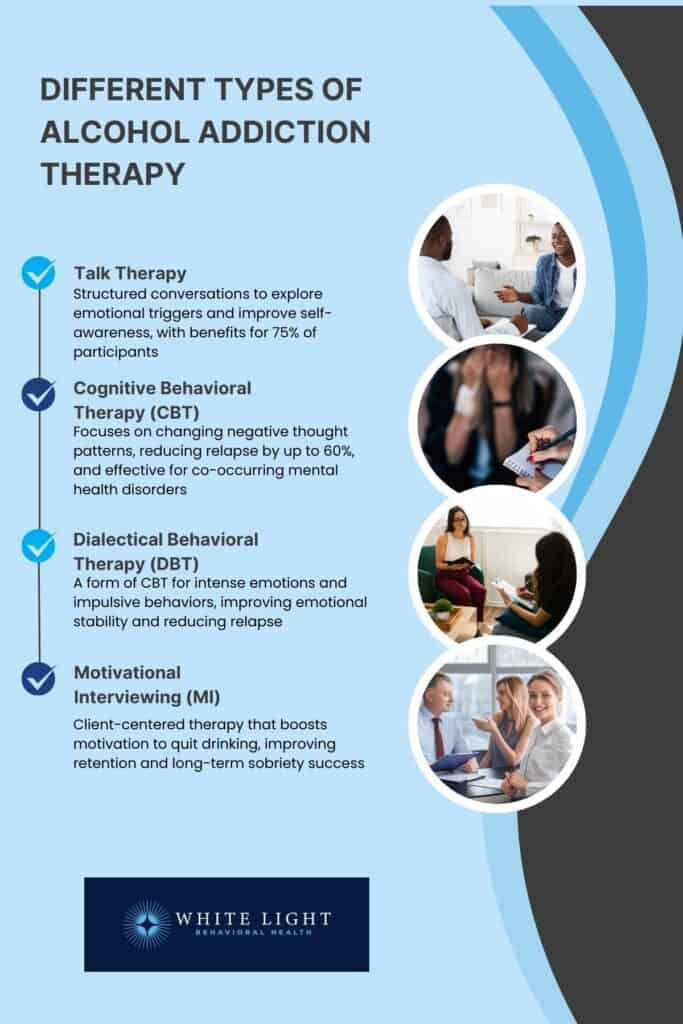
The different types of alcohol addiction therapy used during alcohol detox are talk therapy, cognitive behavioral therapy (CBT), dialectical behavioral therapy (DBT), and motivational interviewing, among others. Each therapy type offers an approach to addressing the underlying causes of alcohol use disorder (AUD).
1. Talk Therapy
Talk therapy, also known as psychotherapy, involves structured conversations between a therapist and an individual struggling with alcohol addiction. This approach helps you explore emotional triggers, past traumas, and stressors that contribute to substance abuse.
Talk therapy fosters self-awareness and emotional regulation by providing a safe and supportive environment. This therapy is suitable for individuals at any stage of addiction. It is delivered in short-term or long-term sessions, depending on the severity of the disorder and personal recovery goals.
Contact us today to schedule an initial assessment or to learn more about our services. Whether you are seeking intensive outpatient care or simply need guidance on your mental health journey, we are here to help.
2. Cognitive Behavioral Therapy (CBT)
Cognitive Behavioral Therapy (CBT) is a widely used evidence-based treatment that helps individuals recognize and alter negative thought patterns contributing to alcohol dependence. CBT focuses on identifying high-risk situations, developing coping strategies, and modifying maladaptive behaviors.
It is particularly effective for people with co-occurring mental health disorders such as anxiety or depression. Treatment lasts between 12 to 16 weeks, although long-term CBT is recommended for those with chronic alcohol addiction.
3. Dialectical Behavioral Therapy (DBT)
Dialectical Behavioral Therapy (DBT) is an advanced form of CBT designed for individuals who struggle with intense emotions and impulsive behaviors, which contribute to alcohol misuse.
DBT incorporates mindfulness, emotional regulation, distress tolerance, and interpersonal effectiveness techniques to help patients manage cravings and reduce self-destructive behaviors.
This therapy is particularly beneficial for those with co-occurring mental health disorders and involves weekly individual and group sessions over several months.
4. Motivational Interviewing
Motivational Interviewing (MI) is a client-centered therapy that focuses on enhancing an individual’s intrinsic motivation to quit drinking. Unlike other structured therapies, MI does not impose changes but instead guides individuals toward self-driven decisions to reduce alcohol use.
According to the Ohio Substance Use Disorder Center of Excellence, MI improves treatment retention rates by approximately 15% and increases long-term sobriety success.
It is particularly effective for individuals who are ambivalent about seeking treatment or have a history of relapse. MI is short-term, consisting of one to four sessions, but is integrated into long-term recovery programs.
What Are the Components of Alcohol Addiction Therapy?
The components of alcohol addiction therapy are identifying the problem, defining objectives, and establishing interventions. Each stage plays an integral role in the recovery process by addressing your root causes of addiction, setting realistic treatment goals, and implementing evidence-based therapeutic strategies.
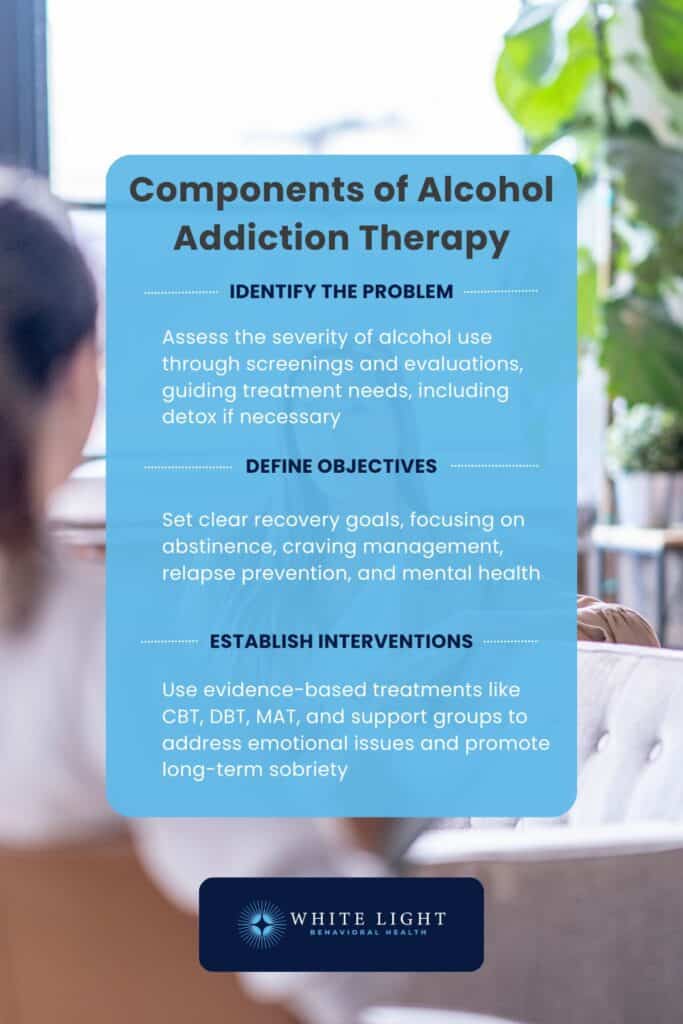
1. Identify the Problem: Medical professionals assess the severity of alcohol use disorder (AUD) and its impact on physical and mental health.
This stage involves screening tests, clinical interviews, and psychological evaluations to determine the extent of dependence. Medical detoxification is required for individuals experiencing withdrawal symptoms, ensuring their safety and stabilization before engaging in therapy.
2. Define Objectives: Defining objectives involves setting clear and measurable recovery goals tailored to an individual’s needs.
This step includes determining whether the treatment focus should be on complete abstinence or controlled drinking, addressing co-occurring mental health disorders, and enhancing overall well-being. By establishing these goals, therapists design structured treatment plans that align with the patient’s readiness and commitment to change.
3. Establish Interventions: These interventions include cognitive behavioral therapy (CBT), dialectical behavioral therapy (DBT), motivational interviewing, medication, and support groups. These interventions collectively ensure a comprehensive approach to recovery, promoting sustained sobriety and improved quality of life.
What Are the Benefits of Alcohol Addiction Therapy?
The main benefits of alcohol addiction therapy are improved mental health, increased self-awareness, better coping skills, and improved relationships. These benefits increase long-term sobriety by addressing both the psychological and behavioral aspects of alcohol use disorder (AUD).
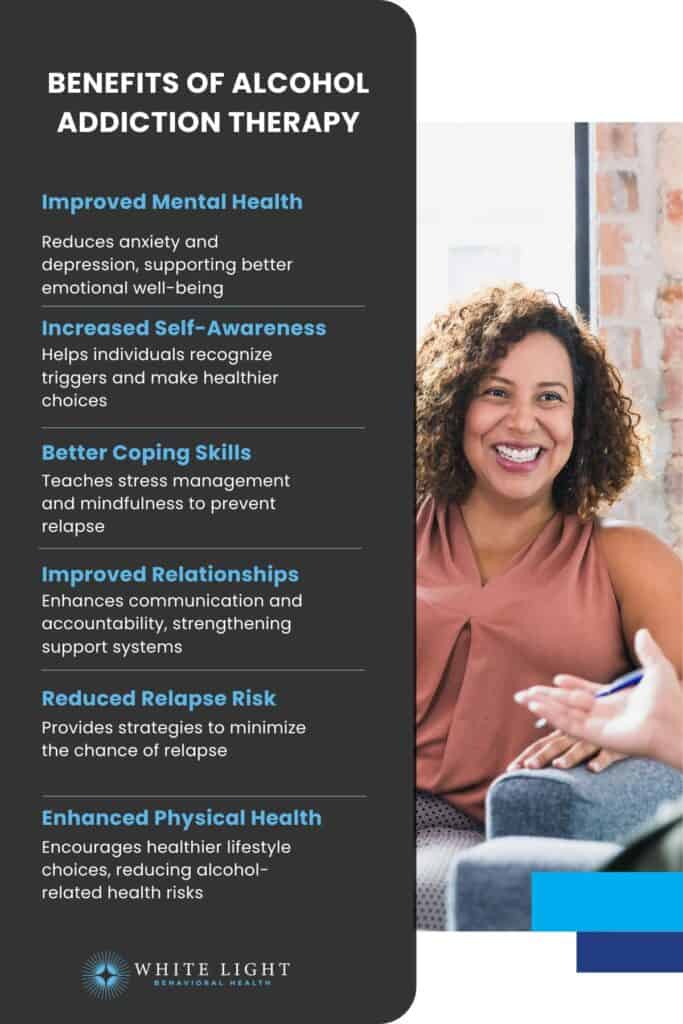
1. Improved Mental Health: Alcohol addiction therapy reduces anxiety, depression, and other mental health disorders associated with alcohol use. Cognitive behavioral therapy (CBT) and dialectical behavioral therapy (DBT) help individuals develop healthier thought patterns, reduce negative emotions, and improve overall well-being.
2. Increased Self-Awareness: Therapy sessions encourage introspection and personal growth, helping individuals understand the root causes of their addiction. By recognizing unhealthy habits, patients replace destructive behaviors with positive coping mechanisms, leading to long-term sobriety.
3. Better Coping Skills: Therapy introduces healthy coping mechanisms, such as mindfulness, stress management techniques, and structured problem-solving. These skills help patients navigate high-risk situations, such as social pressures or emotional distress, reducing the likelihood of returning to alcohol use.
4. Improved Relationships: Therapy helps individuals rebuild trust and repair strained connections by fostering better communication, emotional regulation, and accountability. By addressing interpersonal conflicts and developing healthy social habits, therapy strengthens support systems, which are necessary for long-term recovery.
5. Reduced Relapse Risk: Therapies like Motivational Interviewing (MI) and CBT equip individuals with relapse prevention strategies, helping them maintain their recovery even in challenging situations. The longer a person remains engaged in therapy, the higher their chances of sustaining lifelong sobriety.
6. Enhanced Physical Health: Therapy supports individuals in making healthier lifestyle choices and improving their diet, sleep patterns, and physical activity levels. People who undergo comprehensive addiction therapy experience better overall health outcomes, reducing their risk of conditions like liver disease, hypertension, and neurological damage.
Rediscover Life at White Light Behavioral Health
Get the compassionate support you deserve. We're here to help you reclaim joy, wellness, and a brighter future.
Our Facility
What Are the Challenges of Alcohol Addiction Therapy?
The challenges of alcohol addiction therapy include withdrawal symptoms, resistance to change, relapse, and social stigma. Overcoming alcohol dependence requires dedication, professional guidance, and strong support systems.
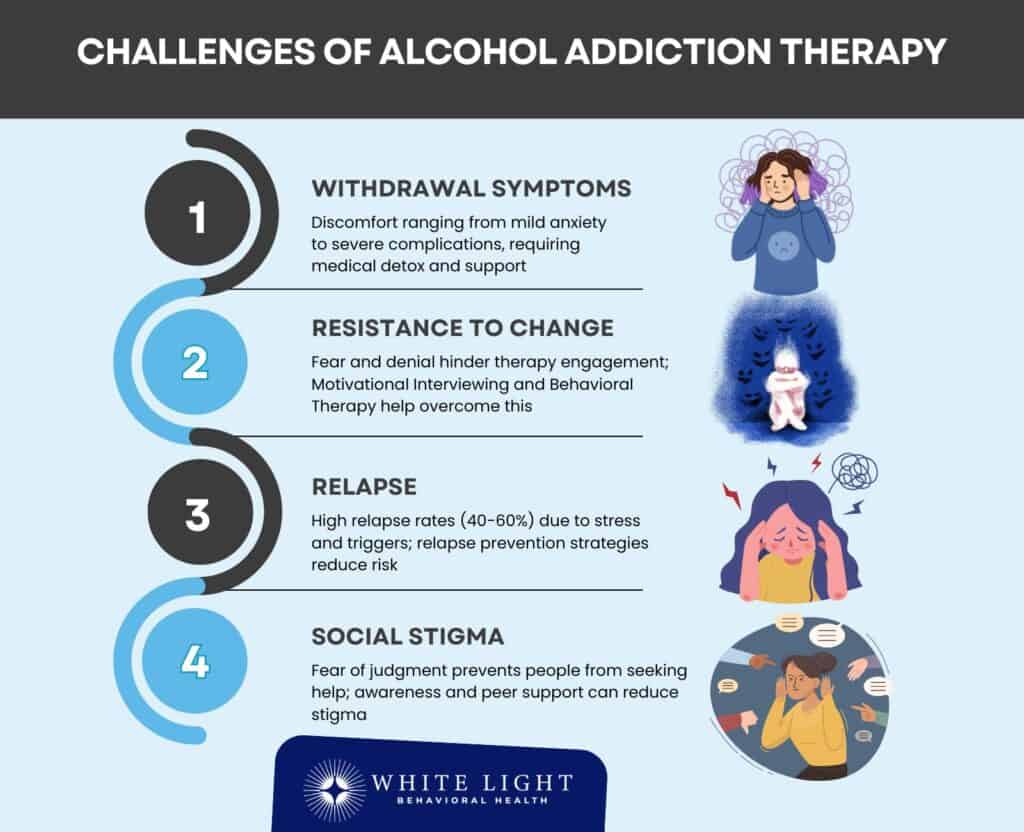
1. Withdrawal Symptoms: One of the biggest obstacles in alcohol addiction therapy is dealing with withdrawal symptoms, which range from mild anxiety to life-threatening complications like seizures or delirium tremens (DTs). Medications like benzodiazepines, supportive care, and gradual alcohol tapering help alleviate withdrawal-related discomfort and prevent complications.
2. Resistance to Change: Many individuals struggle with denial and fear of change, making it difficult to engage in therapy fully.
Cognitive distortions and emotional dependency on alcohol hinder motivation for recovery. Motivational Interviewing (MI) and Behavioral Therapy address this resistance by helping individuals identify personal reasons for quitting alcohol and setting achievable recovery goals.
3. Relapse: Relapse remains a major concern, with common triggers including stress, social pressure, and emotional distress. Comprehensive relapse prevention plans, including counseling, coping strategies, and structured aftercare programs, significantly reduce the likelihood of returning to alcohol use.
4. Social Stigma: The stigma associated with alcohol addiction makes individuals hesitant to seek therapy. Fear of judgment from family, friends, and employers prevents people from openly discussing their struggles.
What Are the Alternatives to Alcohol Addiction Therapy?
The alternatives to alcohol addiction therapy include holistic therapies, support groups, and medication-assisted treatments. These alternatives focus on mental, emotional, and physical well-being.
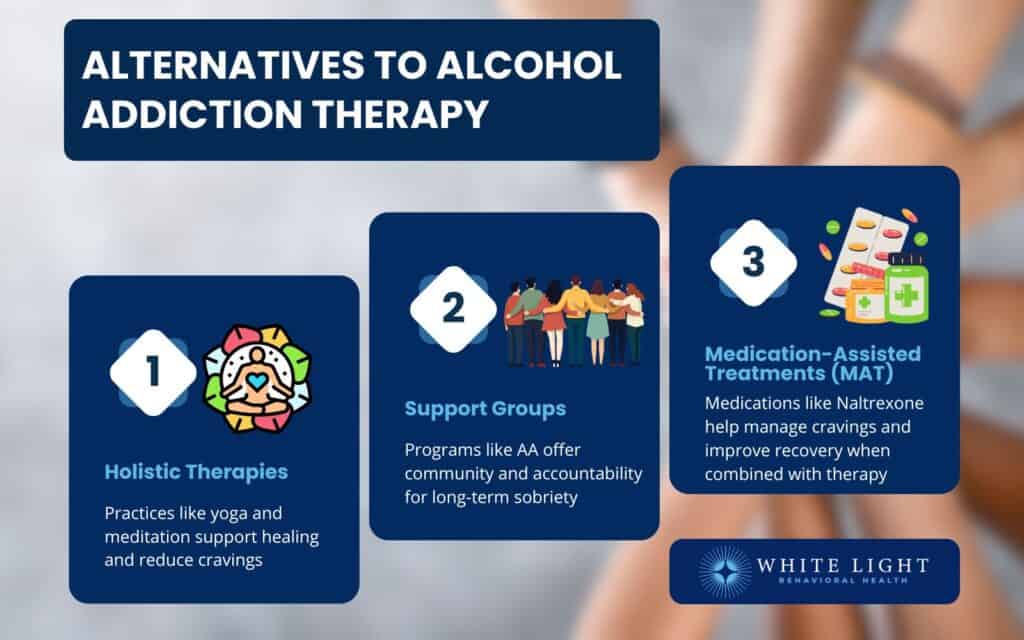
1. Holistic Therapies: Holistic approaches to addiction recovery focus on mind-body healing and include practices like yoga, meditation, acupuncture, and nutrition-based therapies. Holistic therapies are used alongside conventional treatments to promote overall well-being.
2. Support Groups: Support groups like Alcoholics Anonymous (AA), SMART Recovery, and peer-led community programs provide individuals with a non-judgmental space to share experiences and gain support from others in recovery. Regular participation in support groups increases long-term sobriety rates and helps individuals build a strong recovery network.
3. Medication-Assisted Treatments (MAT): Medication-assisted treatment (MAT) involves using FDA-approved medications like Naltrexone, Acamprosate, and Disulfiram to help manage cravings and prevent relapse. This approach is most effective when combined with counseling and behavioral therapies.
What Factors Affect the Length of Alcohol Addiction Therapy?
The factors affecting the length of alcohol addiction therapy include the severity of addiction, co-occurring mental health conditions, duration of addiction, and social factors. Each person’s recovery timeline is unique, depending on biological, psychological, and environmental factors.
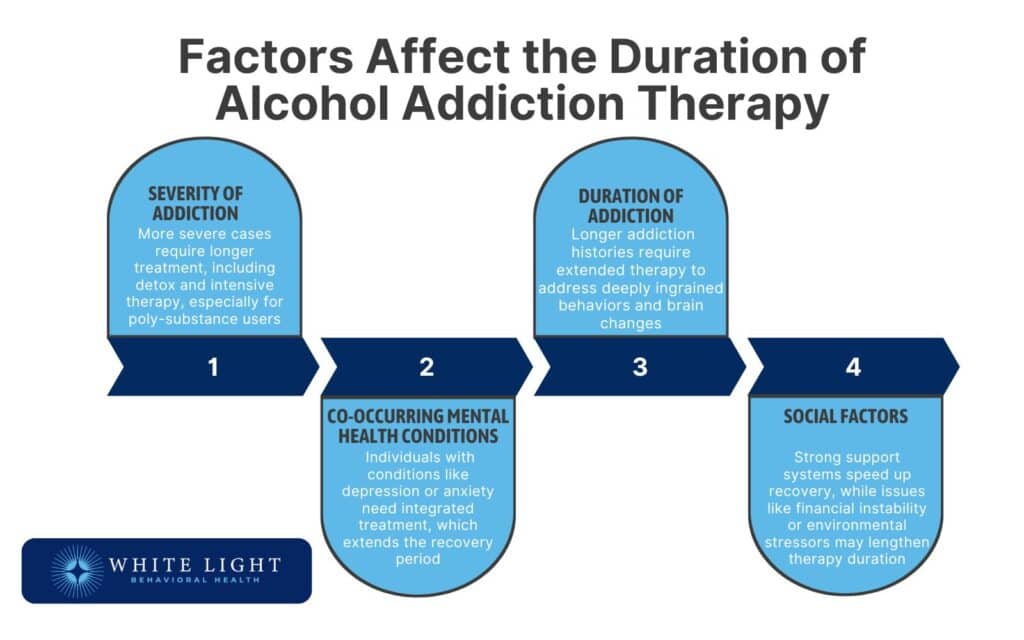
1. Severity of Addiction: The more severe the alcohol dependence, the longer therapy is required.
Individuals with high alcohol tolerance, frequent binge drinking habits, and severe withdrawal symptoms need extended inpatient treatment followed by long-term outpatient care. Severe cases require medical detox and intensive therapy to ensure a successful recovery.
2. Co-Occurring Mental Health Conditions: Individuals with co-occurring disorders such as depression, anxiety, PTSD, or bipolar disorder require integrated treatment plans that address both conditions simultaneously. This dual diagnosis increases the length of their therapy and overall recovery.
3. Duration of Addiction: The longer a person has struggled with alcohol addiction, the more ingrained the behavioral patterns become, making recovery more challenging. Individuals who have been dependent on alcohol for years need long-term behavioral therapy, relapse prevention strategies, and structured aftercare programs to maintain sobriety.
4. Social Factors: Family support, employment status, and environmental influences affect the length of addiction therapy. Those with strong social support systems tend to recover faster, whereas individuals facing financial instability, homelessness, or exposure to heavy drinking environments require longer therapy durations.
How Effective Is Addiction Therapy for Alcoholism?
Addiction therapy for alcoholism is highly effective, with research by the National Institute on Alcohol Abuse and Alcoholism (NIAAA) titled “Alcohol Use Disorder: Treatment and Recovery” showing that structured therapy increases sobriety rates by up to 60%.
Combining therapy with medical detox and ongoing support significantly improves long-term recovery outcomes.
Where Can I Find Alcohol Addiction Therapy In Columbus, Ohio?
You can find alcohol addiction therapy in Columbus, Ohio, at local treatment centers and residential rehabilitation centers such as white light behavioral health. These centers offer comprehensive services that include detox, therapy, and aftercare support.
You can choose to explore outpatient programs for flexible treatment that fit your needs. Many of these services accept insurance and offer sliding scale fees to make therapy more accessible.
Are you covered for treatment?

White Light Behavioral Health is an approved provider for Blue Cross Blue Shield and TUFTS, while also accepting many other major insurance carriers.
Check Coverage Now!Will My Insurance Cover Alcohol Therapy In Columbus, Ohio?
Yes, your insurance will cover alcohol addiction therapy in Columbus, Ohio. Under the Mental Health Parity and Addiction Equity Act, insurance providers are required to offer comparable coverage for mental health and substance use disorder treatments as they do for medical and surgical care.
This coverage means that services like detoxification, inpatient and outpatient rehab, therapy sessions, and medication-assisted treatment (MAT) are often included in your plan. To determine your specific coverage and any out-of-pocket costs, it’s advisable to contact the facility and verify your insurance, and guide you through the next steps.
How Does Alcohol Addiction Therapy Prevent Relapse?
Alcohol addiction therapy prevents relapse by equipping individuals with coping strategies, fostering support networks, promoting lifestyle changes, and incorporating medication-assisted treatment.
Therapy helps individuals identify triggers, manage stress, and develop healthier habits, reducing the risk of returning to alcohol use. Structured relapse prevention programs provide ongoing counseling and peer support to reinforce long-term sobriety.
How Likely Is a Relapse After Completing Alcohol Addiction Therapy?
It is highly likely to have a relapse after completing alcohol addiction therapy. According to the National Institute on Drug Abuse, there is a 40 to 60% relapse rate within the first year of recovery.
However, the likelihood of relapse significantly decreases with continued therapy, participation in support groups, and structured aftercare programs. Factors such as personal motivation, stress management skills, and a strong support system contribute to long-term sobriety success.
Is Counseling Therapy Effective in Alcohol Use Disorder?
Yes, counseling therapy is highly effective in treating alcohol use disorder because it addresses the underlying psychological and behavioral triggers of alcohol dependence. Consistent engagement in counseling therapy improves long-term recovery outcomes for individuals with alcohol use disorder.
What Happens When You Detox From Alcohol?
When you detox from alcohol, your body undergoes physical and psychological withdrawal symptoms as it adjusts to the absence of alcohol. Withdrawal symptoms range from mild anxiety and nausea to severe complications like seizures and delirium tremens (DTs). Alcohol detox under professional supervision is necessary to manage withdrawal symptoms safely and prevent life-threatening complications.
What Is the Success Rate of CBT for Alcoholism?
The success rate of CBT for alcoholism is 50 to 60%, with research by NIAAA showing that individuals who undergo Cognitive Behavioral Therapy (CBT) have significantly lower relapse rates than those who do not. Cognitive-behavioral therapy helps individuals identify negative thought patterns and develop healthier coping strategies, making it one of the most effective therapeutic approaches for alcohol dependence.
Share This Post

Dr. Ryan Wakim M.D.
All author posts
TREATMENTS WE OFFER
Are you covered for treatment?














White Light Behavioral Health is an approved provider for Blue Shield and Tufts, while also accepting many other major insurance carriers.
Check Coverage Now!