
Alcohol Withdrawal: Definition, Causes, Signs and Symptoms, Stages, Risk Factors, Diagnosis, Treatment

If you’re trying to quit alcohol after a period of heavy drinking, it’s important to understand the risks of alcohol withdrawal. Symptoms of alcohol withdrawal include anxiety, tremors, and even seizures. These symptoms range from mild to severe and, in extreme cases, are life-threatening.
Alcohol withdrawal is dangerous without the right support, especially if you’ve had previous withdrawal episodes or have underlying health issues. According to the Ohio Department of Health in their Alcohol-Related Deaths in Ohio report (2023), excessive alcohol use accounts for an average of 5,739 annual deaths in Ohio.
That’s why seeking professional help, whether through a supervised detox or medication, is necessary to significantly reduce risks and help you on the path to recovery. You don’t have to go through it alone, medical intervention makes a big difference.
What Is Alcohol Withdrawal?
Alcohol withdrawal is a physiological and psychological response that occurs when individuals with alcohol dependence abruptly reduce or stop alcohol consumption. It results from the central nervous system adjusting to the absence of alcohol, a depressant that slows brain activity.
Over time, your body becomes reliant on alcohol to function, leading to substance withdrawal symptoms once intake stops. The brain’s neurotransmitter systems, particularly GABA and glutamate, become dysregulated, triggering a cascade of withdrawal symptoms ranging from mild anxiety and tremors to seizures and delirium tremens.
According to the Ohio Department of Mental Health and Addiction Services (ODMHAS) in their Ohio Alcohol and Drug Use Statistics report (2023), approximately 5.1% of Ohio residents struggle with alcohol use disorder annually.
Alcohol addiction treatment is vital in addiction recovery as unmanaged symptoms lead to complications or death. Medical supervision improves long-term outcomes and reduces the risk of relapse.
Did you know most health insurance plans cover substance use disorder treatment? Check your coverage online now.
Why Is Alcohol Withdrawal Dangerous?
Alcohol withdrawal is dangerous due to its potential to trigger life-threatening complications. The most severe withdrawal dangers include seizures, rapid shifts in heart rate, and spikes in blood pressure, which result in cardiovascular collapse.
Alcohol withdrawal is life-threatening, as it leads to severe complications like seizures, heart rate fluctuations, and spikes in blood pressure, which result in cardiovascular collapse. One of the most serious risks is delirium tremens, which causes confusion, hallucinations, and instability in vital functions.
The risk of these complications increases for those with preexisting conditions, such as heart disease or liver issues. This makes professional medical care essential during detoxification. With immediate attention, careful monitoring, and medications like benzodiazepines, the dangers of alcohol withdrawal are managed, helping prevent fatal outcomes.
More Resources on Addiction:
What Causes Alcohol Withdrawal?
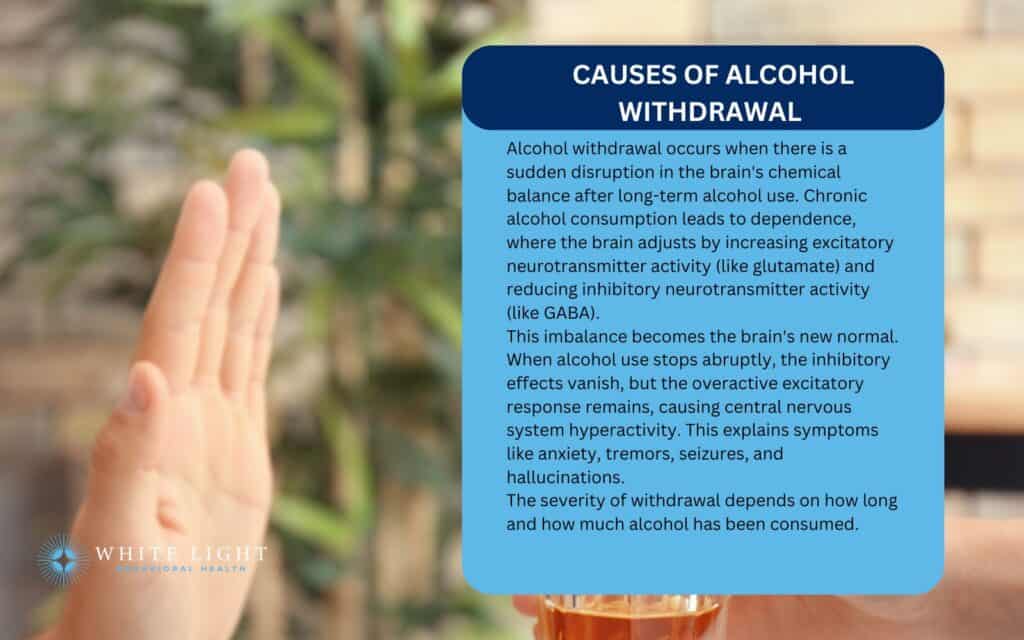
Alcohol withdrawal is caused by a sudden disruption in the brain’s neurochemical balance following prolonged alcohol use.
Chronic alcohol intake leads to alcohol dependence, where the brain adapts to the depressant effects of alcohol by increasing excitatory neurotransmitter activity and suppressing inhibitory pathways.
This creates a neurotransmitter imbalance—primarily involving GABA and glutamate—that becomes the brain’s new normal. When alcohol consumption stops abruptly, the inhibitory effects vanish, but the overactive excitatory response remains, triggering hyperactivity in the central nervous system.
This withdrawal mechanism explains why symptoms like anxiety, tremors, seizures, and hallucinations emerge. The intensity of the response depends on the duration and quantity of alcohol used.
What Are the Signs and Symptoms of Alcohol Withdrawal?
The signs and symptoms of alcohol withdrawal are tremors, sweating, anxiety, nausea, vomiting, insomnia, hallucinations, seizures, and elevated heart rate. These symptoms show autonomic instability and central nervous system hyperactivity following the stop of alcohol in individuals with alcohol dependence and substance withdrawal.
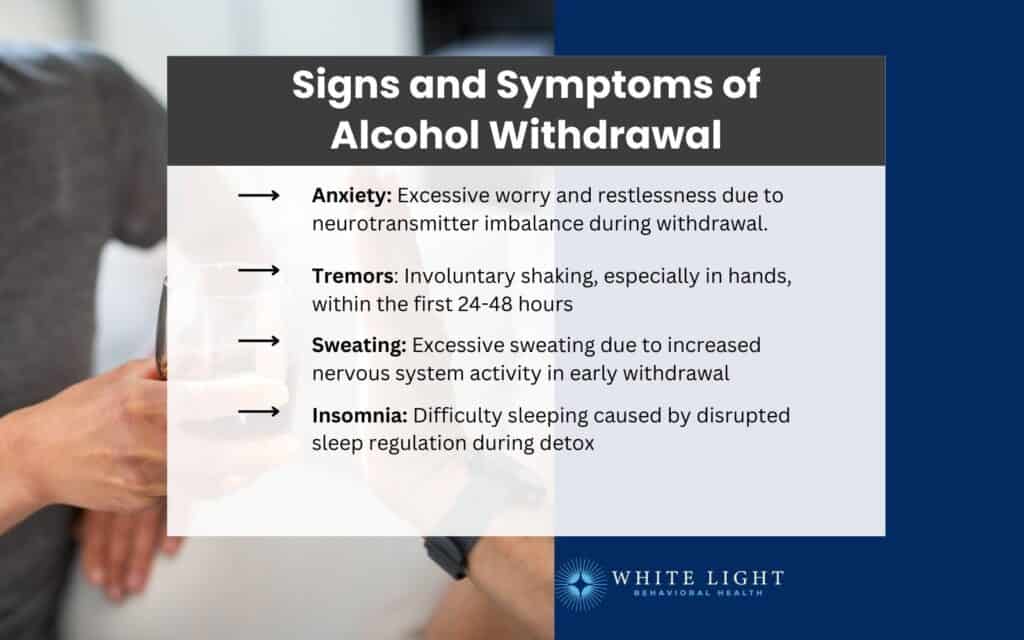
The signs and symptoms of alcohol withdrawal are explained below:
Anxiety
Anxiety is a common withdrawal symptom that occurs during alcohol detoxification. It manifests as excessive worry, nervousness, and a feeling of unease, accompanied by restlessness or irritability.
This symptom arises due to the sudden cessation of alcohol, which disrupts the balance of neurotransmitters like GABA and glutamate, which normally regulate mood.
Tremors
Tremors, or shaking, are another frequent alcohol detox symptom. These involuntary muscle movements affect the hands but also extend to other parts of the body, particularly during the first 24 to 48 hours of withdrawal. Tremors are caused by the body’s adjustment to the absence of alcohol, which disrupts the balance of the central nervous system.
Contact us today to schedule an initial assessment or to learn more about our services. Whether you are seeking intensive outpatient care or simply need guidance on your mental health journey, we are here to help.
Sweating
Excessive sweating, also known as diaphoresis, is a notable withdrawal symptom during alcohol detox. It results from the body’s heightened sympathetic nervous system response, which increases perspiration in an attempt to stabilize body temperature.
The absence of alcohol, which normally suppresses this response, leads to intense sweating, alongside other physical and psychological effects such as anxiety and elevated heart rate.
Insomnia
Insomnia, characterized by difficulty falling or staying asleep, is a common alcohol withdrawal symptom. Chronic alcohol use affects the brain’s sleep-regulation pathways, making it difficult for individuals to maintain normal sleep patterns once alcohol consumption stops.
As the body adjusts to the absence of alcohol, the overactivity of the central nervous system leads to restlessness and disrupted sleep cycles.
Can Alcohol Withdrawal Cause Seizures?
Yes, alcohol withdrawal can cause seizures due to sudden neurological instability following the cessation of chronic alcohol use. Alcohol withdrawal seizures occur within 6 to 48 hours after the last drink and are classified as generalized tonic-clonic seizures without a warning aura.
The neurological effects of alcohol withdrawal come from hyperexcitation of the central nervous system caused by disrupted GABA and glutamate activity.
How Long Do Alcohol Withdrawal Symptoms Last?
Alcohol withdrawal symptoms last several hours to multiple weeks, depending on the severity of alcohol dependence and overall health. The withdrawal timeline begins with mild symptoms like anxiety and tremors within 6 to 12 hours after the last drink.
Peak symptoms—such as sweating, hallucinations, and seizures—occur between 24 and 72 hours and require close monitoring during this critical phase of the detox timeline.
Can Moderate Drinkers Experience Withdrawal?
Yes, moderate drinkers can experience withdrawal by consuming alcohol regularly enough to cause physical adaptation in the brain.
Although the risk is lower than in chronic heavy users, consistent intake over time increases the chance of developing mild alcohol withdrawal symptoms such as irritability, sleep disturbances, and anxiety.
These withdrawal symptoms in casual drinkers occur when alcohol is abruptly stopped after a pattern of habitual use. America’s Health Rankings in their Older Adults and Alcohol Use in Ohio report (2023) reports that excessive drinking behaviors are prevalent among Ohioans aged 65 and older
What Are the Stages of Alcohol Withdrawal?
The stages of alcohol withdrawal are mild, moderate, and severe. Each stage reflects an increase in withdrawal symptoms, ranging from anxiety and tremors in mild cases to hallucinations and delirium tremens in severe cases, following a predictable alcohol detox progression.
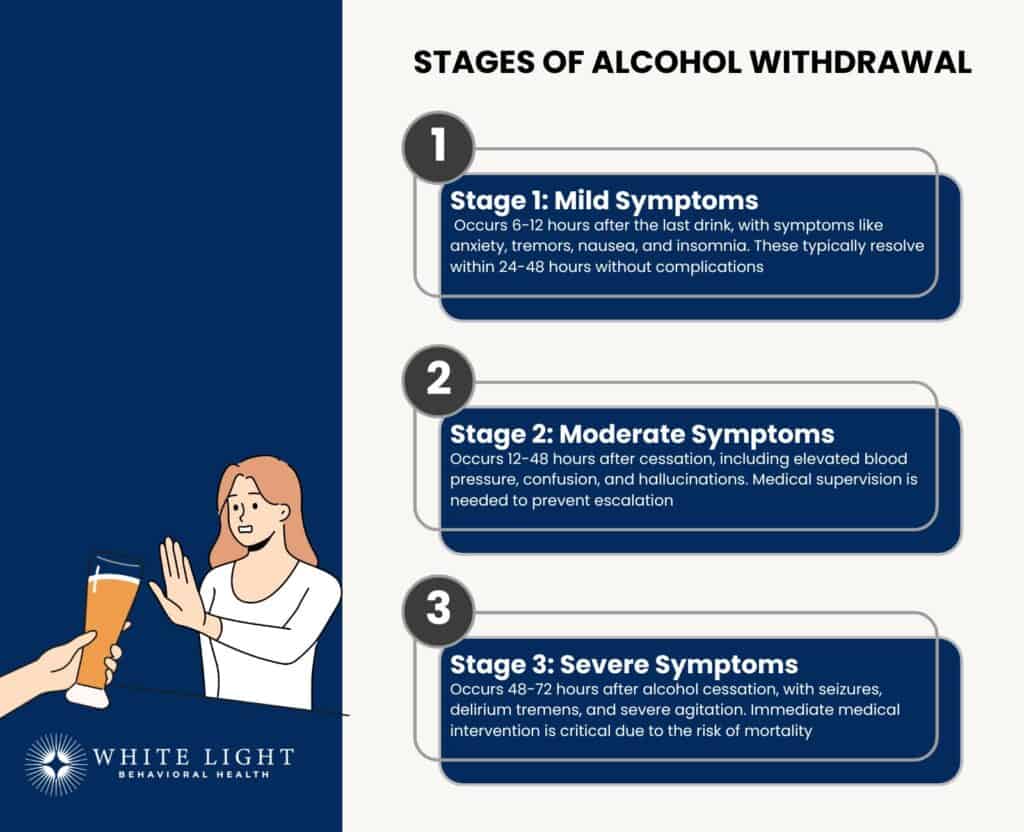
The stages of alcohol withdrawal include:
Rediscover Life at White Light Behavioral Health
Get the compassionate support you deserve. We're here to help you reclaim joy, wellness, and a brighter future.
Our Facility
Stage 1: Mild Symptoms
Stage 1 represents the initial phase of alcohol withdrawal progression, beginning within 6 to 12 hours after the last drink. Symptoms include anxiety, tremors, nausea, insomnia, and increased heart rate, reflecting early disruption of the central nervous system. These signs occur as the brain attempts to rebalance neurotransmitters without alcohol’s depressant effect.
Stage 2: Moderate Symptoms
Stage 2 emerges between 12 to 48 hours and signals increasing withdrawal severity. Individuals experience heightened blood pressure, elevated body temperature, confusion, and auditory hallucinations. These symptoms indicate intensifying neurological distress and require medical supervision to prevent progression.
Stage 3: Severe Symptoms
Stage 3 is the most dangerous stage and occurs between 48 and 72 hours after cessation. It includes seizures, delirium tremens, severe agitation, and cardiovascular instability. These complications show advanced central nervous system hyperexcitability and demand immediate ICU-level intervention.
What Are the Risk Factors of Alcohol Withdrawal?
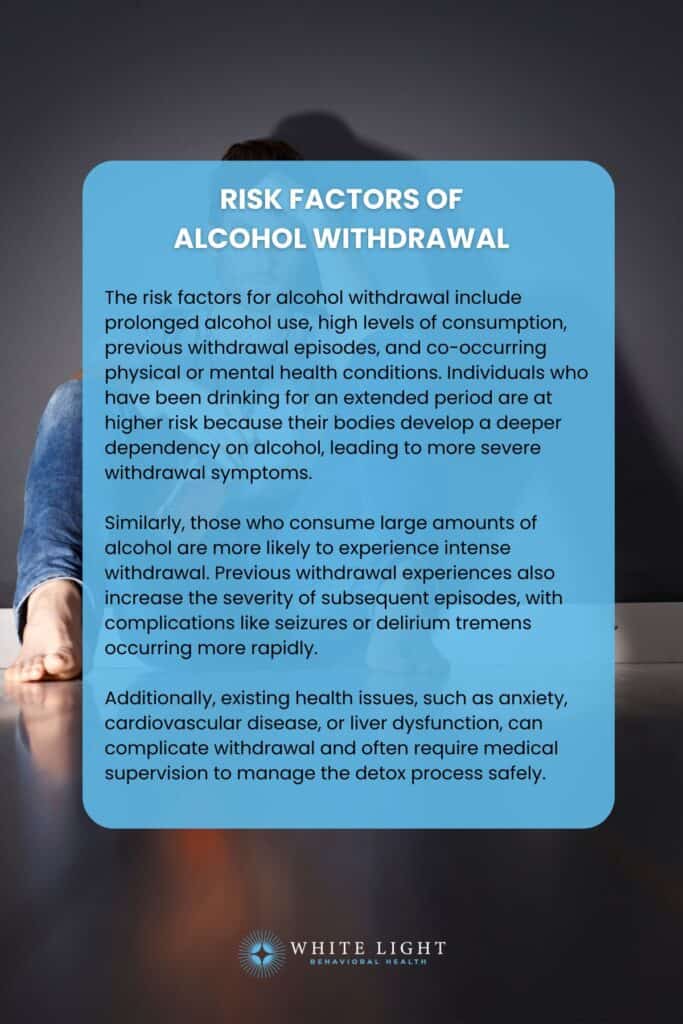
The risk factors of alcohol withdrawal are prolonged alcohol use, high levels of consumption, previous withdrawal episodes, and existing physical or mental health conditions.
Long-term alcohol use leads to stronger dependence, making withdrawal more intense and harder to manage. The seriousness of the symptoms increases as your body becomes more used to alcohol, creating higher risks during detox.
A report by the Health Policy Institute of Ohio titled The Impact of Alcohol Use on Mental Health (2024) states that alcohol use worsens mental health issues such as anxiety and depression, particularly among Ohioans struggling with stress and trauma.
If you’ve gone through withdrawal before, the risk is even greater. Each subsequent detox triggers more severe complications, like seizures or delirium tremens, making professional care even more necessary.
Who Is at Risk for Severe Alcohol Withdrawal?
Someone with a long-standing alcohol use disorder, especially if accompanied by a history of previous withdrawal episodes, is at risk of severe alcohol withdrawal.
Older adults are more vulnerable to alcohol withdrawal due to reduced physical resilience and higher chances of chronic health issues. Conditions like heart disease, liver problems, and mental health disorders make withdrawal even more dangerous.
The Substance Abuse and Mental Health Services Administration states that if you’ve undergone detox multiple times, you face a higher risk due to “kindling,” where each withdrawal episode becomes more severe.
Are you covered for treatment?


White Light Behavioral Health is an approved provider for Blue Cross Blue Shield and TUFTS, while also accepting many other major insurance carriers.
Check Coverage Now!Can Alcohol Withdrawal be Fatal?
Yes, alcohol withdrawal can be fatal due to the onset of life-threatening symptoms such as seizures, delirium tremens, cardiac arrhythmias, and respiratory failure. These complications result from the body’s inability to stabilize after the sudden removal of alcohol, especially if you have severe dependence.
The CDC estimates that over 5,700 Ohioans die from excessive alcohol use per year. As a medical emergency, supervised detox is essential to prevent death and reduce long-term damage.
How Is Alcohol Withdrawal Diagnosed?
Alcohol withdrawal is diagnosed based on a combination of clinical observation, patient history, and structured assessment tools. A thorough medical evaluation includes reviewing your drinking patterns, previous withdrawal episodes, and co-occurring medical conditions to identify a withdrawal diagnosis.
The most widely used clinical tool is the CIWA assessment (Clinical Institute Withdrawal Assessment for Alcohol), a 10-item scale that scores symptoms such as tremors, nausea, anxiety, agitation, and hallucinations to guide treatment decisions.
Lab tests, including liver function tests, blood alcohol levels, electrolyte panels, and complete blood counts, support diagnosis and help detect complications that influence the severity or management of withdrawal.
What Is the CIWA Protocol for Alcohol Withdrawal?
The CIWA protocol for alcohol withdrawal is a structured clinical tool used to assess symptom severity and guide treatment during detoxification.
The CIWA scale (Clinical Institute Withdrawal Assessment for Alcohol, Revised) measures ten indicators—such as anxiety, agitation, nausea, tremors, and hallucinations—each scored to evaluate the level of withdrawal distress.
This alcohol withdrawal assessment provides clinicians with a quantitative method to adjust treatment based on individual needs and ensures early detection of complications.
How Do I Treat Alcohol Withdrawal in Columbus, Ohio?
You treat alcohol withdrawal in Columbus, Ohio, through medication management, supportive care, and psychological therapy. These approaches help stabilize your withdrawal symptoms and prevent medical complications throughout the detoxification process. You can get these in a professional rehab center in Columbus, Ohio.
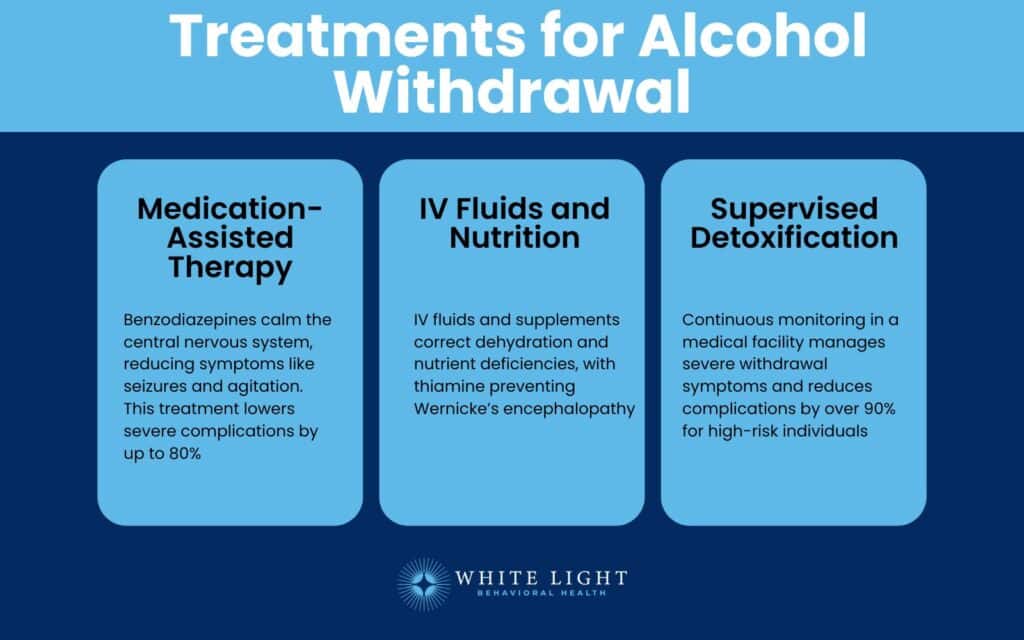
Ways to treat alcohol withdrawal in Columbus, Ohio:
Medication-Assisted Therapy
Medication-assisted therapy helps manage withdrawal symptoms and reduce the risk of complications. Benzodiazepines, such as diazepam or lorazepam, are the primary drugs used to control seizures, agitation, and withdrawal management.
These medications work by calming your central nervous system, counteracting the excitatory imbalance caused by alcohol cessation. Adjunct medications like antipsychotics and beta-blockers are also used based on symptom severity and patient response.
IV Fluids and Nutrition
IV fluids and nutrition are critical in medical detox to correct dehydration, electrolyte imbalances, and nutritional deficiencies common in chronic alcohol users. Alcohol suppresses appetite and impairs absorption of vital nutrients, leading to deficiencies in thiamine, magnesium, and folate. Intravenous therapy replenishes these elements and stabilizes your blood pressure and heart rate.
Did you know most health insurance plans cover substance use disorder treatment? Check your coverage online now.
Supervised Detoxification
Supervised alcohol detox involves continuous clinical monitoring in a hospital or inpatient facility to manage moderate to severe alcohol withdrawal. This method ensures early detection of withdrawal management complications such as seizures, hallucinations, or cardiovascular instability.
You are monitored for vital signs, mental status changes, and medication response, with immediate intervention available if needed.
How Is Severe Alcohol Withdrawal Managed?
Severe alcohol withdrawal is managed through a combination of pharmacological, supportive, and intensive care measures in a hospital detox setting.
Severe withdrawal treatment involves high-dose benzodiazepines to prevent seizures and control agitation, administered based on CIWA scoring and clinical observation.
Intravenous fluids, thiamine, and electrolyte replacements are used to correct dehydration and nutritional deficits, while continuous cardiac and respiratory monitoring allows for early detection of complications. You need ICU admission in cases of delirium tremens or when your vital signs become unstable.
Can Alcohol Withdrawal be Treated at Home?
Yes, alcohol withdrawal can be treated at home based on the severity of symptoms, overall health status, and absence of prior complications.
Home detox is appropriate only if you have mild to moderate symptoms, no history of seizures or delirium tremens, and strong social support.
Key safety measures for alcohol withdrawal at home include scheduled check-ins with healthcare providers, access to medications if prescribed, and an emergency plan in case symptoms escalate.
However, outpatient withdrawal carries risks, as serious complications arise without warning and require immediate medical care. It is best to use a professional detox and treatment center.
How Is Alcohol Withdrawal Syndrome Prevented?
Alcohol withdrawal syndrome is prevented with structured interventions that ease the sudden changes in your body’s chemistry when you stop drinking. A common approach is to gradually reduce alcohol intake (tapering) under medical supervision, which helps minimize withdrawal symptoms and prevent severe reactions.
Using professionals involved means risks are caught early, and medication or detox support provided if necessary. Additional therapies like nutritional support and mental health counseling also play a key role in your recovery, helping you stay on track and avoid complications.
How Does Alcohol Withdrawal Differ from a Hangover?
Alcohol withdrawal differs from a hangover in its cause, duration, and health risk. A hangover results from acute alcohol effects such as dehydration, toxin buildup, and disrupted sleep, resolving within 24 hours.
In contrast, withdrawal is a clinical condition triggered by the abrupt stopping of alcohol after prolonged use, leading to serious withdrawal symptoms like seizures, hallucinations, and autonomic instability.
While a hangover causes temporary discomfort, alcohol withdrawal is life-threatening and requires medical oversight.
Can Alcohol Withdrawal Cause Anxiety or Depression?
Yes, alcohol withdrawal can cause anxiety and depression due to the abrupt disruption of brain neurotransmitters that regulate mood and stress.
Chronic alcohol use suppresses GABA and enhances dopamine activity; when alcohol intake stops, this balance collapses, triggering withdrawal anxiety and low mood.
These psychological withdrawal symptoms are intensified by sleep disruption, cravings, and emotional dysregulation during detox.
Share This Post

Dr. Ryan Wakim M.D.
All author posts
TREATMENTS WE OFFER
Are you covered for treatment?















White Light Behavioral Health is an approved provider for Blue Shield and Tufts, while also accepting many other major insurance carriers.
Check Coverage Now!