Alcohol Addiction Test: Definition, Components, Types, How It Works

An alcohol addiction test helps you understand where you stand if you are finding it hard to control your drinking. An alcohol addiction test is a standardized tool used to assess drinking behavior and identify potential Alcohol Use Disorder (AUD).
According to OhioMHAS (2023), screening tools like AUDIT and AUDIT-C are commonly used in Columbus as part of SBIRT protocols across emergency rooms, primary care clinics, and mental health centres.
The main components of alcohol addiction tests include drinking quantity and frequency, psychological impact, physical dependence, withdrawal signs, and behavioral consequences. These tests use structured questions to evaluate drinking habits, consequences, and withdrawal symptoms.
Common tools include AUDIT, CAGE, MAST, ASSIST, TWEAK, and SBI, with some suited for clinical use and others for self-assessment.
Limitations of alcohol addiction tests include: self-reported bias, lack of clinical diagnosis, influence of external factors, and variability in test sensitivity.
What Is an Alcohol Addiction Test?
An alcohol addiction test is a standardized tool used to assess an individual’s drinking behavior and identify potential alcohol use disorder (AUD). Alcohol addiction tests are important in both clinical and self-assessment settings.
In clinical environments, healthcare professionals use structured questionnaires, such as the Alcohol Use Disorders Identification Test (AUDIT) and the CAGE questionnaire, to screen for alcohol misuse. In self-assessment settings, you take online or paper-based tests to gain insight into your drinking behavior and potential risks.
An alcohol addiction test indicates whether you have problematic drinking patterns, but it does not provide a formal diagnosis of AUD. According to the Ohio Department of Mental Health and Addiction Services (OhioMHAS), an estimated 503,000 Ohio residents struggle with alcohol use disorder annually.
Did you know most health insurance plans cover substance use disorder treatment? Check your coverage online now.
What Is the Purpose of an Alcohol Addiction Test Before Treatment?
The primary purpose of an alcohol addiction test is to identify problematic drinking behaviors early and assess the risk factors associated with alcohol dependence. These tests help detect alcohol-related problems before they escalate, allowing individuals to seek intervention and appropriate alcohol addiction treatment.
Alcohol addiction tests are also used to guide treatment decisions. Based on the results, healthcare providers recommend personalized interventions, such as counseling, medication, or rehabilitation programs.
More Resources on Addiction:
Who Should Take an Alcohol Addiction Test?
Individuals who engage in frequent drinking, experience withdrawal symptoms, or have a family history of alcoholism should take an alcohol addiction test. These tests help identify potential alcohol use disorders and guide individuals toward appropriate treatment.
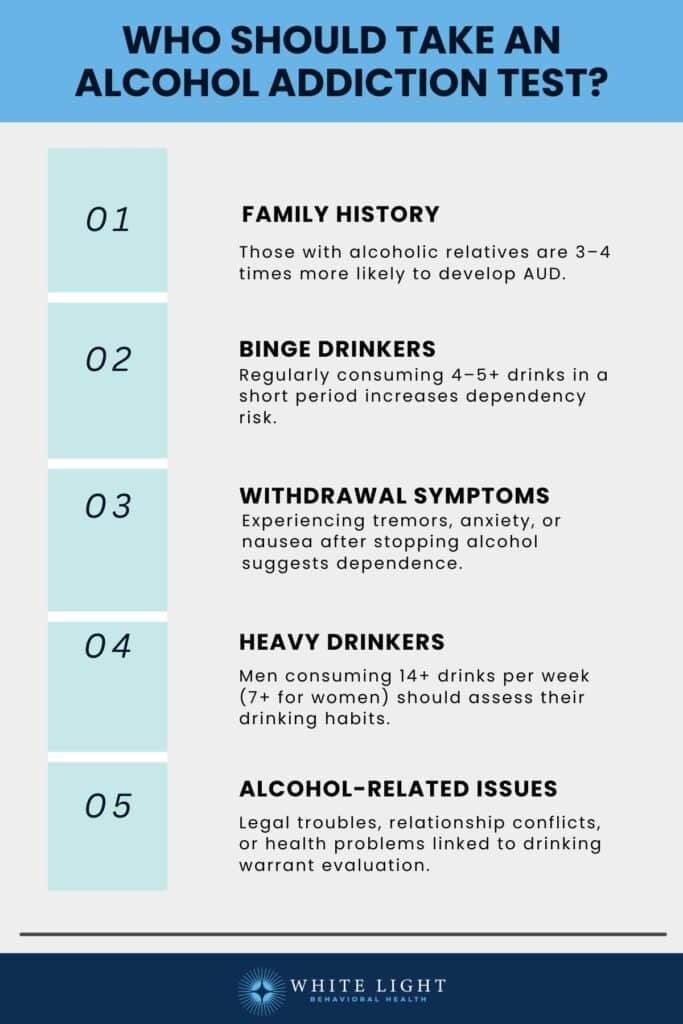
People who should take an alcohol addiction test include:
- Individuals with a family history of alcoholism: Research by the Department of Mental Health, “Family History of Alcoholism: Are You at Risk?” suggests that individuals with a family history of alcoholism are 3 to 4 times more likely to develop AUD than those without a genetic predisposition.
- People who engage in binge drinking: Binge drinking, defined as consuming five or more drinks in a short period for men (four for women), increases the risk of alcohol dependence.
- Individuals experiencing withdrawal symptoms: People who experience symptoms such as tremors, anxiety, nausea, or sweating when they stop drinking develop alcohol dependence. An addiction test determines the severity of their condition.
- Frequent or heavy drinkers: Those who exceed recommended drinking limits, more than 14 drinks per week for men or seven for women, should take an alcohol addiction test to assess potential health risks.
- Individuals with alcohol-related behavioral or health issues: People who have encountered legal problems, relationship conflicts, or health complications due to alcohol consumption should take an alcohol addiction test to evaluate their drinking behavior and its consequences.
What Are the Main Components of an Alcohol Addiction Test?
The main components of an alcohol addiction test are a set of structured screening criteria that assess drinking frequency, quantity, psychological impact, and physical dependence. These components help you determine whether your alcohol consumption falls within a normal range or indicates a potential addiction.
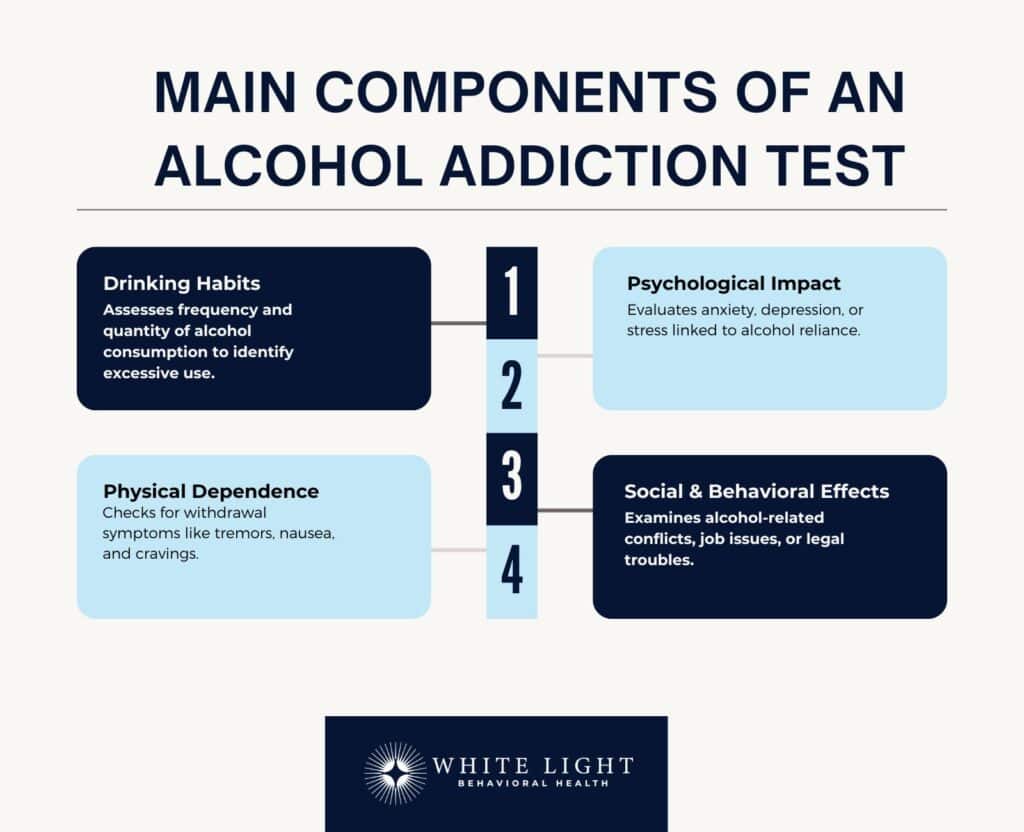
The main components of an alcohol addiction test include:
- Drinking Quantity and Frequency: The test evaluates how often and how much alcohol a person consumes within a specific period. Questions focus on daily, weekly, or monthly drinking habits to identify patterns that indicate excessive alcohol use.
- Psychological Impact: The test assesses whether alcohol consumption affects your emotional well-being, including increased anxiety, depression, or difficulty managing stress without alcohol.
Psychological dependence is a key indicator of addiction.
- Physical Dependence and Withdrawal Signs: Symptoms such as tremors, nausea, sweating, or cravings when alcohol use is reduced are indicators of physical dependence.
- Behavioral and Social Consequences: The test examines the impact of alcohol use on daily life, relationships, work, and responsibilities. Questions focus on alcohol-related conflicts, legal issues, or declining job performance due to drinking habits.
What Are the Different Types of Alcohol Addiction Tests in Ohio?
The different types of alcohol addiction tests are designed to assess drinking behaviors, identify alcohol dependence, and determine the severity of alcohol use disorder (AUD).
These tests vary in format, ranging from brief questionnaires to comprehensive clinical assessments.
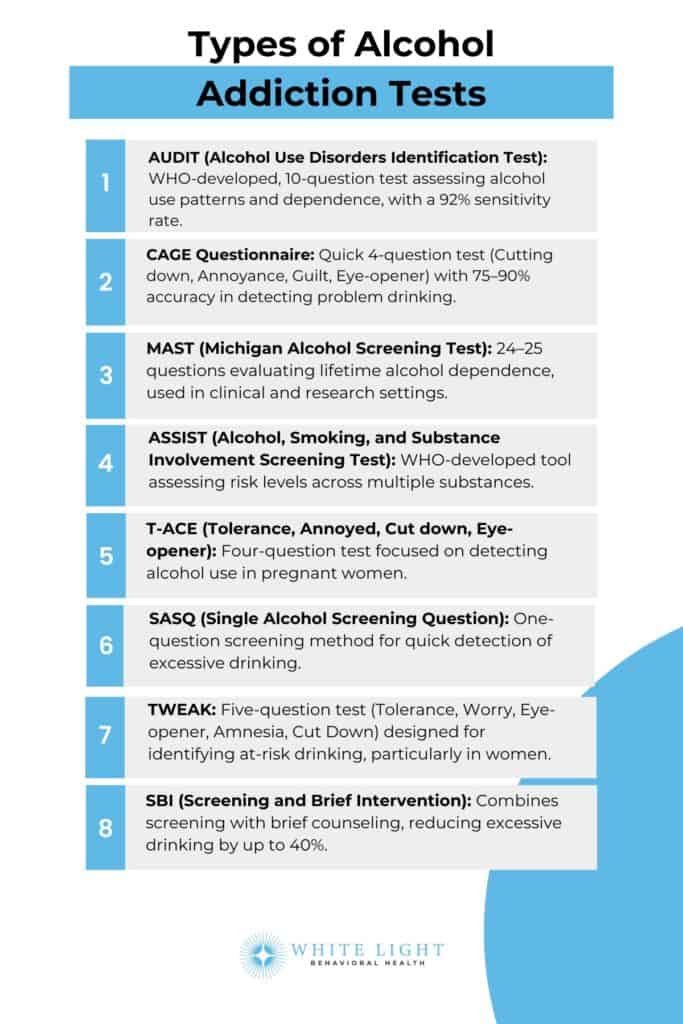
The different types of alcohol addiction tests in Ohio include:
1. AUDIT (Alcohol Use Disorders Identification Test)
The AUDIT is a globally recognized screening tool developed by the World Health Organization (WHO) to assess hazardous drinking patterns and alcohol dependence.
It consists of 10 questions that evaluate alcohol consumption, dependence symptoms, and alcohol-related problems. The AUDIT has been proven effective in detecting alcohol use disorder (AUD).
Contact us today to schedule an initial assessment or to learn more about our services. Whether you are seeking intensive outpatient care or simply need guidance on your mental health journey, we are here to help.
2. CAGE Questionnaire
The CAGE questionnaire is a short screening test designed to identify alcohol dependence quickly.
It consists of four questions related to cutting down, Annoyance, Guilt, and Eye-opening drinking habits. The high sensitivity of this test makes it worthwhile in clinical settings.
The CAGE questionnaire’s effectiveness proves it a valuable tool for identifying individuals who need further evaluation for alcohol addiction.
3. MAST (Michigan Alcohol Screening Test)
The MAST is a long-form assessment that measures lifetime alcohol dependence.
Originally developed in the 1970s, it consists of 24 to 25 questions designed to evaluate the severity of alcohol addiction. It is considered one of the most comprehensive alcohol screening tools, particularly for determining long-term patterns of alcohol misuse.
The MAST is frequently used in clinical and research settings to diagnose severe alcohol dependence, helping healthcare professionals tailor appropriate treatment plans.
4. ASSIST (Alcohol, Smoking, and Substance Involvement Screening Test)
The WHO developed the ASSIST as a screening tool to identify substance use disorders, including alcohol.
Unlike other alcohol-specific tests, ASSIST assesses risk levels across multiple substances, providing an overall picture of a person’s addiction risk. The test consists of eight questions and categorizes individuals into low, moderate, or high-risk levels, guiding appropriate intervention strategies.
5. T-ACE (Tolerance, Annoyed, Cut down, Eye-opener)
The T-ACE test is a four-question screening tool primarily used to detect prenatal alcohol use in pregnant women.
It is similar to the CAGE questionnaire but places greater emphasis on tolerance, which is a key indicator of early alcohol dependence. While originally developed for use in obstetric settings, the T-ACE is also effective in general clinical environments for identifying problematic drinking patterns.
6. SASQ (Single Alcohol Screening Question)
The SASQ is a single-question alcohol screening tool designed by the National Institute on Alcohol Abuse and Alcoholism (NIAAA) for quick assessment in primary care settings. The test asks, “How many times in the past year have you had five (for men) or four (for women) or more drinks in a day?” Studies have shown that the SASQ has a high sensitivity for detecting excessive alcohol use, making it an effective and time-efficient screening method.
Rediscover Life at White Light Behavioral Health
Get the compassionate support you deserve. We're here to help you reclaim joy, wellness, and a brighter future.

7. TWEAK
The TWEAK is a five-question screening test developed to identify at-risk drinking, particularly in women.
The acronym stands for Tolerance, Worry, Eye-opener, Amnesia, and Cut Down. This test is frequently used in pregnancy-related settings to screen for alcohol use that poses risks to fetal health.
The TWEAK has been proven to be more sensitive than CAGE and T-ACE in identifying problem drinking in women.
8. SBI (Screening and Brief Intervention)
The SBI is a healthcare intervention strategy that combines screening with brief counseling to address risky alcohol use.
SBI is commonly used in primary care, emergency rooms, and community health settings to help individuals recognize unhealthy drinking patterns and encourage behavioral change. Research has shown that SBI reduces excessive drinking by up to 40%, making it a highly effective method for early intervention.
What Are the Most Common Alcohol Addiction Tests Used in Columbus, Ohio?
The most common alcohol addiction tests used in Columbus, Ohio, are the Alcohol Use Disorders Identification Test (AUDIT), the CAGE Questionnaire, and the Michigan Alcohol Screening Test (MAST). These tools are widely utilized in clinical settings to assess alcohol use disorders.
Which Alcohol Addiction Test Is the Most Accurate?
The Alcohol Use Disorders Identification Test (AUDIT) is considered the most accurate alcohol addiction test, with a a sensitivity of 92% and a specificity of 94% at an optimal cutoff score of 8, according to the National Institute on Alcohol Abuse and Alcoholism (NIAAA), the Alcohol Use Disorders Identification Test (AUDIT) has demonstrated effective in identifying hazardous or harmful drinking behaviors across diverse populations and settings.
How Are Alcohol Addiction Test Scores Calculated?
Alcohol addiction test scores are calculated based on predefined thresholds that classify the severity of alcohol use disorder. Different tests use varying scoring systems, with results indicating risk levels such as mild, moderate, or severe alcohol dependence. For example, the AUDIT test scores responses on a scale of 0 to 40, with a score of 8 or higher suggesting hazardous drinking.
The CAGE questionnaire, in contrast, uses a simple 4-question format where two or more “yes” responses indicate a potential alcohol problem.
Are you covered for treatment?

White Light Behavioral Health is an approved provider for Blue Cross Blue Shield and TUFTS, while also accepting many other major insurance carriers.
Check Coverage Now!Can Online Alcohol Addiction Tests Provide Accurate Results?
No, online alcohol addiction tests can only provide a general indication of potential alcohol use problems, but they are not as accurate as clinical assessments. These self-assessment tools rely on self-reported data subject to bias or inaccuracies.
What Are the Limitations of Alcohol Addiction Tests?
The limitations of alcohol addiction tests are that they do not always provide accurate or definitive results due to various external and individual factors. While these tests help assess alcohol use patterns, they have inherent drawbacks that affect their reliability.
- Self-Reported Bias: Many alcohol addiction tests rely on self-reported answers, which are influenced by memory gaps, dishonesty, or underreporting due to stigma.
- Lack of Clinical Diagnosis: These tests screen for alcohol-related problems but do not serve as a clinical diagnosis. A medical professional must conduct a comprehensive evaluation using DSM-5 criteria for a formal diagnosis.
- Influence of External Factors: Various factors, such as stress, recent drinking habits, or cultural differences, affect responses and skew results.
Some individuals score high on a test due to temporary circumstances rather than chronic alcohol use disorder.
- Variability in Test Sensitivity: Different alcohol addiction tests have varying sensitivity and specificity levels. While some tests, like AUDIT, have high accuracy rates, shorter assessments, like CAGE, do not fully capture the complexity of alcohol dependence.
Can Alcohol Addiction Tests Diagnose Alcoholism?
No, alcohol addiction tests cannot diagnose alcoholism; they only assess a person’s risk level for alcohol use disorder.
These tests, such as AUDIT and CAGE, help identify problematic drinking patterns but do not provide a clinical diagnosis. A formal alcoholism diagnosis requires evaluation by a medical professional based on DSM-5 criteria, which consider factors like physical dependence, cravings, and negative consequences of alcohol use.
Share This Post

Dr. Ryan Wakim M.D.
All author posts
TREATMENTS WE OFFER
Are you covered for treatment?













White Light Behavioral Health is an approved provider for Blue Shield and Tufts, while also accepting many other major insurance carriers.
Check Coverage Now!