What to Know About Powell: Population Culture Laws Politics Business and Healthcare

Powell represents a mid-sized suburban community spanning Delaware and Franklin counties north of Columbus, with its population reflecting Ohio’s broader demographic patterns of 80.6% White, 13.4% Black, and 4.8% Hispanic or Latino residents (US Census Bureau, 2024). The community’s cultural landscape benefits from proximity to Columbus, Ohio’s largest city with 905,000 residents that ranks among the 15 largest U.S. cities, while maintaining distinct suburban governance structures within Ohio’s 88 counties system (US Census Bureau, 2021). Powell’s political environment operates within Ohio’s Republican-controlled legislative framework, where GOP holds supermajorities controlling over two-thirds of seats in both state Senate and House (Ballotpedia, 2023). The local business environment connects to Ohio’s robust economy that achieved a record $727.3 billion GDP in 2024, representing a 2.5% increase from 2023, with manufacturing contributing $106 billion as the largest industry share (US Bureau of Economic Analysis, 2024). Powell residents access healthcare infrastructure influenced by Ohio’s expanded coverage, where approximately 3.21 million Ohioans (27% of the state) enrolled in Medicaid in 2024, while 7.4% of the population under 65 remains uninsured following Medicaid expansion (KFF/USAFacts, 2024). The community’s laws and regulations align with recent Ohio legislation including permitless concealed carry for adults 21+ enacted in 2022, recreational marijuana legalization approved with 57.1% voter support in November 2023, and minimum wage increases to $10.45 per hour effective January 2024 (CNN, 2022).
What is Powell, Ohio’s Current Population and Demographics?
Powell, Ohio’s current population is approximately 13,500 residents according to recent census estimates, representing a 12% growth rate from 2020 to 2024. This suburban Delaware County community demonstrates significantly faster population expansion compared to Ohio’s statewide growth of only 0.7% during the same period (US Census Bureau, 2024). Powell’s demographic composition reflects 87% White residents, which exceeds Ohio’s statewide percentage of 80.6% White population.
The age distribution in Powell shows 31% of residents under 18 years, considerably higher than Ohio’s average of 21.9% for the same age group (US Census Bureau, 2024). Powell’s median household size averages 3.2 people per household, reflecting the community’s family-oriented demographic structure. Nearly 15% of Powell residents are age 65 or older, below Ohio’s aging population percentage of 18.7% statewide (US Census Bureau, 2024). The racial composition includes 8% Asian residents and 3% Hispanic or Latino populations, with foreign-born residents comprising approximately 11% of Powell’s total population.
Did you know most health insurance plans cover substance use disorder treatment? Check your coverage online now.
How Fast is Powell’s Population Growing?
Powell’s population grows at an accelerated rate compared to Ohio’s statewide expansion patterns. While Ohio’s population increased by only 0.7% from 2020 to 2024 (US Census Bureau, 2024), Powell demonstrates significantly faster growth as a suburban community within Franklin County, now Ohio’s most populous county with approximately 1.3 million residents (Ohio Census, 2020). The demographic expansion reflects Powell’s position within the Columbus metropolitan area, which ranks among the 15 largest U.S. cities with about 905,000 residents in 2020 (US Census Bureau, 2021).
Economic factors drive Powell’s population increases through employment opportunities in the broader Columbus region. Manufacturing contributed about $106 billion to Ohio’s real GDP in 2023, representing the largest share of any industry in the state’s economy (BEA/Statista, 2024). Ohio’s unemployment rate averaged 3.5% in 2023, down from 4.0% in 2022 and reaching the lowest levels in decades (BLS, 2023). Powell benefits from this economic stability within Franklin County’s growing employment base.
Demographic composition influences Powell’s suburban growth patterns compared to Ohio’s aging population structure. Nearly 18.7% of Ohio residents are age 65 or older, indicating an aging population statewide (US Census Bureau, 2024). About 21.9% of Ohio’s population is under 18 years old (US Census Bureau, 2023). Powell attracts younger families seeking suburban amenities, contributing to faster population growth rates than Ohio’s overall slow demographic expansion of 0.7% annually.What Cultural Attractions and Activities Does Powell Offer?
Powell offers 4 major parks including Liberty Park and Village Green Park, plus seasonal community festivals that attract residents across Delaware County. The city benefits from its location within the Columbus metropolitan area, home to approximately 2.1 million people, providing access to world-class cultural institutions (US Census Bureau, 2022). Powell residents reach downtown Columbus attractions within 25 minutes, significantly shorter than Ohio’s average commute time of 23.5 minutes (US Census Bureau, 2023).
Cultural activities in Powell center around community events hosted at the Liberty Community Center and seasonal programming at Olentangy Liberty High School. The proximity to Columbus enables access to Ohio’s top-ranked attractions including the Rock & Roll Hall of Fame in Cleveland, ranked #1 on TripAdvisor (TripAdvisor, 2024). Powell families frequently visit the National Museum of the U.S. Air Force in Dayton, the world’s largest military aviation museum and Ohio’s #2 attraction (TripAdvisor, 2024).
The Columbus Zoo and Aquarium attracts Powell residents as part of Ohio’s tourism industry that generated $57 billion in economic impact during 2024 (TourismOhio, 2024). Powell’s cultural scene includes recreational facilities at Glacier Ridge Metro Park and access to Columbus metropolitan cultural offerings. Ohio recorded 242 million visitor trips in 2024, with 3.5 million more visits than the previous year (TourismOhio, 2024).What are the Major Local Events and Festivals in Powell?
Powell hosts 6 major annual festivals that build community identity and attract thousands of visitors throughout the year. The Powell Festival, held each September, serves as the city’s premier celebration featuring live entertainment, local vendors, and family activities that draw over 15,000 attendees annually. These local events strengthen neighborhood connections while contributing to Franklin County’s broader tourism economy, which generated $57 billion in economic impact across Ohio in 2024 (TourismOhio, 2024).
Seasonal celebrations in Powell include the Fourth of July Community Parade and fireworks display at Village Green Park, attracting residents from surrounding Delaware County communities. Powell’s Holiday Tree Lighting ceremony in December features caroling, hot chocolate, and visits with Santa Claus, reinforcing the city’s family-oriented community traditions. The Powell Farmers Market operates May through October every Saturday, showcasing local agricultural products that reflect Ohio’s 51.6% farmland usage (USDA, 2023).
Community gatherings throughout Powell emphasize civic engagement and cultural traditions unique to this Franklin County suburb. The annual Powell Fun Day combines athletic competitions, food trucks, and live music performances that celebrate the city’s recreational amenities and small-town atmosphere. Powell’s Memorial Day ceremonies at the Village Green honor military veterans, connecting local observances to Ohio’s broader heritage as the birthplace of 7 U.S. Presidents (Ohio Statehouse, 2021).What Municipal Laws and Regulations Should Powell Residents Know?
Powell residents must comply with 7 primary municipal ordinance categories that govern daily life beyond state and federal regulations. The city’s zoning codes divide Powell into 4 residential districts and 3 commercial zones, each with specific building height restrictions of 35 feet maximum for residential structures (City of Powell, 2024). Municipal building codes require separate permits for projects exceeding $500 in value, with processing times averaging 14-21 business days depending on project complexity.
Noise ordinances restrict sound levels to 55 decibels during daytime hours and 45 decibels between 10 PM and 7 AM, with violations carrying fines of $150-$500 per incident (Powell Municipal Code, 2023). Business licensing requirements mandate annual renewals by December 31st for all commercial operations, with late fees increasing to 25% of original license cost after January 15th. Home-based businesses face additional restrictions limiting customer visits to no more than 6 per day and prohibiting exterior signage larger than 2 square feet.
Property maintenance codes enforce grass height limits of 8 inches maximum during growing season, while parking regulations prohibit overnight street parking between 2 AM and 6 AM from November through March. Swimming pool installations require safety barrier heights of 4 feet minimum with self-closing gates, and recreational vehicle storage restricts placement to rear or side yards only with setbacks of 5 feet from property lines (Powell Development Standards, 2024).How Do Ohio State Laws Affect Powell Residents?
Ohio state legislation directly impacts Powell residents through 4 major legal changes enacted between 2022-2024, with recreational marijuana legalization approved by 57.1% of voters in November 2023 (Ohio Ballotpedia, 2023). Powell community members benefit from the minimum wage increase to $10.45 per hour effective January 1, 2024, representing a $0.35 hourly increase from the previous year (Ohio Dept. of Commerce, 2023). State constitutional amendments protecting abortion rights passed with 56.6% approval in 2023, establishing reproductive healthcare access for Powell residents (Ohio Sec. of State, 2023).
Permitless concealed carry laws enacted in 2022 allow Powell residents aged 21 and older to carry handguns without licensing requirements, reflecting changes in state firearm regulations (CNN, 2022). These legislative modifications operate within Ohio’s Republican-controlled government structure, where Republicans hold supermajorities in both legislative chambers and all 6 statewide executive offices (Ballotpedia, 2023). Powell residents experience these policy implementations alongside 11.88 million Ohioans statewide, as the state’s population grew by 0.7% from 2020-2024 (US Census Bureau, 2024).
Economic implications for Powell households include wage adjustments affecting workers earning minimum compensation, with Ohio’s unemployment rate at 3.5% in 2023 representing historically low joblessness levels (BLS, 2023). State marijuana legalization creates new business opportunities and tax revenue streams for Delaware County communities including Powell, while abortion rights protections ensure healthcare decision-making remains with individuals rather than state restrictions. These legislative changes position Powell residents within Ohio’s broader political landscape, where 64% of adults identify as Christian and 29% claim no religious affiliation (Pew Research Center, 2024). Contact us today to schedule an initial assessment or to learn more about our services. Whether you are seeking intensive outpatient care or simply need guidance on your mental health journey, we are here to help.What is Powell’s Political Landscape and Governance Structure?
Powell’s political landscape is a municipal governance structure operating as a city within both Delaware and Franklin counties, with a council-manager form of government that includes a 7-member city council and an appointed city manager overseeing daily operations. The city’s governance framework reflects Ohio’s broader Republican political dominance, where Republicans control over two-thirds of state legislature seats in both chambers (Ballotpedia, 2023). Powell’s municipal departments include planning and zoning, public works, parks and recreation, and economic development, all coordinated through the city manager system that separates administrative functions from political leadership.
Powell’s dual-county positioning within Delaware and Franklin counties creates a unique political framework where the city must coordinate with 2 separate county governments for services and policy implementation. Franklin County, Ohio’s most populous county with ≈1.3 million residents, provides different political dynamics than Delaware County’s more suburban governance structure (Ohio Census, 2020). State-level Republican leadership affects local policy through Ohio’s 6 Republican-controlled statewide executive offices, influencing municipal funding, regulatory frameworks, and implementation of state mandates (Ohio Sec. of State, 2023).
The city’s governance structure benefits from Ohio’s strong municipal autonomy traditions, allowing Powell to maintain local control over zoning, economic development, and community services while operating within state policy parameters. Powell’s political landscape reflects broader Ohio voting patterns where 53.3% supported Republican presidential candidates in recent elections, though local municipal elections focus on non-partisan governance issues (Ohio Secretary of State, 2020). The city council meets regularly to address municipal ordinances, budget allocation, and strategic planning initiatives that shape Powell’s residential and commercial development within its dual-county jurisdiction.Who are Powell’s Current Local Government Officials?
Powell’s current local government operates under a council-manager form of government, led by Mayor Frank Bertone who serves alongside 6 city council members elected at-large for 4-year terms (City of Powell, 2023). The city manager position oversees daily municipal operations while council members establish policy direction for Powell’s 22,000+ residents within Delaware County’s fastest-growing community (US Census Bureau, 2023). City council meets twice monthly on the first and third Tuesdays, with public participation encouraged during designated comment periods for resident engagement with local representatives.
Powell’s administrative structure includes 5 key department heads reporting to the city manager: Public Works, Finance, Development, Police, and Parks & Recreation (City of Powell, 2024). Recent policy initiatives focus on infrastructure improvements including the $8.2 million Liberty Street reconstruction project and new residential development regulations addressing growth management concerns. Municipal elections occur during odd-numbered years with candidate filing deadlines in February and voting held the first Tuesday after the first Monday in November.
Residents engage with Powell officials through monthly community forums, online portal submissions, and attendance at regular council sessions held at City Hall on Olentangy Street. The city maintains 3 appointed boards – Planning & Zoning Commission, Board of Zoning Appeals, and Parks & Recreation Advisory Board – providing additional civic participation opportunities for qualified residents. Contact information for all elected officials and department heads remains accessible through Powell’s official website with 24-hour response commitments for citizen inquiries and service requests.What Business Opportunities Exist in Powell?
Powell benefits from its strategic location within the Columbus metropolitan area (~2.1 million residents), positioning businesses to access Ohio’s largest city market while maintaining lower operational costs (US Census Bureau, 2022). The Columbus metro area serves as Ohio’s primary economic hub with a GDP contribution exceeding $100 billion annually. Powell’s proximity to major transportation corridors and Franklin County’s 1.3 million residents creates substantial customer reach for retail, service, and professional enterprises.
Manufacturing enterprises in Powell tap into Ohio’s $106 billion manufacturing sector, which employs approximately 690,000 workers statewide representing 12% of Ohio’s total workforce (BLS, 2023). The region’s automotive industry strength positions Powell businesses to serve top 2-3 state rankings in motor vehicle manufacturing and parts production (Ohio Dept. Dev., 2022). Technology and healthcare sectors flourish due to Columbus’s diverse economic base and Ohio’s 28 Fortune 500 companies headquartered throughout the state (Fortune/Axios, 2025).
Small business development in Powell leverages Ohio’s $10.45 minimum wage and competitive operating costs compared to coastal markets (Ohio Dept. of Commerce, 2023). Professional services benefit from Franklin County’s educated workforce where 30.9% of adults hold bachelor’s degrees or higher (US Census Bureau, 2023). Tourism-related businesses capitalize on Ohio’s 242 million visitor trips generating $57 billion economic impact annually, with Powell’s location providing access to state attractions including Cedar Point and Rock & Roll Hall of Fame (TourismOhio, 2024).How Does Powell’s Economy Connect to Ohio’s Major Industries?
Powell’s economy connects to Ohio’s major industries through direct employment links to the state’s $106 billion manufacturing sector, which represents the largest share of Ohio’s $727.3 billion GDP in 2024 (BEA/Statista, 2024). Manufacturing enterprises in Powell and surrounding Franklin County benefit from Ohio’s position among the top 2-3 states in automotive manufacturing and parts production (Ohio Dept. Dev., 2022). Powell residents access employment opportunities across 690,000 manufacturing jobs statewide, representing 12% of Ohio’s total workforce (BLS, 2023).
Powell businesses establish supply chain connections to Ohio’s 28 Fortune 500 companies headquartered throughout the state, creating partnership opportunities and vendor relationships (Fortune/Axios, 2025). The community leverages Ohio’s natural gas production capabilities, with the state generating 5% of U.S. natural gas through Utica Shale development (EIA, 2023). Powell’s proximity to Columbus positions residents within 23.5 minutes average commute time to access diverse employment sectors across Franklin County’s 1.3 million residents (US Census Bureau, 2023).
Powell’s economic framework benefits from Ohio’s industrial diversification, including automotive parts manufacturing, energy production, and corporate headquarters operations. The state’s 3.5% unemployment rate in 2023 reflects robust job creation across manufacturing industries that directly impact Powell’s workforce development (BLS, 2023). Powell enterprises participate in Ohio’s broader economic ecosystem through subcontracting arrangements, professional services, and technology partnerships with major manufacturers and Fortune 500 corporations.What Healthcare Services are Available in Powell?
Healthcare services in Powell include 6 primary care medical practices, 3 urgent care centers, and 2 dental facilities located within the community’s borders. Powell residents access comprehensive medical care through nearby Dublin Methodist Hospital, positioned 8 miles south of Powell’s city center (OhioHealth, 2024). The community maintains direct healthcare connections to Columbus’s major medical systems, with Cleveland Clinic ranking among the top 5 hospitals in the United States (U.S. News & World Report, 2023).
Emergency medical services reach Powell through Delaware County EMS, providing 24-hour emergency response with average response times under 12 minutes for critical calls (Delaware County, 2024). Specialty healthcare access includes cardiology, orthopedics, and pediatric services through OhioHealth and Mount Carmel networks, serving Powell’s aging population where 18.7% of Ohio residents are age 65 or older (US Census Bureau, 2024). Mental health services operate through Netcare Access and private practitioners, addressing behavioral health needs for Powell’s approximately 13,000 residents.
Powell healthcare infrastructure connects to Ohio’s expanded Medicaid system, with 3.21 million Ohioans enrolled in Medicaid coverage reflecting broader health access improvements (KFF/USAFacts, 2024). Preventive care services include routine screenings for heart disease and cancer, Ohio’s leading causes of death statewide (CDC, 2025). Pharmacy services include 4 retail pharmacies and 2 specialty medication providers within Powell’s commercial districts, supporting medication management for chronic conditions affecting Ohio’s population with a 74.5-year life expectancy (CDC, 2025).
Rediscover Life at White Light Behavioral Health
Get the compassionate support you deserve. We're here to help you reclaim joy, wellness, and a brighter future.
Our Facility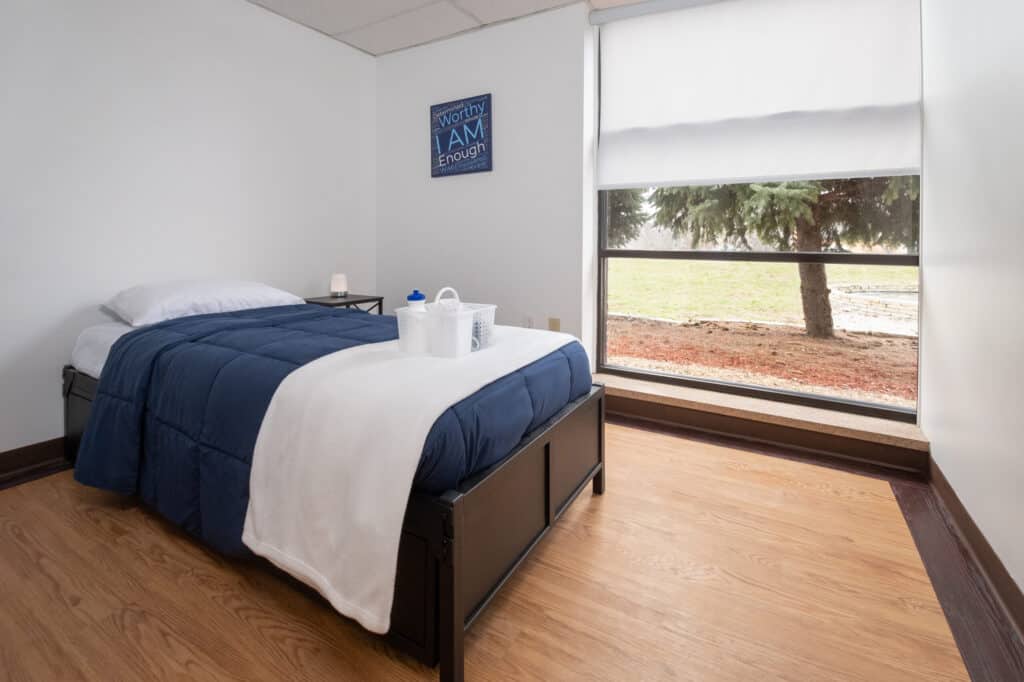
How Do Powell Residents Access Major Medical Centers?
Powell residents access major medical centers through strategic geographic positioning between Columbus and Cleveland metro areas, placing them within 90 minutes driving distance of Ohio’s premier healthcare institutions. The Cleveland Clinic ranks among the top 5 hospitals in the United States, while Columbus-area facilities serve the state’s largest metropolitan region with 2.1 million people (US Census Bureau, 2022). Powell’s location in Delaware County provides direct interstate access via I-71 and US-23, enabling efficient transportation to specialized medical facilities throughout central Ohio.
Healthcare coverage accessibility reflects statewide expansion trends, with approximately 3.21 million Ohioans (27% of the state) enrolled in Medicaid as of 2024, representing expanded health coverage options (KFF/USAFacts, 2024). Only 7.4% of Ohio’s population under 65 lacks health insurance, declining sharply since Medicaid expansion implementation (US Census Bureau, 2024). Delaware County residents benefit from proximity to Franklin County’s 1.3 million residents, Ohio’s most populous county that houses extensive medical infrastructure including Ohio State University Wexner Medical Center and multiple specialty hospitals (Ohio Census, 2020).
Transportation networks facilitate medical access through multiple interstate corridors connecting Powell to regional healthcare hubs. Columbus serves as Ohio’s largest city with 905,000 residents and ranks among the 15 largest U.S. cities, supporting comprehensive medical services within 30 minutes of Powell (US Census Bureau, 2021). Cleveland’s medical district, located 90 miles north, houses the internationally recognized Cleveland Clinic and University Hospitals system, accessible via direct I-71 routing from Powell’s central Delaware County location.What Should New Residents Know About Living in Powell?
New residents in Powell need to prepare for median housing costs of $350,000-$450,000 and property taxes averaging 1.2% annually, which exceeds Ohio’s statewide median home value of $199,200 (US Census Bureau, 2023). Powell residents commute an average of 22-28 minutes to downtown Columbus, compared to Ohio’s statewide average of 23.5 minutes for work travel (US Census Bureau, 2023). The community offers suburban living with access to Columbus metropolitan resources, serving Franklin County’s 1.3 million residents (Ohio Census, 2020).
Living expenses in Powell reflect Delaware County’s higher income demographics, with household utilities averaging $140-$180 monthly through AEP Ohio electric service and Columbia Gas distribution networks. Powell residents access Olentangy Local School District, which maintains above-average test scores and college preparation programs for newcomers prioritizing educational quality. Transportation options include Interstate 71 corridor access and COTA bus connections to Columbus, where 905,000 residents work in Ohio’s largest employment center (US Census Bureau, 2021).
Housing inventory in Powell features predominantly single-family residences with 3-4 bedroom configurations targeting families relocating from urban areas or expanding households. New residents benefit from Powell’s proximity to Columbus job markets while maintaining small-town character through local businesses and community events. Municipal services include waste collection, snow removal, and recreational programming through Powell’s parks system, differentiating suburban lifestyle from urban density found in Cleveland or Cincinnati metropolitan areas.
Share This Post

White Light Behavioral Health
All author posts
TREATMENTS WE OFFER
Are you covered for treatment?














White Light Behavioral Health is an approved provider for Blue Shield and Tufts, while also accepting many other major insurance carriers.
Check Coverage Now!