
Xanax addiction refers to a condition where a person becomes dependent on the drug to feel calm or manage anxiety. It involves taking the medication more often or in higher doses than prescribed.
Xanax (alprazolam) is a benzodiazepine prescription medication primarily used to treat anxiety disorders and panic attacks by enhancing the activity of gamma-aminobutyric acid (GABA) in the brain, producing a calming effect. It is commonly prescribed for short-term relief but carries a risk of dependence with prolonged use.
Xanax is commonly prescribed to manage anxiety, panic disorders, and sometimes insomnia. When used as directed and for short periods, Xanax effectively alleviates symptoms of anxiety, but misuse or long-term use leads to dependence and addiction.
Xanax is one of the most widely used and misused benzodiazepines in the U.S., though its prescription rates have declined in recent years. According to a report by Statista, alprazolam prescriptions dropped from 29 million in 2014 to approximately 15 million in 2022. Despite this decline, Xanax misuse remains a concern, contributing to dependence and emergency room visits related to its abuse.
Xanax addiction symptoms often appear as both physical and behavioral changes. Individuals develop intense cravings, take larger doses than prescribed, or feel unable to function without the drug. The common signs include drowsiness, slurred speech, poor coordination, memory problems, and mood swings. Over time, users may isolate themselves, neglect responsibilities, or experience withdrawal symptoms like anxiety, insomnia, or tremors when they stop taking the drug.
The causes of Xanax addiction vary, but they involve a combination of psychological, genetic, and environmental factors. People with anxiety disorders, depression, or high-stress levels are more likely to misuse Xanax for its calming effects. A history of substance abuse in the family or early exposure to addictive behaviors can also increase the risk. Misuse often begins with a legitimate prescription, eventually leading to dependence as tolerance builds and the body adapts to the drug.
The effects of Xanax addiction are harmful to both mental and physical health. Long-term use impairs cognitive function, increases the risk of depression, and leads to accidents due to slowed reaction times. Social relationships, work, and daily responsibilities often suffer as the addiction deepens. In severe cases, overdose is a risk, especially when Xanax is combined with alcohol or other depressants.
Treatment for Xanax addiction involves a gradual tapering process under medical supervision to avoid dangerous withdrawal symptoms. Detox is followed by behavioral therapies, such as cognitive-behavioral therapy (CBT), which helps address the root causes of addiction. Inpatient or outpatient rehab programs, along with support groups, also play a vital role in long-term recovery. Medications may be used in some cases to manage anxiety or withdrawal effects, supporting the overall treatment plan.
What is Xanax Addiction?
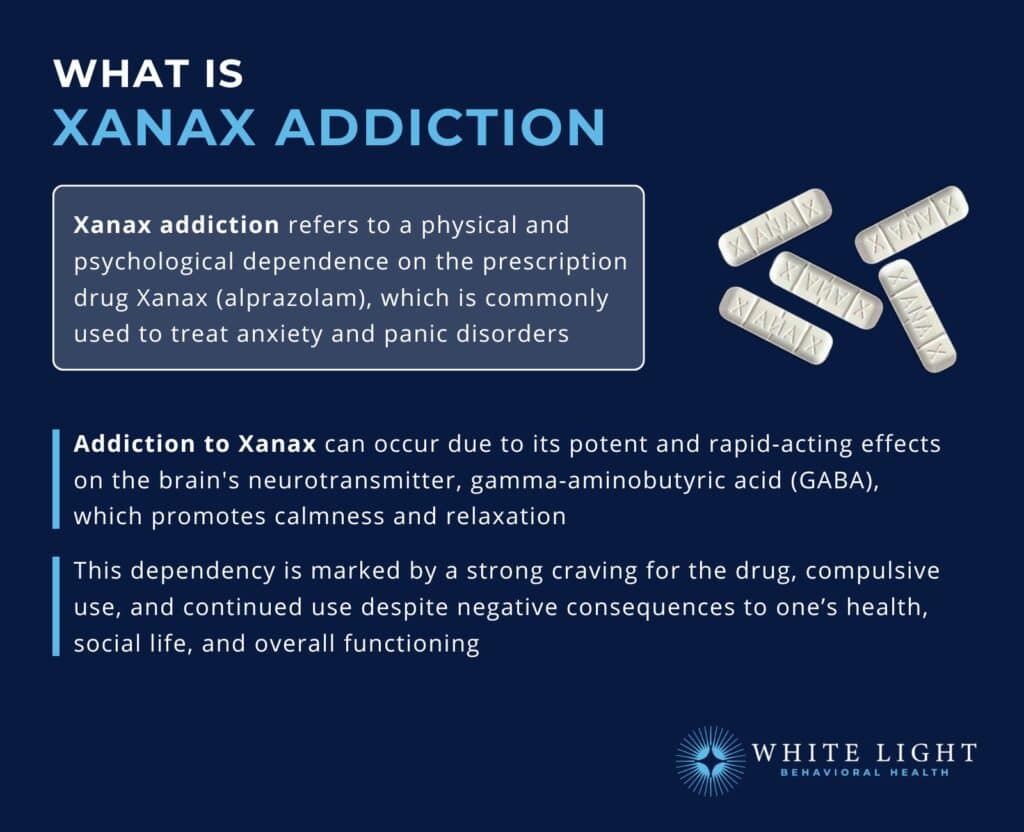
Xanax addiction refers to a physical and psychological dependence on the prescription drug Xanax (alprazolam), which is commonly used to treat anxiety and panic disorders. This form of addiction develops when the drug is used in larger doses or for a longer period than prescribed, leading to tolerance (needing more of the drug to achieve the same effect) and withdrawal symptoms when usage is reduced or stopped. The 2013 National Survey on Drug Use and Health showed that young adults were the most likely to have ever used alprazolam for non-medical purposes. The rate of abuse among those aged 18-25 (10.3%) was nearly double that of people aged 26 or over (5.7%).
Addiction to Xanax can occur due to its potent and rapid-acting effects on the brain’s neurotransmitter, gamma-aminobutyric acid (GABA), which promotes calmness and relaxation. Over time, the brain may become less responsive to natural GABA activity and more reliant on the drug to maintain normal function, making it challenging to discontinue use. This dependency is marked by a strong craving for the drug, compulsive use, and continued use despite negative consequences to one’s health, social life, and overall functioning. Xanax addiction is a serious condition that requires professional treatment to safely manage withdrawal symptoms and address the underlying issues contributing to the addiction.
Did you know most health insurance plans cover substance use disorder treatment? Check your coverage online now.
What are the Signs And Symptoms of Xanax Addiction?
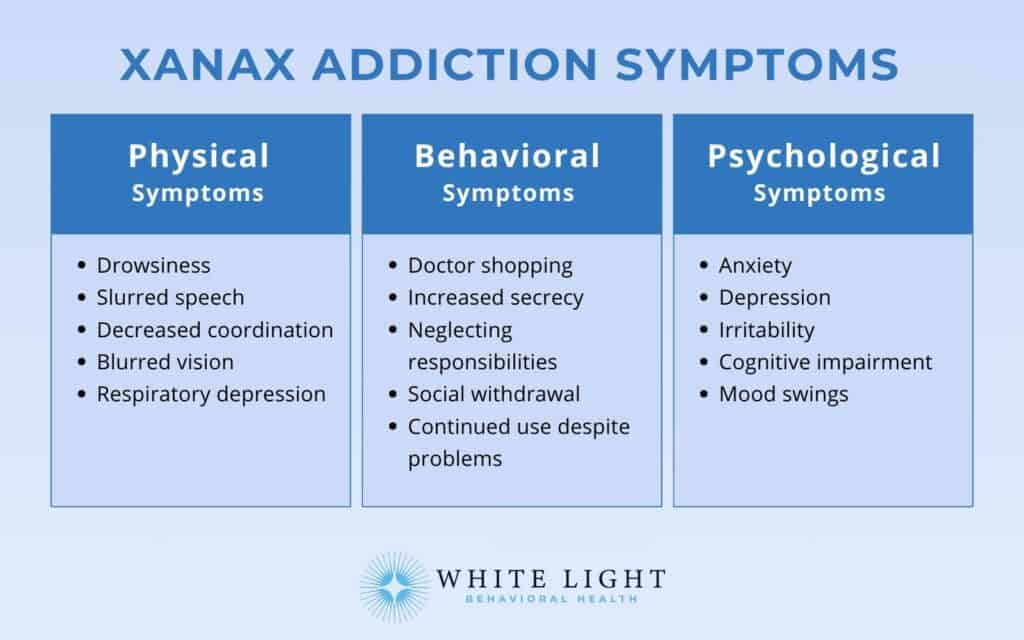
The signs and symptoms of Xanax addiction can be challenging to identify because Xanax is a legitimate medication with valid uses. In some cases, the distinction between genuine medical use and abuse can become blurred. Xanax addiction presents a range of symptoms that can be categorized into physical, behavioral, and psychological aspects.
More Resources on Addiction:
11 behavioral signs of Xanax addiction are listed below:
- Inability to stop taking Xanax despite wanting to
- Lack of interest in doing things
- Obsessing about obtaining and taking Xanax
- Regularly increasing the amount of Xanax taken
- Continued use of Xanax despite it causing personal problems
- Erratic or risky behavior
- Legal problems relating to Xanax use
- Doctor shopping: Visiting multiple doctors to obtain more prescriptions.
- Increased secrecy: Being more secretive or lying about the amount of drug taken.
- Neglecting responsibilities: Failing to fulfill work, school, or home duties.
- Social withdrawal: Pulling away from family and friends and losing interest in activities once enjoyed.
The physical signs and symptoms of Xanax addiction are listed below.
- Drowsiness: Frequently appears as excessive sleepiness and lethargy due to the sedative effects of Xanax.
- Slurred speech: Impairment in speech clarity, making communication difficult.
- Decreased coordination: Users may appear clumsier or have trouble with motor skills, increasing the risk of accidents.
- Blurred vision: Vision may become fuzzy, impacting the ability to perform tasks that require visual precision.
- Respiratory depression: Slowed breathing, which can be dangerous and lead to severe health issues, especially when mixed with other depressants.
The psychological symptoms of benzodiazepine use disorder are listed below.
- Anxiety: Paradoxically, increased anxiety may occur, especially when the drug is not available.
- Depression: Feelings of sadness or emptiness that don’t seem to go away, which may be intensified by drug use.
- Irritability: Quick to anger or frustration, often over seemingly minor issues.
- Cognitive impairment: Difficulty concentrating or remembering things, which may affect daily functioning.
- Mood swings: Rapid and extreme changes in mood, unrelated to external circumstances.
NOTE: This is a comprehensive list of signs and symptoms that can be used to identify a problem with Xanax or other Benzodiazepines for purposes of self-assessment or identification of problematic use in someone else. However, the opinion of a professional is always best.
What Are the Factors Causing Xanax Addiction?
The factors causing Xanax addiction are categorized into biological, psychological, and social elements. These causes not only initiate the use of Xanax but also contribute to its misuse and the progression to addiction.
What Are the Biological Factors Causing Xanax Addiction?
- Genetic predisposition: Individuals with a family history of addiction are at higher risk of developing addiction themselves, due to inherited traits that affect the brain’s response to drugs. According to the National Institute on Drug Abuse, genes and environmental stressors on gene expression represent 40–to–60 percent of an individual’s addiction risk.
- Brain chemistry: Xanax works by enhancing the effect of GABA, a neurotransmitter that promotes relaxation and reduces anxiety. Over time, the brain may become reliant on Xanax to produce these effects, leading to physical dependence and addiction.
Psychological Factors
- Mental health disorders: People suffering from anxiety, depression, and other mental health issues might start using Xanax as a way to self-medicate. This can unfortunately lead to dependency and addiction as tolerance to the drug’s effects builds up. According to a research study, Xanax prescriptions account for 44% of all doctor’s orders for anxiety problems. Also, Prescriptions for Xanax increased by about 27% from 2006 to 2011, reaching almost 50 million orders.
- Stress and trauma: Individuals who experience high levels of stress or who have gone through traumatic events may use Xanax to cope with negative emotions, which can quickly lead to misuse and addiction.
Social Factors
- Peer pressure: Social environments where drug use is common can influence an individual to start using Xanax, increasing the risk of addiction.
- Accessibility of medication: The ease of obtaining Xanax, whether through prescriptions or illicitly, can play a significant role in the development of addiction.
- Lack of information: Not understanding the risks associated with benzodiazepine use, including the potential for addiction and dependence, can lead individuals to misuse the drug.
Contact us today to schedule an initial assessment or to learn more about our services. Whether you are seeking intensive outpatient care or simply need guidance on your mental health journey, we are here to help.
Behavioral Factors
- Misuse of medication: Taking Xanax in a way not prescribed, such as in higher doses or more frequently than directed, greatly increases the risk of addiction.
- Polysubstance abuse: Combining Xanax with other drugs, especially alcohol or opioids, not only increases euphoria but also the risk of developing an addiction to one or more substances.
What Are the Effects of Xanax Addiction?
The effects of Xanax addiction impact both the physical and psychological aspects of a person’s health. According to the Substance Abuse and Mental Health Services Administration (SAMHSA). In 2012 alone, 17,019 individuals were admitted to treatment facilities all across the nation quoting benzodiazepines like Xanax as their fundamental or singular drug of abuse. There were also over 48 million prescriptions written for Xanax in 2013. Below are the effects of Xanax categorized into short-term and long-term impacts:
Short-term Effects:
- Drowsiness: Xanax is often prescribed for its sedative effects, but this can lead to excessive sleepiness and lethargy.
- Impaired Coordination: It can affect motor skills, resulting in clumsiness or trouble walking.
- Confusion and Disorientation: Users may experience moments of confusion or difficulty in understanding basic instructions.
- Slurred Speech: Communication may be impaired due to the relaxing effects on the muscles involved in speech.
Long-term Effects:
- Cognitive Decline: Long-term use can impact cognitive functions, leading to difficulties with memory, focus, and decision-making.
- Physical Dependence: The body may become accustomed to the presence of Xanax, leading to withdrawal symptoms when the drug is not taken.
- Emotional Dependency: Users might feel unable to cope with daily stresses without the drug.
- Social and Behavioral Changes: Relationships and social interactions can deteriorate due to the behavioral changes and dependency on the drug.
Health Risks:
- Risk of Overdose: Especially when mixed with other substances like alcohol, there is a significant risk of overdose, which can be fatal.
- Withdrawal Symptoms: These can be severe and include anxiety, insomnia, seizures, and, in extreme cases, psychosis.
Psychological Impact:
- Mood Swings: Users may experience severe fluctuations in mood, ranging from euphoria to deep depression.
- Increased Anxiety: Ironically, prolonged use can lead to heightened anxiety or panic attacks, the very conditions it’s often prescribed to manage.
What are the Treatment Options for Xanax Addiction?
Treatment options for Xanax addiction are detoxification and withdrawal, behavioral therapy, and support groups. These methods focus on managing withdrawal symptoms, maintaining recovery, and providing emotional support.
The treatment of Xanax Addiction has to be done comprehensively to ensure effectiveness and minimize the risk of a relapse. Sometimes, usage is gradually tapered until it’s stopped to reduce withdrawal symptoms effects.
Here are the treatment options for Xamax addiction:
1. Detoxification and Withdrawal
Detoxification, or detox, is the process of stopping the use of a harmful substance, which can occur gradually or rapidly depending on the drug. For Xanax addiction, detox is typically gradual due to potentially severe withdrawal symptoms, necessitating medical supervision to manage complications and adverse effects.
Physical dependence on benzodiazepines like Xanax can develop within days or weeks, making abrupt cessation risky. Withdrawal symptoms are generally more intense for frequent, long-term users compared to those who have used the drug for a short period.
Common milder withdrawal symptoms include:
- Restlessness
- Insomnia
- Nightmares
- Nighttime awakenings
- Morning tension
- Anxiety
- Irritability
- Depression
- Trouble focusing
- Poor memory
- Muscle aches
Serious withdrawal symptoms for chronic users may include:
- Seizures
- Hallucinations
- Feelings of emptiness
- Anhedonia
- Suicidal thoughts
For long-term or high-dose users, quitting Xanax can be life-threatening, highlighting the importance of medical supervision during detox.
2. Behavioral Therapy
This crucial phase focuses on maintaining recovery after detox. Behavioral therapy can extend for months, equipping individuals to prevent relapse and avoid substance abuse. Key therapy types include:
- Cognitive Behavioral Therapy (CBT): Helps individuals understand the connection between their thoughts, feelings, behaviors, and addiction.
- Motivational Interviewing: Aims to boost motivation for change through targeted questions from therapists.
- Contingency Management: Provides motivational incentives, such as rewards, for achieving specific goals or participating in programs.
- Dialectical Behavioral Therapy (DBT): Enhances emotional regulation, increasing the likelihood of full recovery and relapse prevention.
Rediscover Life at White Light Behavioral Health
Get the compassionate support you deserve. We're here to help you reclaim joy, wellness, and a brighter future.
Our Facility
3. Support Groups
Individuals on a recovery journey share experiences and offer support to one another. The emotional and psychological support received in support groups helps individuals to appreciate and enjoy their journey better.
Note: some or all of these options are often combined in stages to ensure safe withdrawal, full recovery, and prevention of a relapse.
Can Ambien Addiction Develop Alongside Xanax Addiction, and How Are They Treated Differently?
Ambien addiction can develop alongside Xanax addiction, particularly in individuals using both medications to manage anxiety and sleep disorders. While Xanax is a benzodiazepine used primarily for anxiety, Ambien is a sedative-hypnotic prescribed for insomnia. Treatment for co-occurring addictions requires a comprehensive approach, often involving a gradual tapering of both medications to minimize withdrawal symptoms. Cognitive-behavioral therapy for insomnia (CBT-I) and anxiety management techniques are crucial components of the treatment plan. Medical supervision ensures safe withdrawal, and ongoing therapy supports long-term recovery by addressing the root causes of both addictions.
Selecting the Right Detox Clinic
When you or someone you love is ready to pursue addiction recovery, choosing a quality detox clinic is extremely important. At White Light Behavioral Health, we provide a safe and supportive environment for clients working to overcome their Xanax dependence in Columbus Ohio. Our staff is highly trained, knowledgeable, and caring, and we offer a number of resources to ensure that the detoxification process goes as smoothly as possible. We understand the many challenges that come with getting past drug addiction, and we’ll provide you or your loved one with the necessary tools to succeed.