
Heroin addiction affects how you think, feel, and function, gripping both body and behavior in cycles that are hard to break alone. In Columbus, its rise has been deeply felt across families, schools, and emergency rooms. You’re not alone.
This city has established a system to assist you in your recovery. According to the Franklin County Coroner’s Office (2023), heroin contributed to nearly 25% of opioid overdose deaths across the county.
Heroin addiction causes intense cravings, withdrawal symptoms, and changes in mood, sleep, and physical health. It leads to collapsed veins, infections, and cognitive decline. Treatment often involves detox, medication-assisted therapy (like methadone or buprenorphine), counseling, and long-term support to manage both physical dependence and underlying behavioral patterns. You can receive immediate help through crisis lines or by visiting a Healthcare Facility. Most centers accept Medicaid.
What Is Heroin Addiction?
Heroin addiction is a chronic condition marked by compulsive heroin use despite harmful consequences to health, relationships, and life stability. It rewires the brain’s reward system, creating intense physical dependence and a cycle of tolerance, withdrawal, and relapse.
In Columbus, heroin addiction has fueled rising overdose rates and treatment admissions. The drug’s fast-acting euphoric effects make it particularly dangerous, especially when cut with fentanyl. Once addicted, withdrawal symptoms like pain, insomnia, and anxiety often drive continued use.
According to the Franklin County Coroner’s Office (2023), heroin-related overdose deaths accounted for nearly 25% of all opioid fatalities reported across the county.
Did you know most health insurance plans cover substance use disorder treatment? Check your coverage online now.
What Is Heroin?
Heroin is a powerful opioid drug made from morphine, a natural substance extracted from the seed pod of the opium poppy. It comes in the form of a white or brown powder or a sticky black substance known as black tar heroin. People use it by injecting, snorting, or smoking, each method delivering rapid and intense effects.
Once inside the body, heroin binds to opioid receptors in the brain, quickly triggering euphoria, relaxation, and pain relief. This fast onset creates a high addiction risk. Repeated use leads to tolerance, dependence, and, eventually, a cycle of compulsive use.
In Columbus, law enforcement and treatment providers report that heroin on the street is frequently mixed with fentanyl, heightening overdose risk even for experienced users.
What Are The Symptoms Of Heroin Addiction?
The symptoms of heroin addiction include compulsive use, withdrawal signs, behavioral changes, neglected responsibilities, physical signs of injection, and social decline. These symptoms appear progressively and worsen with continued use. Recognizing them early helps you or a loved one avoid serious health and legal consequences.
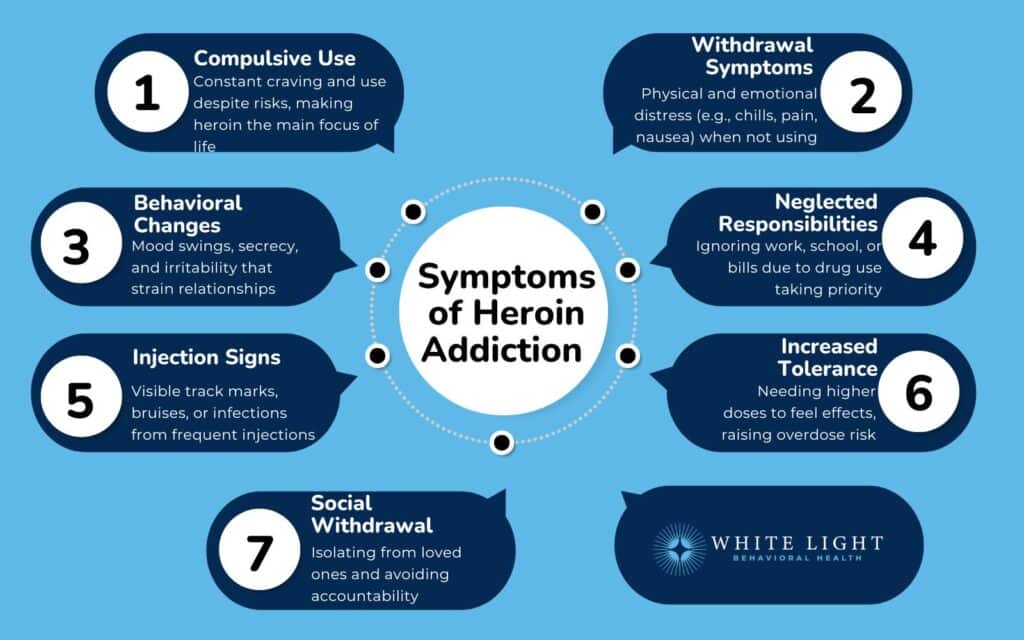
The symptoms of heroin addiction are explained below:
- Compulsive drug use: You feel a constant urge to seek and use heroin, even when facing risks or consequences. This behavior overrides responsibilities and personal safety. It becomes the central focus of daily life.
- Withdrawal symptoms: When not using, you experience chills, body pain, nausea, and anxiety. These symptoms begin within hours after the last dose. They often lead to repeated use just to avoid discomfort.
- Behavioral changes: Mood swings, secrecy, lying, or sudden irritability appear. These shifts disrupt relationships and trust. They’re often early signs of deepening addiction.
- Neglected responsibilities: You begin missing work, ignoring bills, or failing in school. Priorities shift entirely to drug use. The daily function breaks down.
- Physical signs of injection: Track marks, bruises, or skin infections form around injection sites. These marks are often hidden under clothing. They may also become infected or lead to scarring.
- Increased tolerance: Over time, you need more heroin to feel the same high. This increases overdose risk significantly. It also leads to financial and emotional strain.
- Social withdrawal: You begin to isolate yourself, avoiding family, friends, and social activities. You avoid conversations that challenge your behavior. Over time, isolation becomes a pattern.
What Are The Short-Term and Long-Term Effects Of Heroin Use?
The short-term and long-term effects of heroin use include Short-term euphoria and sedation, nausea and constipation, respiratory depression, cognitive decline, and kidney damage. These effects worsen the longer use continues and become irreversible without early treatment.
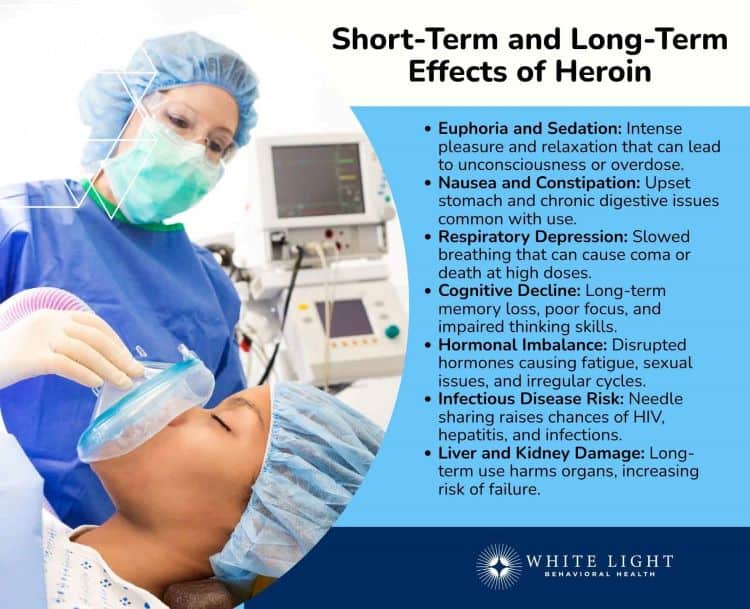
The short-term and long-term effects of heroin use are:
- Short-term euphoria and sedation: Right after use, heroin causes a rush of pleasure and calm. Breathing slows, pain fades, and muscles relax. This sedative effect can lead to unconsciousness or overdose if doses are too high.
- Nausea and constipation: Many users experience an upset stomach, vomiting, and slowed digestion. Constipation becomes chronic with repeated use. These effects cause discomfort and may require medical treatment.
- Respiratory depression: Heroin slows down breathing to dangerous levels. In high doses, this can cause unconsciousness, coma, or death. It’s the leading cause of fatal overdose.
- Cognitive decline: Long-term use leads to poor memory, slow thinking, and reduced problem-solving ability. These changes affect job performance, learning, and relationships. They persist even after quitting.
- Hormonal imbalance: Chronic heroin use disrupts testosterone and menstrual hormone levels. This leads to sexual dysfunction, irregular cycles, and fatigue. These imbalances often go untreated.
- Infectious disease risk: Sharing needles increases the chance of HIV, hepatitis B, and C, and skin infections. These diseases add serious complications to an already high-risk condition.
- Liver and kidney damage: The body struggles to filter heroin and its additives. Over time, this leads to organ failure. Combined with dehydration or poor diet, the damage escalates quickly.
How Is Heroin Addiction Treated?
Heroin addiction is treated through a combination of medication-assisted treatment (MAT), structured inpatient and outpatient programs, and integrated behavioral therapies. Each method supports different stages of recovery, helping you stabilize physically, regain mental clarity, and rebuild your life over time.
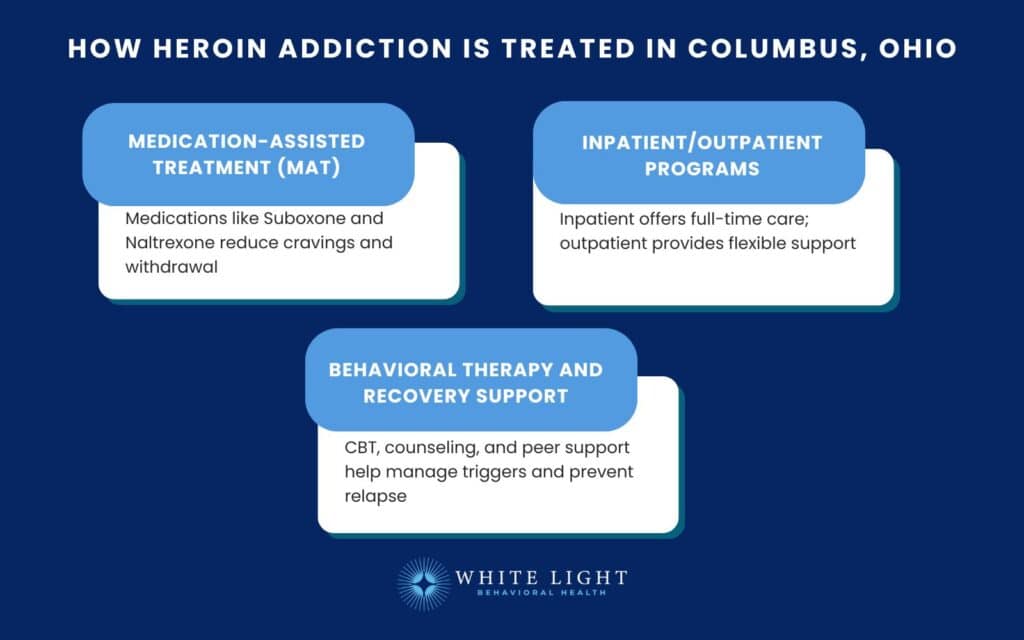
Heroin addiction is treated in Columbus, Ohio, as follows:
Medication-assisted treatment (MAT)
Columbus clinics offer Suboxone, Methadone, and Naltrexone as part of MAT protocols. These medications reduce cravings, ease withdrawal symptoms, and help regulate brain chemistry during recovery. Suboxone and Methadone are opioid agonists that prevent withdrawal while blocking euphoric effects. Naltrexone stops opioids from activating pleasure receptors and is ideal after detox.
Contact us today to schedule an initial assessment or to learn more about our services. Whether you are seeking intensive outpatient care or simply need guidance on your mental health journey, we are here to help.
Inpatient and outpatient programs:
Inpatient rehab gives you 24/7 care, with medical supervision, therapy, and detox services in one setting. This is often essential during early recovery or after relapse. Programs last 30 to 90 days, depending on medical need and insurance coverage.
Outpatient programs offer more flexibility. You attend therapy sessions while maintaining work or family life. These programs are ideal if you’ve completed inpatient rehab or have a stable living environment.
Combined behavioral therapy and recovery support
Cognitive Behavioral Therapy (CBT), group therapy, and trauma counseling are core parts of treatment in Columbus. These approaches help you understand what drives your use, stress, trauma, or habits, and teach healthier responses. Therapists help you reframe thinking, avoid triggers, and manage cravings in real time.
Support services like peer recovery coaches, caseworkers, and recovery housing are integrated into most treatment plans. These combined approaches lower dropout rates and build stronger, community-based recovery outcomes.
What Recovery Support Exists For Heroin Users In Columbus?
The recovery support that exists for heroin users in Columbus includes Narcotics Anonymous (NA), peer recovery coaching, and structured wraparound services like housing and employment help. These supports continue long after formal treatment ends, helping you build stability and avoid relapse.
NA meetings provide a free, community-based path for connection and accountability. With dozens of weekly meetings across Franklin County, held in churches, recovery centers, and online, NA offers a safe space to share experiences and stay grounded in sobriety. The 12-step framework also emphasizes spiritual and behavioral growth, helping you stay focused long-term.
They guide you through setbacks, celebrate progress, and connect you to resources. Support services in Columbus include sober housing, job training, childcare, and mental health coordination. Together, these resources form a recovery ecosystem that helps you move forward with real momentum.
Where To Get Immediate Help For Heroin Addiction In Columbus
Where to get immediate help for heroin addiction in Columbus includes 24/7 detox centers, crisis lines, walk-in clinics, and emergency intake programs. These services provide urgent medical care, withdrawal support, and direct referral to long-term treatment.
Franklin County Crisis Line at (614) 276-2273 connects you to licensed counselors any time, day or night. Most rehab centers offer emergency walk-ins, same-day assessments, and medication-assisted detox services.
These centers work closely with Medicaid and the ADAMH Board, so cost should not delay your care. Whether you’re facing relapse or trying to start recovery today, help is immediate, local, and structured for action.