
Nyquil addiction develops when individuals misuse the medication beyond its intended purposes, leading to physical or psychological dependence. Nyquil is an over-the-counter medication commonly used to relieve symptoms of colds and flu, including cough, congestion, and body aches. Despite its therapeutic benefits, addiction to Nyquil has become a growing concern, particularly due to its ingredients like acetaminophen and alcohol, which increase the potential for misuse. Misuse frequently occurs when individuals seek the sedative effects of the medication for recreational purposes or to self-medicate underlying issues.
Nyquil addiction refers to a dependency that arises from the repeated misuse of the medication, often for its calming effects or as a way to self-treat anxiety or insomnia. Over time, this misuse disrupts natural sleep patterns and increases the risk of health complications.
Globally, millions of people misuse over-the-counter medications, including Nyquil, with a significant proportion reported in the US. Misuse has led to numerous cases of liver injuries, as noted by Foust et al., 1989, in the study “Nyquil-associated liver injury.” The report highlights that exceeding recommended doses increases the risk of acetaminophen toxicity, which damages the liver.
The main symptoms of Nyquil addiction include persistent cravings for the medication, increased tolerance requiring larger doses, and withdrawal effects such as anxiety, irritability, and insomnia when stopping its use. Physical effects include nausea and fatigue, especially when liver damage has occurred from misuse.
The main causes of Nyquil addiction include self-medicating to address insomnia, chronic stress, or anxiety. Misuse frequently stems from an unawareness of the risks of exceeding recommended doses, leading to dependence on the medication’s sedative effects. Notable complications of Nyquil addiction include severe liver damage, heightened risk of acute liver failure, and dangerous effects when combined with alcohol. According to Foust et al., 1989, in the study “Nyquil-associated liver injury,” chronic alcohol use worsens the hepatotoxic effects of acetaminophen, significantly increasing the risk of liver damage.
Treatment options for Nyquil addiction include medical detox programs, CBT, and the use of medications to manage withdrawal symptoms. Medical detox ensures the safe management of withdrawal, while CBT addresses patterns of behavior linked to misuse. Treatments incorporating dual diagnosis approaches are especially effective when co-occurring mental health disorders exist.
The best prevention strategies for Nyquil addiction include education on proper dosage, increased public awareness of risks, and encouraging alternatives for managing sleep disturbances or anxiety. Limiting access to high-risk medications and promoting safe use practices also play an important role in reducing misuse.
What is Nyquil Addiction?
Nyquil addiction is the misuse of Nyquil, an over-the-counter (OTC) medication, for purposes beyond its intended use, such as treating cold symptoms or aiding sleep. Prolonged or improper use of Nyquil, particularly for its sedative effects, leads to dependency and withdrawal symptoms over time.
Nyquil is considered habit-forming due to its active ingredient, dextromethorphan (DXM), which has a significant potential for abuse. Misuse of DXM-containing medications like Nyquil leads to both psychological and physical dependence, as highlighted by Mutschler et al., 2010, in the study “Dextromethorphan Withdrawal and Dependence Syndrome.” The study notes that prolonged use increases the likelihood of withdrawal symptoms, including rapid heart rate and high blood pressure.
Nyquil, as an OTC drug, is commonly used to relieve cold symptoms, including cough, congestion, and body aches, and is also used as a sleep aid. Misuse begins when individuals increase their dosage to achieve stronger effects, leading to tolerance and dependency. According to Mutschler et al., 2010, habitual Nyquil users showed a 50% rise in dose escalation, and approximately 30% developed psychological dependence. Misuse for recreational purposes has been reported by about 5% of young adults.
Did you know most health insurance plans cover substance use disorder treatment? Check your coverage online now.
Why is Nyquil Addictive?
Yes, Nyquil is addictive due to its active ingredients, dextromethorphan (DXM) and antihistamines, which have properties that encourage dependency when misused. DXM, a cough suppressant in Nyquil, produces psychoactive effects when consumed in large amounts, contributing to its misuse. Antihistamines, another key component, produce sedative effects that some individuals misuse to induce sleep or calmness.
More Resources on Addiction:
The abuse potential of DXM is reflected in its high prevalence among reported cases of misuse. From 2000 to 2010, 44,206 DXM abuse cases were reported to US poison centers, with a mean annual prevalence of 13.4 cases per million population, as described by Wilson et al., 2011, in the study “Monitoring trends in dextromethorphan abuse using the National Poison Data System: 2000-2010.” Among adolescents aged 15-19, this figure increased to 113.0 cases per million. These data highlight the scale of DXM misuse and its role in Nyquil addiction.
Dependency risks increase when Nyquil is used with other substances. Multi-substance exposures are linked to a 2.53 times higher likelihood of severe medical outcomes, according to Wilson et al., 2011. Misuse of Nyquil’s active ingredients over time leads to physical dependency, withdrawal symptoms, and significant long-term effects on mental health.
How Long Does It Take to Get Addicted to Nyquil?
It takes approximately 2 to 3 weeks for addiction to Nyquil to develop when the medication is misused frequently or in high doses. Repeated use beyond recommended amounts leads to tolerance, requiring increased quantities to achieve the same effects. Dependency occurs faster in individuals with genetic predispositions or other risk factors, resulting in psychological dependence characterized by cravings and difficulty stopping use. According to Mutschler et al., 2010, in the study “Dextromethorphan Withdrawal and Dependence Syndrome,” prolonged misuse of Nyquil’s active ingredient, dextromethorphan, increases the risk of dependency and withdrawal symptoms, which include both physical and psychological challenges.
What Are Common Symptoms of Nyquil Addiction?
The common symptoms of Nyquil addiction include physical, psychological, and behavioral effects. As a common over-the-counter medication for colds and flu, Nyquil contains ingredients like dextromethorphan, antihistamines, and acetaminophen, which are effective for temporary relief but carry risks when used improperly. Misuse involves taking higher doses than recommended or using the medication for non-medical purposes, such as achieving sedative effects.
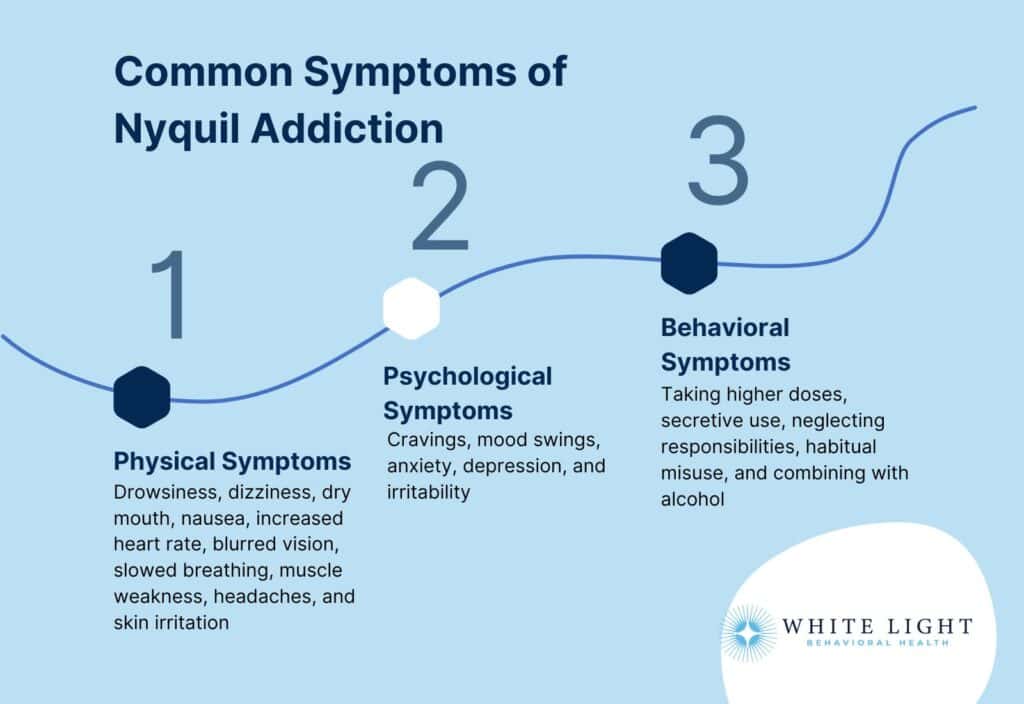
The symptoms of Nyquil addiction are listed below:
- Physical symptoms include a variety of adverse effects resulting from the sedative and dehydrating properties of Nyquil’s active ingredients, such as dextromethorphan and antihistamines. Misuse that exceeds the recommended daily acetaminophen limit of 4 grams for most people or 2 grams for those with liver disease increases the risk of liver damage. This risk is higher for those who consume alcohol, as alcohol amplifies the toxic effects of acetaminophen, according to Foust et al., 1989, in the study “Nyquil-associated liver injury.”
- Drowsiness and Fatigue: Persistent lethargy and an overwhelming need to sleep, even during the day.
- Dizziness and Coordination Issues: Difficulty maintaining balance and frequent episodes of lightheadedness.
- Dry Mouth: Constant thirst and dryness in the mouth due to the antihistamines in Nyquil.
- Nausea and Vomiting: Digestive discomfort, often accompanied by an upset stomach or vomiting.
- Increased Heart Rate: Noticeable palpitations or rapid heartbeat, linked to overuse.
- Blurred Vision: Difficulty focusing or visual disturbances, common with excessive intake.
- Respiratory Depression: Slowed or shallow breathing, especially when taken in high doses.
- Muscle Weakness: Reduced physical strength or a general feeling of weakness.
- Headaches: Recurring headaches or migraines as a result of dependence or withdrawal.
- Skin Irritation: Itching or rashes due to prolonged or excessive use.
- Psychological symptoms include emotional and mental struggles that arise from dependence on Nyquil for relief. These symptoms often make quitting difficult despite negative consequences.
- Cravings: Persistent urges to consume Nyquil, even when not physically needed.
- Mood Swings: Fluctuations in emotional stability, often ranging from irritability to euphoria.
- Anxiety: Heightened feelings of nervousness or fear, especially during withdrawal periods.
- Depression: Feelings of sadness or hopelessness linked to the inability to stop misuse.
- Irritability: Increased frustration or anger, particularly when unable to use Nyquil.
- Behavioral symptoms include noticeable changes in habits and routines that reflect dependency. These behaviors often disrupt personal and professional responsibilities.
- Increased Dosage: Gradually consuming more than the recommended amount of Nyquil to achieve the desired effects.
- Secretive Use: Hiding the frequency or quantity of Nyquil consumption from others.
- Neglect of Responsibilities: Ignoring personal, professional, or social obligations due to dependence.
- Habitual Misuse: Taking more than two tablespoons (650 mg of acetaminophen) per dose, which significantly increases health risks.
- Combining with Alcohol: Using Nyquil alongside alcohol further increases the likelihood of severe complications such as liver failure.
What Overlooked Behavioral Signs Indicate Nyquil Addiction?
Overlooked behavioral signs of Nyquil addiction include hiding Nyquil bottles, erratic behavior, and social withdrawal. Individuals struggling with addiction hide bottles to conceal the extent of their misuse or prevent others from noticing their dependency. Erratic behavior, such as sudden mood changes or impulsive decisions, reflects the psychological impact of dependency. Social withdrawal is another common sign, as individuals disengage from relationships and activities to prioritize misuse or avoid stigma related to their addiction. According to Foust et al., 1989, in the study “Nyquil-associated liver injury,” such behaviors are compounded by the risks of physical health issues, including liver damage, particularly when Nyquil is misused in high doses or combined with alcohol.
What Causes Nyquil Addiction?
Nyquil addiction is caused by psychological, physiological, and situational factors. Psychologically, individuals may misuse Nyquil to self-medicate conditions such as anxiety, depression, or insomnia, relying on its sedative effects for relief. Physiologically, tolerance to Nyquil’s active ingredients, like dextromethorphan and doxylamine, can lead to increased consumption to achieve the same effects. Situational factors, including its over-the-counter accessibility and social influences, further contribute to misuse.
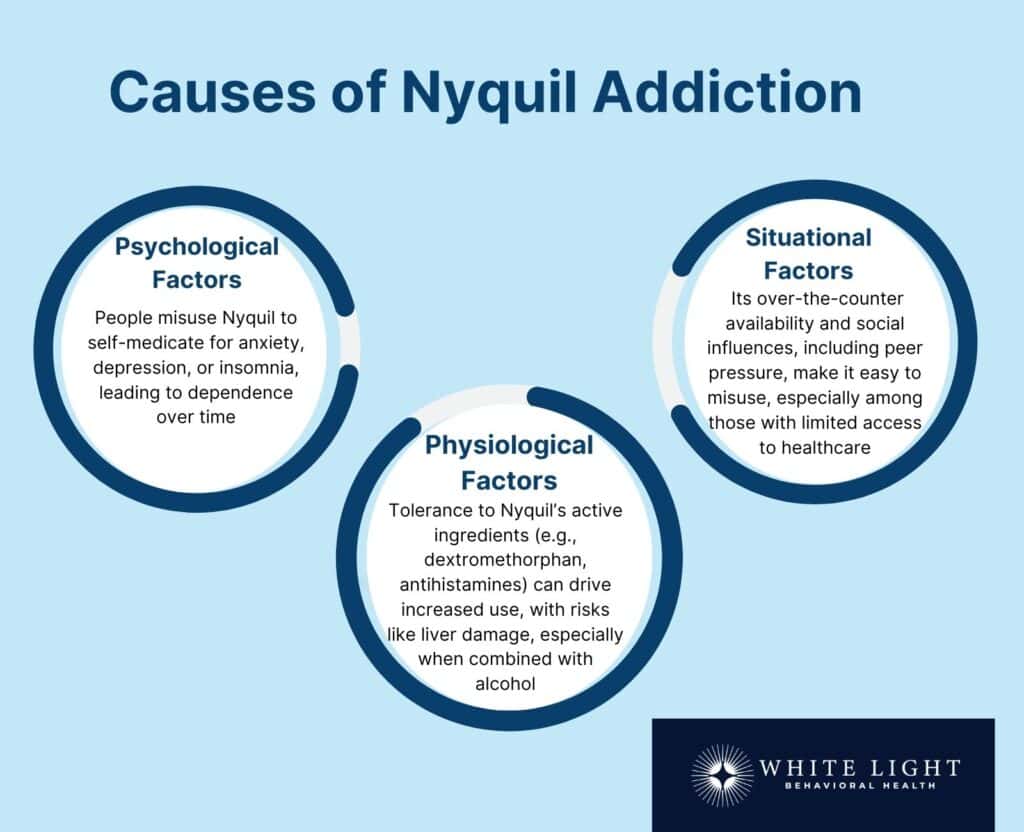
Psychological causes include stress, anxiety, and insomnia, which drive individuals to misuse Nyquil as a form of self-medication. Many people turn to Nyquil to calm their nerves or improve sleep, avoiding harder drugs or prescription medications due to concerns about stigma or potential side effects. Over time, this reliance on Nyquil as a coping mechanism increases the risk of dependency, particularly when it becomes a routine solution for emotional or physical discomfort.
Physiological causes involve the habit-forming properties of Nyquil’s active ingredients, such as dextromethorphan and antihistamines, which can produce calming or psychoactive effects when misused in high doses. These effects make it particularly appealing to those with a history of substance misuse or chronic health issues like persistent coughing or sleeplessness. According to Foust et al., 1989, in the study “Nyquil-associated liver injury,” misuse of Nyquil’s acetaminophen content significantly increases health risks, particularly when daily intake exceeds 4 grams. This danger is compounded for individuals who also consume alcohol, as alcohol amplifies acetaminophen’s toxic effects.
Situational causes include the accessibility of Nyquil and the influence of social environments. As an over-the-counter medication, Nyquil is readily available, making it easy for individuals to misuse without medical oversight. People who have limited access to professional healthcare or fear the stigma of seeking help for prescription medications often turn to Nyquil as a seemingly safer alternative. Social settings that normalize or promote the recreational use of Nyquil also contribute to dependency, particularly among younger individuals experimenting with the medication. This dynamic is further amplified in cases where peer pressure encourages repeated misuse.
Contact us today to schedule an initial assessment or to learn more about our services. Whether you are seeking intensive outpatient care or simply need guidance on your mental health journey, we are here to help.
What Are the Risk Factors for Nyquil Addiction?
The risk factors for Nyquil addiction include age, mental health conditions, and a family history of addiction. As a widely available remedy for colds and flu, Nyquil’s sedative effects make it susceptible to misuse, particularly among vulnerable groups. Certain traits and circumstances increase the likelihood of dependency, making early identification and intervention important.
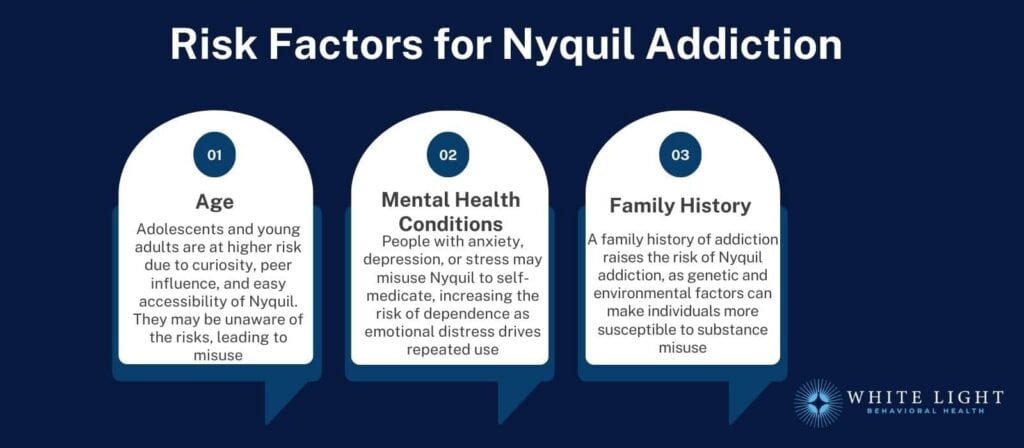
- Age: Age is a significant risk factor for Nyquil addiction. Adolescents and young adults are more likely to misuse over-the-counter medications like Nyquil due to curiosity or peer influence. Accessibility and a lack of awareness about the risks contribute to higher misuse rates among this age group.
- Mental health conditions: Mental health conditions increase the risk of Nyquil addiction. Individuals with conditions like anxiety, depression, or stress misuse Nyquil as a form of self-medication, seeking its sedative effects for relief. The presence of co-occurring disorders complicates dependency, as emotional distress drives repeated misuse.
- Family History: A family history of addiction contributes to a higher predisposition for Nyquil addiction. Genetic and environmental factors play a role in increasing susceptibility, particularly in families where substance misuse has been normalized or where there is less support for healthy coping mechanisms.
How Does Nyquil Addiction Affect Your Health?
Nyquil addiction affects your health by causing immediate side effects and long-term complications that harm both the body and mind. Short-term effects include dizziness, nausea, and fatigue, which interfere with daily functioning. Long-term misuse leads to chronic health problems like organ damage, cognitive decline, and increased vulnerability to mood disorders such as depression and anxiety. Chronic misuse also increases the risk of social isolation, further exacerbating the negative effects of dependency.
The effects of Nyquil Addiction include:
Short-term Effects of Nyquil Abuse
Short-term effects of Nyquil abuse impact both physical and mental health, leading to immediate risks for those struggling with addiction. Misusing Nyquil, particularly in large doses or outside medical guidelines, results in noticeable symptoms that interfere with normal functioning. Some of these effects escalate in severity when higher doses are consumed or when combined with other substances. Several short-term effects highlight the immediate risks associated with Nyquil abuse. These symptoms reflect the harmful impact of misuse on respiratory, cognitive, and physical health.
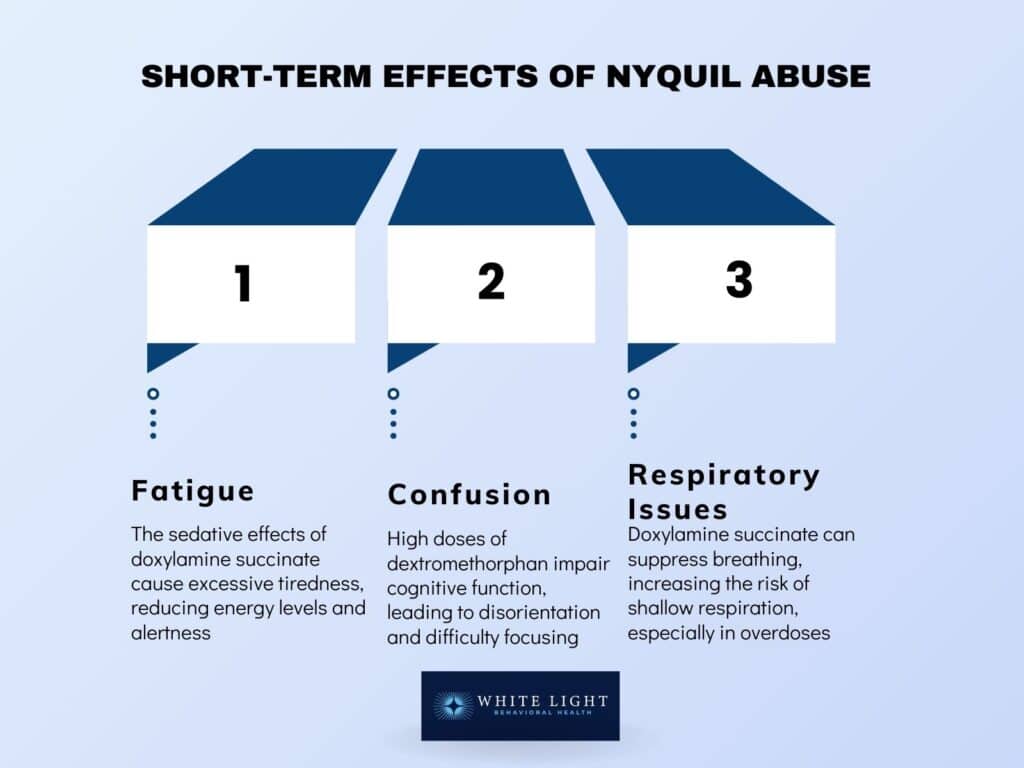
- Fatigue: Fatigue is a common short-term effect of Nyquil abuse. The sedative properties of doxylamine succinate cause excessive tiredness, interfering with energy levels and alertness.
- Confusion: Confusion occurs with excessive Nyquil use. High doses of dextromethorphan disrupt cognitive function, leading to disorientation and difficulty focusing on daily tasks.
- Respiratory Issues: Respiratory issues are another immediate concern. Doxylamine succinate suppresses respiratory function, slowing breathing and increasing the risk of shallow respiration, particularly in cases of acute overdose.
Long-term Consequences of Nyquil Addiction
The long-term consequences of Nyquil addiction include serious physical, mental, and social health effects. Chronic misuse of Nyquil, particularly in large doses or when combined with other substances, increases the risk of liver damage due to acetaminophen toxicity. According to Li et al., 2023, in the study “Advances in the study of acetaminophen-induced liver injury,” acetaminophen is a leading cause of drug-induced liver failure, and repeated overdoses elevate this risk. Prolonged misuse also impairs cognitive function, causing issues with memory, focus, and decision-making. Additionally, users experience mood fluctuations, ranging from irritability to severe depression and anxiety, which worsen with dependency. Social isolation and strained relationships are common as addiction becomes the focal point of daily life, further undermining emotional and physical well-being.
What Are the Treatment Options for Nyquil Addiction?
Treatment options for Nyquil addiction include detoxification, behavioral therapies, medication-assisted treatment, and family and community support. These approaches address the physical and psychological aspects of addiction while promoting long-term recovery. Professional help is important to ensure safety and effectiveness throughout the process.
Rediscover Life at White Light Behavioral Health
Get the compassionate support you deserve. We're here to help you reclaim joy, wellness, and a brighter future.
Our Facility
1. Detoxification
Detoxification is the first step in treating Nyquil addiction and involves safely withdrawing from the medication under medical supervision. The detox process is designed to manage withdrawal symptoms and minimize health risks during recovery. In supervised settings, healthcare professionals use protocols like the Clinical Institute Withdrawal Assessment (CIWA) to monitor patients for signs of active withdrawal. Detoxification lasts 5 to 7 days, though the timeline varies based on individual dependency levels and overall health. Challenges include managing withdrawal symptoms like nausea, insomnia, and anxiety, which require close monitoring. According to Mutschler et al., 2010, in the study “Chronic Addiction to Dextromethorphan Cough Syrup: A Case Report,” patients undergoing supervised detox with medication support stabilized successfully during the acute withdrawal phase.
What Are Common Nyquil Withdrawal Symptoms?
Nyquil withdrawal symptoms occur when someone stops using the medication after developing a dependency. These symptoms affect both the body and mind, creating challenges during the early stages of recovery. Severity depends on individual factors, including the length and intensity of misuse.
- Insomnia: Insomnia and difficulty sleeping are common during Nyquil withdrawal.
- Irritability: Irritability and mood swings frequently occur as the body adjusts to the absence of the medication.
- Flu-like Symptoms: Flu-like symptoms, including headaches, body aches, and fatigue, develop as part of the withdrawal process.
- Anxiety: Anxiety and restlessness increase during withdrawal, contributing to emotional discomfort.
How Long Does Nyquil Withdrawal Last?
Nyquil withdrawal lasts between 2 and 7 days during the acute phase, with individual timelines varying based on the severity of dependency. Some symptoms, such as anxiety and insomnia, persist beyond the acute phase but gradually improve with proper care and treatment.
2. Behavioral Therapies
Behavioral therapies are effective in addressing Nyquil addiction by promoting healthier coping mechanisms and identifying root causes of misuse. Cognitive-behavioral therapy (CBT) focuses on changing harmful behaviors and thought patterns associated with dependency. Motivational interviewing helps individuals strengthen their commitment to recovery by exploring their motivations and goals. These therapies also address underlying issues, such as stress and anxiety, which contribute to addiction. According to Mutschler et al., 2010, combining behavioral therapies with other treatments resulted in patients maintaining recovery for several months post-treatment, demonstrating their effectiveness.
3. Medication-Assisted Treatment (MAT)
Medication-assisted treatment helps reduce cravings and manage withdrawal symptoms during Nyquil addiction recovery. Medications such as low-dose chlordiazepoxide are used to alleviate physical symptoms like nausea and anxiety during withdrawal. MAT is most effective when combined with counseling and behavioral therapies. According to Mutschler et al., 2010, patients receiving MAT in a structured setting showed significant stabilization during withdrawal and sustained recovery for five months without relapse.
4. Family and Community Support
Family and community support are important for maintaining long-term recovery from Nyquil addiction. Family involvement fosters a stable environment and strengthens relationships, providing emotional encouragement during recovery. Support networks, such as peer support groups and the addiction recovery network, offer guidance and accountability. According to Mutschler et al., 2010, ongoing involvement with family and community resources reduces relapse risk and enhances recovery outcomes.
What Are the Best Strategies to Prevent Nyquil Addiction?
The best strategies to prevent Nyquil addiction involve responsible use, avoiding misuse, and exploring safer alternatives. Misusing Nyquil for its sedative effects or taking higher-than-recommended doses increases the risk of dependency. Adopting preventive practices ensures the medication is used safely and reduces the likelihood of addiction.
Practical strategies to prevent Nyquil addiction include using it only as directed, seeking professional guidance for persistent symptoms, and considering non-medication alternatives.
Are you covered for treatment?








White Light Behavioral Health is an approved provider for Blue Cross Blue Shield and TUFTS, while also accepting many other major insurance carriers.
Check Coverage Now!What Are Healthy Alternatives for Sleep Aid or Cold Management?
Healthy alternatives for sleep aid or cold management include over-the-counter and natural options that are non-addictive. For sleep support, alternatives such as melatonin supplements and herbal teas like chamomile provide relaxation without the risk of dependency. For managing cold symptoms, options like saline nasal sprays, menthol rubs, and warm broths offer effective relief. These approaches support recovery while reducing the risk of misuse associated with medications like Nyquil.
How Does Nyquil Addiction Compare to Dependencies on Other OTC Drugs?
Nyquil addiction compares to dependencies on other over-the-counter (OTC) drugs in terms of addictive potency and health risks, with unique challenges stemming from its combination of active ingredients. Drugs like Benadryl, Robitussin, Sudafed, Tylenol PM, and codeine-based cough syrups each present specific dependency risks, but Nyquil’s formulation makes its misuse particularly dangerous. The potential for cross-dependence among OTC medications further complicates recovery.
- Benadryl (Diphenhydramine) dependency: Like Nyquil, it creates drowsiness, but long-term misuse leads to confusion, memory issues, and heightened tolerance. Compared to Nyquil, Benadryl lacks dextromethorphan and acetaminophen, making its risks somewhat narrower in scope but still significant when abused.
- Robitussin (Dextromethorphan or DXM) misuse: Both drugs produce dissociative effects when taken in high doses, but Nyquil’s additional sedative components, such as doxylamine, increase sedation and respiratory risks. According to Bryner et al., 2006, in the study “Dextromethorphan Abuse in Adolescence: An Increasing Trend,” over 6,000 emergency visits annually are linked to DXM misuse, with products like Nyquil and Robitussin frequently involved.
- Sudafed (Pseudoephedrine) misuse: Dependency on Sudafed arises from its potential to increase energy and alertness, making it popular among individuals seeking these effects. However, Nyquil misuse is more likely to lead to liver damage and severe sedation due to its acetaminophen and doxylamine content.
- Tylenol PM or Advil PM (Diphenhydramine + Pain Relievers) dependency: Misuse of these medications produces sedative effects similar to Nyquil but lacks the dissociative properties of DXM. However, excessive use still causes liver damage due to acetaminophen or ibuprofen components, comparable to Nyquil’s risks when overused.
- Codeine-based cough syrups carry a higher dependency risk due to their opioid content. Compared to Nyquil, which is a non-opioid, codeine-based syrups lead to stronger withdrawal symptoms and a higher likelihood of respiratory depression. Nyquil’s risks primarily center on liver toxicity and sedation, but both types of medications require careful monitoring to prevent misuse.
How to Help Someone Struggling With Nyquil Addiction?
To help someone struggling with Nyquil addiction, start by providing support and taking actionable steps to guide them toward recovery. Family and friends stage a compassionate intervention to address the issue openly and express concern for the individual’s health. Encouraging professional treatment is important, as professional medical detox and behavioral therapies are effective in addressing physical dependency and psychological factors contributing to addiction.
Supporting their recovery involves attending counseling sessions with them or connecting them to resources like peer support groups and addiction recovery networks, which provide emotional encouragement and accountability. Help is available through healthcare providers, specialized treatment centers, or addiction hotlines that offer guidance for accessing appropriate resources.